Category Archives: glacier moraine

Nest Fights

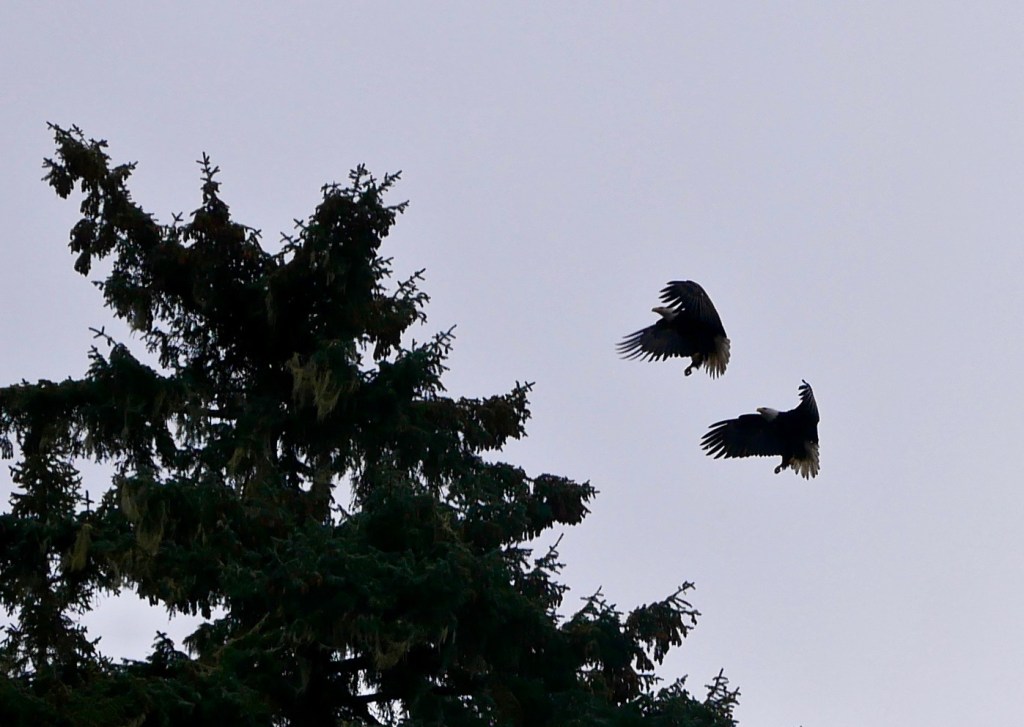
This morning we have wind-driven rain and a sky full of swarming scavengers. Just a few meters above the tree tops ravens and eagles juke away from and dive on each other. The ravens are making all the noise. Hampered by my rain-spotted glasses I first assume that a raven gang is trying to drive one eagle away from the forest and the river beach it fronts.  After wiping the glasses down with a handkerchief, I can see more than one eagle.

In less than a month, king salmon will rest in nearby river eddies before making their final push to the spawning grounds. Pink, chum, and silver salmons will follow. For most of the summer, the nutrient-rich carcasses of spawned out salmon will drift up onto the beach. Ravens and eagles tough enough to establish nests along the beach will have more than enough food for their chicks.
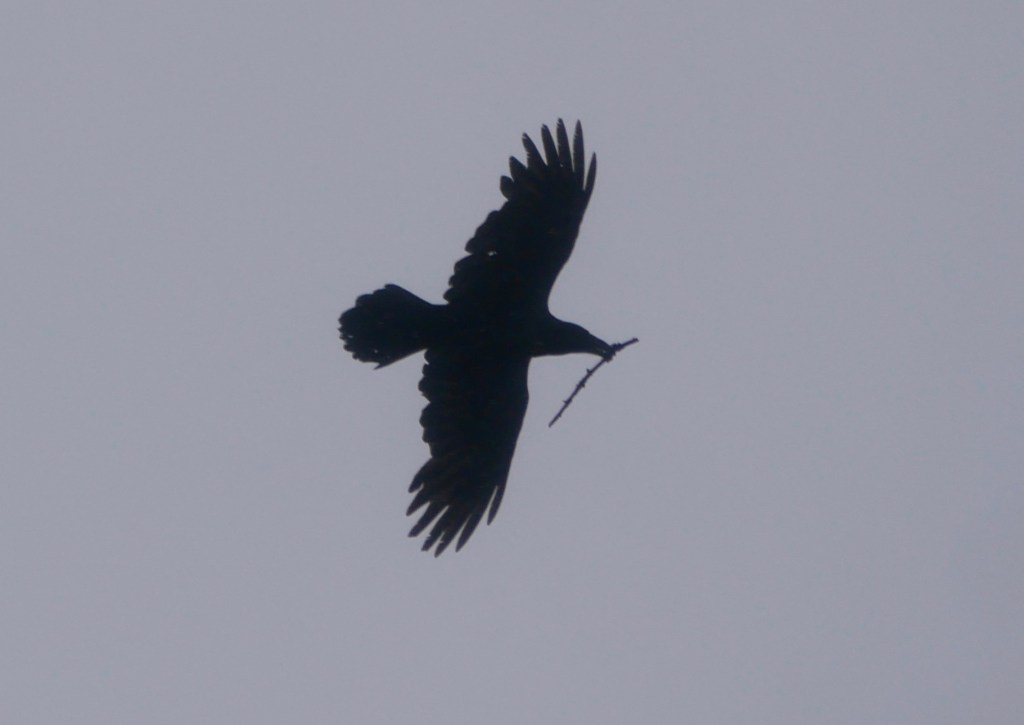
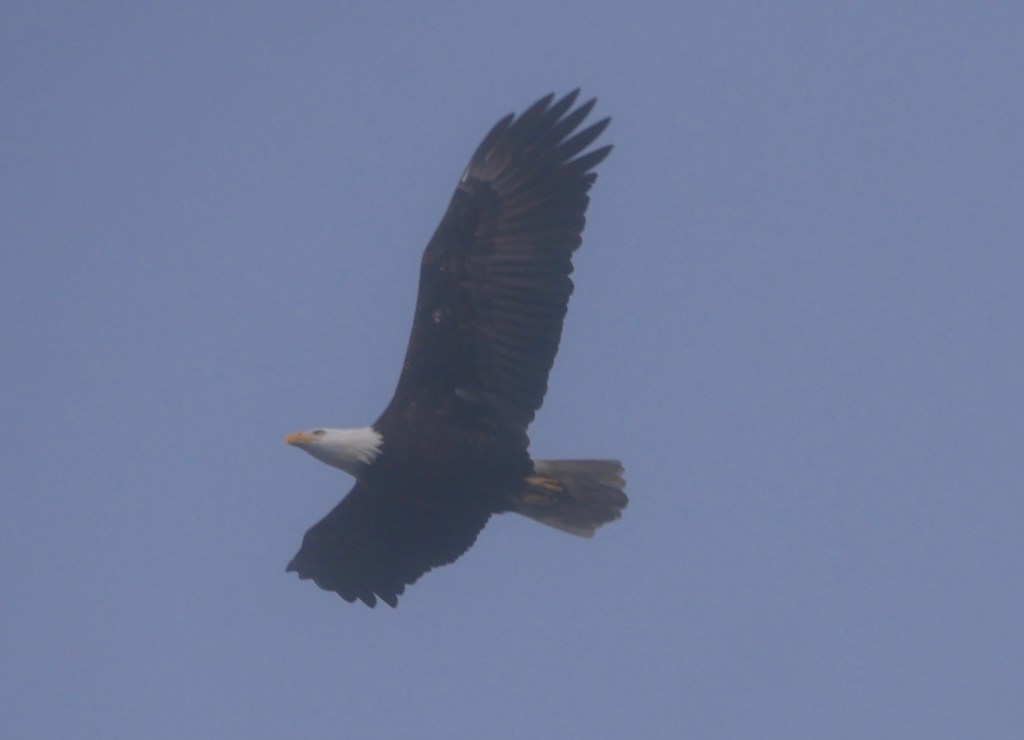
Eagles are doing most of the nest building. One eagle tries to keep a clump of old man’s beard lichen in its beak as it barrel rolls to escape two ravens. A third eagles takes advantage of the distraction to carry a cottonwood twig to its nest site. The members of the two bird clans are having a free-for-all fight over nest building materials. 

Mellow Swans

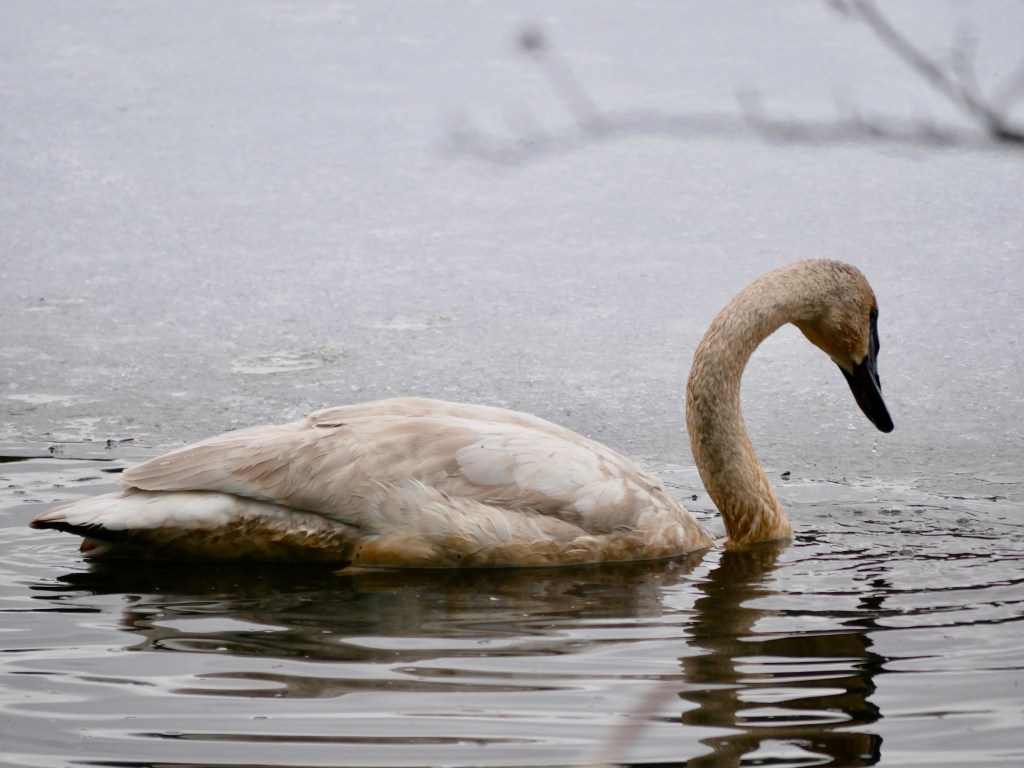
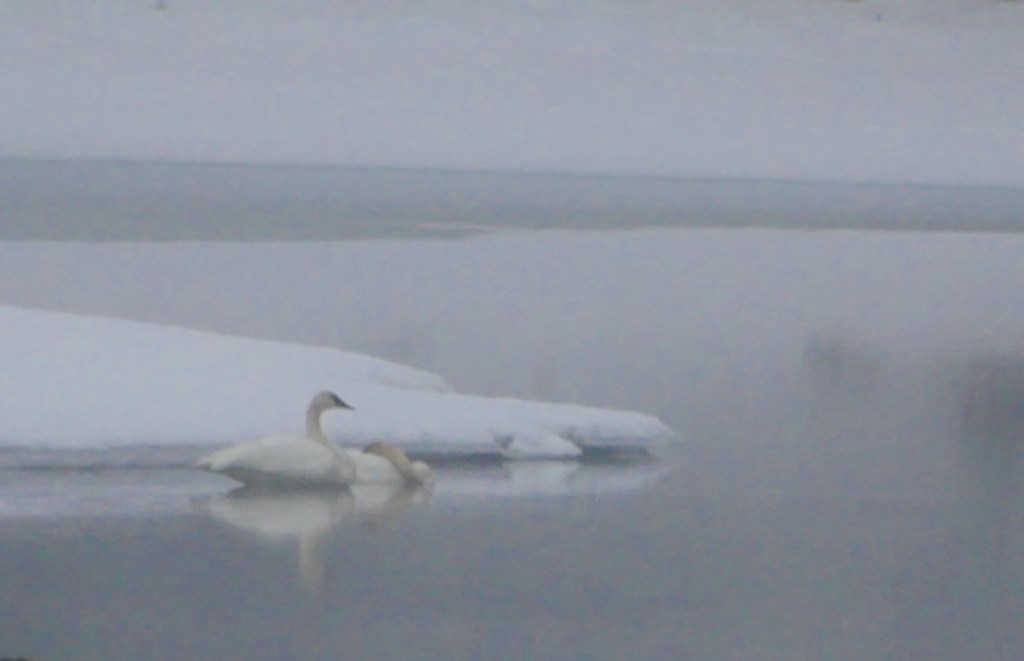
Aki stands staring at two trumpeter swans that feed in a sliver of open water on Moose Lake. Her tail is up but she doesn’t bark. The swans, only a meter away from her, continue to search for food in the calm manner they showed when we first spotted them.

            A screen of alders prevented me from seeing Aki approach the swans or I would never have let her go so close to the tired looking birds. I would have kept closer tabs on the little poodle-mix if not distracted by a stream of water drops pouring off the beak of a third swan that swam a few meters away from Aki’s brace.  

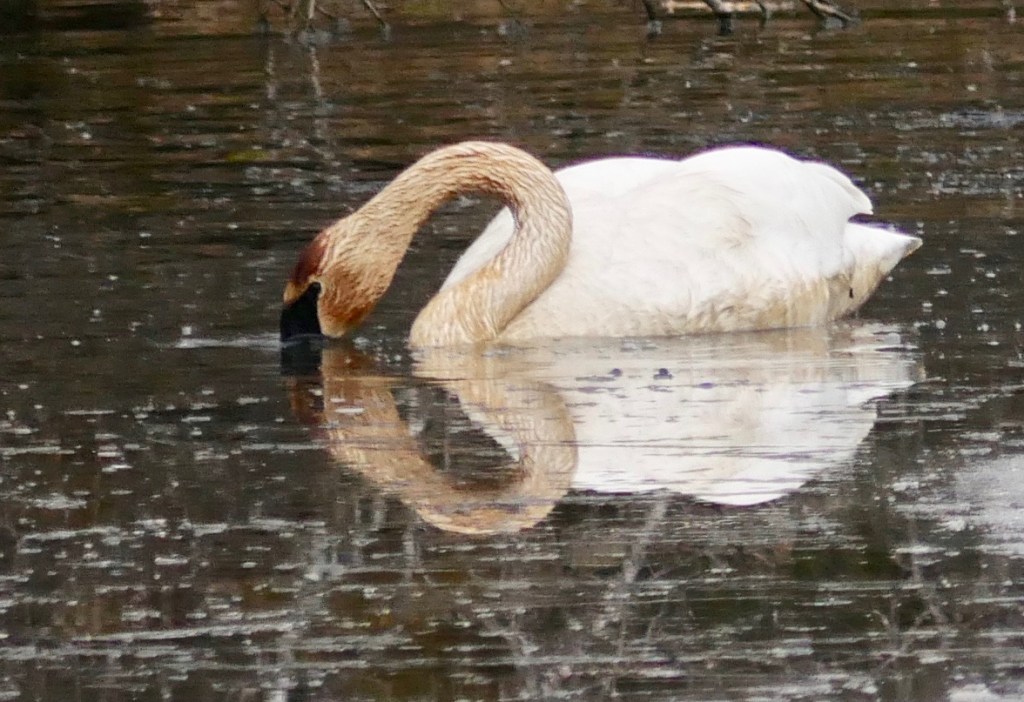
            Because of their massive size, few animals prey on swans. Trumpeters are the largest waterfowl in North America. Their wingspan exceeds two meters. Humans could bring them down with a well-aimed shotgun but that would break federal law. This might explain why the much-hunted mallards usually fly off in a panic when we approach but swans just ignore us. 

            This morning a brace of mallards paddle tight circles around one of the feeding swans. The mallard hen gives me a hard stare, then returns her attention to the swan. The ducks must be feeding on scraps that fall from the swans’ beaks or eating food stirred up as the swans dredge the lake bottom with their massive beaks. 

One Last Ski to the River

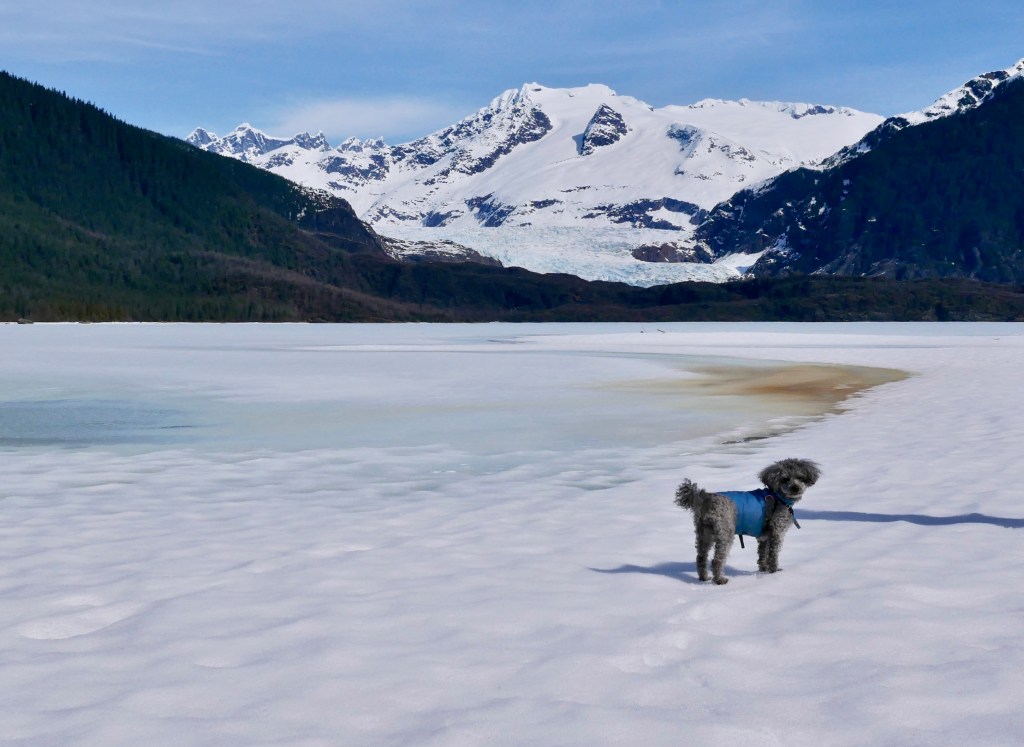
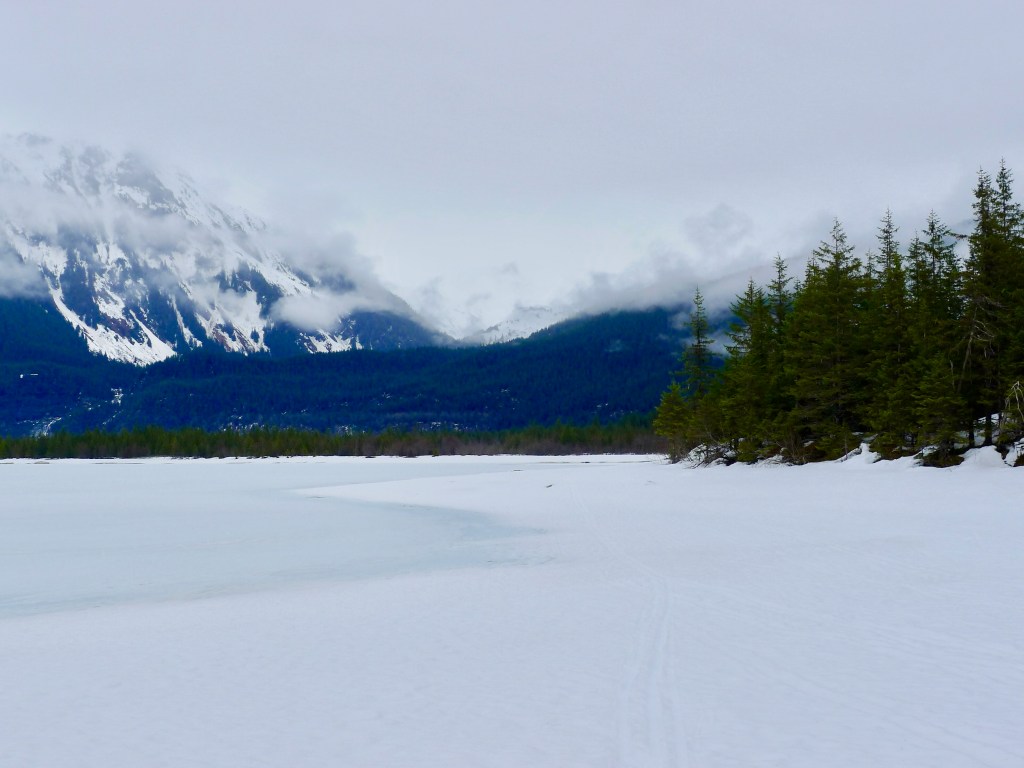
Wondering if we can ski all the way to the river, I lead Aki past Skater’s Cabin and onto the still-snow-covered beach of Mendenhall Lake. The snow is softer than yesterday but still firm enough for skiing. Like yesterday, we have the place to ourselves. 

            Aki rolls in the snow and then plants her face in it. Holding a handful of the coarse-grained stuff is like holding a handful of cold sand. Crush it and you have an ice cube rather than a snow ball. 

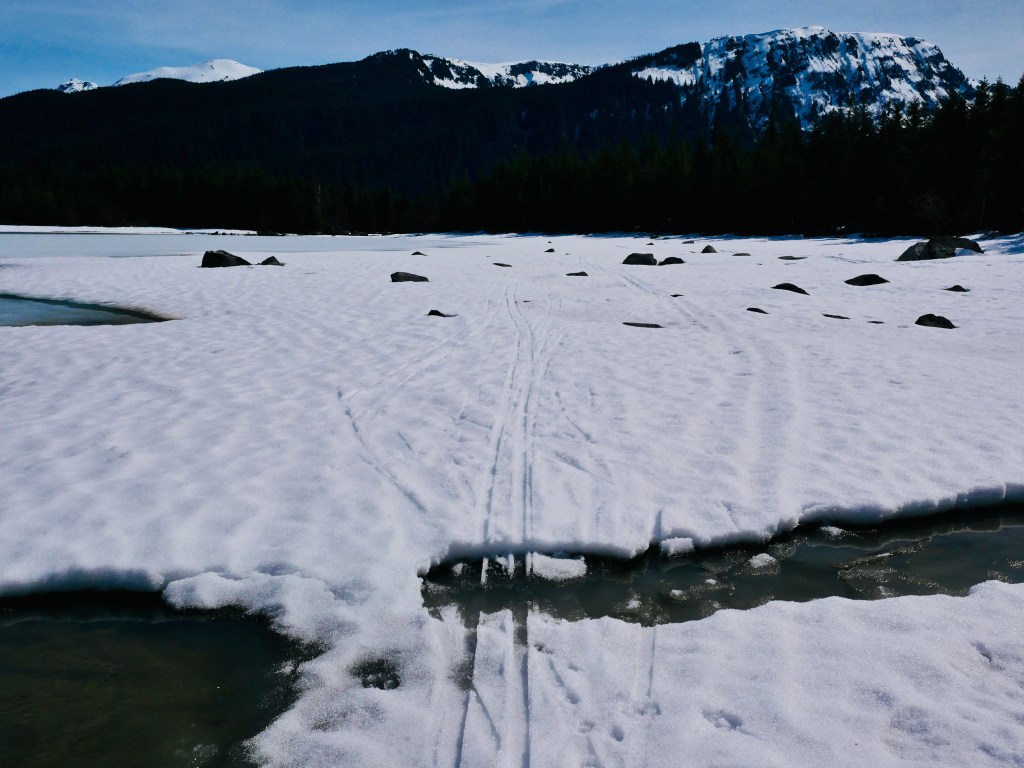
            I ski parallel to yesterday’s tracks, surprised to see the tops of rocks poking up through them. On the way to the river, my skis break through a snow bridge over a narrow stream. Thanks to expanding bare spots along the river, I will have to carry my skis a longer distance than yesterday.  

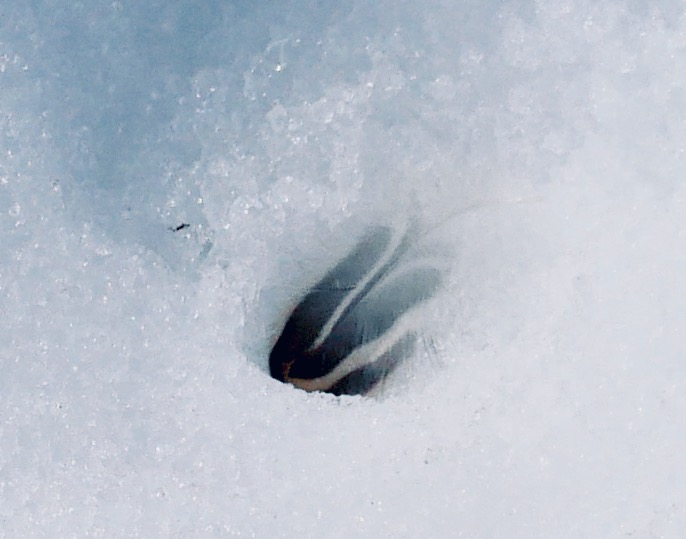
            We pass divots in the snow formed by light, fallen objects rather than rocks. Sun heated things leaves, feathers, and tangles of tree lichen have melted the snow where they came to rest. I remember visit I made this time of year to Grayling on the Alaskan portion of the Yukon River. An Athabaskan man was scattering wood stove ash onto a bulldozer sized patch of snow. When I asked him why, he dug down until he struck the yellow-colored cab of a small Caterpillar earth mover. 

Safe Social Distancing

It’s already 10 degrees Celsius and the sun’s been up for hours. Good thing I can hike in these ski boots, little dog. Aki, who knows she will get in a walk one way or another, doesn’t care what kind of boots I pull on this morning. After securing her in the car and fasten skis and poles on the roof top carrier, I drive out to Mendenhall Lake.  A lot of snow covered the shore two days ago. Maybe we can still ski along the beach. 

            The warm, sunny weather has drawn people away from their home shelters. Cars fill the Fred Meyers parking lot. More head out Glacier Highway to drive thirty miles to the end of the road system and return. I expect to find the lake shore crowded with people escaping quarantine. But the Skater’s Cabin lot is empty as is the lake. This is almost as surprising as trail conditions. The temperature dropped below freezing last night long enough for a thick crust to form on the beach snow. 

            The little dog trots behind as I sneak onto the lake ice to skirt a bare spot in the beach. It holds, even offers good skiing. I think, for a few seconds, of leaving the safe, solid shore for the freedom offered on the lake ice. We could ski all the way to the glacier free from people and virus worries—establishing a social distance of six kilometers rather than the two meters we must struggle to maintain at the grocery store. But breaking through the lake ice far from help could create a social distance I could not close without becoming a ghost. 

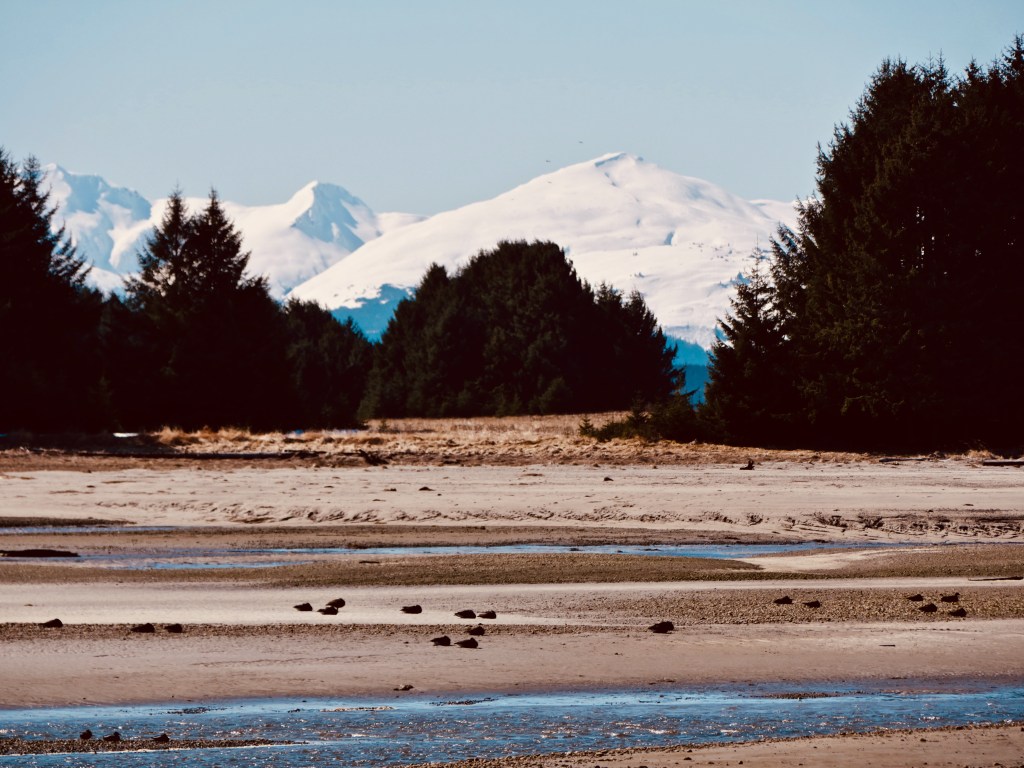
            We return to shore and ski again to the river where mallards sunbathe on the snowy banks. Some fly further downstream when we approach. Most just ignore the little dog and I. The even ignore the martial sound of an avalanche crashing down the flank of Bullard Mountain.

Soft Beauty

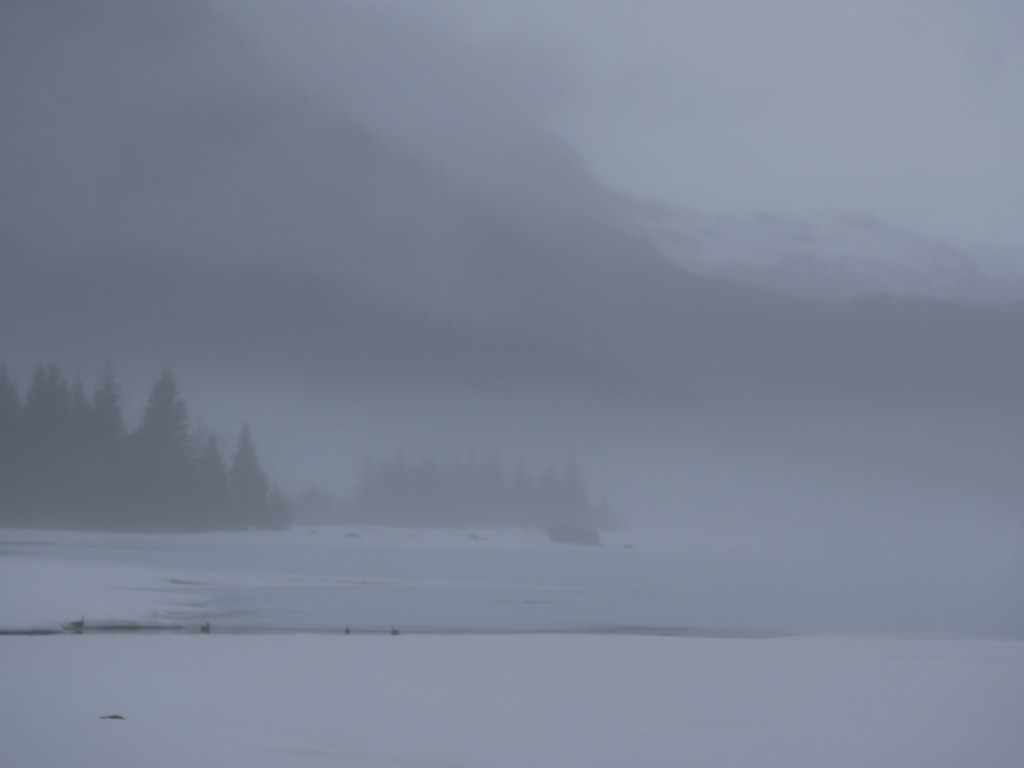
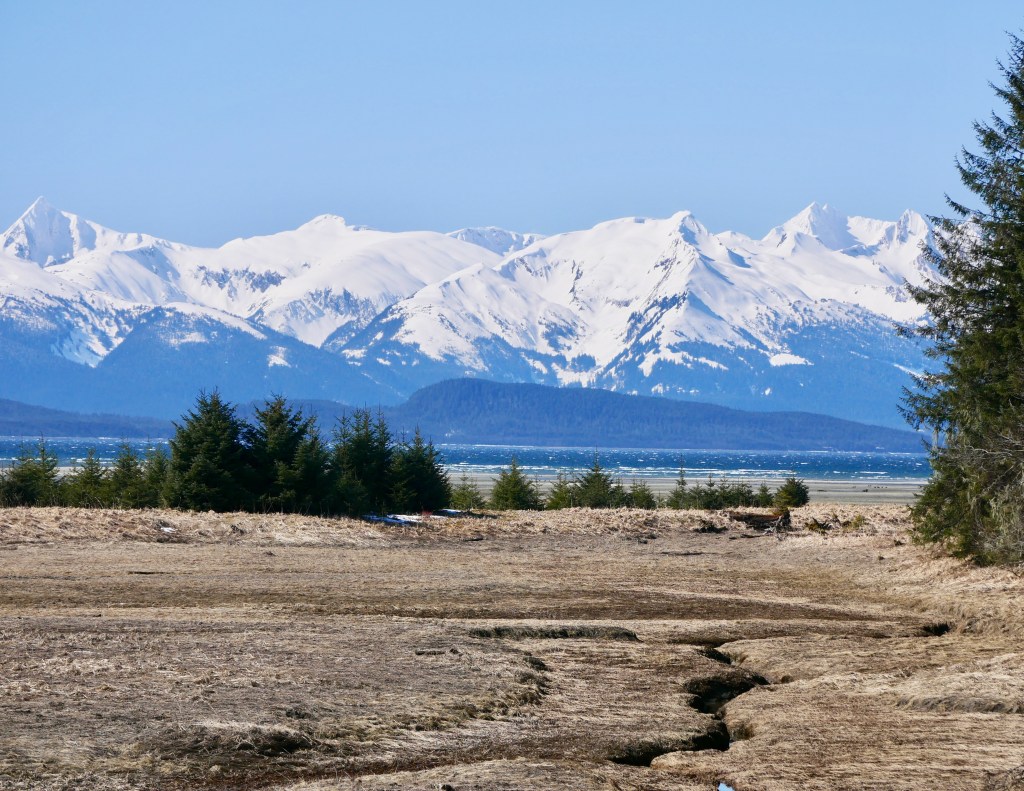
Wanting at least one more chance to ski, I drive through the rain to Mendenhall Lake. We have it to ourselves. Fog and clouds obscure the glacier and mountains. Spruce covered peninsulas appear and disappear in the moving gloam. Aki breaks through the snow crust every fourth step while my skis keep me on top of it. For the first time all winter, I have it easier than the little dog. 

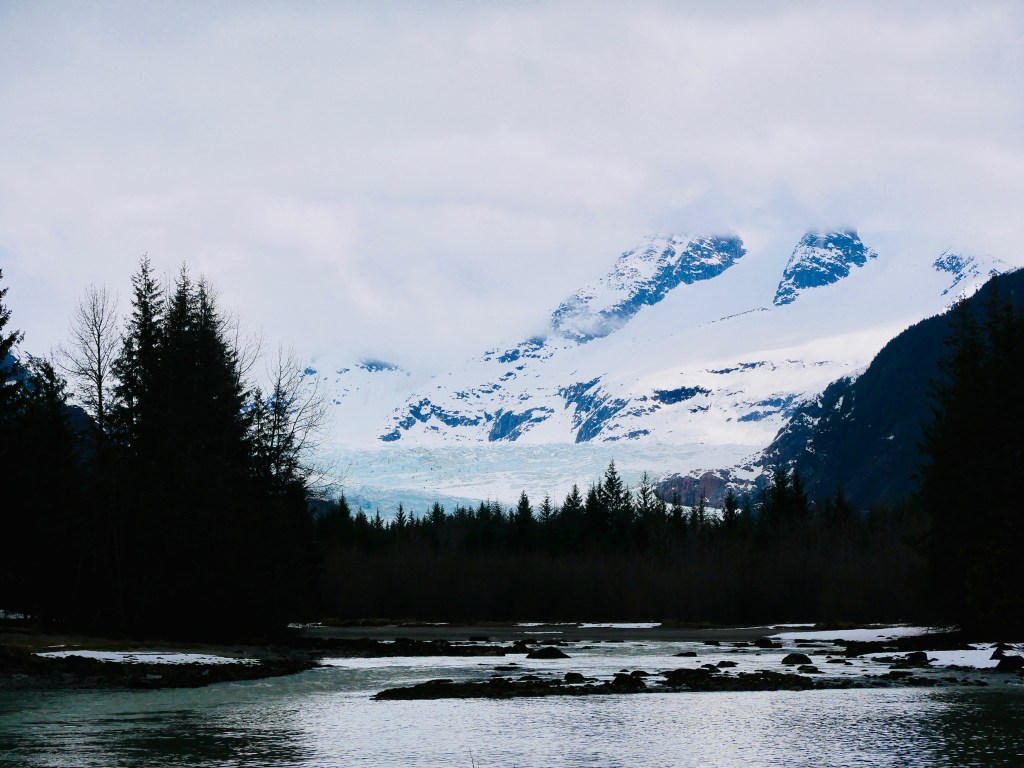
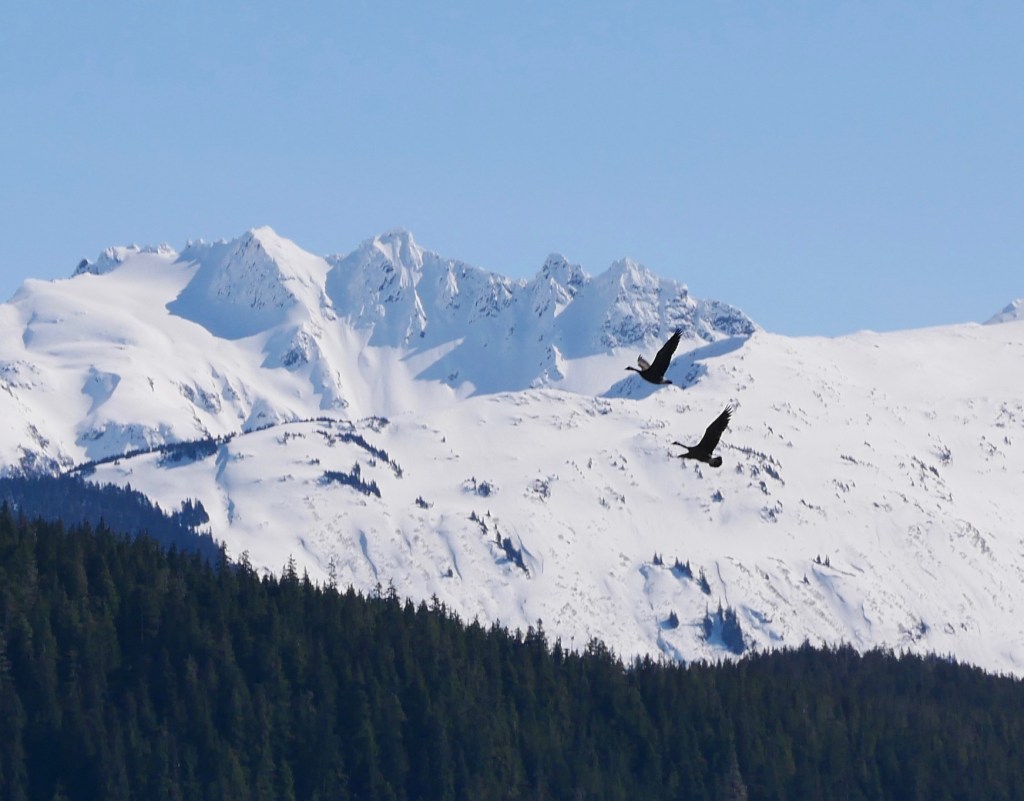
            At first, I am disappointed with the views. Then the glacier ghosts into view for a moment. The ice color deepens then fades. The glacier disappears. I can briefly make out the silhouette of a Canada goose and those of a raft of Canada geese. Then the soft power of the day returns. 

            We ski over to the river and follow it to a section broken into channels by rocky islands. It’s a place of eddies that trap food for mallards and swans. I count 9 trumpeter and (I think) 2 tundra swans.  They must be new arrivals, taking a break from their northern migration. The trumpeters have formed a community on one of the islands. Resident mallard ducks crowd up close to them. Downriver, the two tundra swans cuddle off a snowy point. 

Turquoise Ice

Yesterday, after the fog burned off, Aki’s other human and I rode our bicycles to Sheep Creek. We enjoyed blue skies and a summer time temperature of 16 degrees Celsius. After his one-day visit, summer left with the sun, driven south by rain. The temperature dropped 12 degrees. We are back on skis with Aki in tow. 

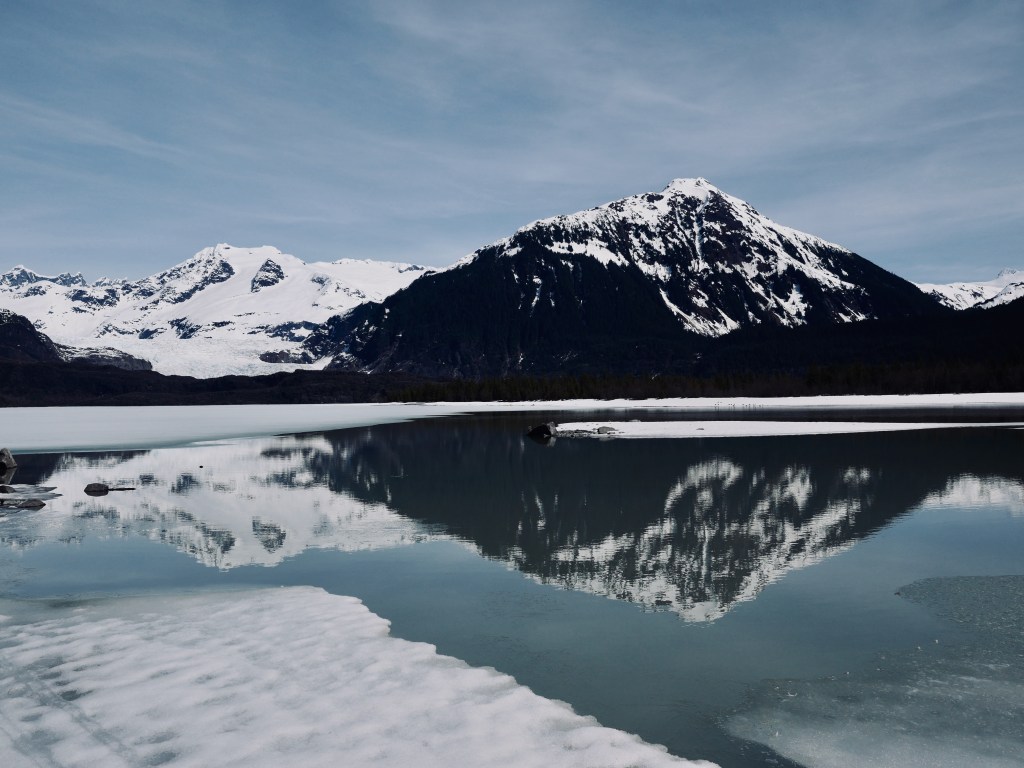
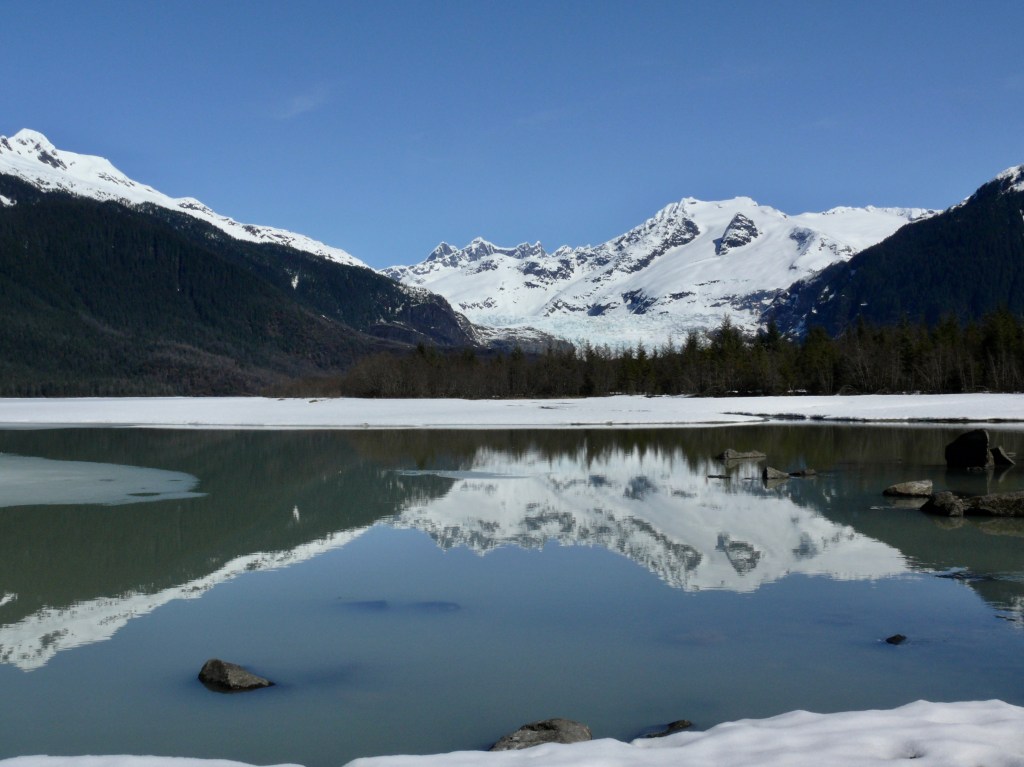
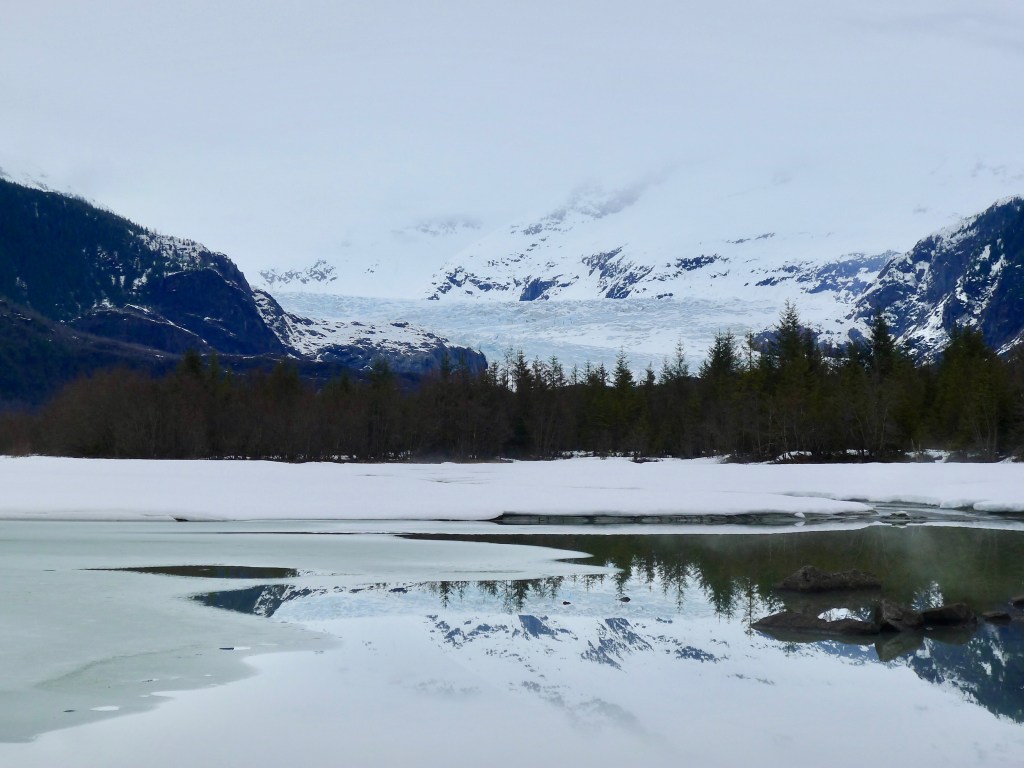
            Only one car occupies the Skater’s Cabin parking lot when we arrive. It belongs to a dog walker that leaves as we carry our skis to the lake. We felt lucky to find a parking place on our last visit. We find Mendenhall Lake covered with turquoise colored ice. Snow, in some places more than 30 cm thick, still blankets the beach. Made just soft enough by the rain, the snow provides us great skiing. 

            After taking a few snow baths, Aki falls in behind me as we head toward the river. We visited with a family of swans several times on the river this spring. As I search for them, a northern harrier drops from the top of a spruce and glides across the river. Other than the resident mallards, the harrier will be the only bird we will see until just before we leave the river for the woods. Then our thee swans will appear from behind a downriver bend and fly away to the north.

Lifting Fog

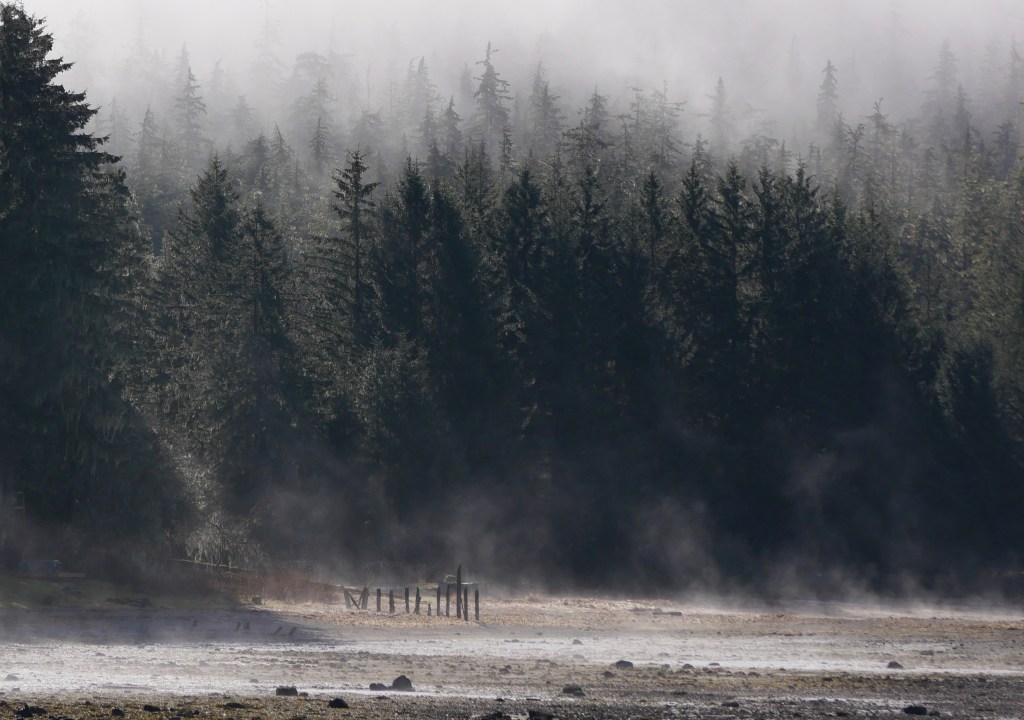
Thick fog slowed our drive to the Fish Creek trailhead. But I am not hurry.I want to arrive at the creek mouth just as the fog lifts like a curtain. I’d settle for a chance to watch it tear itself apart on the spruce-covered Douglas Island Ridge. 

            Through a screen of alders, we can hear mallards cackling on meadow of dead grass. Wisps of fog rise up from around the ducks. A large raft of male golden-eye duck have taken over the pond. The most aggressive drakes try to drive the others away from a huddle of hens. On a quieter edge of the pond, two other golden-eyes paddle with the tranquility of an old married couple. 

            The fog thickens when we leave the pond. I start slow-walking my way toward the mouth, doddling often, seeing little. Several song sparrows cheer us with their short, but sweet melodies. Aki shows me the patience of a care giver at a senior citizen center. 

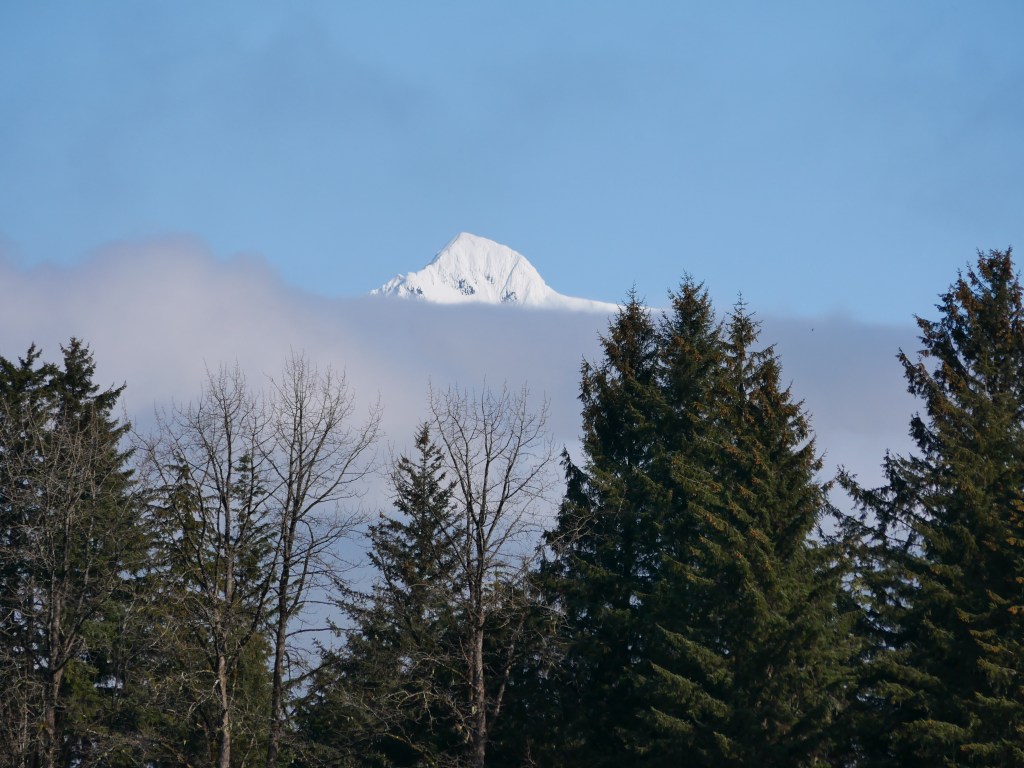
            The fog defeats my attempts to photograph with its gray cloak. Two eagles appear out of the muck, then disappear into a tangle of spruce limbs. Then the wind rises, stirring the occluding ground layer as the sun burns away fog that seconds before had blocked out view of the Mendenhall Towers.  

Tired Travelers

Aki has the sense to shelter behind a driftwood windbreak. Wanting to photograph a group of exhausted looking waterfowl, I let the wind chill me and shake my camera as I point it at the birds. One stands on one leg. The rest have flattened themselves against a mid-channel gravel bar. All, even the standing one, have tucked their beaks into their back feathers. The birds don’t flinch when a dog barrels down the beach on the opposite shore of the river. 

            The photos I take will be too blurry for me to identify the tired birds. I know that they are not part of the Canada goose gang that winters in the rain forest. They are nattering just upriver from the sleeping geese. I see a slash of white on one bird. Maybe they are brants. Rest while you can travelers. The flood tide will flush you off the gravelbar in a few hours. 

            The local Canadians huddle fifty meters away. Their watchman honks out an alarm when another dog bursts out of the opposite shore woods and gall lumps toward the river. The locals form a single file line behind the watchman and trot away from the dog.

            Two other Canada geese linger on their own in the middle of a different gravel bar. When spooked by a pair of hikers, the geese flee. I expect them to join their cousins. But they spiral up until high above the river, then fly up river to a quieter place. 

Eagles in Love? Mallard’s Distain?

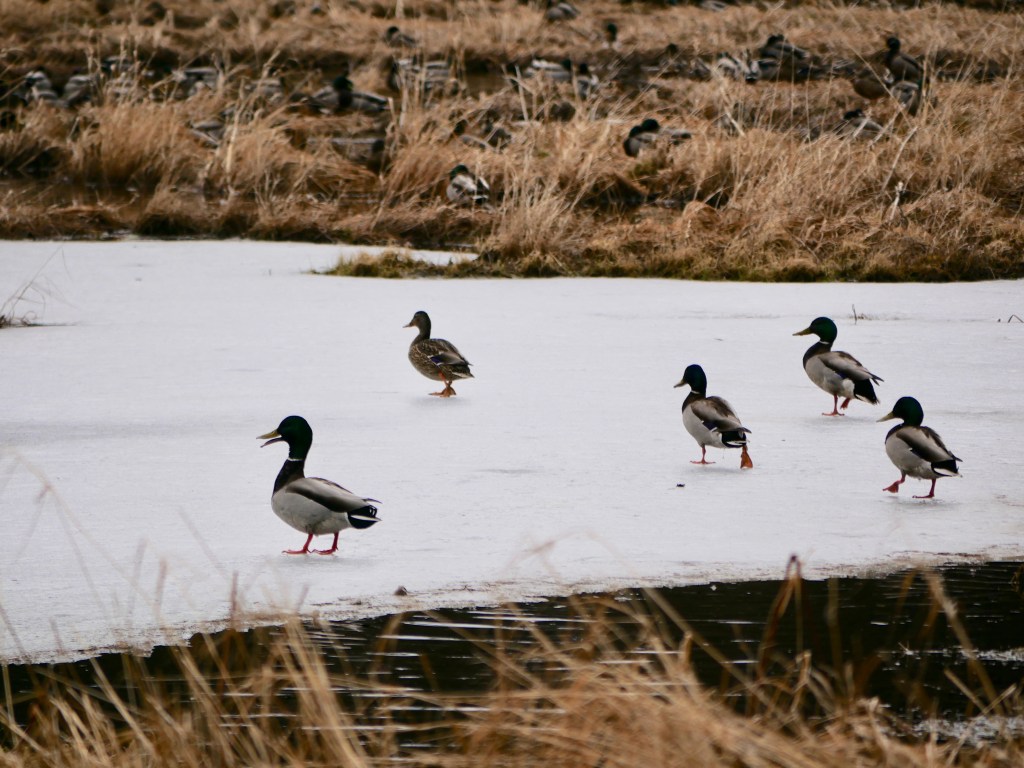
Hundreds of mallards have gathered on a tidal meadow pockmarked with thawing ponds. We would not have spotted them if one of the drakes hadn’t croaked, “crack, crack, crack” in the tone of a mean-spirited bully. He could be commenting on a karaoke performance at the neighborhood pub. I stop myself from anthropizing when I spot two eagles just setting onto limbs of a nearby spruce tree.  

 Aki and I are returning from the mouth of Fish Creek. It was barren of birds except for a half-dozen bald eagles. One of the big predators gave itself away with a long, plaintive call. I wondered whether the eagle was singing the blues until another eagle flew across Fritz Cove and landed in the singer’s tree. 

A hundred meters away, two other eagles launched into the air. They circled above Aki and I. One chased the other, who was making an uninspired attempt to escape.  When the pursuer thrusted his talons toward the pursued, she quickly headed toward a spruce tree. In a few seconds both birds were sharing the same spruce limb. 

I watched the performance, hoping to see the eagles complete their mating dance by locking talons and tumbling toward Aki and I. Another eagle, perhaps frustrated by love and not interested to seeing such a public display of affection, flew out of his spruce roost and landed at the edge of the cove. While he sulked yet another eagle called out for a lover. 

Tired Travelers

As a flood tide swells the Mendenhall River, Aki and I walk towards its mouth. The ice-free river must look like a miracle to migratory waterfowl looking for a feed. On this flat-light day, the river looks to me like a dark-gray snake slithering across a barren grassland. A Canada goose might agree with me. It flies low over the drab scene, repeating over and over a honking lament. 

            Ignoring the lamentation, I lead Aki off the trail. We cross tide-soaked grass to the top of a low bluff. Below, the current carries three sleeping ring necked ducks up river. At least 50 more of their fellow travelers are waking up to feed a kilometer down river. They have a long way to go to the breeding grounds in central Alaska. After they resume their northern migration, we won’t see their kind again until next spring. 

            Aki and I squelch our way back to main trail and use it to continue our own journey to the river’s mouth. Out of the corner of my eye I spot a large mammal slinking through the wetland grass. It moves with feline sensuality rather than lumber like a bear or lope like a dog. I can’t make out a tail. Is it a lynx? A short way away from the mystery guy, two Labrador retrievers start toward it until their owners call them back. I’ll look without success for the predator for the rest of our walk. 

American Widgeon

            We will spot other recharging ducks on our walk down river. One Eurasian widgeon, with aquatic weed handing from its beak will feed along side an American widgeon. She needs to top off her tank. Her migration will take her to the Aleutian Islands, over 3000 kilometers away.