Why are people so noisy? Aki doesn’t answer. Somehow she is twenty meters away, sniffing her way along a hedge of thimbleberry bushes that line the beach. I am close to the water, where the sounds of a small surf blocks out the voices of the other people walking along the Auk Rec beach.
Aki shows no sign of joining me at the surf line so I walk at an angle toward a spot she will be in a minute or two. I pick a few thimbleberries while waiting for the little dog. Only the wine-red ones are ripe. To eat one you have to carefully lift the thin berry portion from it’s thimble-shaped seed pod. The berry portion likes like red velvet cake but retains a tart, wild taste.
The berry plants cover the old village site. The ones providing me a snack cover a spot where large, ocean going canoes, each hallowed out from a single red cedar log, were beached. Even though the village has been abandoned for over a hundred years, not tree, not even an aggressive alder, grows among the berry plants.
Opting for solitude over spectacle, I drive Aki out to the False Outer Point trailhead. It sunny and the temperature has climbed above 70 degrees F.—beach weather in the rain forest. Our favorite trails are already clogged with sun worshipers.
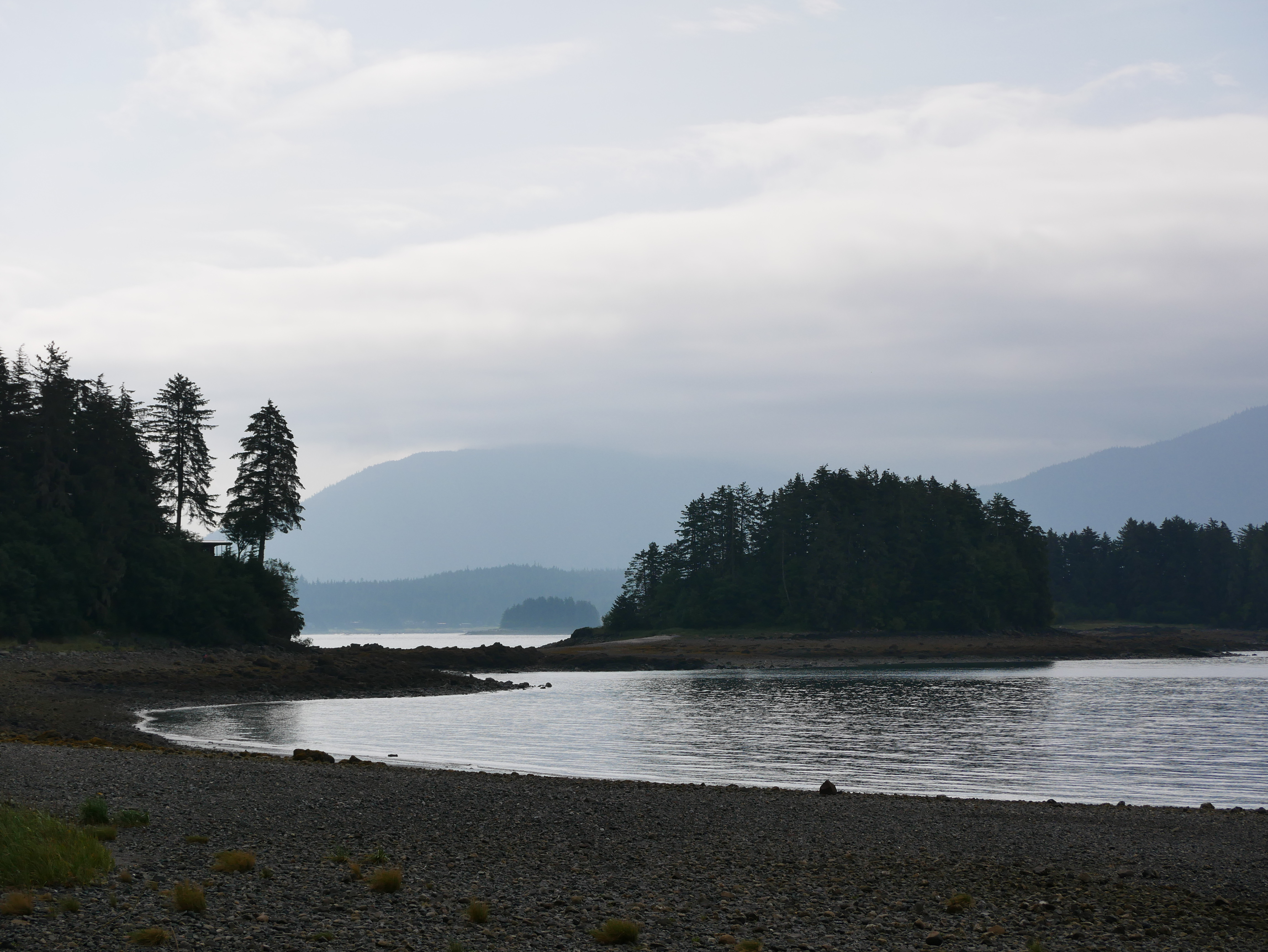
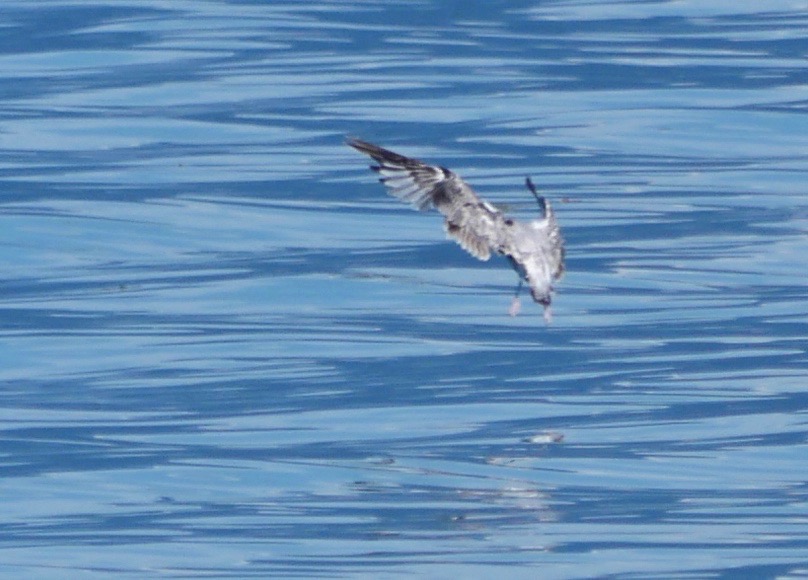
We approach the point on a crescent-shaped beach. It offers filtered views of the glacier and smooth gravel that seems perfect for sunbathing. I am the only human here, Aki the only dog. There are no bathing beauties or families roasting hot dogs over an open fire. Tiny sparrows hop in and out of the beachside grass but no eagles roost in nearby trees. Just offshore a solo gull does a touch and go on the surface of Fritz Cove. But no whales will surface for air as we walk around the point.
After watching hermit crabs skittering across the bottom of a tide pool, the little dog leads me into the forest. Red Huckleberry bushes line an informal trail up and over the headland. Aki finds a spot on the forest floor dappled by sun. If we stay in this spot much longer, she will collapse into a nap. It’s not a bad idea. I could join her on the mossy spot and listen to the sound of diminutive surf until we are both asleep.
The trail from Skater’ Cabin to Mendenhall Lake is flooded. Aki saunters to the edge of the water, sniffs and then hops straight onto the top of a two-foot high concrete barrier. In seconds she has walked onto a pocket beach. I don’t know what amazes me more—that she figured out the workaround on her own or that at 12 years of age, she can still manage such a vertical leap.
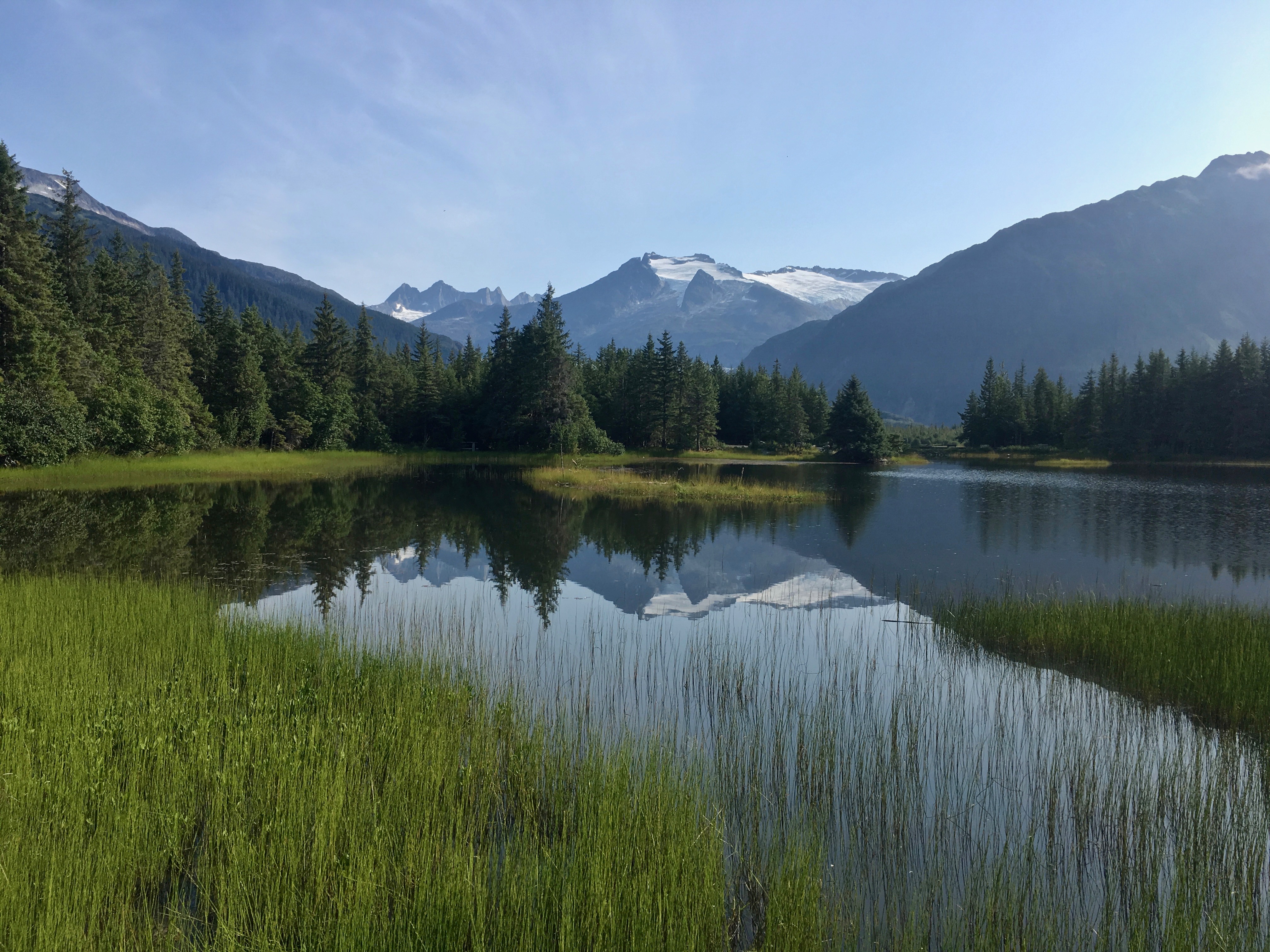
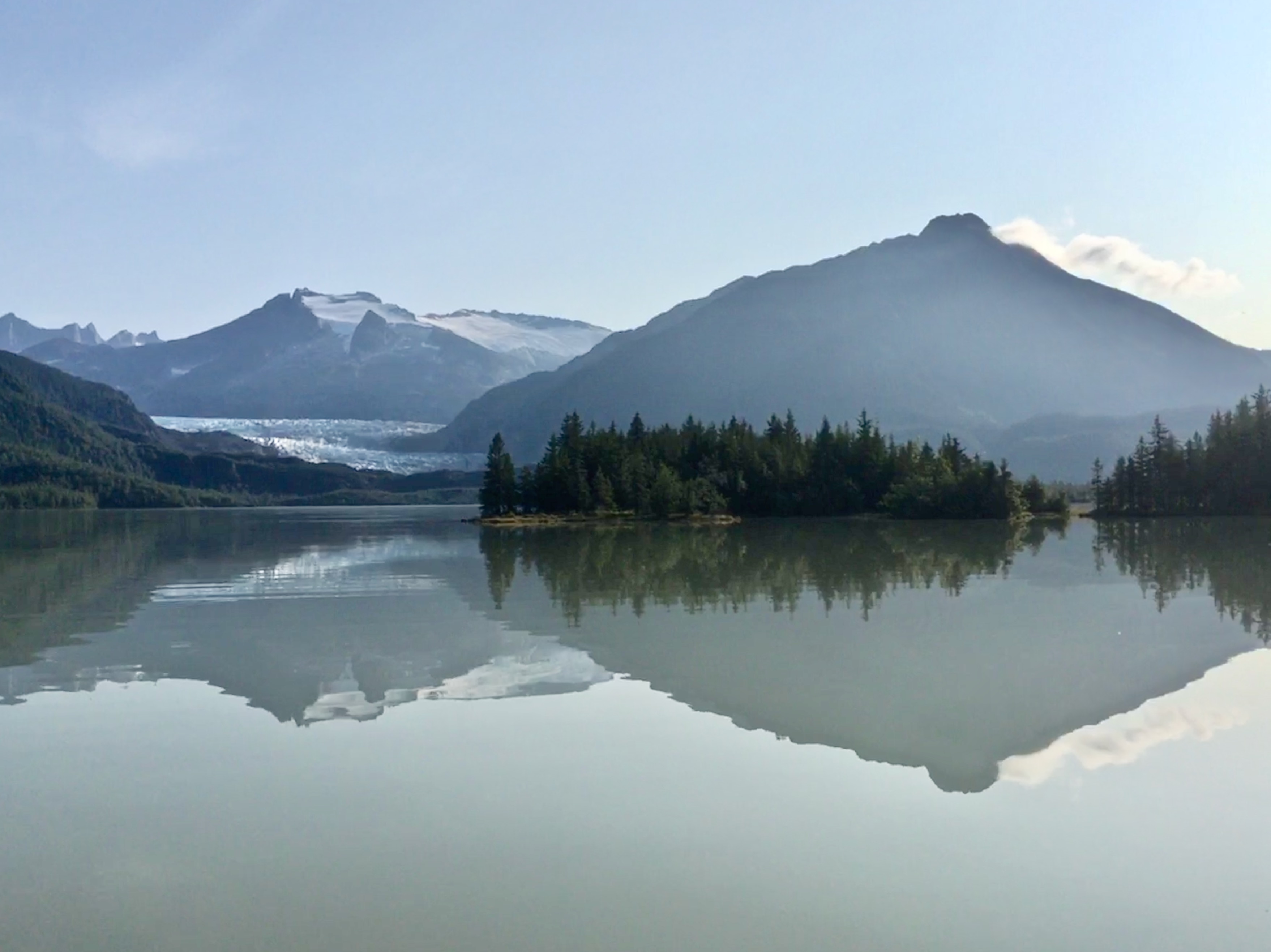
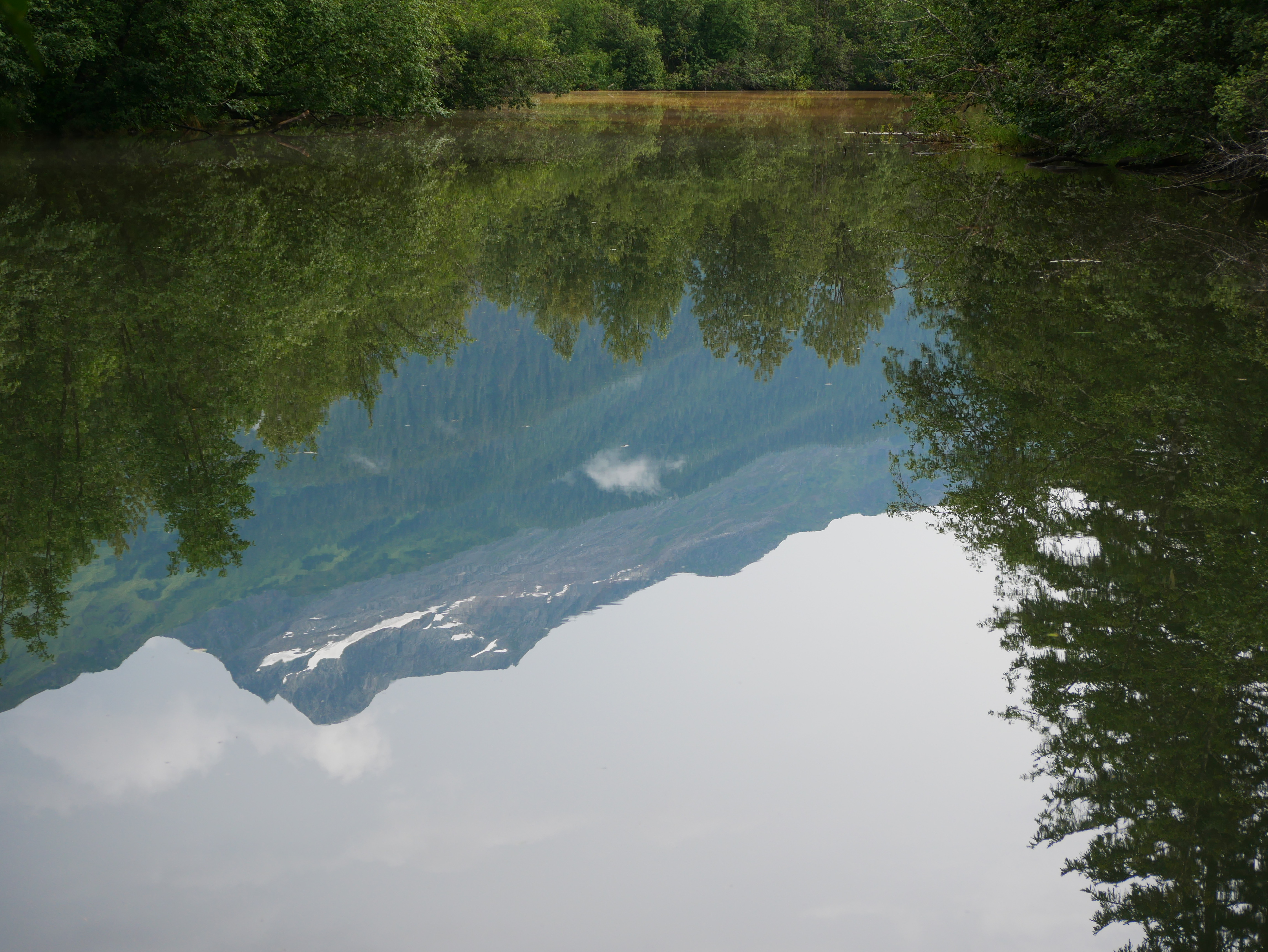
While the little dog conducts a nose survey of the beach, I try to enjoy the view of Mendenhall Glacier reflected in the calm waters of the lake. In winter light, the mountains surrounding the glacier would cut a crisp, jagged line across the blue sky. Today forest fire haze blurs their rocky details. The glacial ice manages to catch and refract light to reduce the dullness. It’s still a beautiful thing, but one robbed of drama.
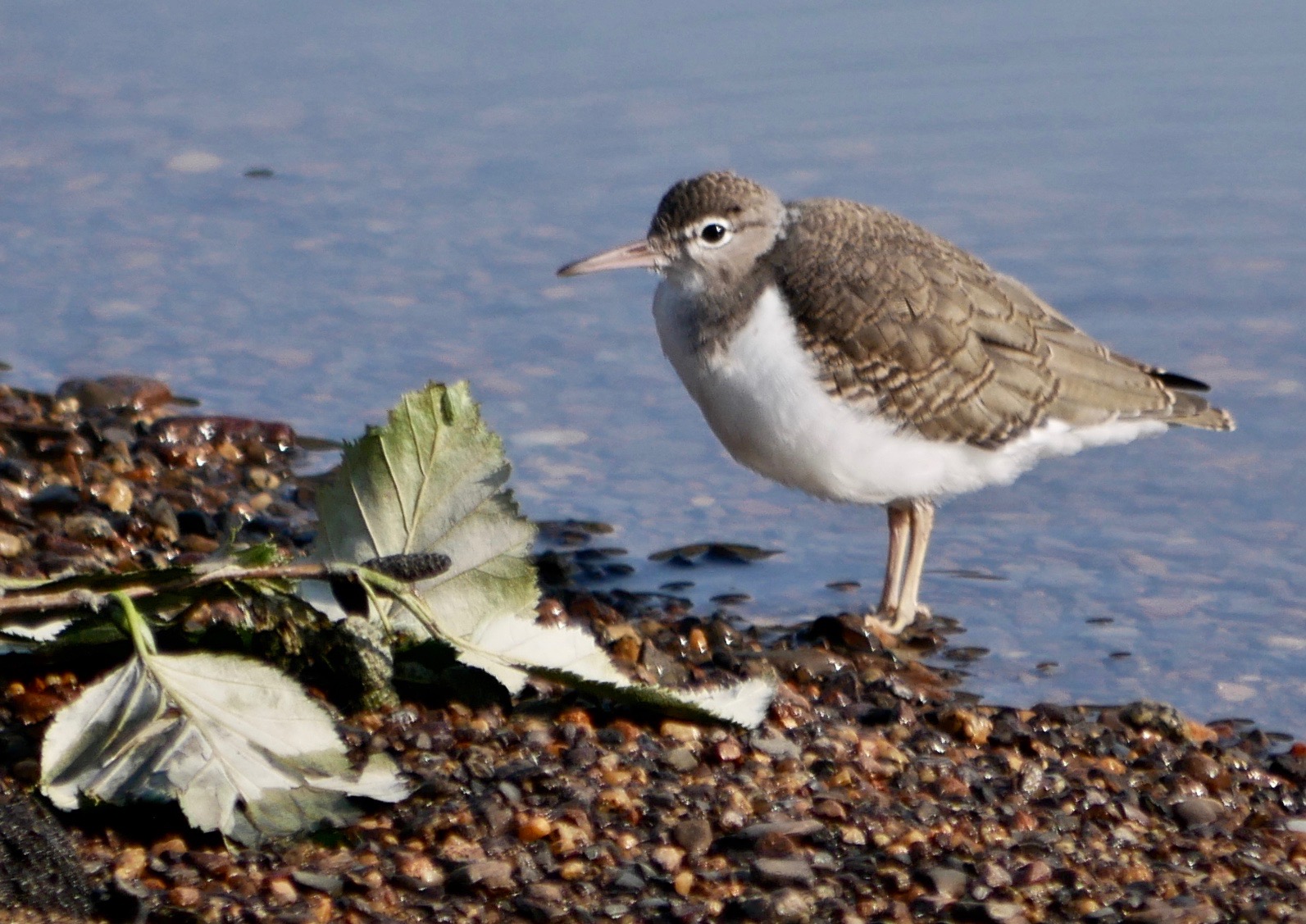
Glacier melt water has swollen the lake so we are forced to use the informal paths made by animals in the lakeside forest. I coax Aki onto tiny beaches when we find them. One is occupied by a juvenile semipalmated plover. It takes no notice of Aki. The little dog returns the favor. I wonder why one of the normally nervous plovers is content to stretch and flex in the morning sun while we watch.
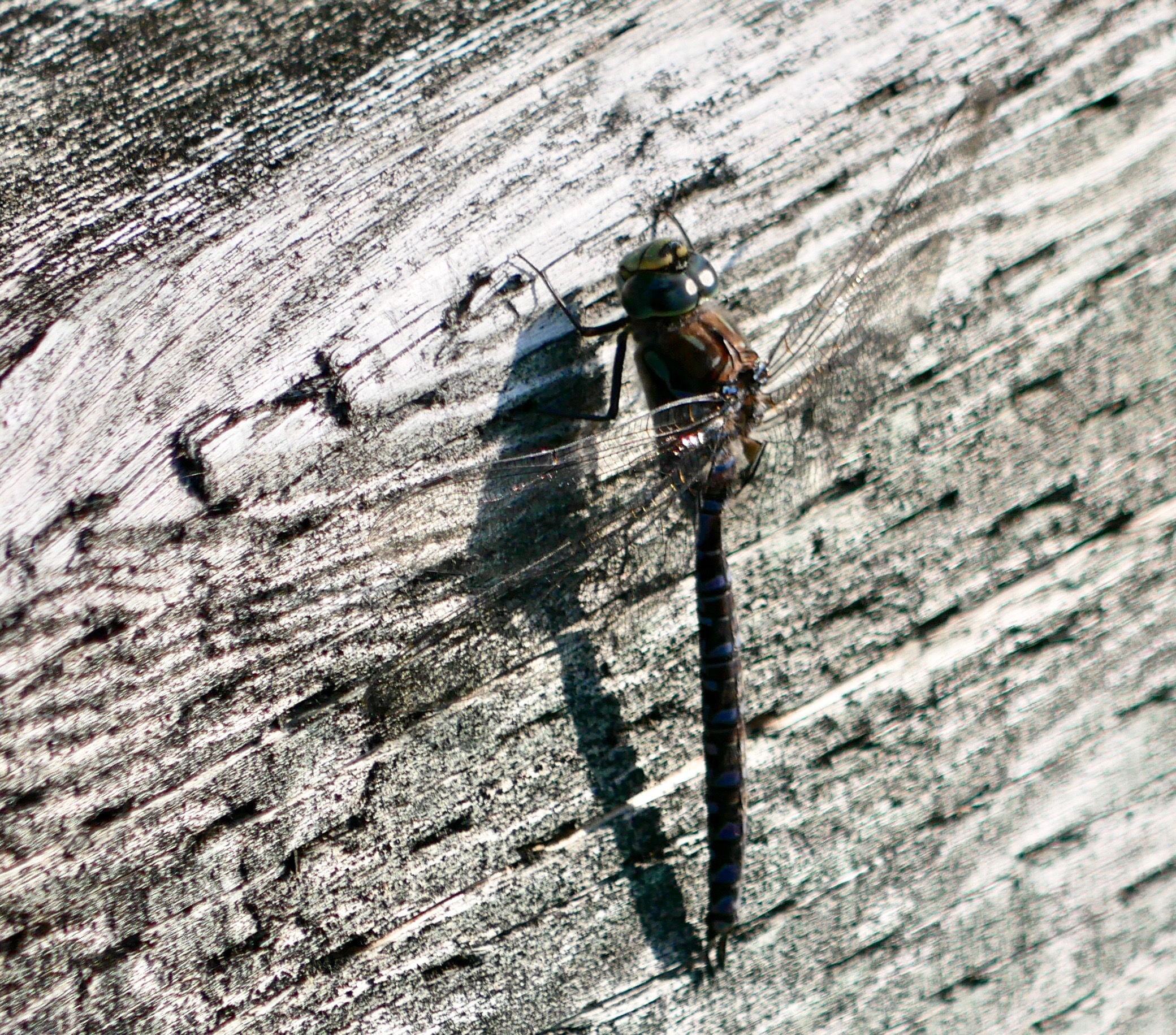
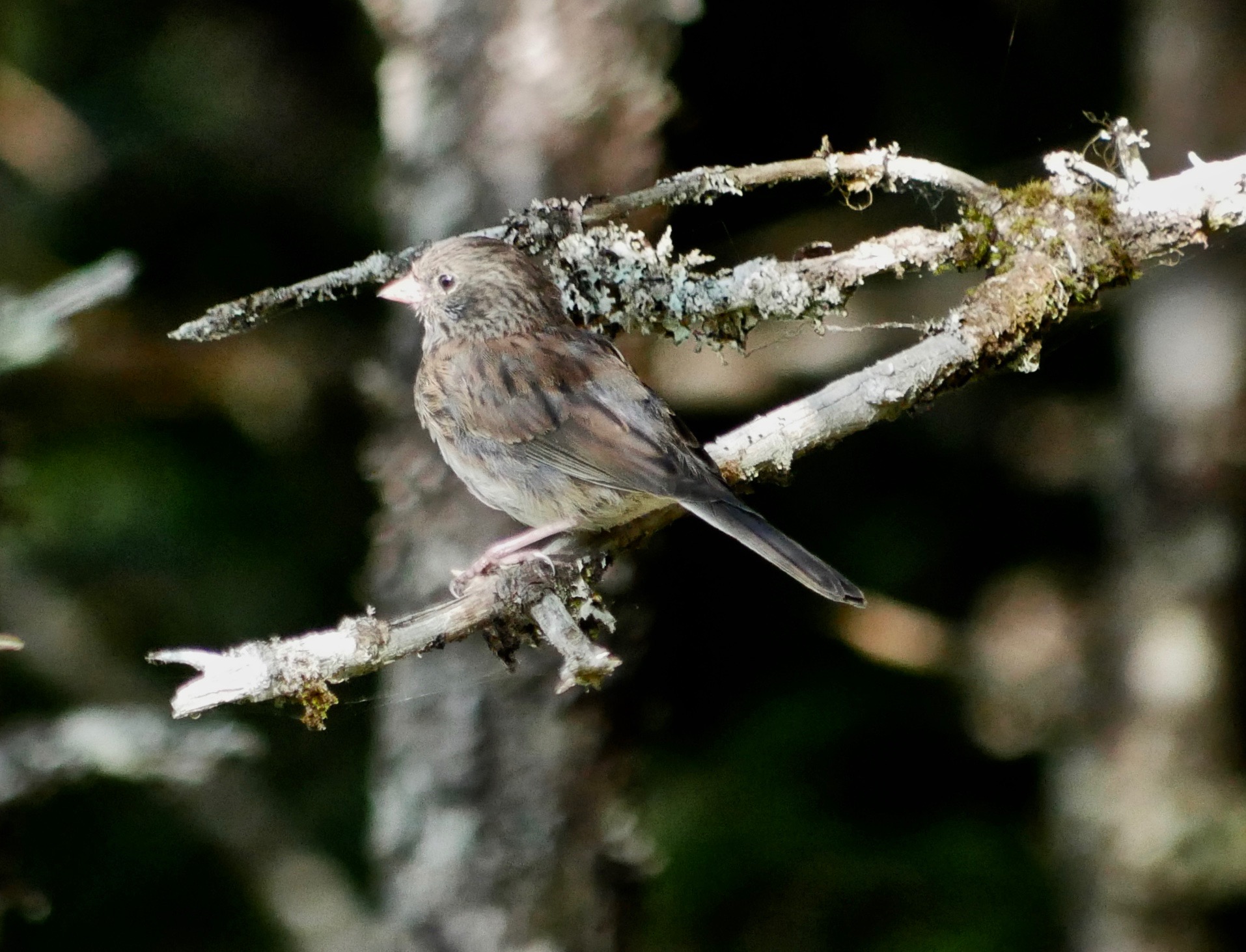
Leaving the plover, Aki and I cross a small beaver dam and reenter the forest. In minutes we are walking around a small pond. Dragonflies battle each other over the pond water. We spook a small flock of winter wrens and dark-eyed juncos. Instead of flying off to safety, the birds fly down the trail a few meters and stare at us from the trailside spruce. I can make no more sense of this behavior than I could that of the mellow plover. I have to accept my ignorance, like I have to accept the dulling effect of forest fire smoke blown here from the Yukon by prevailing winds.
Aki ignores the chum salmon splashing beneath the Fish Creek bridge. She doesn’t even flinch when one of the ten-pound fish slaps the water with its tail. While one of the chums rolls on its side and uses it tail to dig out a depression in the creek bed to hold its eggs Aki keeps her nose just millimeters from the bridge deck. She doesn’t give up on the scent until we cross the bridge and start down toward the creek mouth.
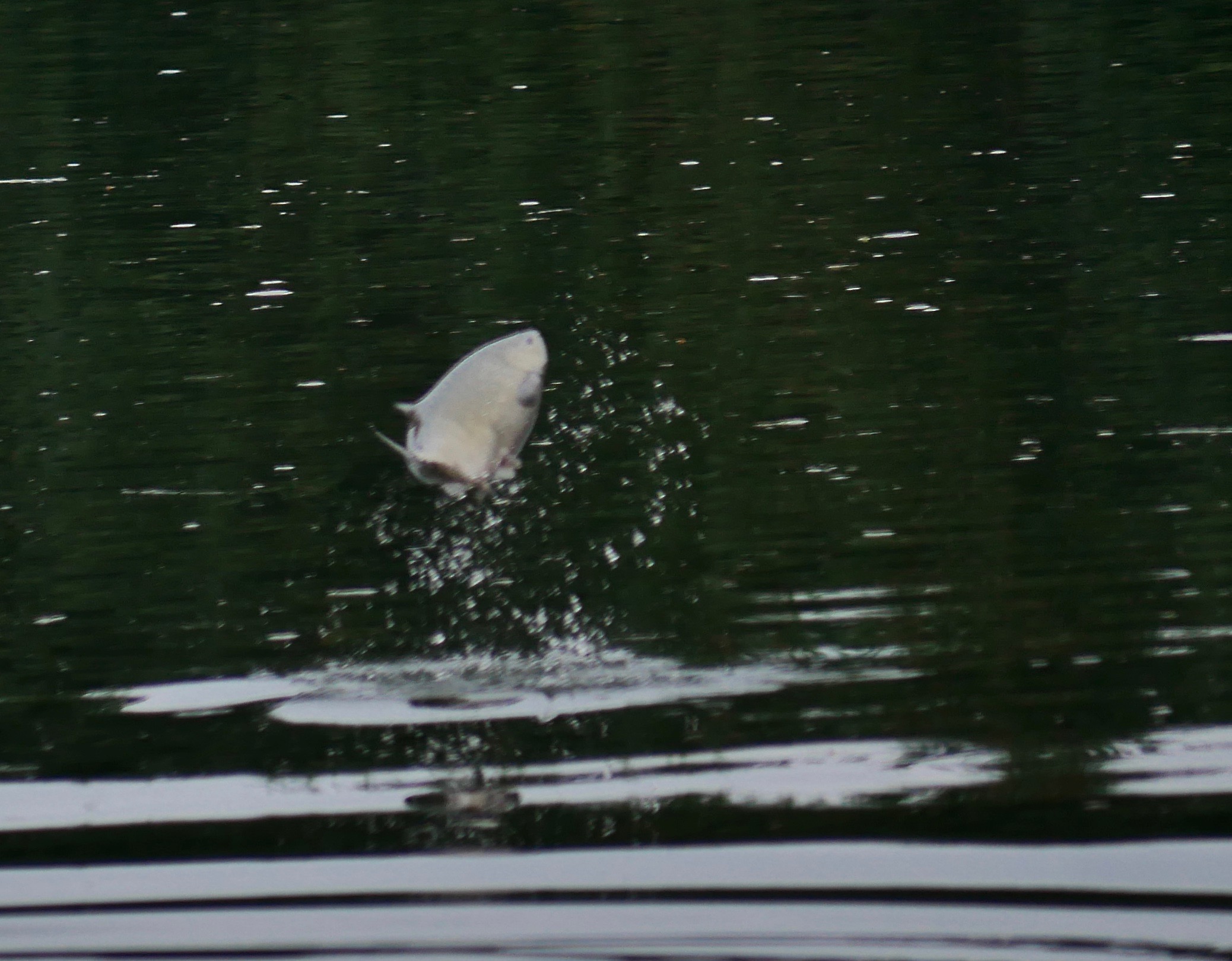
The little dog and I have kept away from the creek since the king salmon arrived. A chance to catch one of the largest of salmons drew many fishermen to the creek to snag one of the big fish. The kings have died out or moved up the creek to spawn. This is the time of the less tasty chum salmon. Only two men fish the pond when we arrive. Fresh chum salmon leap from the water. Two great blue heron watch the action from pond-side spruce trees.
The heron surprise me by leaving the safety of their roosts and glide toward a nearby pond beach. Aki ignores the long-necked birds, like she ignored the chum salmon. Instead she stares at me watching the herons. She might be silently pleading me to give the dinosaur-like birds a wide berth and return to the bridge so she can again inhale the intriguing smells on the bridge. Rather than attack the little dog or me, the herons fly a few meters down the beach. We swing into the woods, round the pond, and walk down a trail lined with aging fireweed stalks.
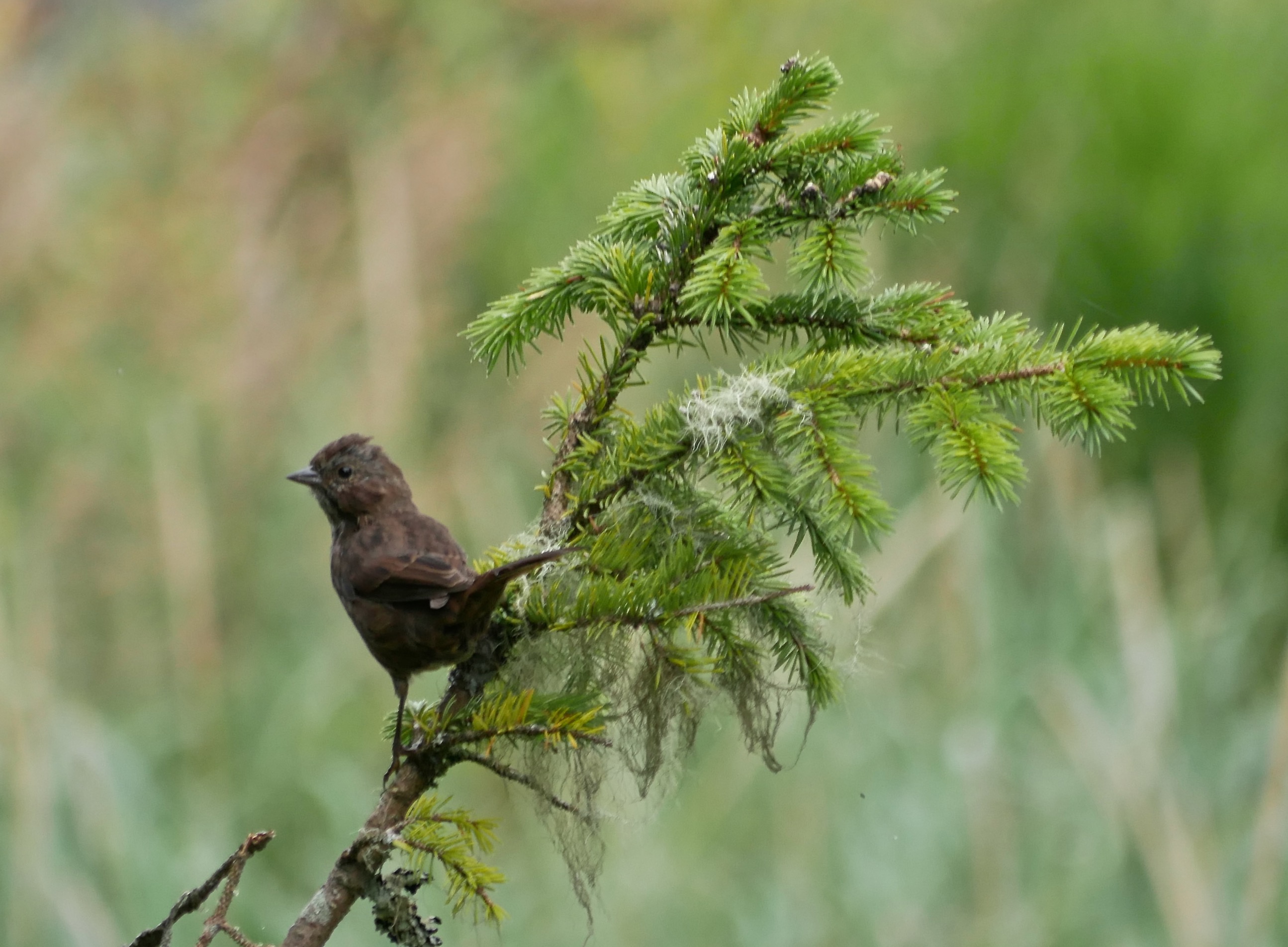
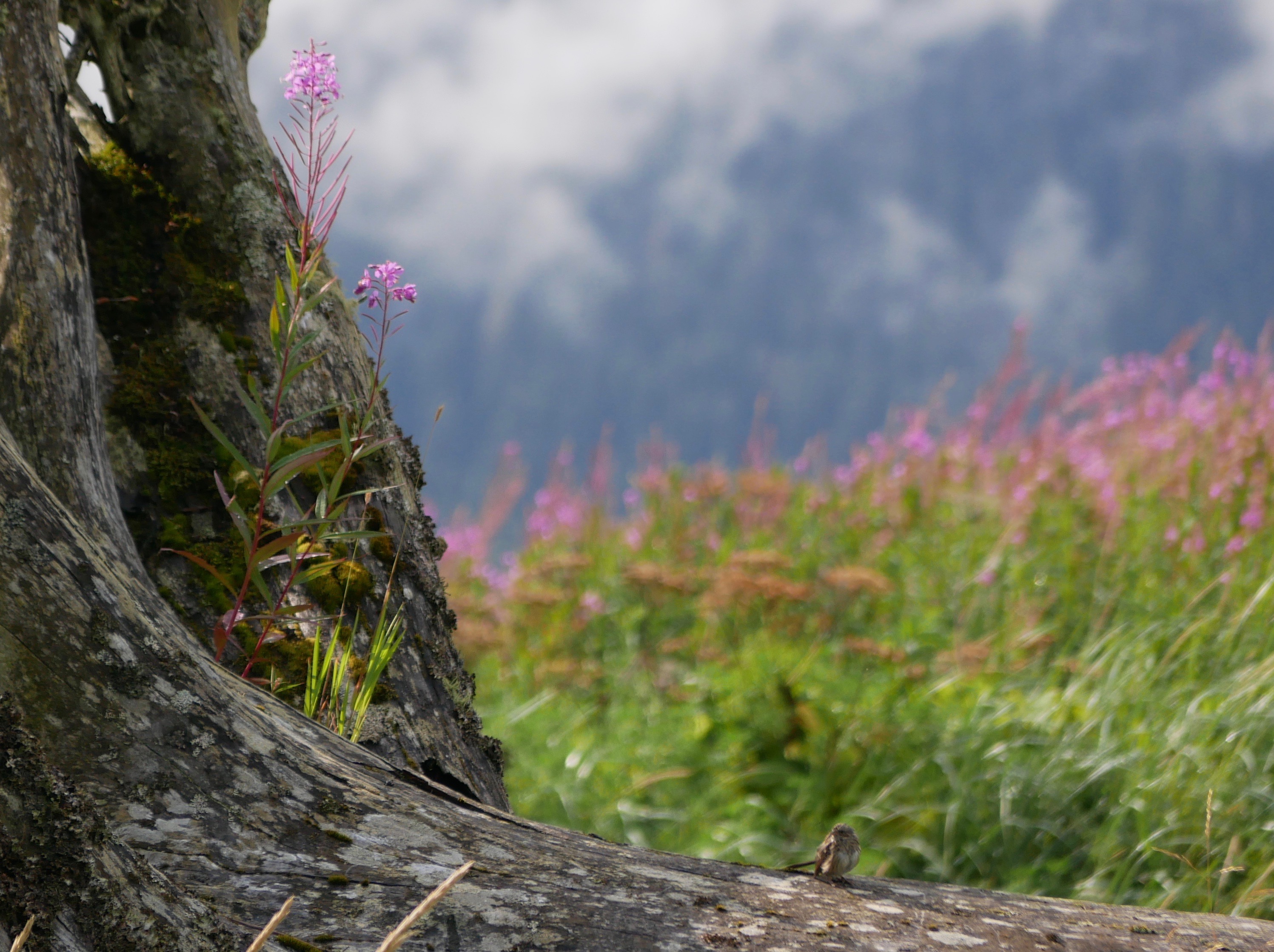
Diminutive sparrows flitter about the trail margins. One tries to land in the top of a fireweed. When the stalk bends toward the ground, the sparrow finds a more secure roost on a stunted spruce. After landing the sparrow, as plump as a stuffed toy, glares at the little poodle-mix and I. It shows less fear of us than the long-beaked herons did.
We will see dozens of sparrows bursting from the grass like grasshoppers when we reach the stream mouth. We’ll see the heron twice more. Both of them will fly into the top of a spruce tree normally occupied by bald eagles. Then they will try fishing in shallow stream rapids until a belted kingfisher harasses them into flight, a bird as small as the sparrow and just as brave.
Aki has to squint when looking at the lake. I have to screw up my eyes too. With no clouds to block out the sunlight, the lake’s surface is painfully bright. For relief. the little dog and I follow a bear trail into a patch of lakeside alders.
You would think that after our recent stint of cloudy weather, we would welcome a bright day. But it cool among the alders and the light is gentle. Looking out for bears, I don’t see a small raft of mallard hens that have tucked themselves up in the lakeside grass.
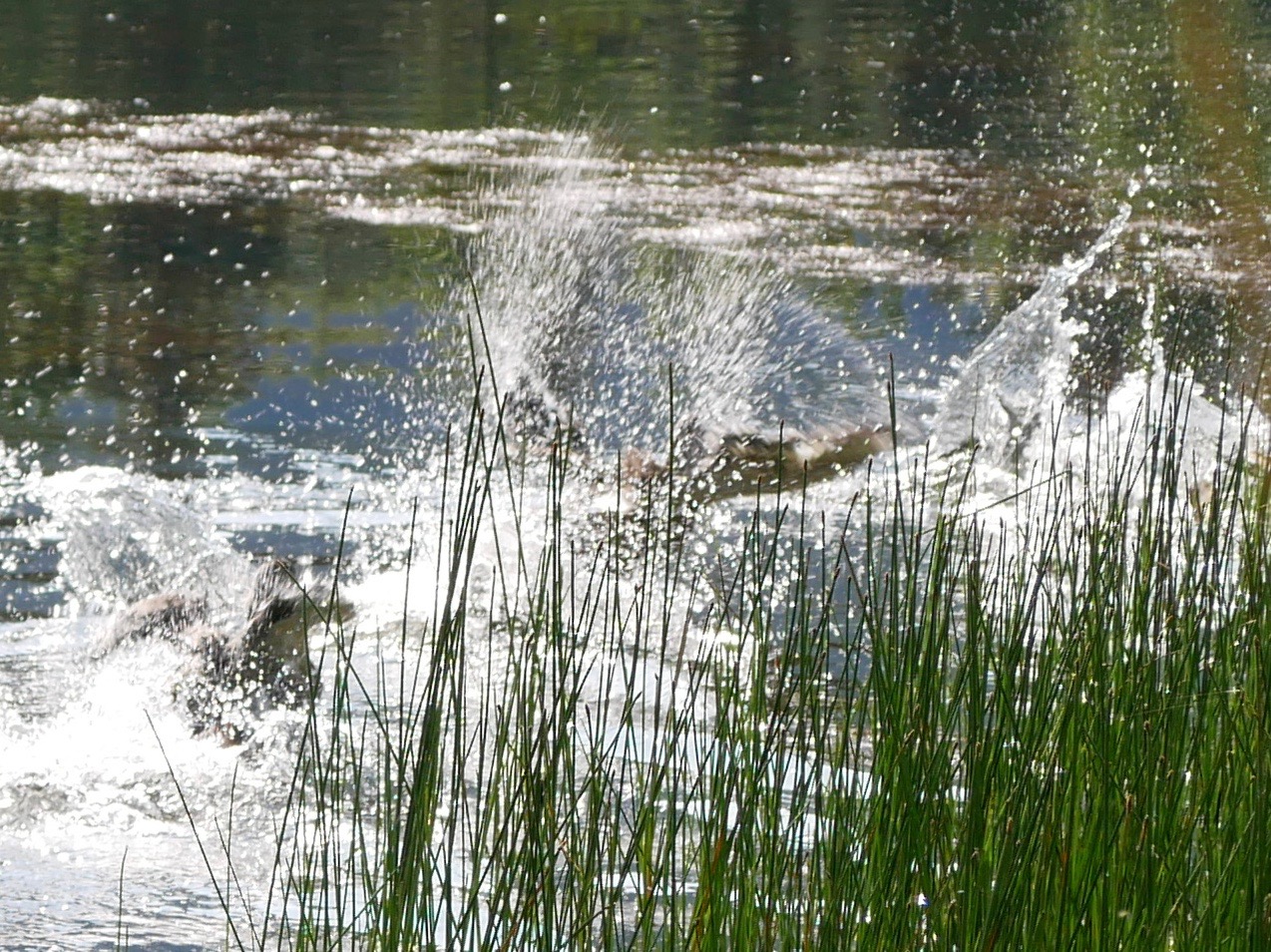
Aki and I might never have known about the mallards if I hadn’t stepped into a bog hole. I curse and the mallards crash out into the lake, splashing the water like a group of kids in a school pool.
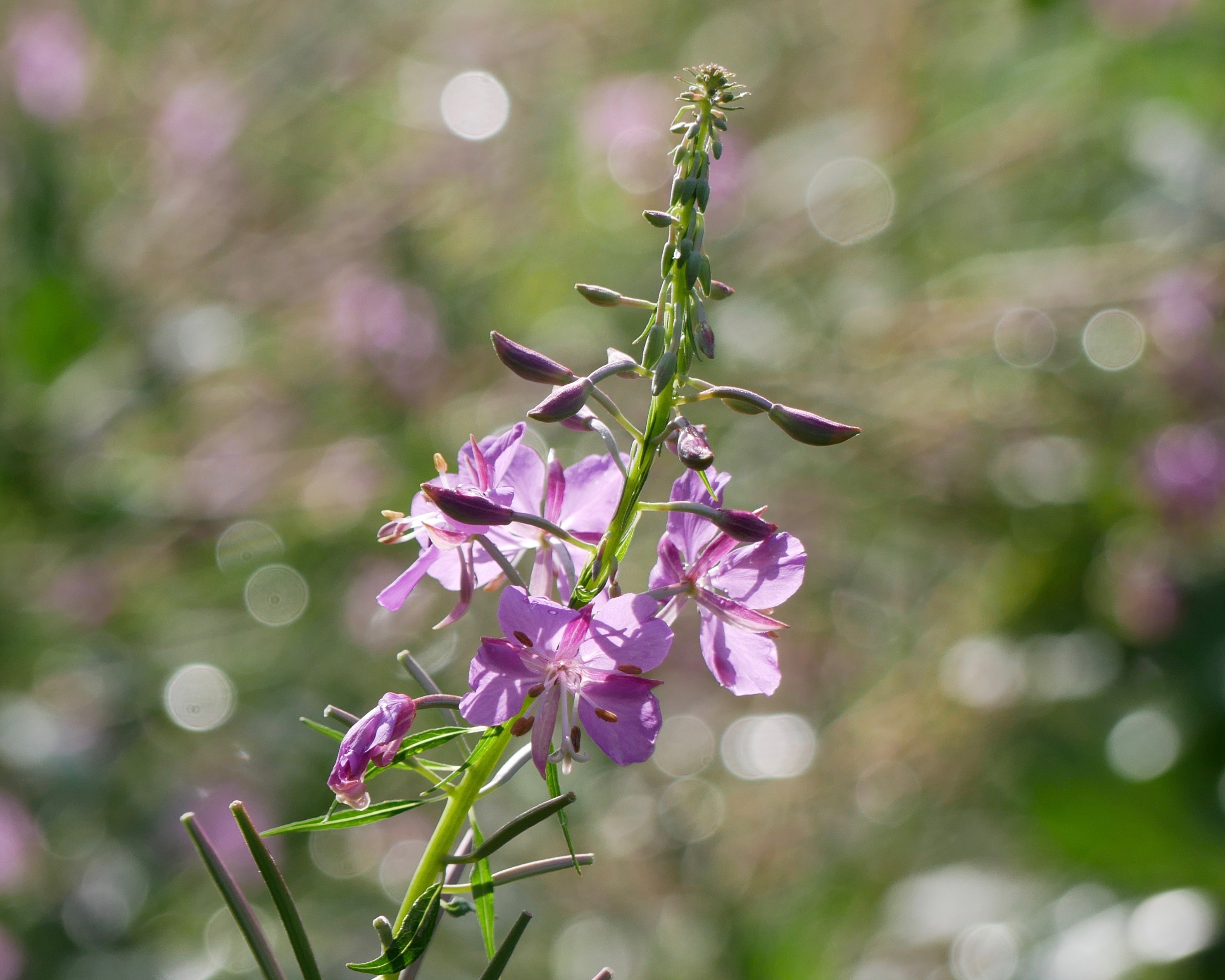
The path we take to the Mendenhall Wetlands is lined with blooming fireweed stalks, some six feet tall. Almost a month ago magenta colored followers only circled the lower parts of each stalk. After blooming, the lower flowers went to seed. Just above them, a new set of blooms opened. The upward progress continued until now all but the top five inches of the stalks have bloomed. When the topmost flower bud opens it will mark the end of our Alaskan summer.
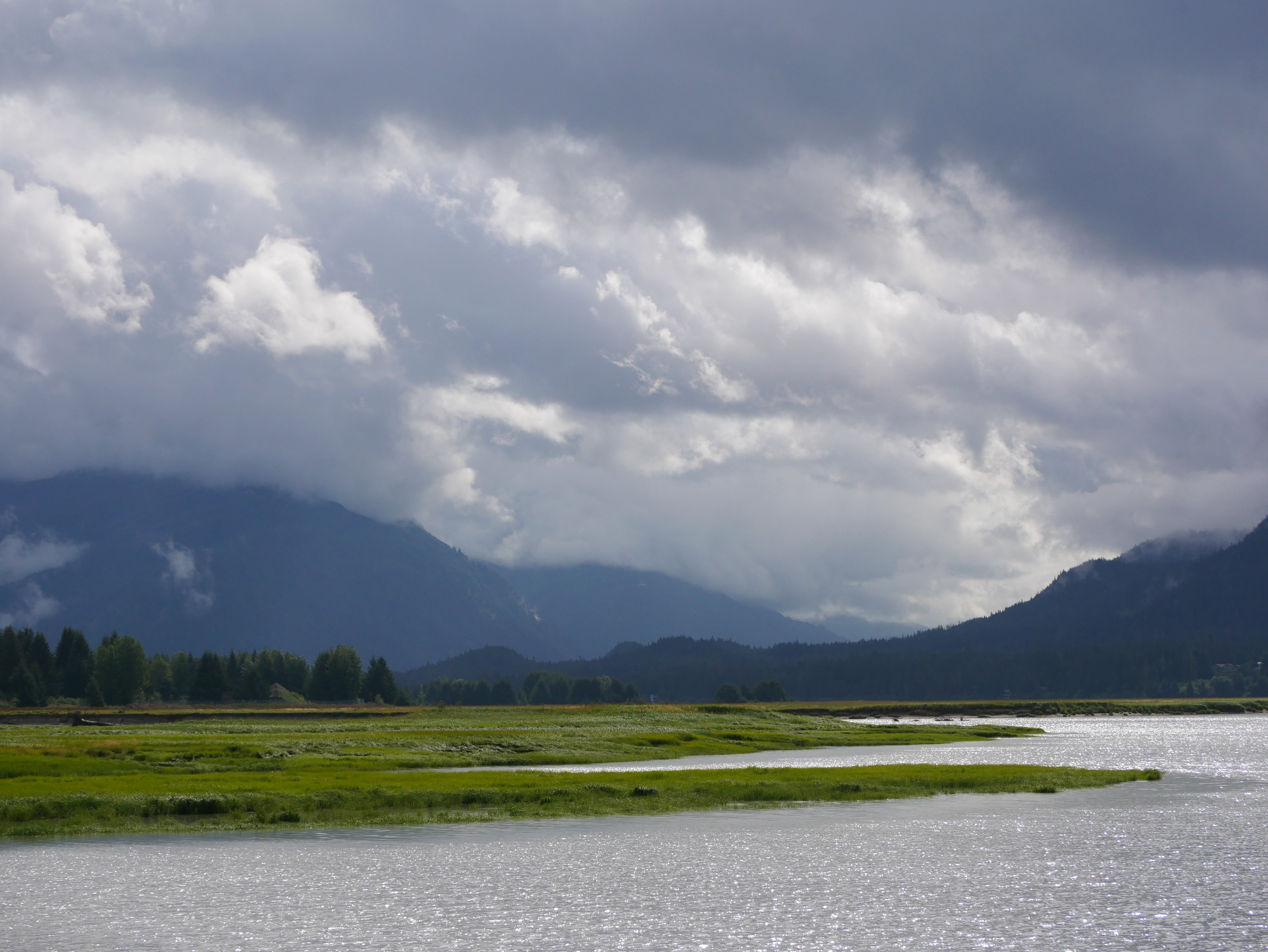
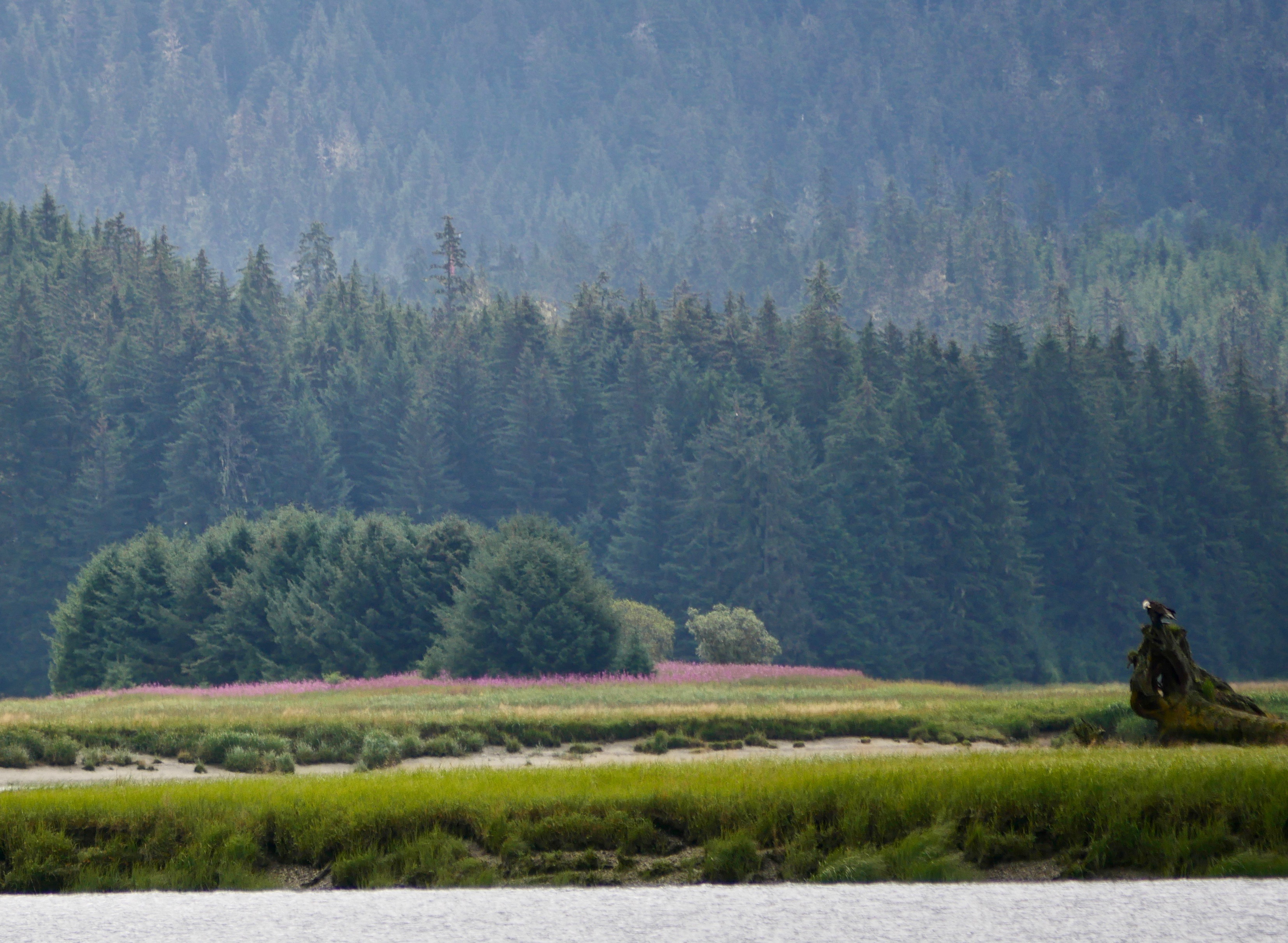
A gray quilt of clouds hangs over the wetlands when Aki and I emerge from a tunnel of willows. Fireweeds grow here as well, forming thick magenta patches on a grassy plain. Drab-colored sparrows watch us while perched in dried cow parsnip stalks. Shafts of sunlight break through the cloud canopy to brighten the yellowing grass and the surface of the Mendenhall River. It just reaches a bald eagle keeping lookout on a driftwood log.
The storm light promises downpours, rainbows, or clear blue skies. Then the cloud coalesce and we are again dominated by gray. I look for waterfowl or more eagles and only find sparrows. The bigger birds have already been flushed away by groups of Labradors and other waterdogs stretching their legs on the wetlands.
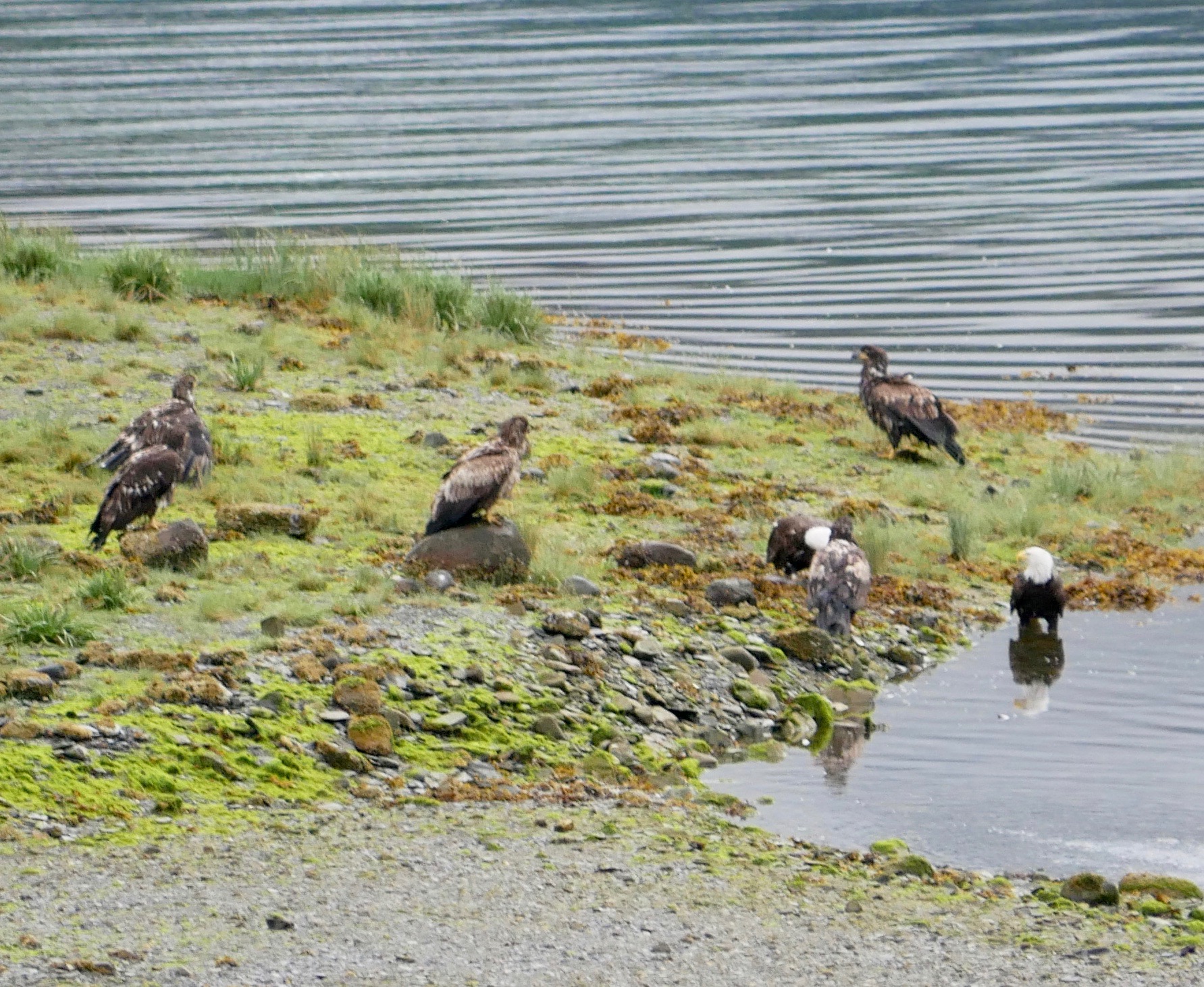
Three miles north of the Douglas Island Bridge a regiment of bald eagles waits. They will wait until the tide crests and then ebbs. Then they will search the exposed flats for salmon alive or dead. From the top of a grass-covered bank I watch the eagles preen, argue, or sleep while Aki wanders around sniffing and leaving scents for other dogs to sniff. She must becoming deaf to eagle screams.
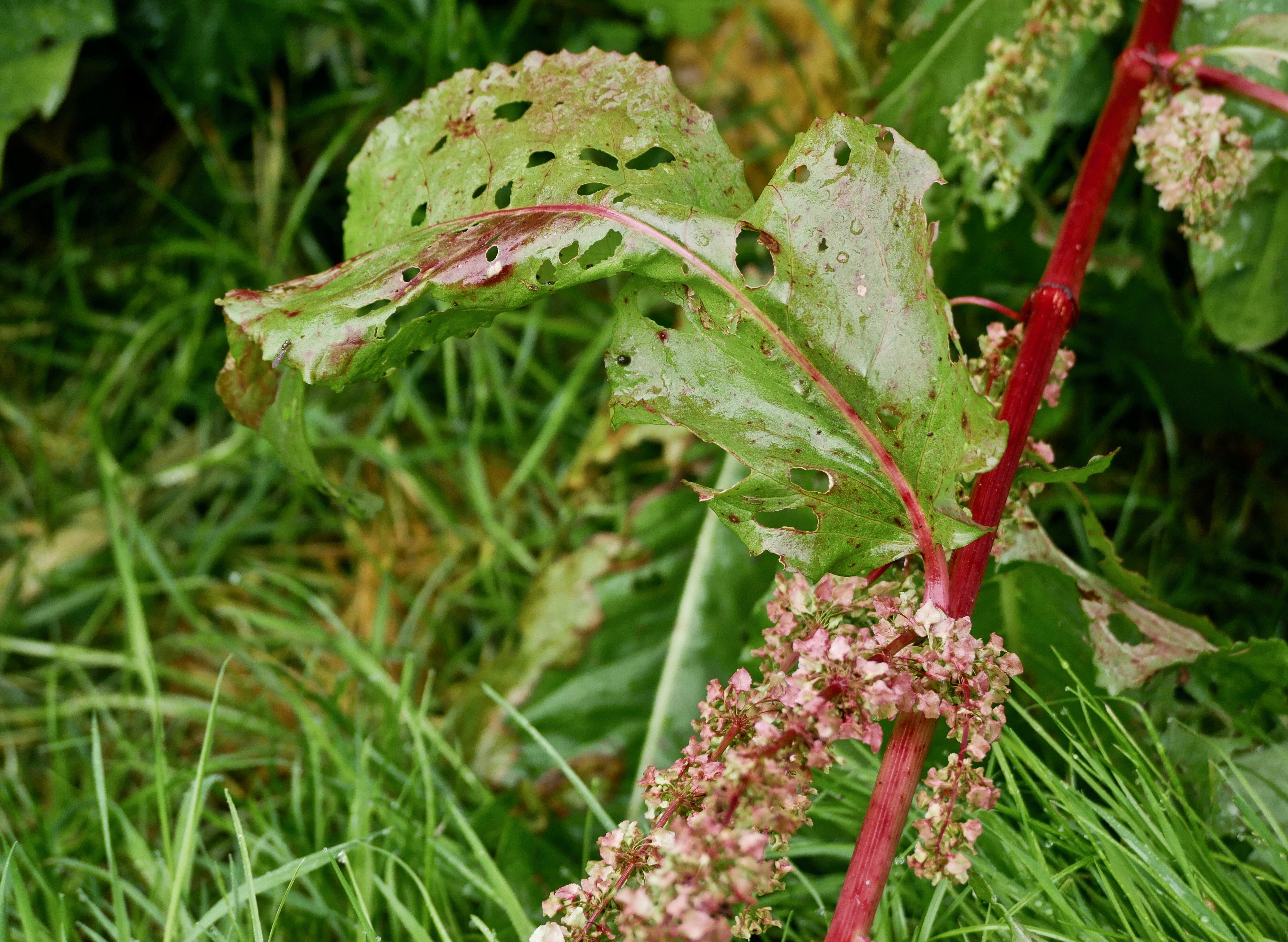
Later, we will hike down a rain forest trail to the beach, seeing evidence of a dying summer along the way. Fruit will still pull at the branches of berry bushes but many of the surrounding leaves will be fading to fall colors. The leaves of other plants will bare wounds from months of insect attacks.
We will take a beach trail lined with stalks of dead-brown cow parsnip. I will look, without success, for splashes of color among the beach grass. Gulls will sleep on offshore rocks. They, like the eagles will be waiting for the big salmon die off.
When she was a puppy, Aki would travel at least twice the distance as I on our daily walks. I would stick to the trail. She would wander back and forth across it, usually at a run. The little dog, now the age of a granddame and I have switched roles.
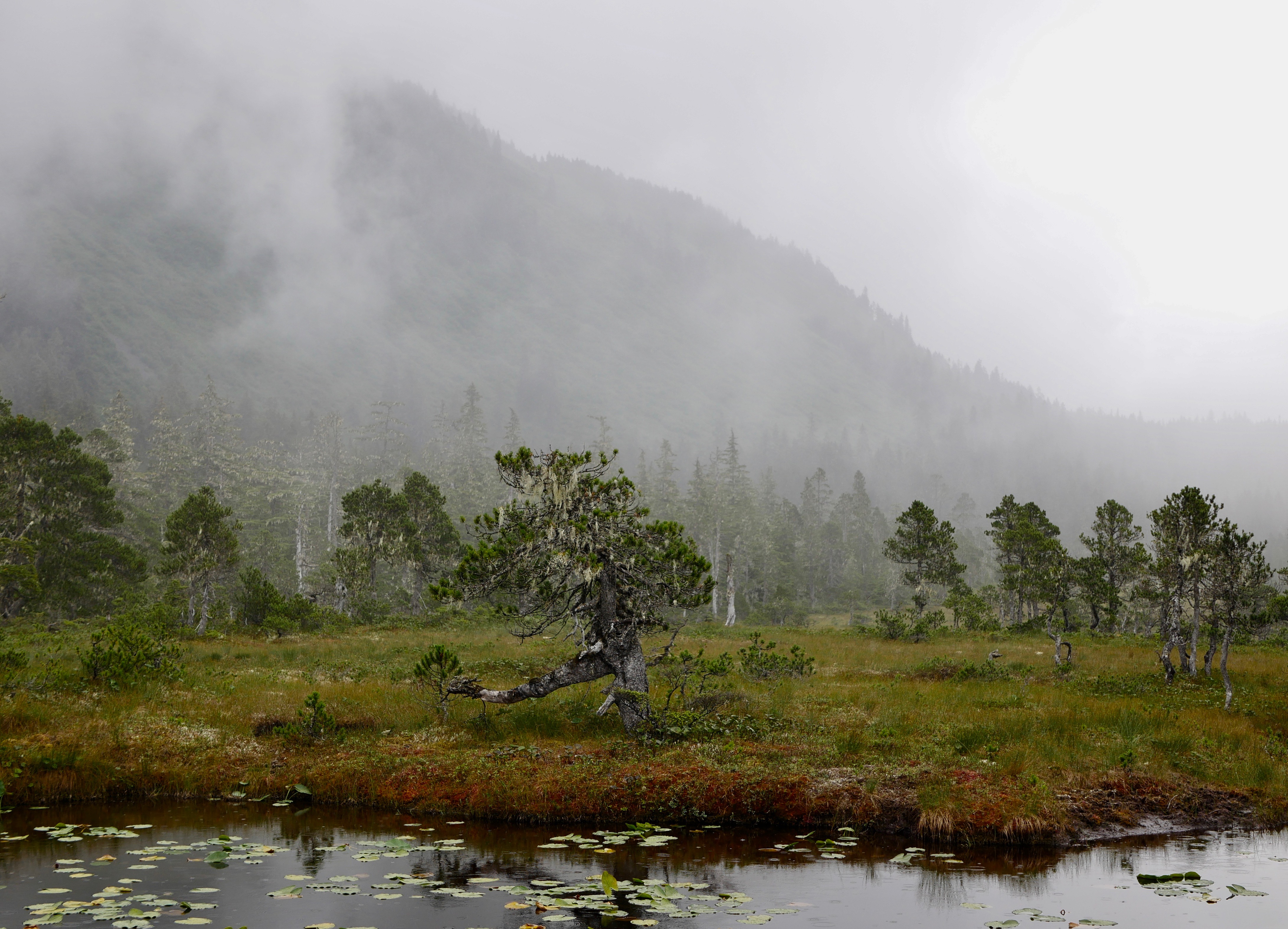
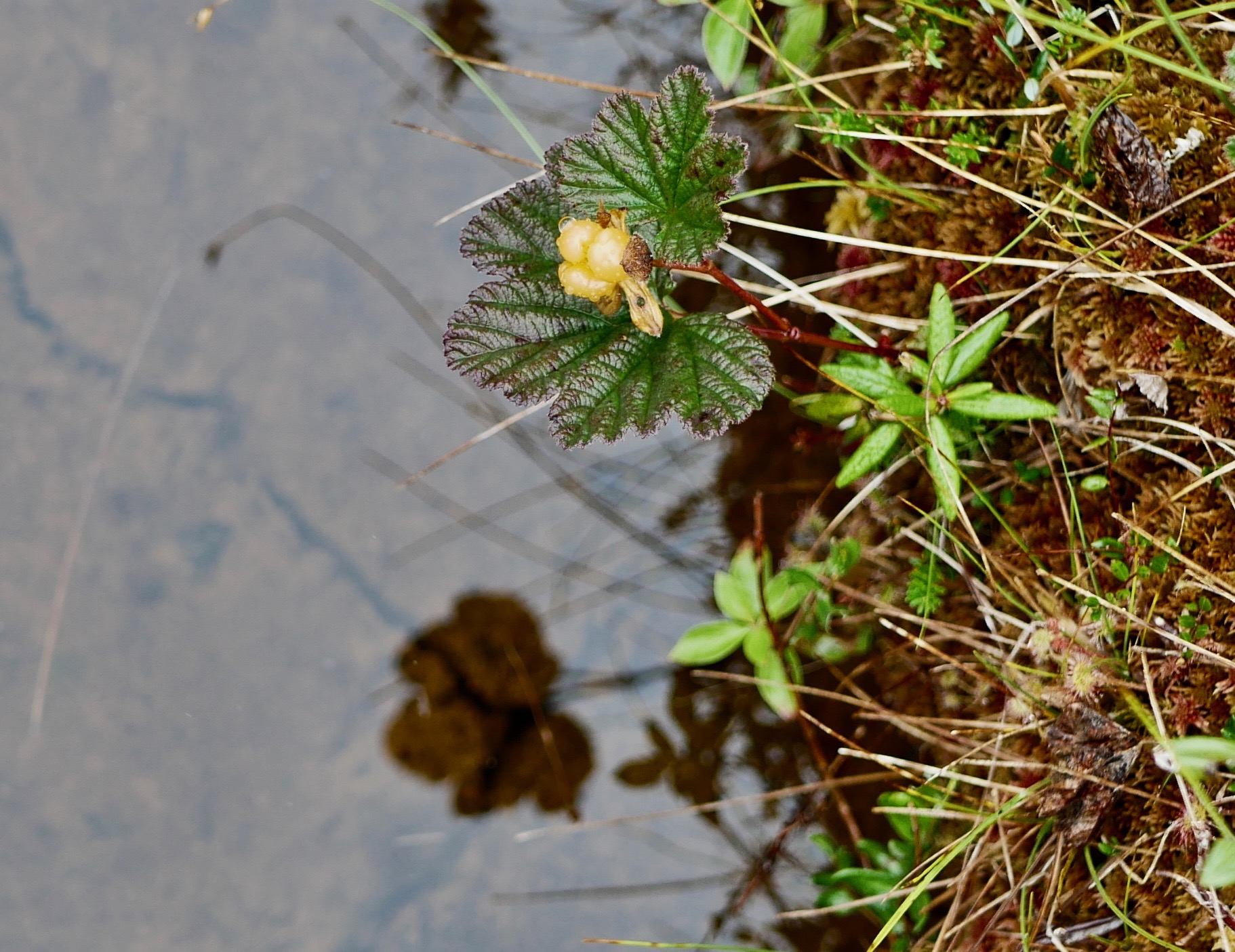
This morning Aki sticks to the trail across this mountain meadow as I wander its margins looking for cloudberries. She doesn’t follow me until the distance between us exceeds her comfort level. Nearing that point, I turn around and see her, four paws planted firmly on the proper trail, giving me a look of incongruity. She doesn’t flinch even though heavy rain is soaking into her fur. Seconds later she trots up to me just as a gang of six large dogs run head on into a family with their own dog.
Through the rain I watch the confused, very loud meeting. There is yelling, barking, more yelling, and then apologies. When things calm down, I realize that Aki has kept her eyes on me the whole time. Was she worried that I would join the fray?
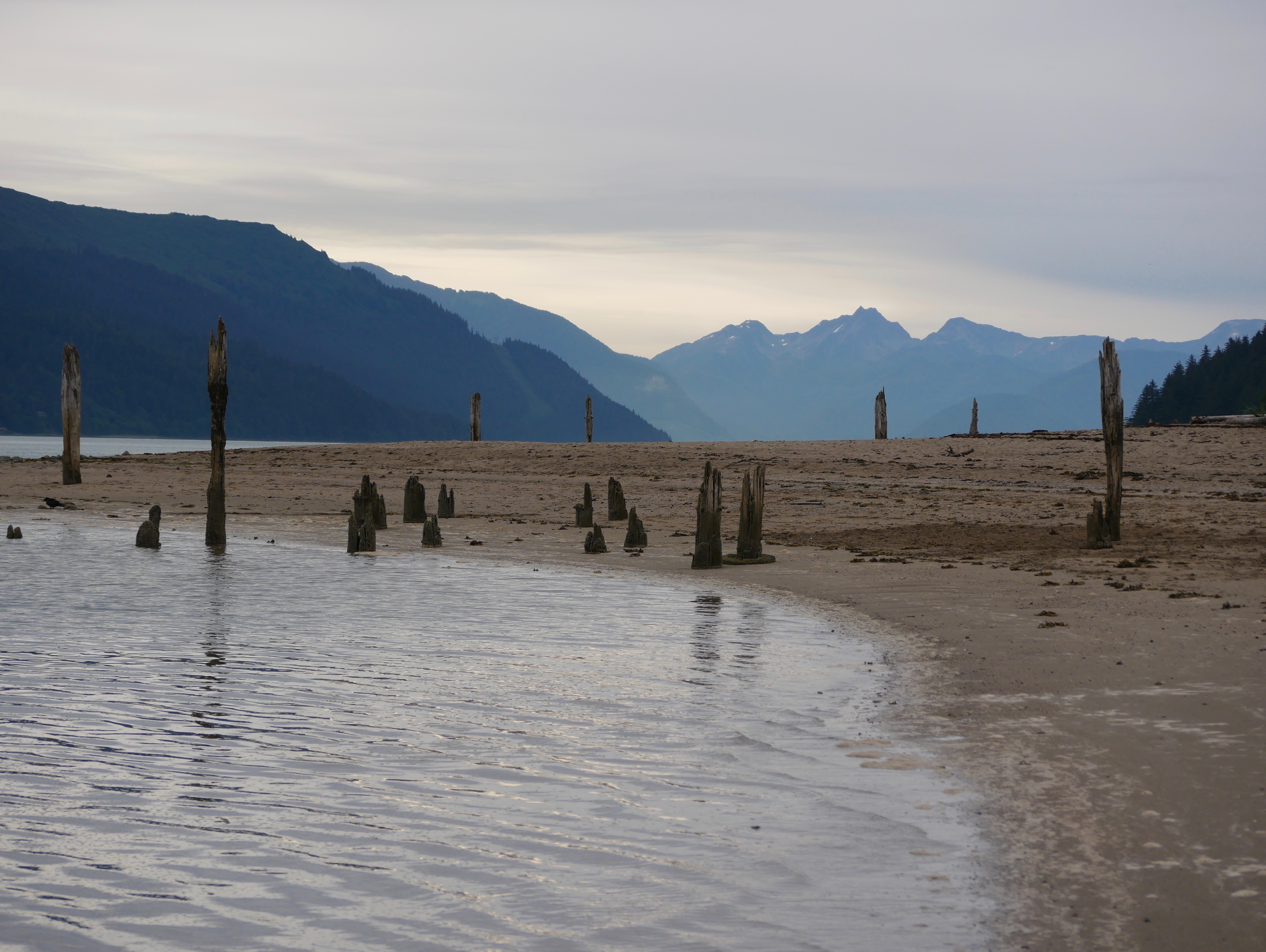
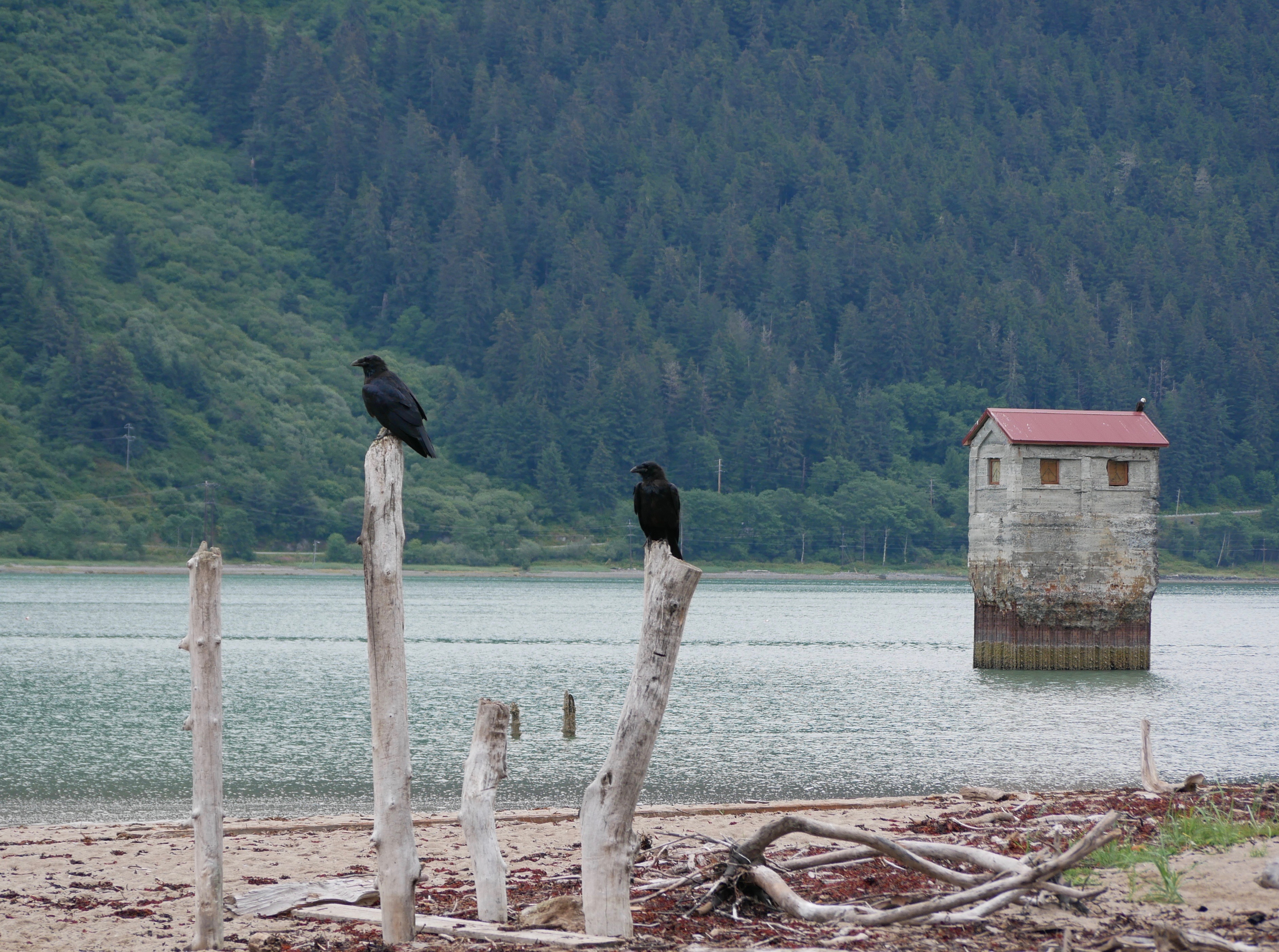
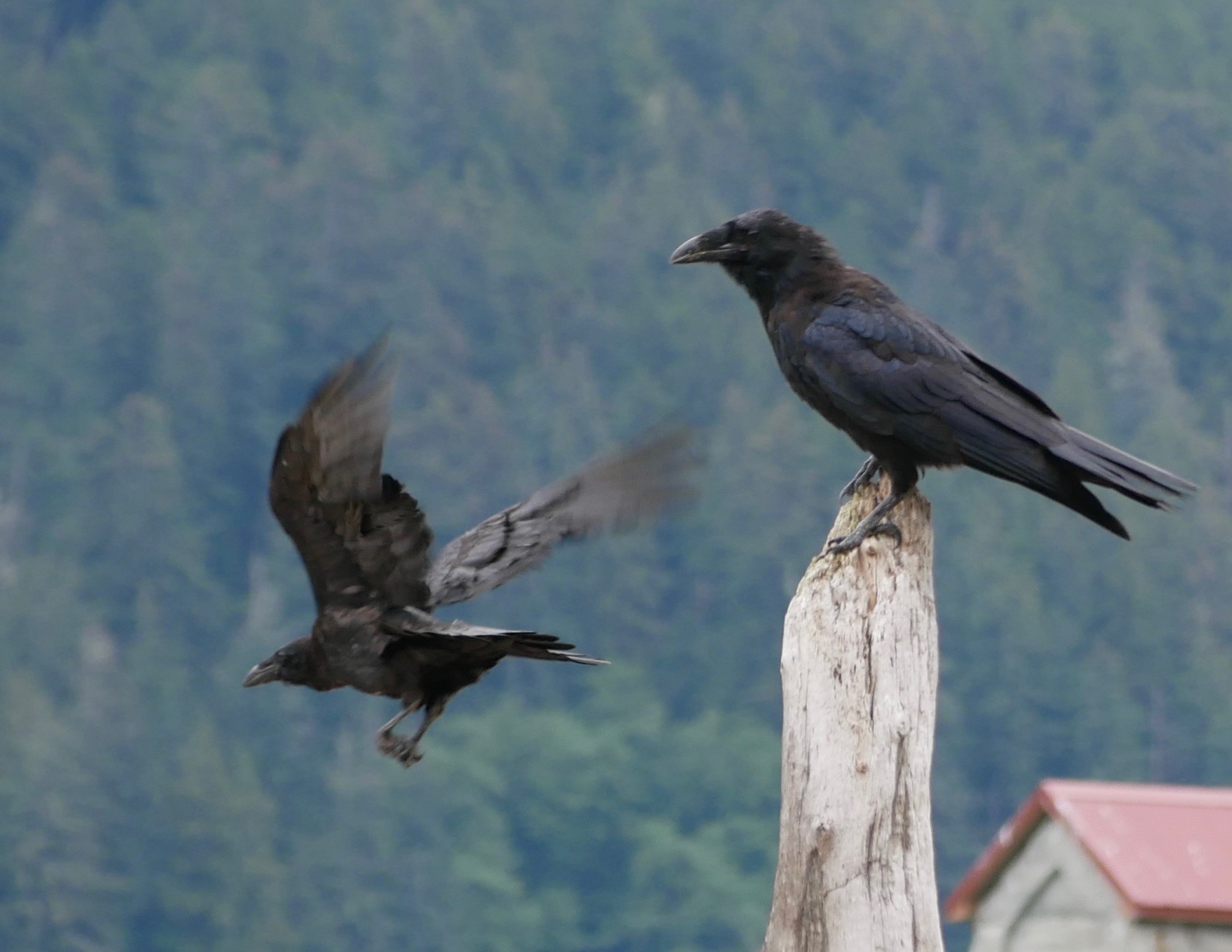
Something has drawn a cabal of ravens to Sandy Beach. A dozen of the grouchy birds sulk on the sand or on top of broken wharf pilings. The usual eagle sits on its perch on the roof of the old ventilation shaft. The eagle isn’t watching the ravens. It stares down the beach toward Marmion Island.
I follow the eagle’s gaze and spot what looks like a giant bald eagle walking along the edge of the collapsed glory hole. In the rainforest, ravens are credited in legend with having magical powers, not eagles. Are the little dog and I witnessing the start of a new legend.
As we approach a dog climbs out of the water and runs up to the big eagle. The “eagle” is only a white-haired woman wearing a coat that hangs off her body like a bell. For some reason I don’t want to approach any further. Maybe it is because with each step the woman becomes more human than bird-like. Feeling foolish, I lead Aki back into the Treadwell Woods. Then I wonder if the real eagle, sitting on top of the ventilator shaft, was also fooled.
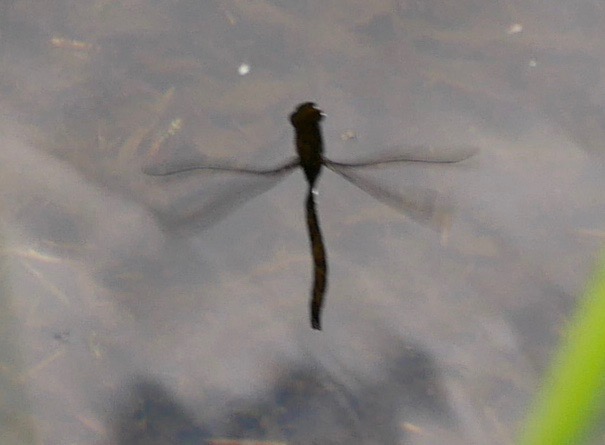
Aki stares at me while I stare at the empty surface of a lake. We are deep in the Troll Woods, a place that the little dog loves to investigate using her nose. She has already catalogued all the smells within her reach. Her patience must be about to run out. But I am not ready to leave until I get a photograph of the dragonflies.
Two of the big, four-winged insects are flying up and down the lakefront. One hovered right in front of me for a few seconds. It was gone by the time I turned on my camera. I am determined to use my camera to freeze its wings. Aki knows that I am wasting my time. I’ve tried before, without success, to photography a dragonfly in flight.
After adjusting the camera so that it will focus on quickly moving objects I turn on the “burst” feature and wait. When I spot the pair approaching, I point the camera at the lake and depress the shutter button and listen to the click-click-click-click of the shutter.
At home I will sort through forty or fifty photographs, most will show empty lake water. A few will feature blurry versions of the dragonflies. Only one will capture with some clarity, one the patrolling pair. I will be relieved that I spent a few minutes in the woods photographing high bush cranberries dripping rain.

















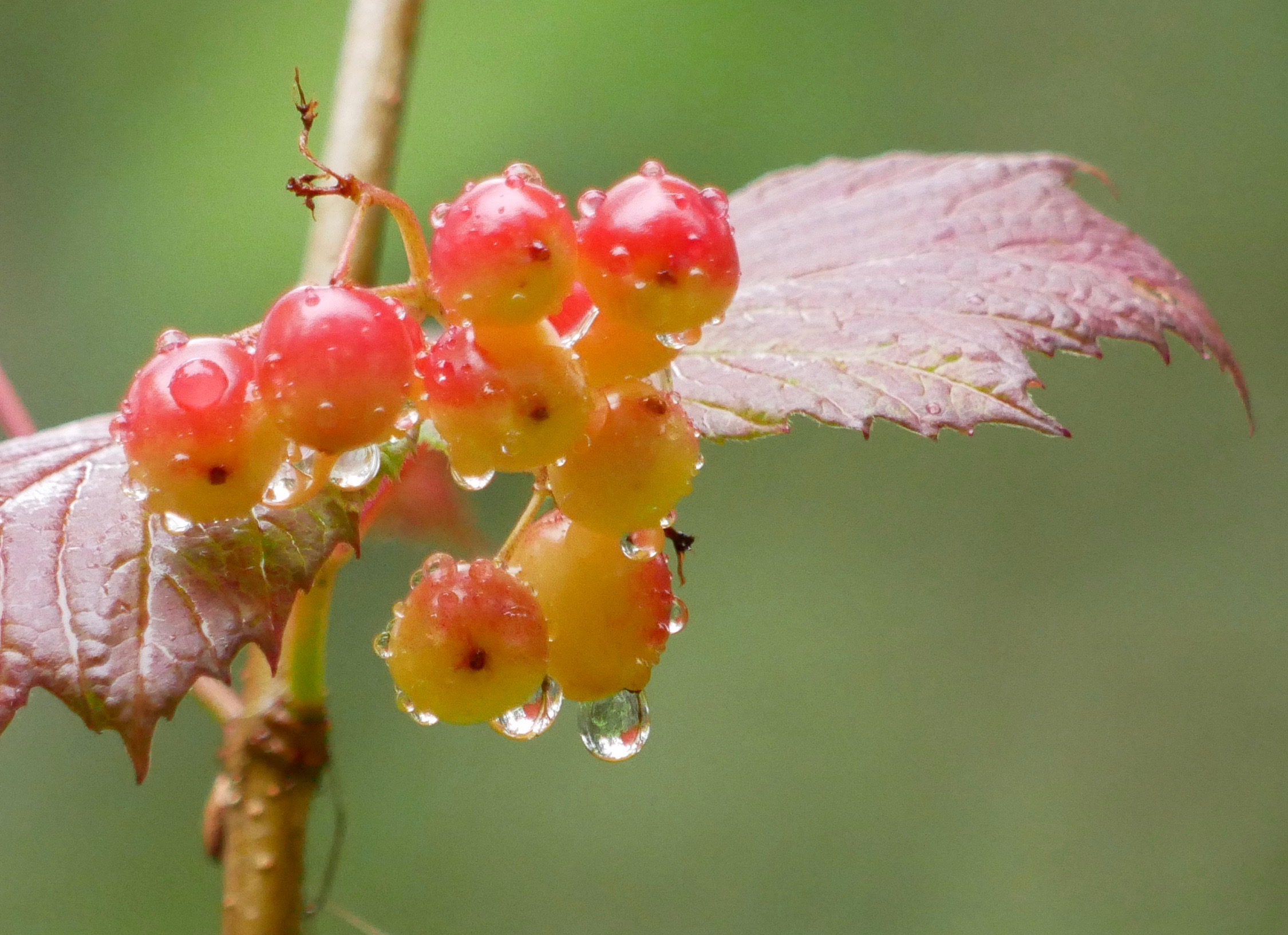
 Walking with Aki