Category Archives: Dan Branch

Patience

4

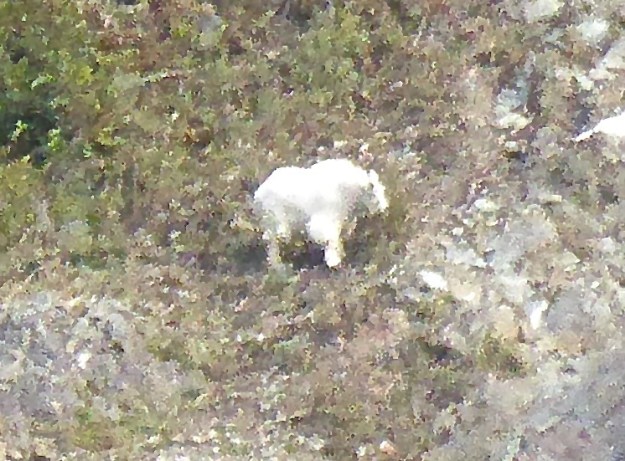
The mountain goat is a surprise. I wouldn’t have thought to look in its direction if not for how bright and white its coat is in the morning sun. Did today’s spring-like conditions trigger a memory of the new shoots it enjoyed here last April? Even though it feeds high up a flank of Mt. Juneau, the goat turns to look at us when Aki barks a welcome to an approaching dog. At this distance, my eye bests the camera I brought for recording the goat’s presence. But, much to the little dog’s annoyance, I still try many settings to capture an image I can share on this blog.

1

I put away the camera and we walk further up the Perseverance Trail. She forgives me after we round the next bend.

2


Electing to Ignore


1

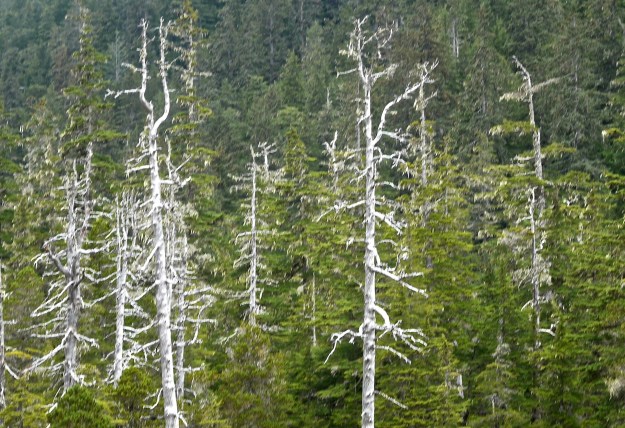
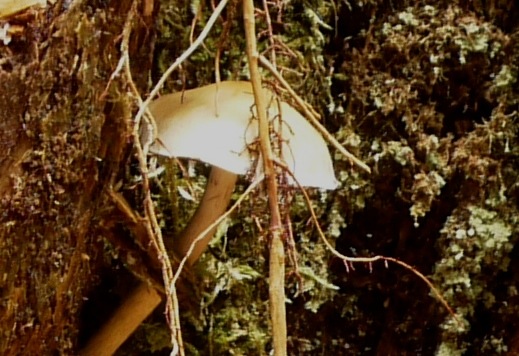
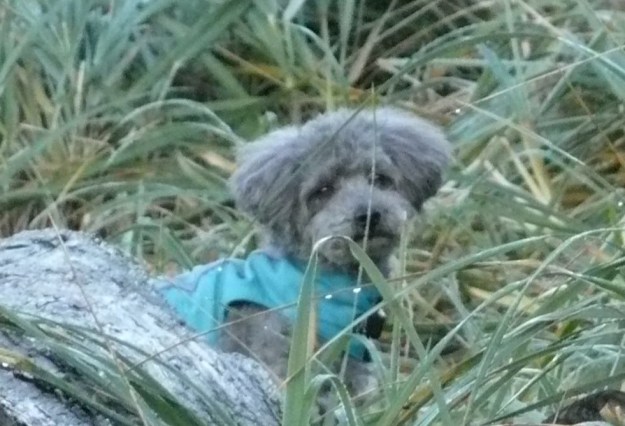
It’s Election Day in Juneau. Aki, who didn’t vote, trots down a mountain meadow trail with an “I exercised by right to vote” sticker on her head. It seems to have made her intolerant. When I stop to photograph mushrooms on a tree trunk, she whines. When I try to lead her onto the Treadwell Ditch Trail, she hesitates. When I try to engage her in a discussion about beauty, the little dog looks bored. I ignore her mood and point to a wall of dead-white hemlock snags and say, “Bugs, rain, and wind have stripped these old trees bare and they still have more beauty than the live ones that surround them.” Aki turns away, not prepared to admit that when alive, the trees’ sparse foliage hid their lovely shapes.

2

The Harvest

2

Aki, her other human, and I are on a gathering trip. We drive out to False Outer Point beach to fill five gallon buckets with rockweed (Bladder Wrack) for covering our garden’s perennials. The little dog chases her Frisbee as her humans fill the buckets. She should be safe as the beach is off the roadway and far from any bears.
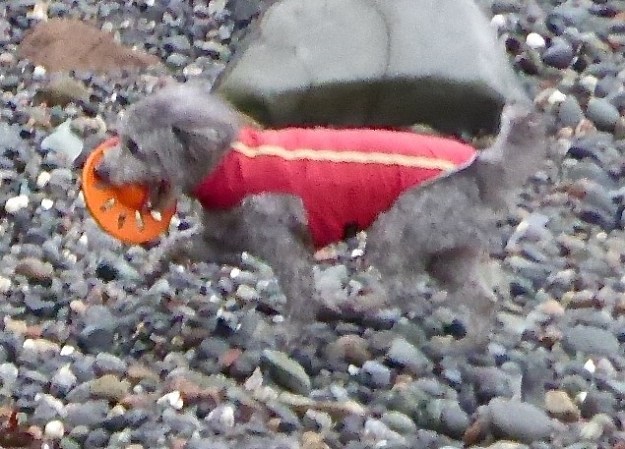
1With head down, I grab clumps of the burnt sienna-colored rockweed, shake out any pebbles or sticks, and drop the handfuls into a bucket. Aki interrupts often with demands that I throw her Frisbee. Without looking up I toss it toward the water and return to work. When I take a break to stretch, three bald eagles are flying low over the beach from where, seconds earlier, Aki retrieved her Frisbee. Maybe the big birds dove on a washed-up salmon carcass. Maybe they want to chase the Frisbee. Maybe they want to see how a ten-pound poodle tastes.

4

We move quickly to fill the remaining buckets and haul them to the car. In minutes we start phase two—lingonberry picking. Many years before Aki, we lived in a tundra town in Western Alaska. Each autumn, we’d pick gallons of lingonberries for jams, bake goods, liqueur, and only once—catsup. The plants grow here in the rainforest but until this year, we have rarely seen them produce berries. Last week I stumbled on this muskeg meadow with clumps of wine-red berries pulling their diminutive plants into meadow moss. The hard little spheres plunk when they hit the bottom of my berry bucket—a cut down, half-gallon soy sauce container. After an hour of picking the plunking stops as berries already in the bucket cushion the newly harvested ones.

3

Picking the low growing berries keeps out noses near the fragrant ground where we can smell the spicy smell of Labrador tea. Biting into a lingonberry releases the same smell, whether harvested on a rainforest bog meadow or on the tundra. None of the rain forest blue berries taste like a tundra berry. But the lingonberries we harvest today deliver the same flavor and smell as those I remember harvesting from a Kuskokwim River bluff after the first frost.
What’s the Deal?

2

It’s early morning when we stop to look at Mendenhall Glacier from the North Douglas boat ramp. Pre-dawn sunlight touches the tops of the Mendenhall Towers but not the stream of ice. Across Lynn Canal, the same light hits the Chilkat Mountains with enough strength to wipe out any detail. Usually morning light clarifies rather than obscures landscapes. Has something upset the laws of nature? Aki is no help and the two stellar sea lions practicing synchronized swimming just off shore only growl.

1


We press on to the Outer Point Trail and take it through an old growth forest to the beach. Only squirrels break the silence until we walk close enough to the shore to hear the complaints of gulls. It’s low tide so all the birds are on the feed except a monstrous murder of crows roosted in the trees on Shaman Island. They mutter like witnesses at an execution.

4

We could walk to the island on a spit only exposed by the lowest tides. Maybe that’s why the crows complain. But that doesn’t explain why the scooters and mallards panic into the air and circle while the gulls feed. I look for the eagle that we passed under to reach the spit and find it gone.

3

Beauty’s Last Stand

1

As she trots down the trail, Aki’s paws make crisp alder leaves crackle and pop. It’s a happy song that matches her mood. She has already played with several dogs and chased a cheeky squirrel. Surprisingly warm temperatures and sunshine have almost lifted my mood to match her’s. But tranforming leaves add a pinch of sadness to the walk. Beautiful with sunlight-enhanced reds, yellows, and gold, their edges already crumble to a winter brown. They remind me that we must pass through the dull, wet days of late fall before being brightened by winter snow.

2

Time to Look for Wild Clues

1

Once a week, when Aki and I walk a route through downtown Juneau, the little dog transforms into a policewoman patrolling her beat. This morning, as sunlight brightens the clouds over Douglas Island, she insists on a full investigation of a patch of pavement on Chicken Ridge. It could be urine spread by a favorite dog friend, or scent left by the bear that raided a neighbor’s garbage. It might even be the aroma of popcorn crumbs scattered by one of the neighborhood’s raven or the faint musk of a passing deer. Is this town, the state’s capital, uniquely blessed to have so many wild animals within its urban core? Or do the little dog and I just have more time than other city dwellers to notice?

2

Why are We Still Here?

3

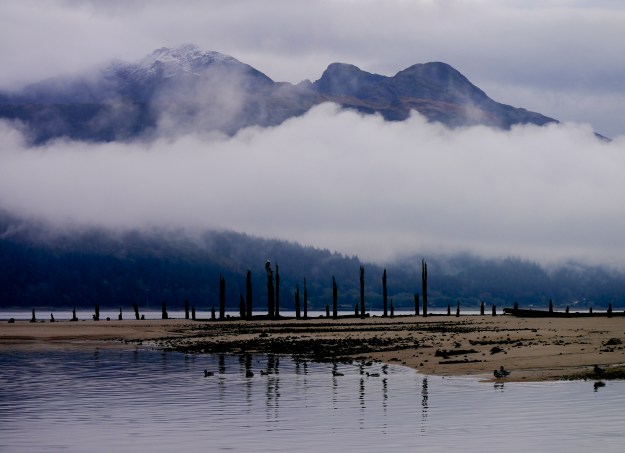
In pre-dawn light, it’s hard to distinguish the fisherman from the scattering of ruined wharf pilings that mark the mouth of Sheep Creek. On the opposite end of the creek delta two men in winter-weight overalls work a small gold dredge. Fish and gold, the two targets of Americans that moved to Alaska after Seward purchased the territory from Russia in 1867. Aki, who likes her fish fried and then drenched in soy sauce, isn’t on this beach for salmon or gold. She is here to inventory scents.

1

It’s thirty-eight degrees but a light channel breeze makes it feel colder. As long as she has new territory to survey, the cold doesn’t bother the little dog. But, when we complete a looping tour of the delta, she refuses to follow me as I walk back toward the channel marker. She knows that no animals, wild or domestic, have marked the path since she trod on it. I walk on, wanting a photograph of the first sun strike on the creek waters.

2

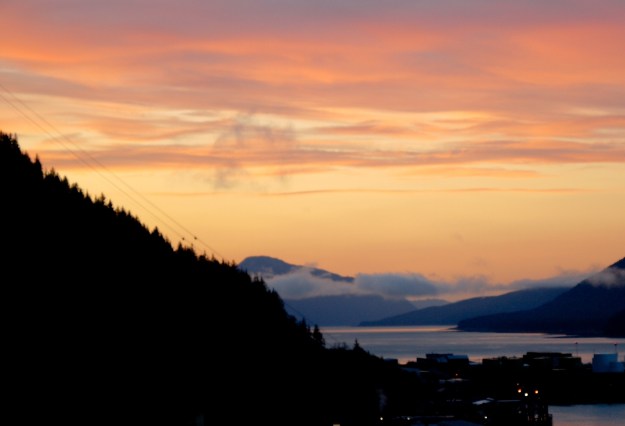
The gold dredgers have just pulled away in their pickup and the fisherman is packing up. Chilling in the wind, I wonder why I remain on this grey, cold place enticed only by the yellow light striking a cloud over Salisbury Point.

Big Attitude, Small Body

1

Three bald eagles fly over the little dog and I as we walk down Sandy Beach. Another one perches on the root of a large driftwood log as the closest, high in a spruce tree, scolds the other four. Across the deep cove formed by a mine tunnel collapse, a fifth eagle watches several mallard families dabble in the water. When the ducks swim past the eagle, it flies low over them and then out, over the channel. Other than the scolding spruce tree eagle, only two belted kingfishers show attitude. They twist and turn around each other over the ducks and eagles like fighter planes above London during the Battle of Britain. Instead of bullets, the kingfishers hurl angry-sounding curses at each other. They drop for a second, over my little dog’s head and I am thankful that God gave such fierce hearts to little dudes rather than eagles with two-meter wing spans.

2

Synchronization

1

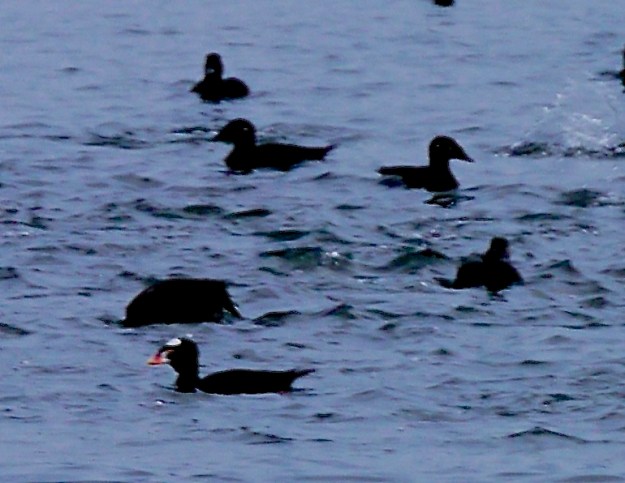
Last week, spider webs decorated most of the mountain hemlocks in this muskeg meadow. Today, the webs are gone. The little dog and I move down to the cove formed by Outer Point and spot a large raft of mallard ducks bumping up against the shore. An even larger number of surf scoters have formed a long, thick line on the other side of the Shaman Island spit.

When not being chased off by hunters, ducks and scoters winter in these protected waters. They spend their summers feeding in the rich seas along Southeast Island’s coast. A recent storm must have convinced them to return to our protected bays.

2

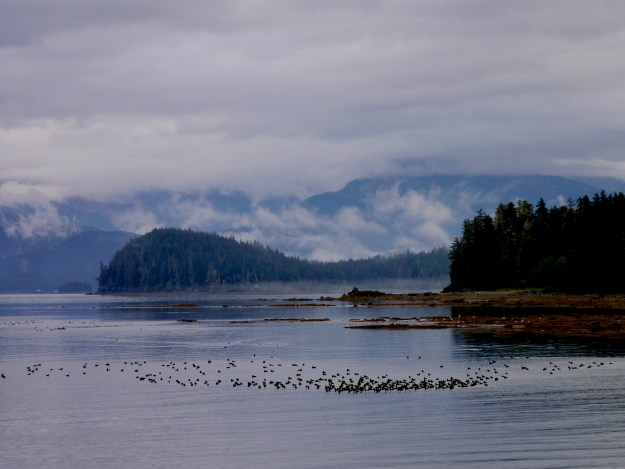
Aki is more interested in the beach sparrows and one bossy squirrel than the waterfowl. Too bad for her. Scoters, who sound like the Three Stooges in full retreat, act like members of a well-trained synchronized swim team. While I watch, they transform the thick line I first spotted into an elongated oval and parade past until reaching a ball of baitfish. Then, the birds in the forward section dive in unison, followed by the group behind them. The first to dive pop up at the back of the raft. Each subsequent line snaps into the water. In minutes the original leaders are back in the front of the oval.

3

Why do the silly sounding and looking scoters fish in such an efficient and generous manner? What destroyed the spider webs? I could ask an expert or search for the answers online. But, I am not an educator or game manager so there is no reason to rinse out the magic.

Valuing the Common

3

The skies above this mountain meadow are as gray as Aki’s fur. But sunlight reaches a favored flank of Mount Jumbo. Little dog, why aren’t we so blessed? Aki pees—her typical response to a foolish question. Suddenly she is squinting, as the chunk of meadow we are passing through turns as bright as a California day.

4

Rarity enhances value. For us rain forest dwellers, autumn sun is a rare commodity. I click away with camera, in danger of gushing about golden, glowing grasses when the sunlight blinks out and the meadow’s beauty fades to gray.

2

On the drive home, I stop to watch sunlight battle with broken clouds over the Douglas mountain ridge. The clouds win. As they each darken to a different shade, I am reminded that beauty can be found in the common as well as the rare.

1