Category Archives: Bald Eagle

Eagle River in Wild Flower Time

Aki doesn’t realize that Chum salmon are trickling into Eagle River.  They pooled up in nearby salt water until the tide changed from ebb to flood.  Now they ride an income tide over the sand bars at the river’s mouth. To enter the river the salmon must swim pass a half-a-dozen seals.

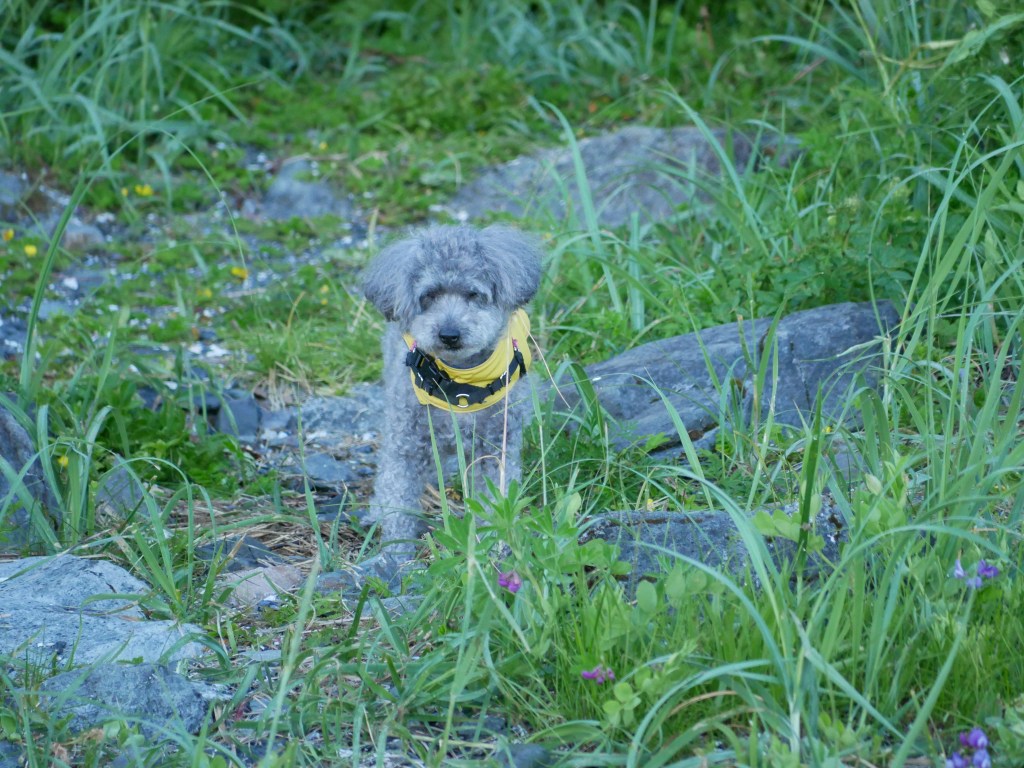
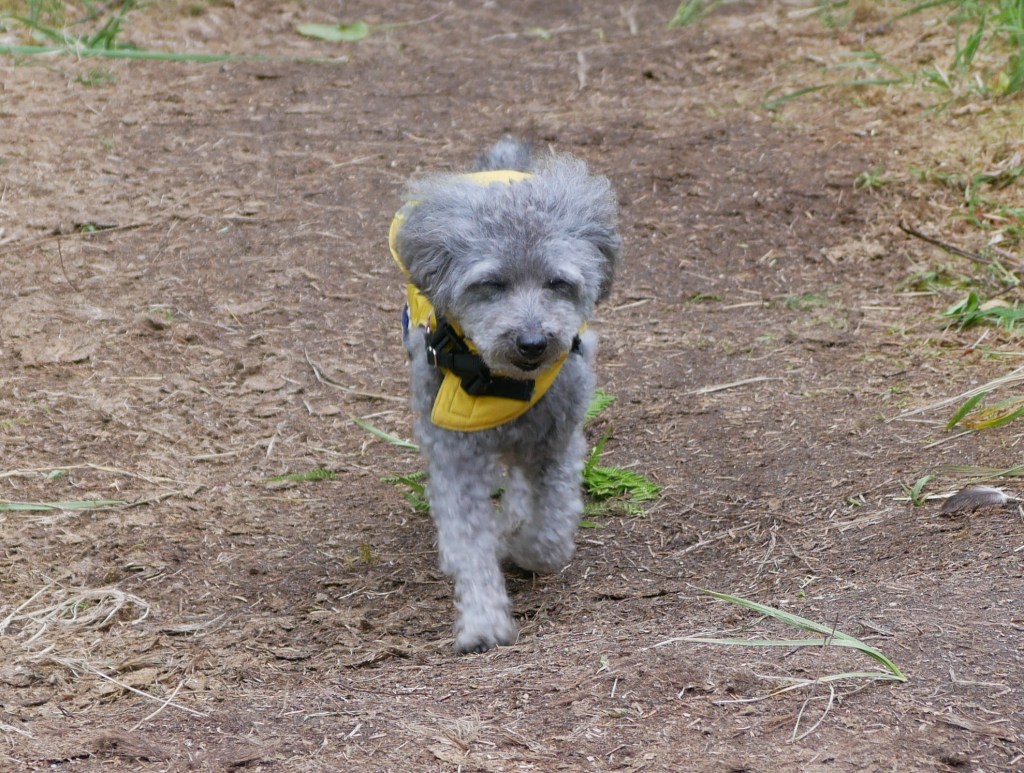
            Aki doesn’t see the seals, even when one 50 meters away snatches a salmon and splashes around the river surface until its powerful jaws crush the fish’s spine. Distracted by the seal-salmon scene, I don’t notice the little dog wade chest-deep into the river. While Aki sips away, two of the seals swirl toward her. They stop when they spot me and the black barrel of my camera lens.  
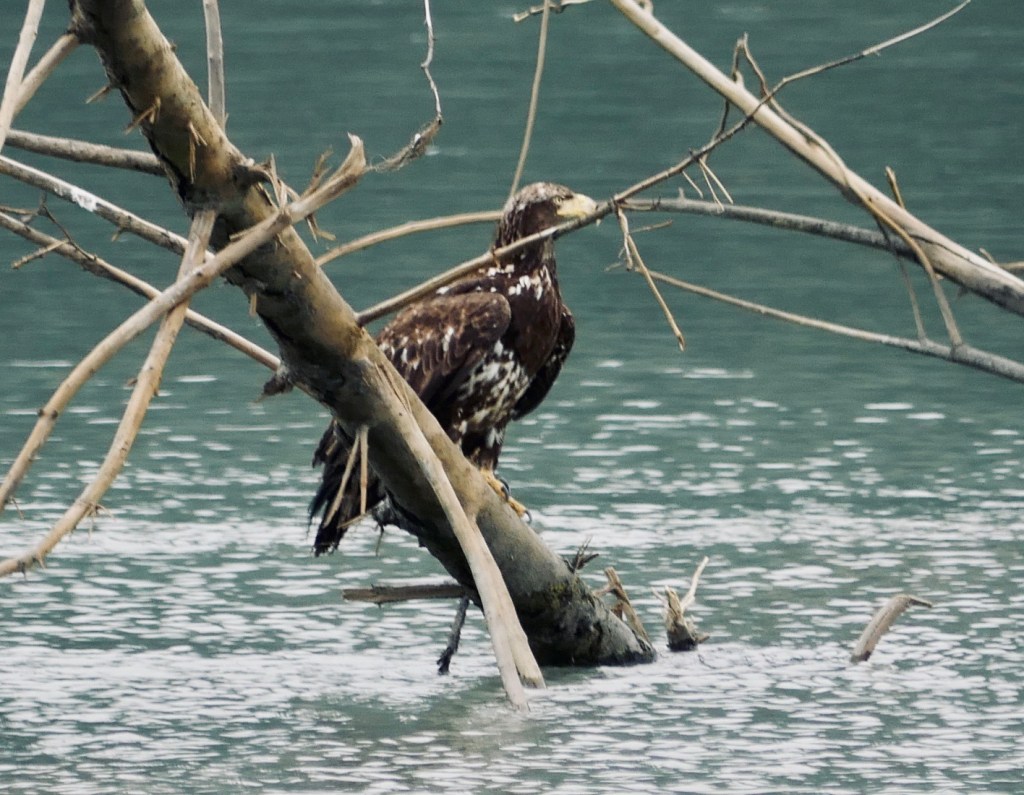
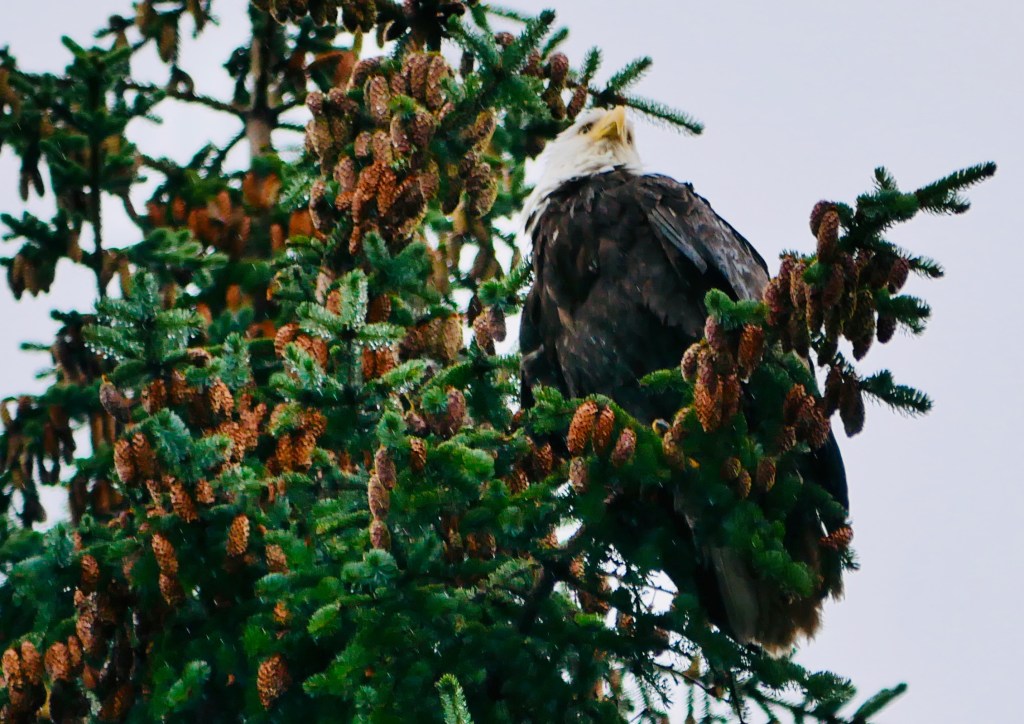
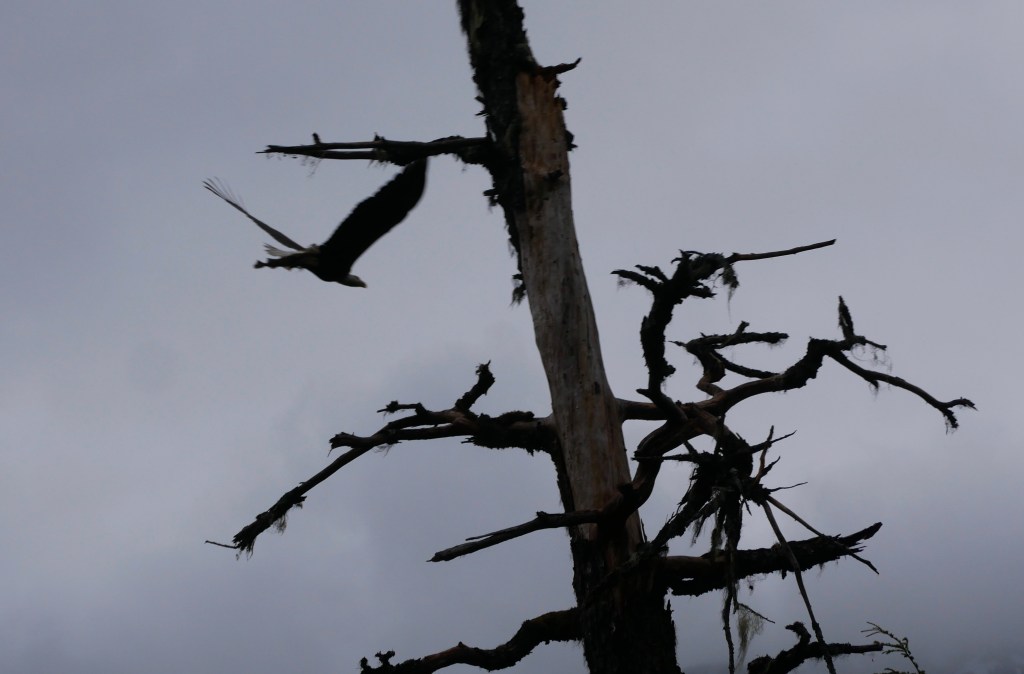
            An immature bald eagle watches Aki and the seals, perched on the skeleton of a spruce tree that vibrates in the river current. The eagle is close enough to the water for a seal to grab it with a quick lunge. The eagle wouldn’t have to worry about the seals if it moved further up the tree. But the tree limbs protect it from any assault from the air. An adult eagle watches all of us from the top of a riverside spruce tree. Maybe the mid-river bird has some history with the mature eagle. 
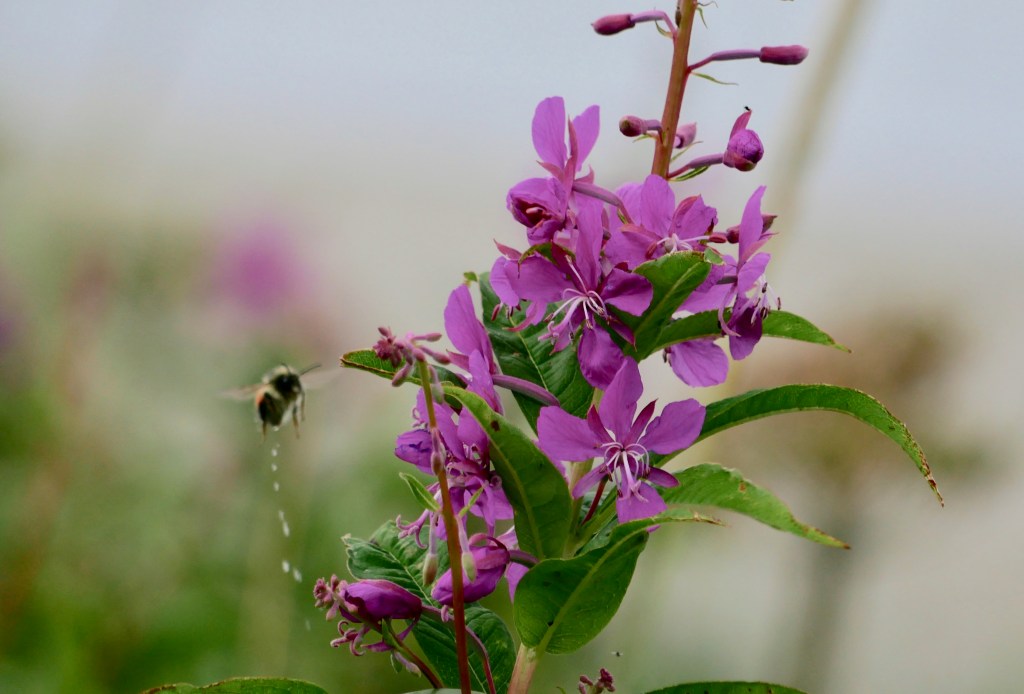
            When Aki leaves the river, the immature bird flies off and the seals return to their salmon hunt. We walk over to a line of dunes now covered with summer wildflowers. Five-foot high stalks of fireweed line our trail. Heavy-bodied bumble fees collect pollen feed from the magenta fireweed blossoms. One releases some golden-colored liquid that dribbles toward the ground. Do bees pee like poodles, little dog?   
A Slow Day in the North Pass

My hand reaches out for the little dog, but she is not there. My mind knows this but apparently, not my hand. Aki is cozy at home. I’m sitting on a folding chair on the deck of an old fishing boat. Two hooks baited with herring spin behind the boat as it moves through the north pass between Lincoln and Shelter Islands. 

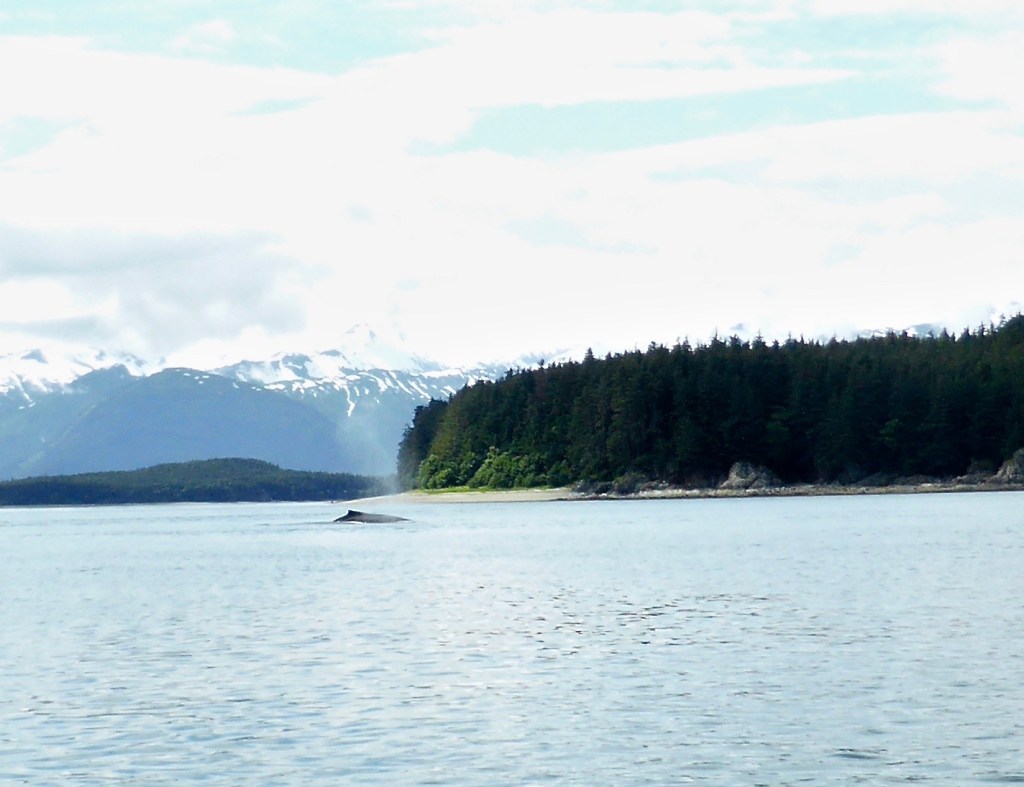
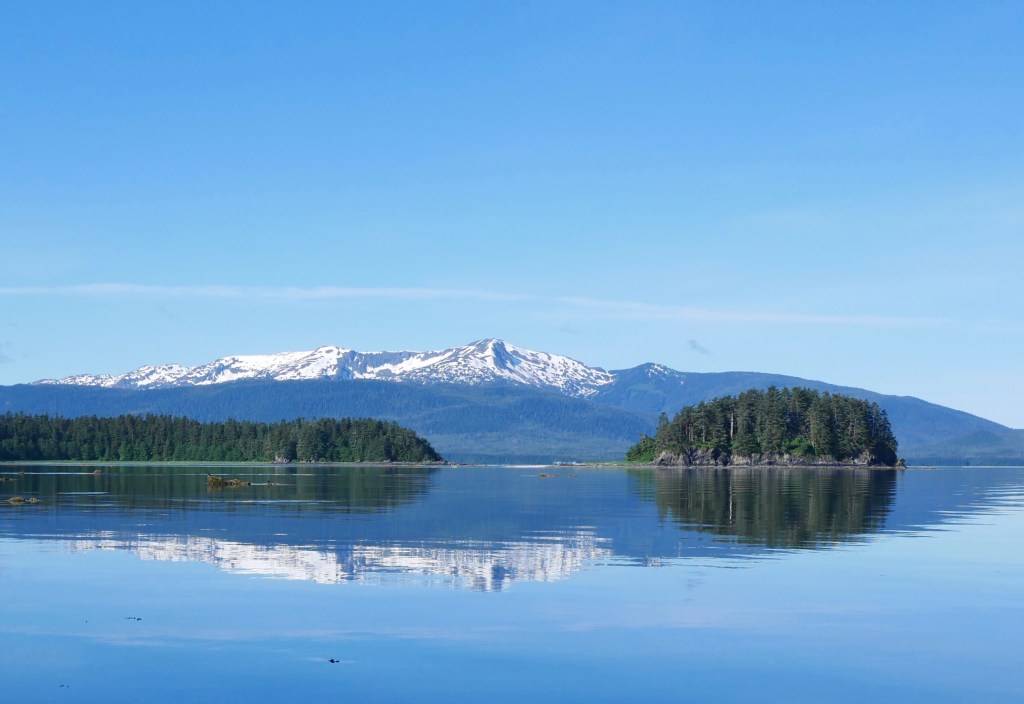
            Two eagles watch from Shelter Island. A sea lion follows in case we hook a coho salmon. It would see that we would not be able to get the salmon into the boat. A few minutes ago, three Dahl porpoise weaved in and out of the water to our right. In a half-an-hour, a humpback whale will do the same. 

            Salmon will make several attempts to pull herring from our hooks. One will be hooked briefly. Neither the sea lion nor I will catch a fish. 

Quiet is Okay

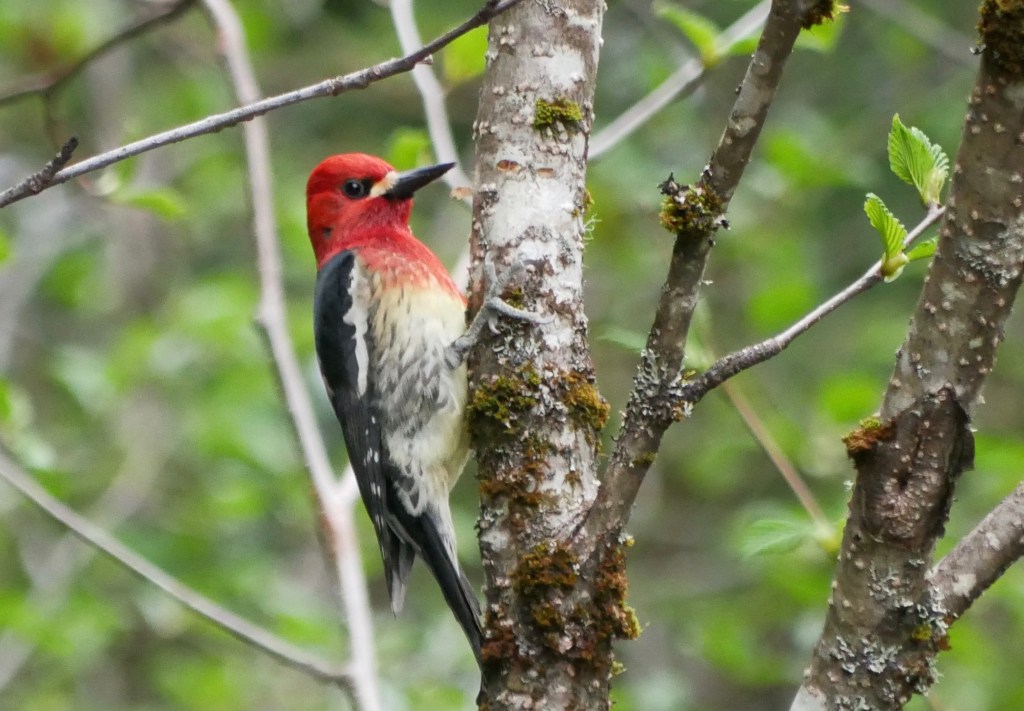
It’s quiet in the rain forest. No woodpeckers hammer hemlocks, no thrush sing. That’s okay. Even in a summer when most of the engines of industrial tourism have been silenced by a virus, a quiet forest is often hard to find. 

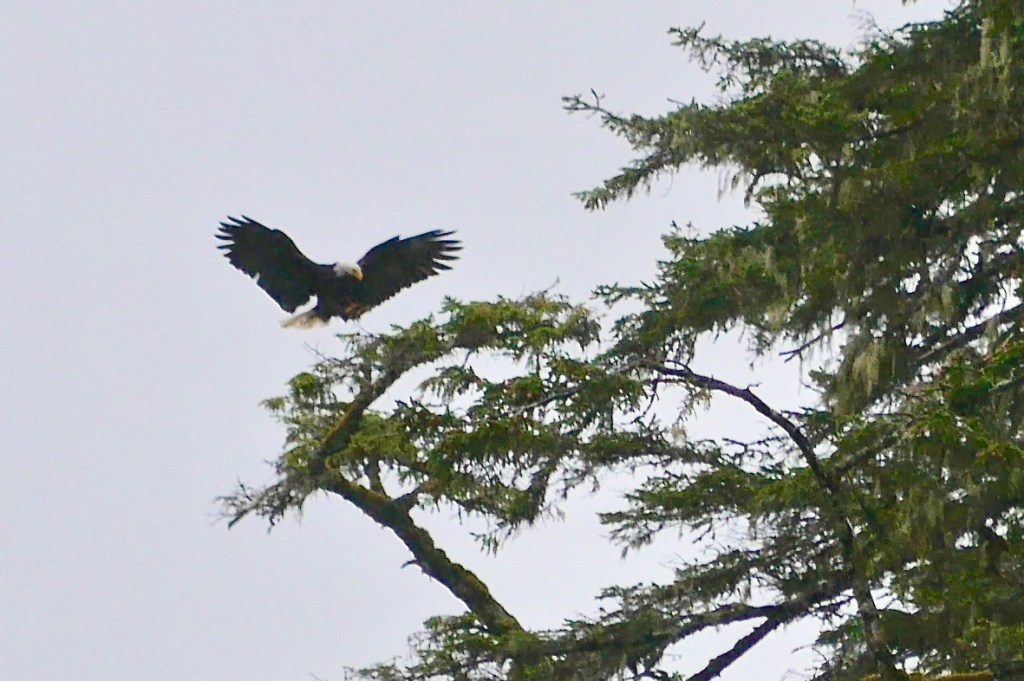
            Aki’s nails beat a faint tattoo on the trail boards. When we pass a little cataract of moving water, the sound seems deafening. We return to quiet when we leave the boardwalk to walk on the soft forest floor. That’s why the sudden burst of eagle bickering is so jarring. While we approach the beach, one bald eagle chases another, driving its victim into a spruce tree. I can’t find either eagle after we emerge from the woods. 

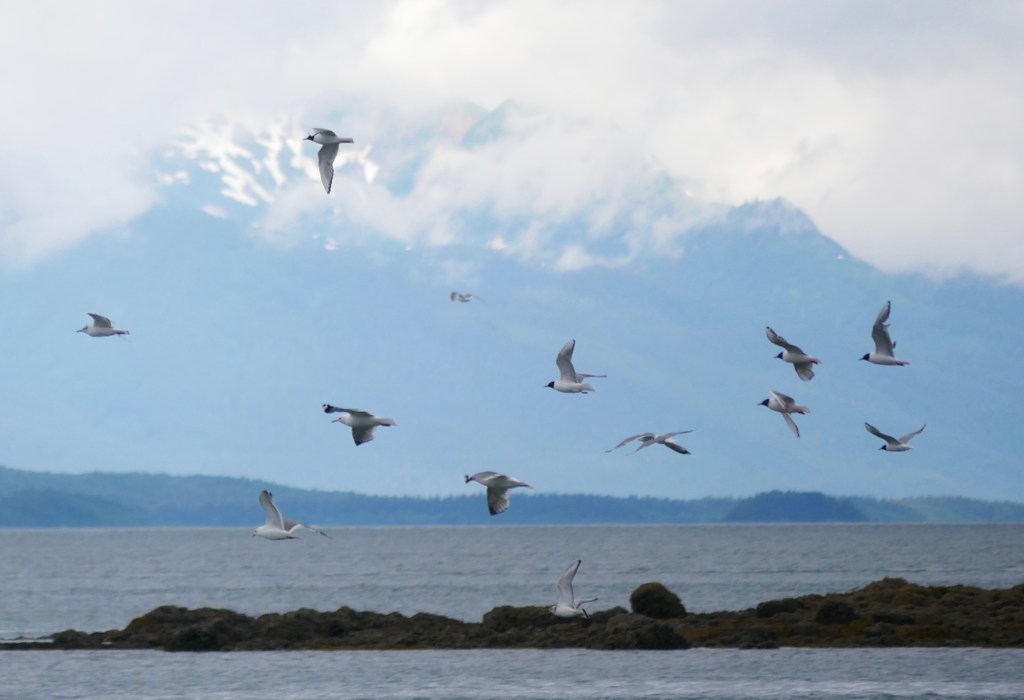
            A single parent merganser family cruises off shore, making no noise. The resident crows and a flock of Bonaparte gulls remain silent until I walk in their direction. They take to the air, moan a bit, then fly noiselessly away. Later we see eagles sulking quietly on the beach.

The Heart of a Thrush

The dogs are in and they have brought the eagles.  “Chum” is the more polite name for dog salmon. Because they arrive in great numbers and aren’t as tasty as king or silver salmon, indigenous people of Northern Alaska dried chum salmon to feed their dog teams during the winter. Hence, the name. For some reason, rain forest people have also labeled chum salmon as dogs. 

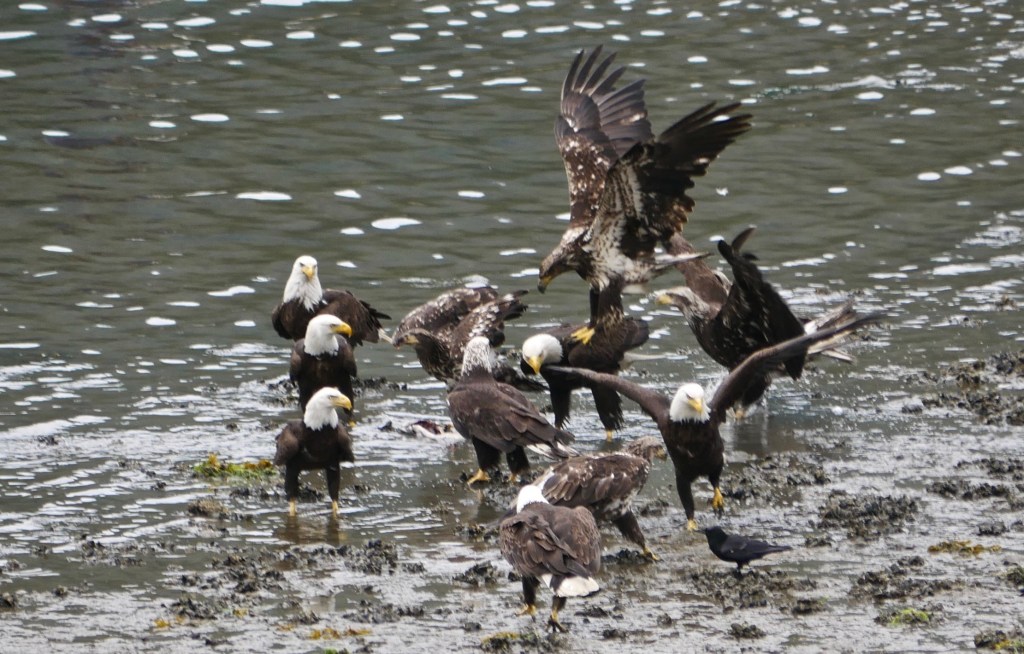
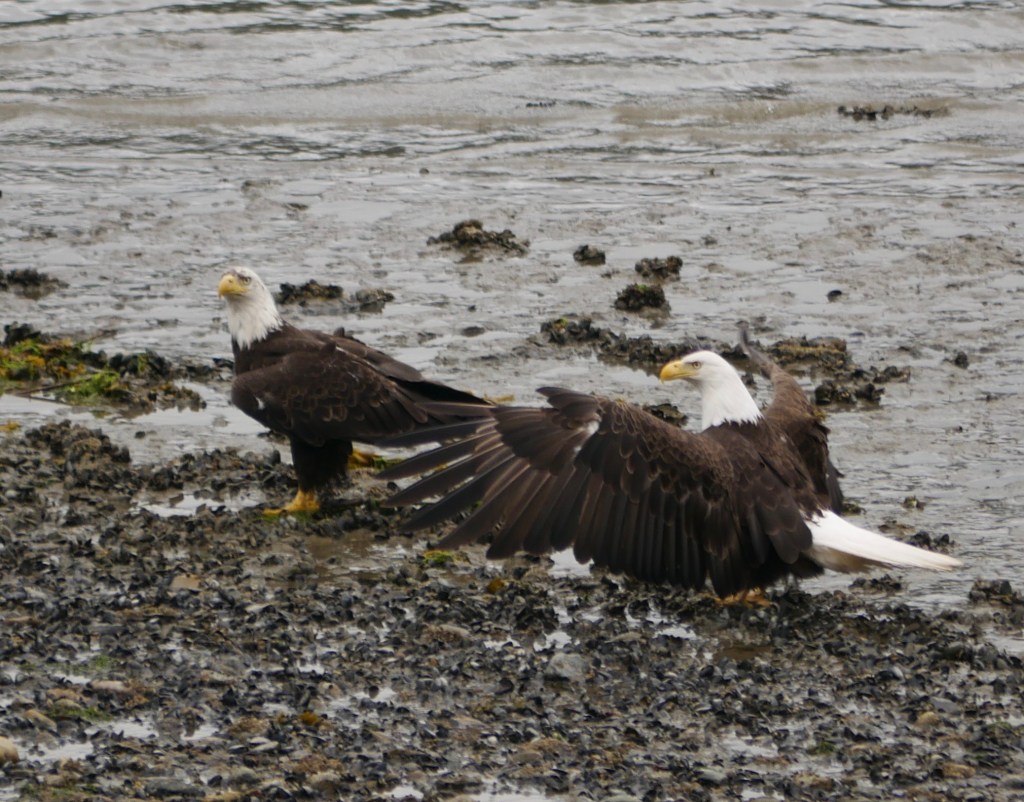
            Ten bald eagles scan the beach for dead dog salmon. Twenty more have grouped up around a half-eaten salmon carcass. In ones or twos, the eagles perching in the trees leave their roosts to fly low over the beach cabal. These fly overs don’t dislodge the eagles on the beach or drive off  the one crow brave enough to stand its ground near them.

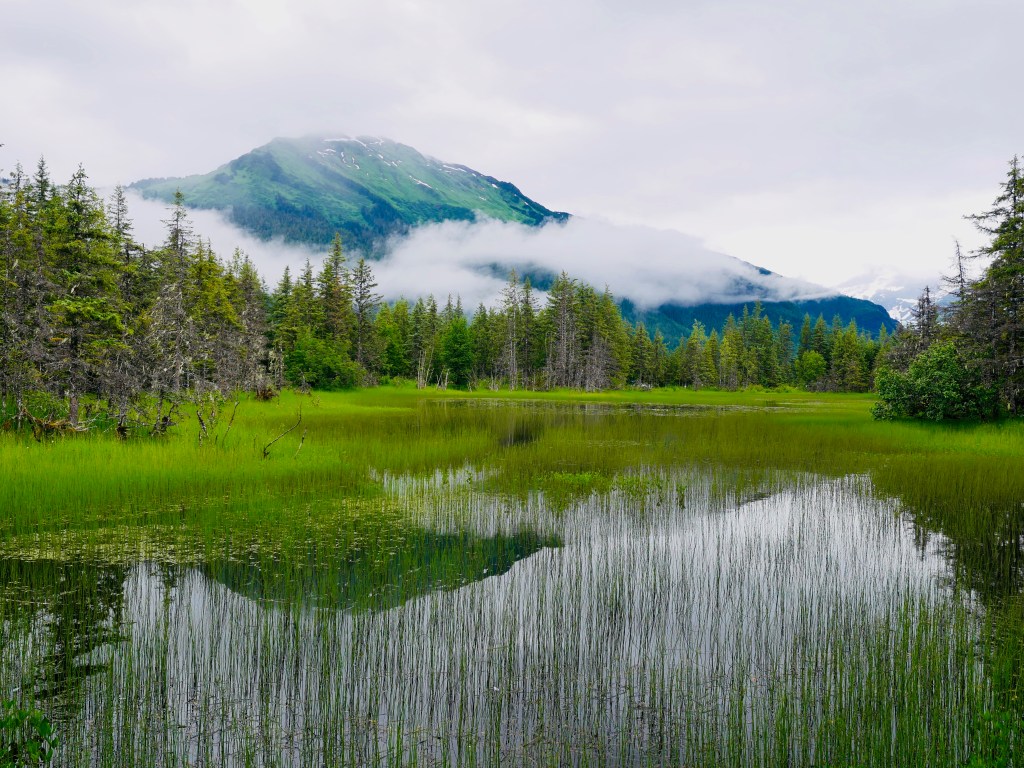
            It was much quieter on the glacier moraine where Aki and I spent the morning. Instead of watching bickering eagles we spied on a mallard hen and her chicks gliding through pond reeds. Lady Tress orchids provide white highlights to a predominately green landscape. 

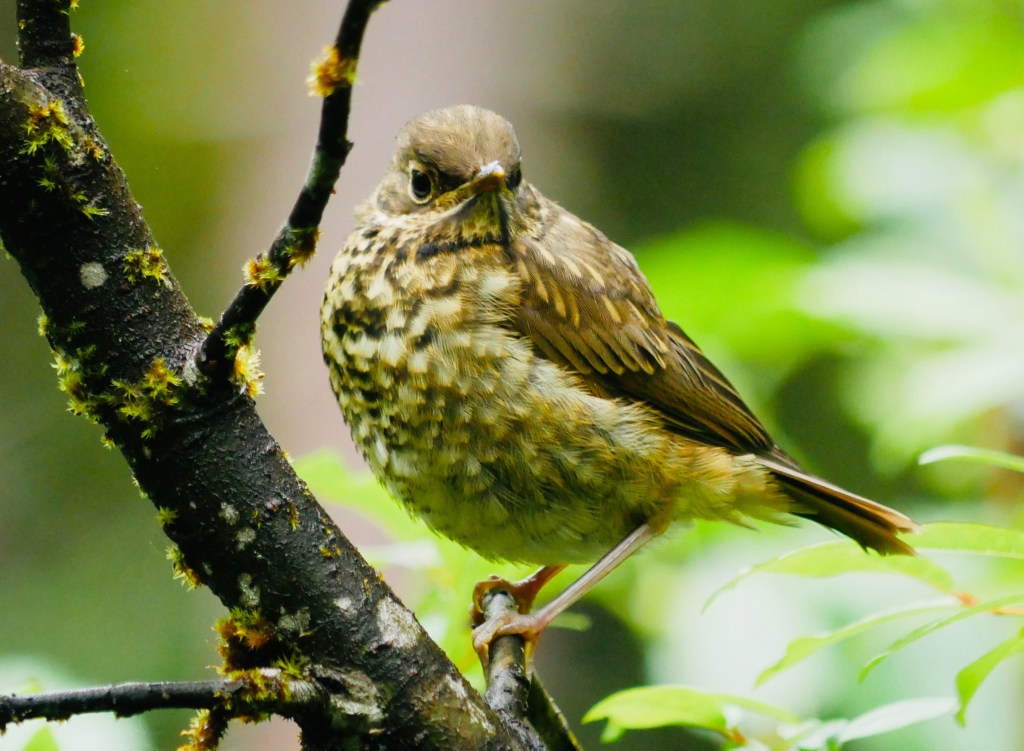
            Rather than eagle screams, the spiraling songs of the hermit thrush provided a song track for our walk. One flew onto a tree limb near us and gave me a policeman’s measuring stare. I’d hate to think of what would happen if eagles were as tough as a thrush.  

Harvest Time

On an otherwise empty beach, Aki snuffles the sand. I watch her even though it means facing an up-channel breeze that throws rain in my face. Two eagles in a nearby tree also watch the little dog. They turn their heads away when I point my camera at them. They are waiting for something editable to wash ashore. 

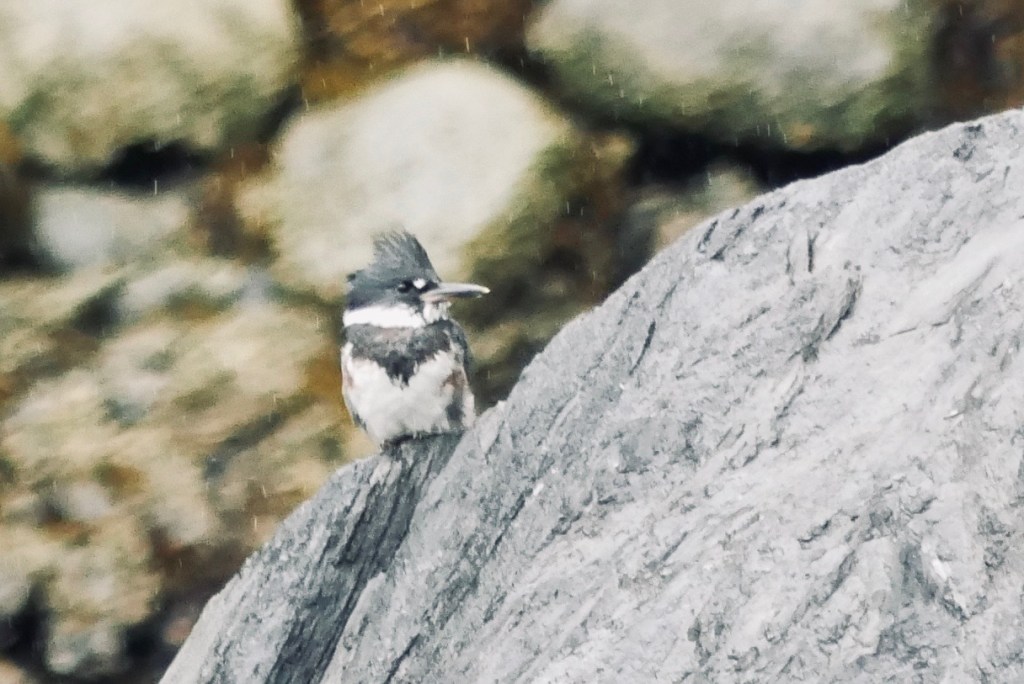
            In a week or so, the eagles will be pulling flesh from salmon carcasses marooned on the beach by the ebbing tide. For now, they must watch and wait for lesser fare. At least three more eagles roost in the beachside trees. Just down the beach, a belted kingfisher watches the glory hole bay while perched on a glacier erratic.

            The kingfisher won’t fly away unless I get really close. I don’t, choosing to watch it watching me through a curtain of rain. Inside the Treadwell Woods, I have a similar stare down with a pine siskin. It and the other song birds show no fear of Aki nor I, which surprises me given all the goof ball dogs that galumph through the woods. Then I realize that this is their  harvest time. 

Urban Eagles

Knowing that this year’s crop of dog salmon should already be heading up the Mendenhall River to spawn, I drive Aki out to a trail that leads to the river’s mouth. Usually we hear eagle and raven squabbles just after getting out of the car. This morning only robins and sparrows break the silence. The trail winds along a forested hillside, requiring the little dog and I to maneuver around and over exposed spruce roots. At first I worry that the Aki might reinjure her leg jumping over something. But she does fine.

            The beach, when we reach it, is as quiet as the woods. No salmon fin in eddies. No ducks or geese gossip on the shore. Here and there beach rocks are decorated with yellow flower petals. We will find these little dots of yellow on over a kilometer stretch of beach. A belted kingfisher scolds us and then lands on a rock near the river. Then we hear the first eagle. It screams from inside a tangle of spruce limbs. Other eagles will call out as we progress down the beach. But will only see one of them.

            On the drive back home, I stop at the hatchery where dog salmon wait to swim up a fish ladder to their death. Over a dozen bald eagles watch the salmon from perches in tree tops, pilings, and the top of the Juneau Empire building. Maybe made confident by their number, the eagles don’t seem bothered by our presence. Unlike their hard scrabble Mendenhall River cousins, these urban birds look large and in charge.    

Frozen in Place

Aki is giving me her “Don’t Expect Me to Follow You!!!” look. She intends to finish the Rain Forest Trail loop and be home in time to mooch cheese from her other human. I want to walk down a beach still wet from the retreating tide. We will see more eagles than dogs, little dog, but I’m feeling selfish.

            The dawn broke clear and the sun is still low enough in the sky to bathe the ocean in intense light. Bald eagles come and go from their spruce roosts, making sorties over Lynn Canal. Most return with empty talons. Each time an eagle returns to its roost, at least one crow drops onto a nearby limb to harass it. None of the eagles show the least interest in Aki. 

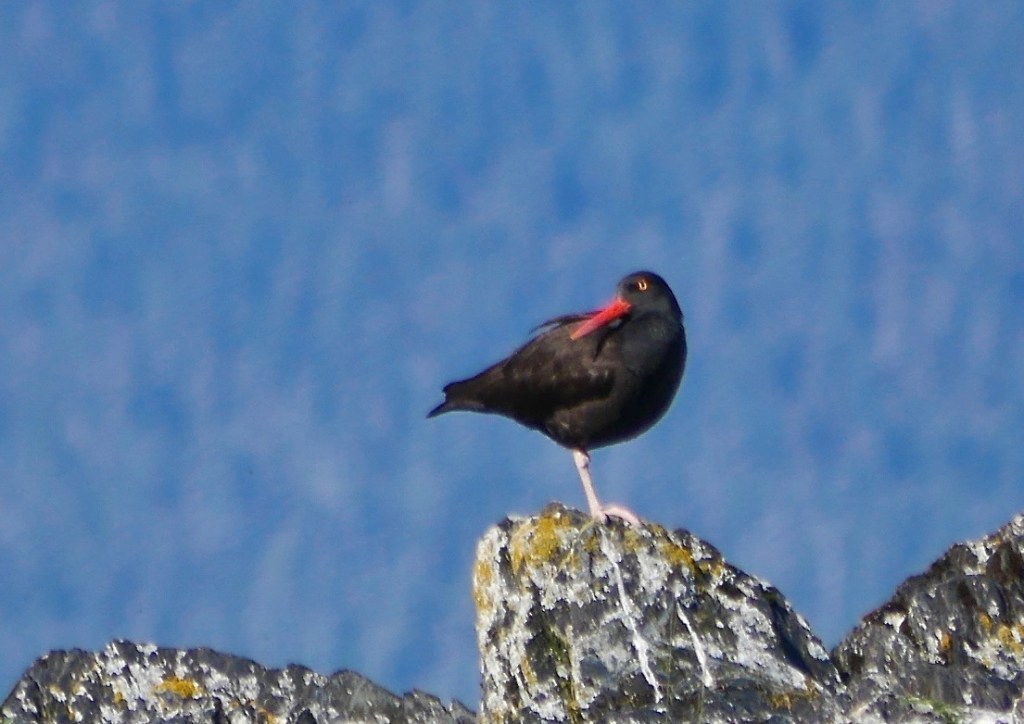
            The poodle-mix follows closely behind me when we approach False Outer Point. A scattering of crows leave the beachside forest and land on rocks recently revealed by the ebbing tide. One of the black, crow-sized birds has an orange beak. It’s an oyster catcher. I haven’t seen one this year. Even though it is as noticeable on its sun-soaked beach rock as a flashing traffic barrier, the oyster catcher freezes in place as if camouflaged.  

            Nothing startles the oyster catcher into flight, not a salmon leaping just offshore, the growl of a Steller seal lion, the shadow of a cruising eagle, or two belted kingfishers engaged in aerial combat.

Born to the Rain

We rain forest dwellers take special care with our roofs. Under a good metal roof, you can fall asleep to the sounds of rain drops. Wearing good rain gear allows you to enjoy the sound of heavy rain drumming on broad-leafed plants, like devil’s club and skunk cabbage. This morning the rain is beating a comforting tattoo on the plants that lines the Rainforest Trail. 

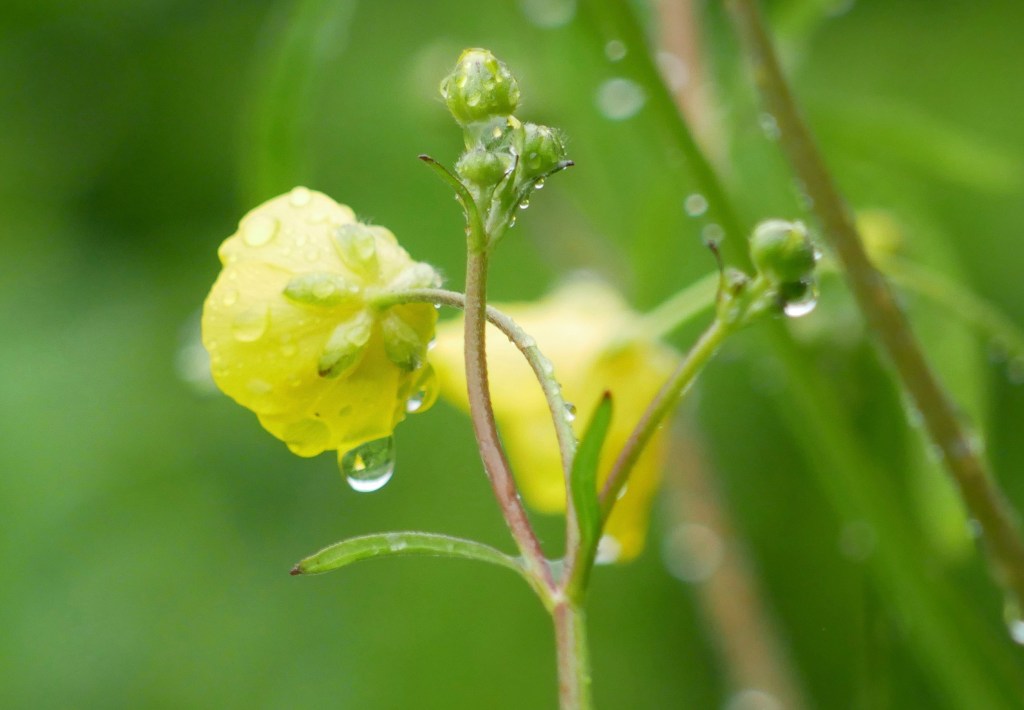
            Aki is taking more than her usual amount of time reading her pee mail. Maybe she is worried that the rain will wash the messages away. I don’t mind. I use the extra time to watch water drops fattening at the end of buttercups and huckleberry blossoms. 

            We pass two young women on our way to the beach. One is wearing shorts and sandals, the other light canvas shoes. Rain has soaked their bare heads and limbs. One bends down to pet Aki. The other clutches beach greens in her hands. You can tell that both were born in the rain. 

Wet Eagles

This morning started being about the rain and ended up being about eagles. Rain beat a tattoo on the house roof as I pulled on my parka. Reminding her that the weather is never as bad as it appears from inside a snug house, I secured a wrap on the poodle-mix and led her to the car. We drove out the North Douglas Island Road. The rain stopped by the time we arrived at the trailhead. What did I tell you, little dog?

            We crossed over a stream that will host spawning silver salmon in July. Oversized skunk cabbage plants lined both sides if it. Aki stops to sniff at a print made when a large canine planted one of its paws in the muddy bank and lept in or over the narrow stream. She keeps at my heals after that. 

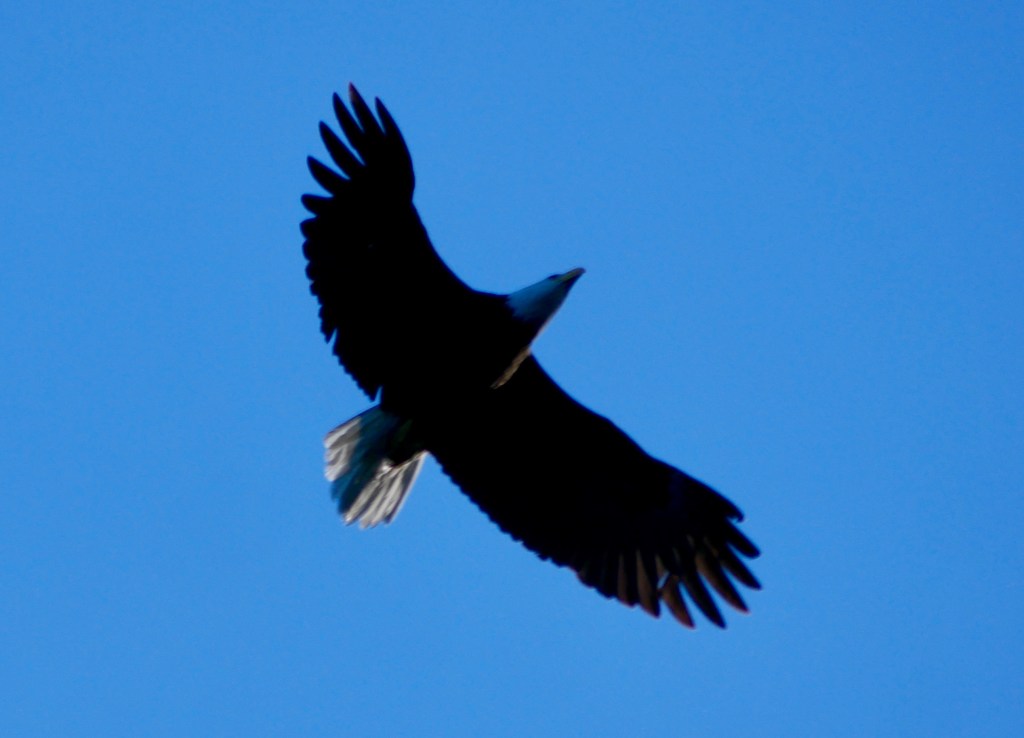
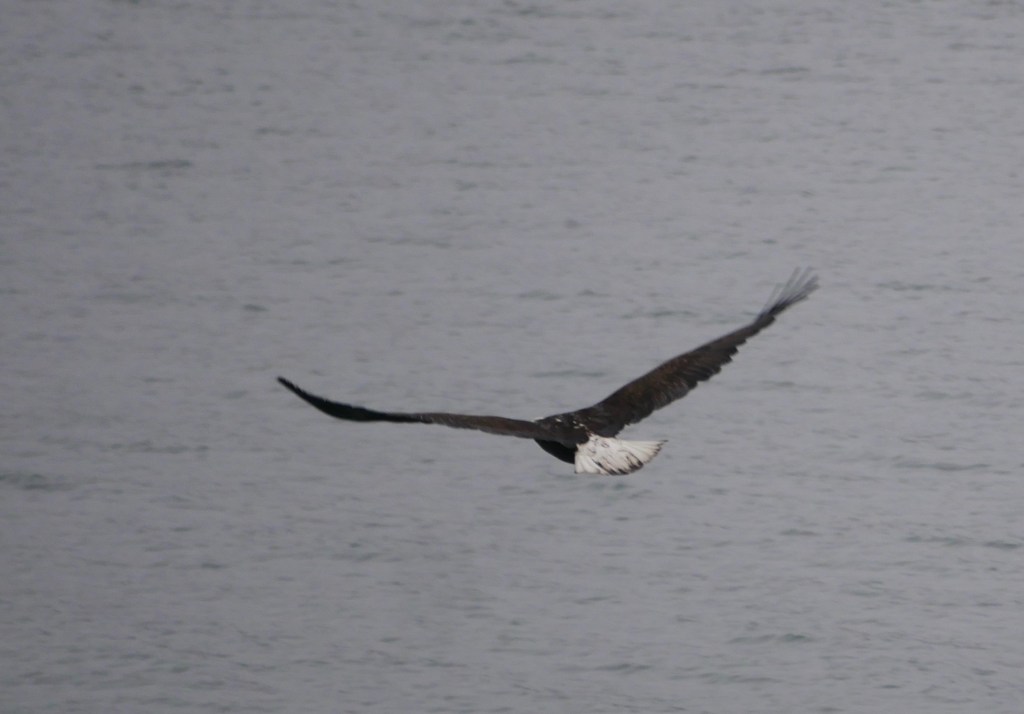
            After passing many flowering cloudberry plants, we reach the beach in time to watch a line of seven bald eagles flying down Stephen’s Passage to Admiralty Island. The first eagle hovers and then dives toward the water. The rest continue south. I go back and forth between watching the diving eagle and keeping track of the rest of them until I misplace them all. 

            Aki, who is not comfortable around eagles or wolves, hangs back at the forest’s edge until the last eagle disappears. She leads me off the beach and up to a muskeg meadow where three of the eagles fly over low our heads. One clasps a small fish in its talons. It heads into the woods, maybe to deliver the fish to its nest-minding mate. 

Quiet Drama

There is little drama on the Fish Creek delta today. We are in between ducks and salmon. Even the tide is middling. In an hour the flood will cover this trail like it has already covered the food-rich wetlands. Then it will retreat and things should get more interesting. As the Tlingit elders tell their grandchildren, when the tide is out, the table is set. 

            The tide is widening channel of Fish Creek where a great blue heron hunts and pecks for salmon smolt trying to reach salt water. Several crows land near the heron, watching it out of boredom or in hopes of snatching some leftovers. In a minute they are gone. The crows didn’t distract the heron. Nor did a bald eagle that flew a meter above the heron’s head. 

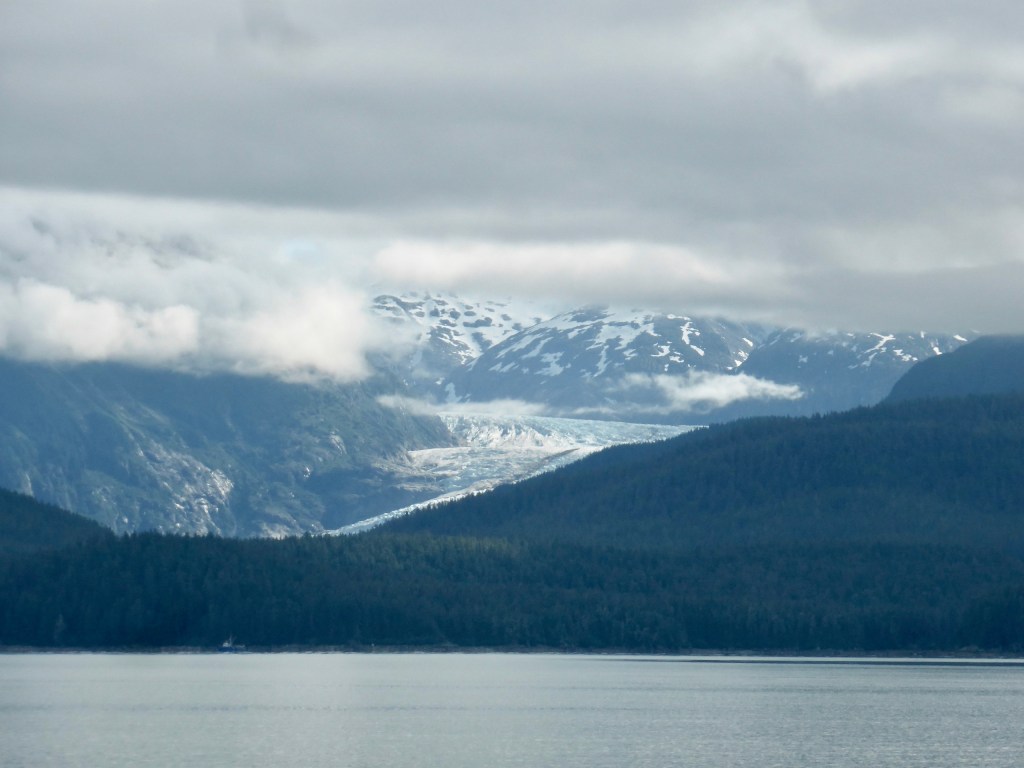
            My attention level is somewhere between the heron and the crows. I planned to remain near the heron long enough to watch it spear a salmon smolt. Then an eagle flew down the creek and clouds that have been covering the top half of the glacier lifted. I leave the heron to head down stream to Fritz Cove where one might better see the glacier, spot a seal lion or maybe even a killer whale.