


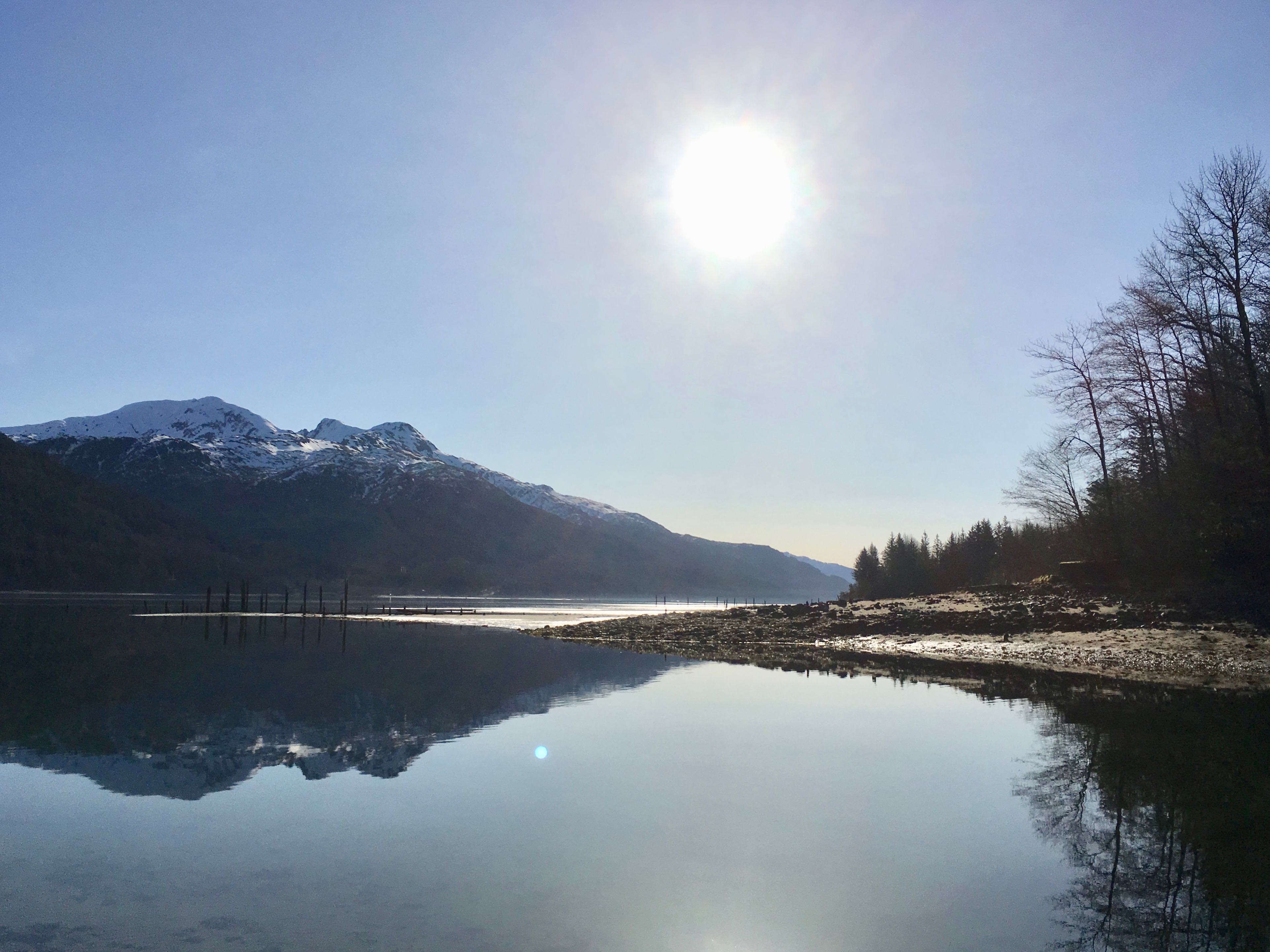
A harsh, almost equatorial sunlight bounced off the surface of the Treadwell glory hole. I tried to stare across that bay formed by the collapse of a mine tunnel, hoping to spot the belted kingfisher that was squawking out his territorial claim. Above and close, an unseen bald eagle screamed. After checking to make sure Aki was close and safe I spoted the eagle tucked into a crotch of prickly spruce branches. I wondered for the hundredth time at the fierce aggressiveness of the tiny kingfishers and the apparent cowardness of the powerful eagles.

Earlier, just after Aki and I dropped onto Sandy Beach from the Treadwell woods, three kingfishers dog fought over Gastineau Channel, their chitterling calls as rapid as machine gun fire. A bald eagle roosting on top of the old mine ventilation shaft watched without concern. Perhaps the eagle knew it was not the kingfisher’s target.
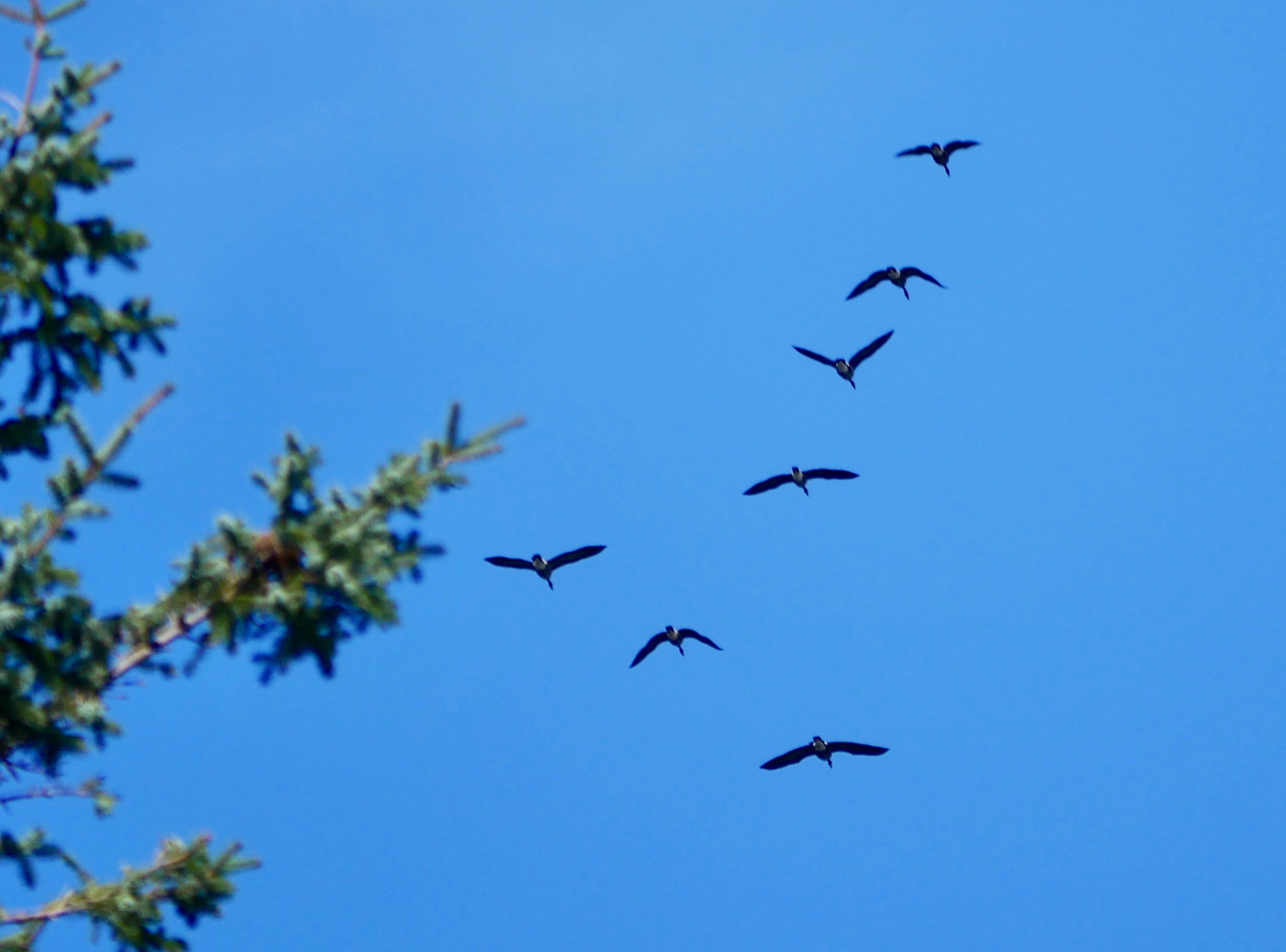
Other birds made low flights over the little dog and I today. Early morning sun lit up the white patches on Canada geese as their “V” shaped formation moved toward the Mendenhall wetlands. Minutes later we watched the underside of a great blue heron as it flew close to my head, looking more dinosaur than bird.
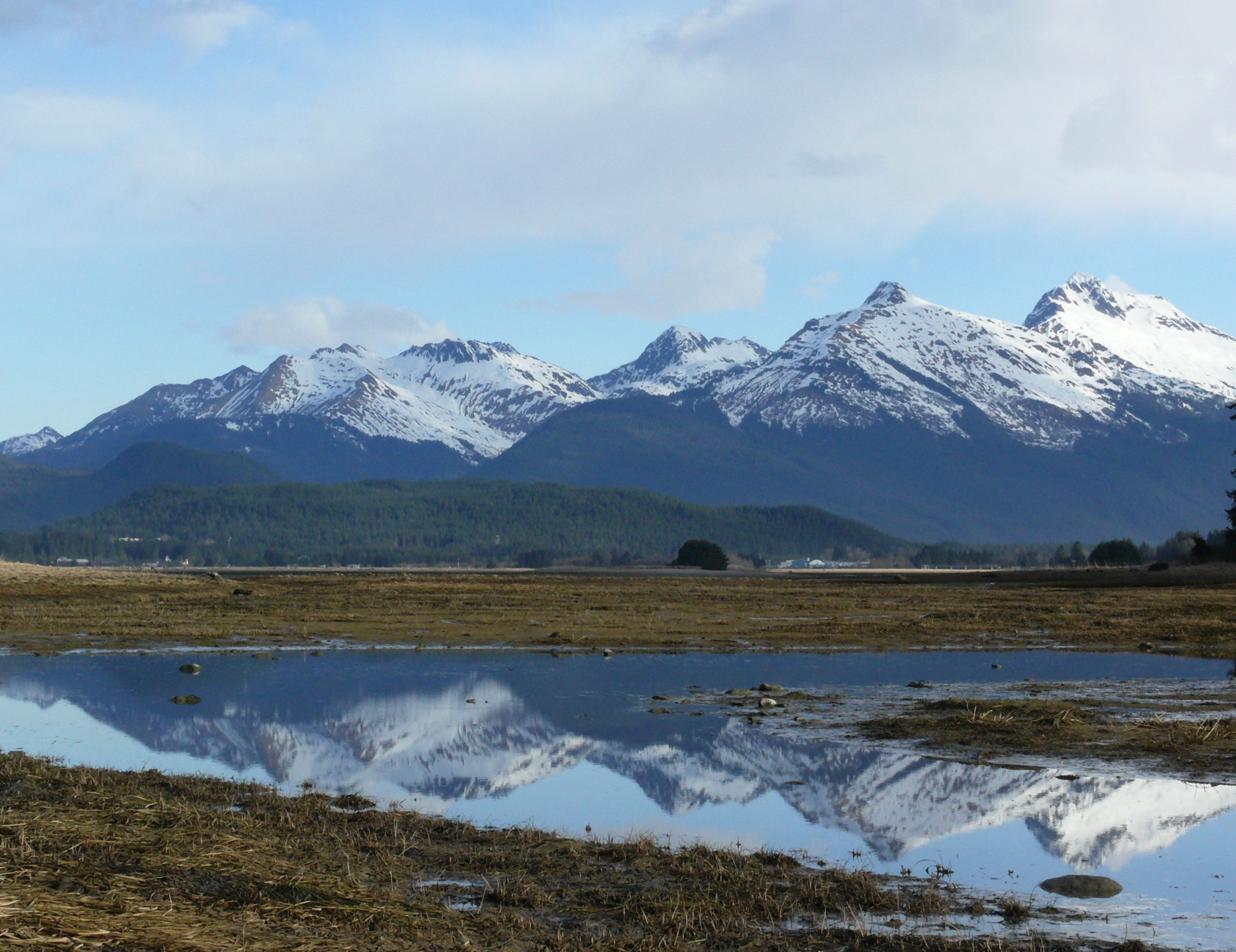
Aki stops twenty feet behind me. A few days ago she would have been standing on ice. But that is gone, melted by the string of warm, sunny days that followed our last visit. “Why,” she seems to be saying, “are we back on the Fish Creek Delta?” If she were a human, I’d explain my intent to make many visits here so we can take an informal bird census. Because she would be that kind of human, she would press me until I admitted that I’d take any excuse to return to the rich and beautiful place.
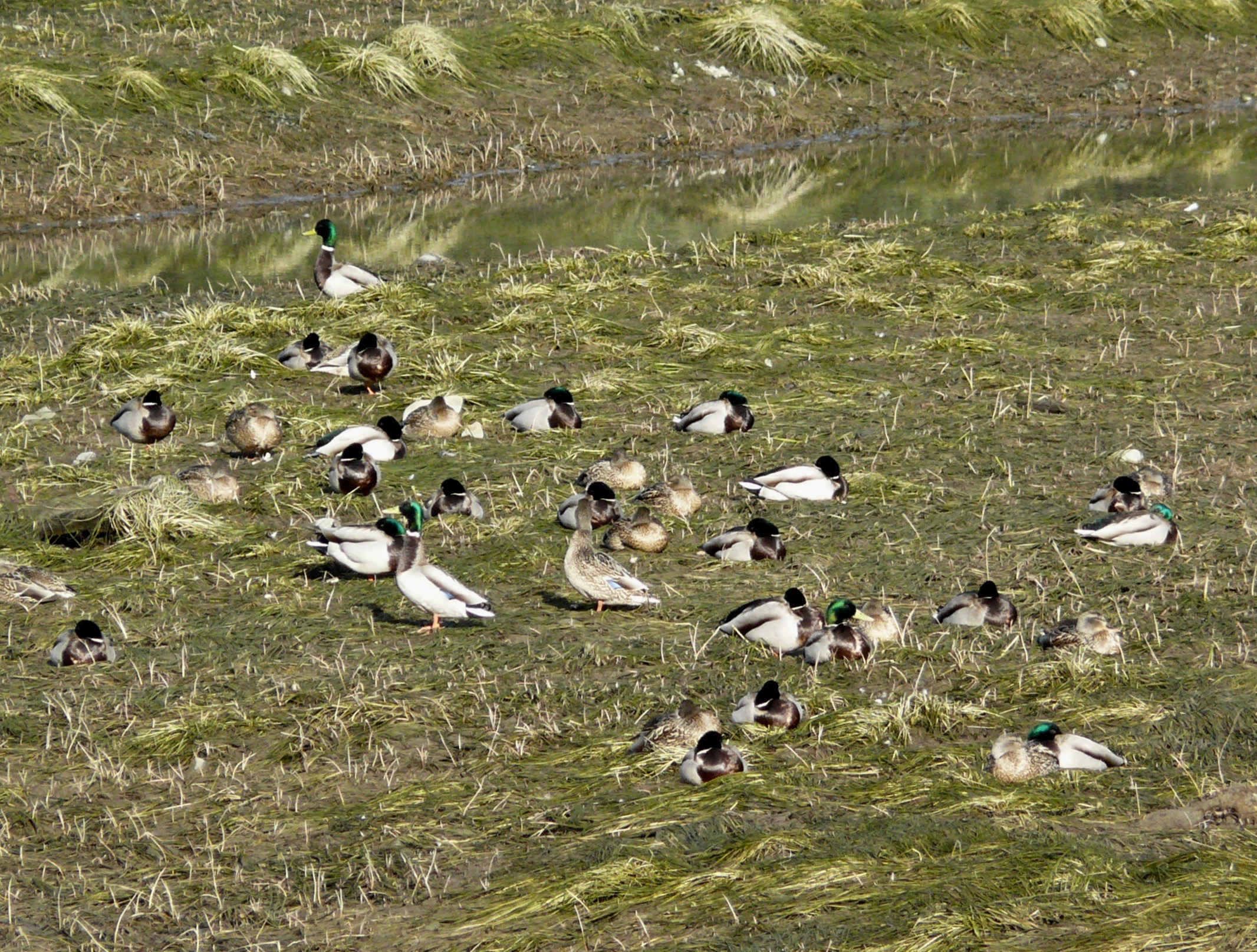
I was pleased to find the trailhead parking lot empty when we arrived. As if to confirm that we were the day’s first human visitors, two braces of mallard ducks rested on a pond right next to the trail. They paddled without haste to edge of the pond and stepped onto the meadow grass.

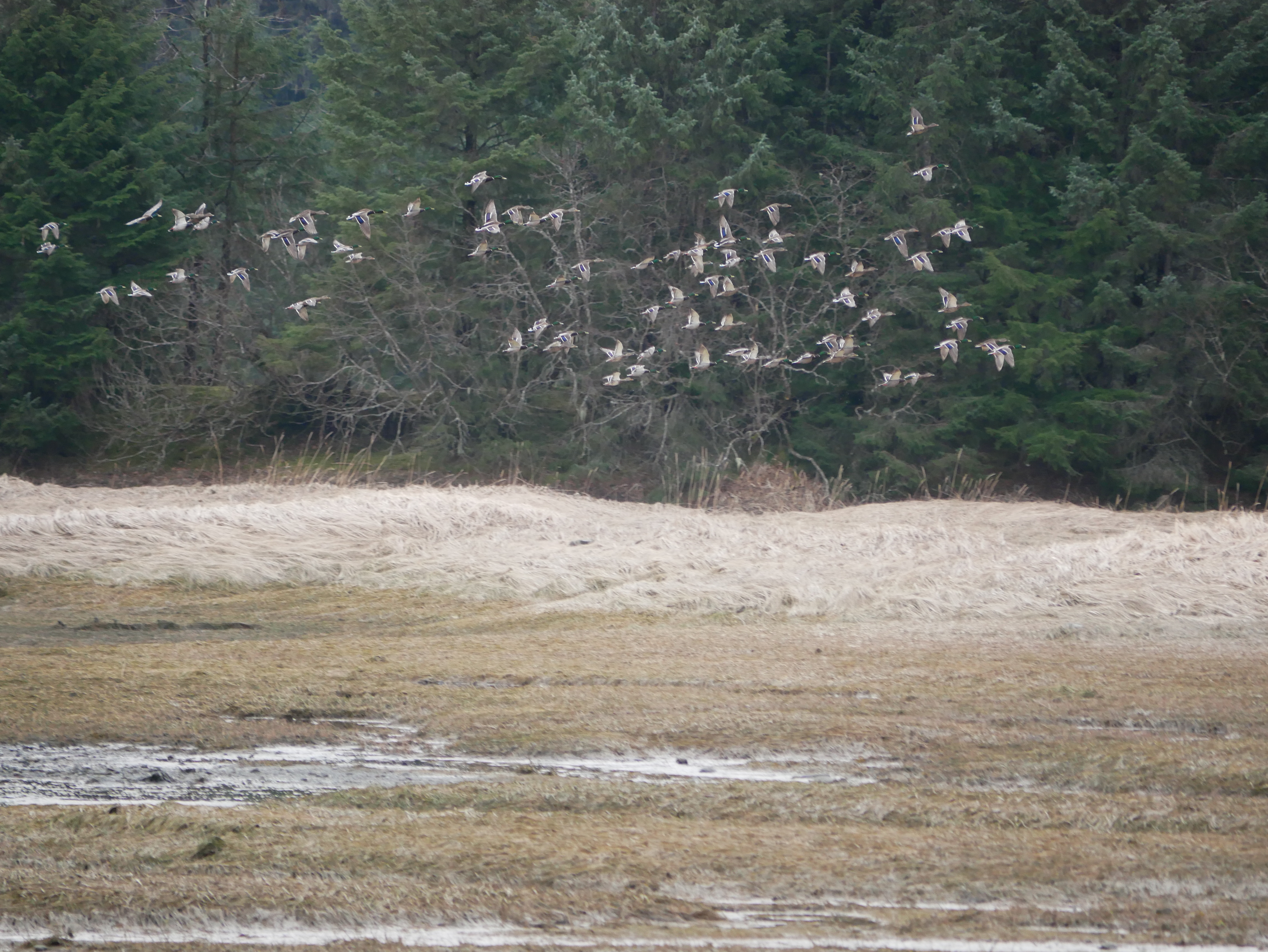
The ebb tide provided ducks with exposed grassland for resting. A small raft of mallards slept on a nearby patch of grass, their necks buried into their back feathers. Another gathering of their cousins walked the shallows along the Fritz Cove beach, their heads plunged into the water. They ignored a gang of American Widgeons that splash down onto nearby water after being spooked by an eagle.

The still-hungry eagle screeched out a complaint and flew into the top of a beachside spruce. It clamped its talons tight around the springy branch, hunched its shoulders, and held on like a rodeo bull rider as the branch bounced up and down. After the movement stopped, the eagle raised its beak into the air and announced victory.


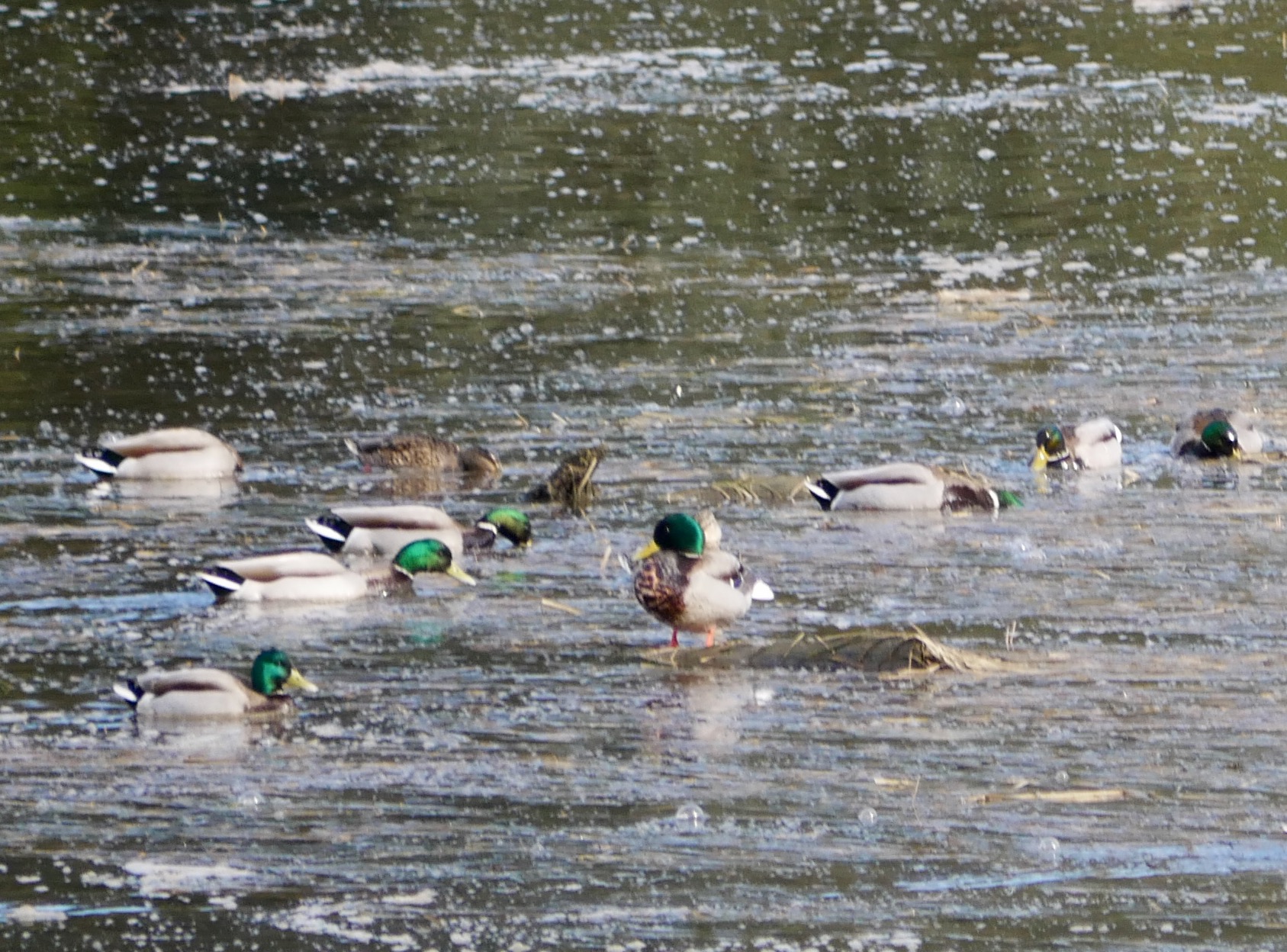
The mallards are still here, settled in along the banks of Fish Creek. But the widgeons that we watched last week are gone. I can’t find one, nor can I spot a green wing teal. Those transients must have moved north. Other migrants has arrived.
A pair of American robins try to decoy us down the trail. It is too early in the spring for their rich nesting songs. Today we will only hear discordant birds songs: crow grumbles, the harsh threats of Stellar’s jays, and screams of frustration from touchy eagles.

Two half-foot slabs of pond ice still lay athwart the trail. They won’t last long in this warmish weather. Only a thin skim of ice covers the pond. All of it will be carried away by this afternoon’s eighteen-foot high tide.

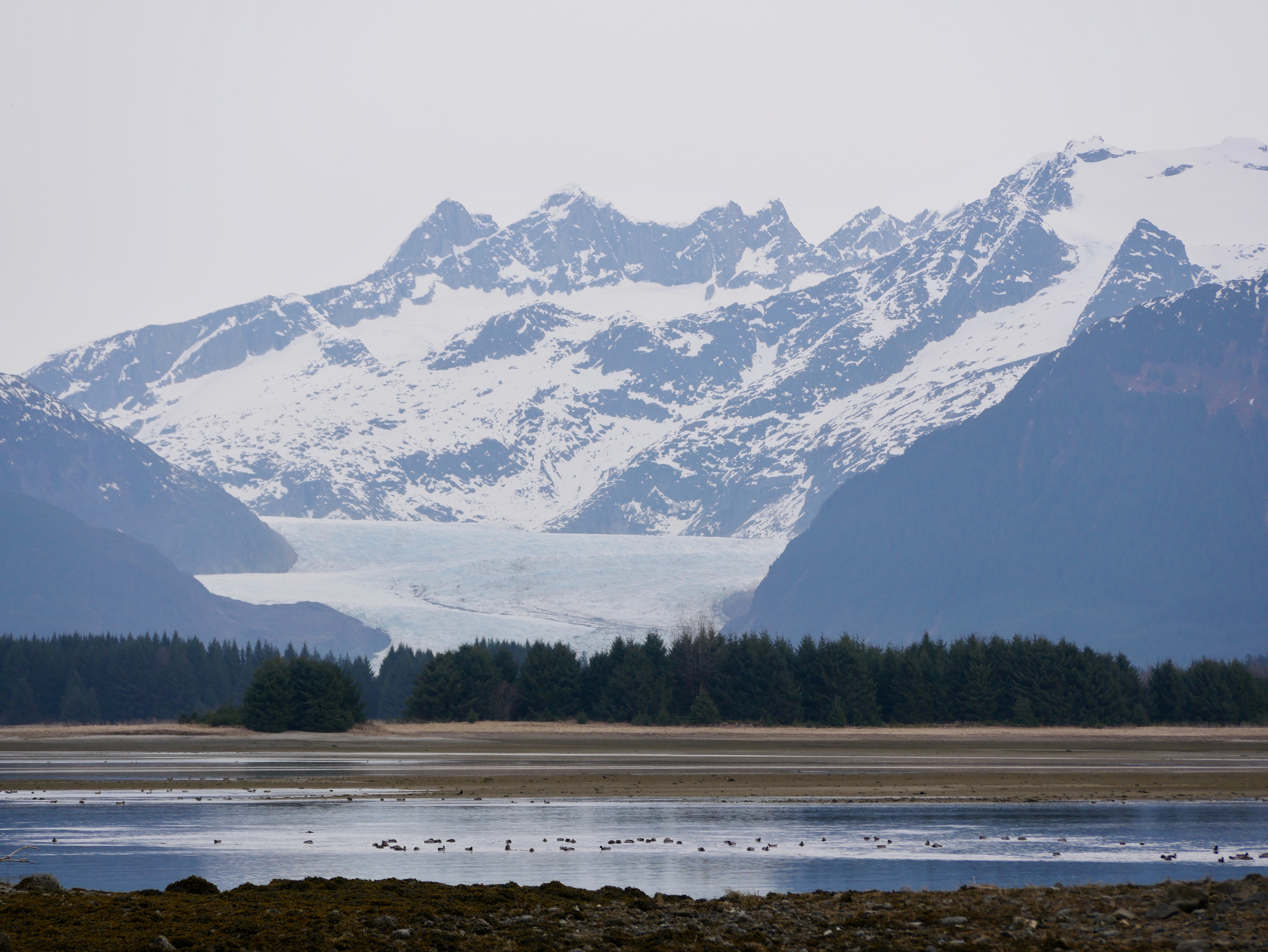
Other than the mallards, the creek is empty of waterfowl. A small scattering of golden eye ducks dabble in Fritz Cove. We can’t spot a raven. On a tiny island in the creek’s mouth a murder of bored-acting crows ignore us and the incoming tide.

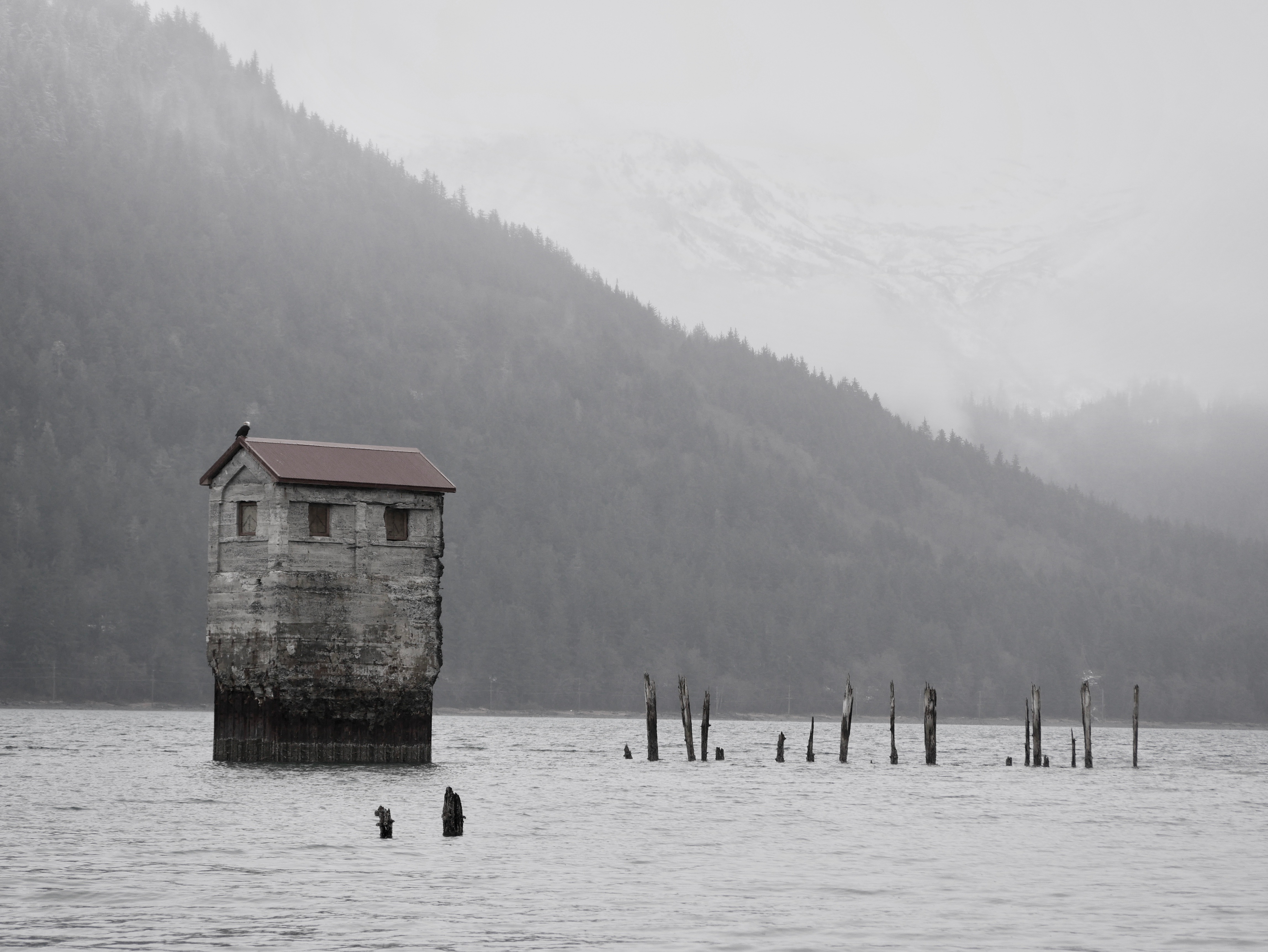
This morning only one bald eagle roosts on top of the old Treadwell mine ventilation shaft. Small waves slap at the base of the shaft. Rain soaks into the eagle’s feathers. It focuses one eye on the little dog and I and forces its eyebrow into a shallow “u.” I’ve seen a similar look on policemen and teachers about to scold a troublesome student.

Aki trots over to the beach’s grassy verge, apparently unaware of the eagle’s mood. A few yards away, a rusted piece of ore car railing emerges from the sand. Further down the beach, the tide has exposed a hundred-year-old engine block. In between chunks of shattered pottery and bricks lay on the beach. Maybe the eagle is upset with the men that left all this junk behind when the mines closed after World War I.

We walk on down the beach into the wind and exposed to the rain. When Aki and I reach the little bay formed by collapsing mine tunnels, we move into woods that have grown over the mining town of Treadwell. Steel cables, car springs and ore cart railings emerge from the flesh of spruce trees. The trees, not the things manufactured by men, are the aggressors. This is not right. The trees aren’t attacking, just tiding up the mess left by the men who moiled for gold. (“Moiled for gold” borrowed from “The Cremation of Sam McGee” by Robert Service).


On this grey day at Fish Creek, yellow is the dominant color. Last week, when sun hammered down on the snow-covered meadow, white fought with blue for chromatic first place. Tides and rain have washed away the snow. Grey clouds hide the indigo sky. The straw-yellow of last fall’s grass can draw the eye.
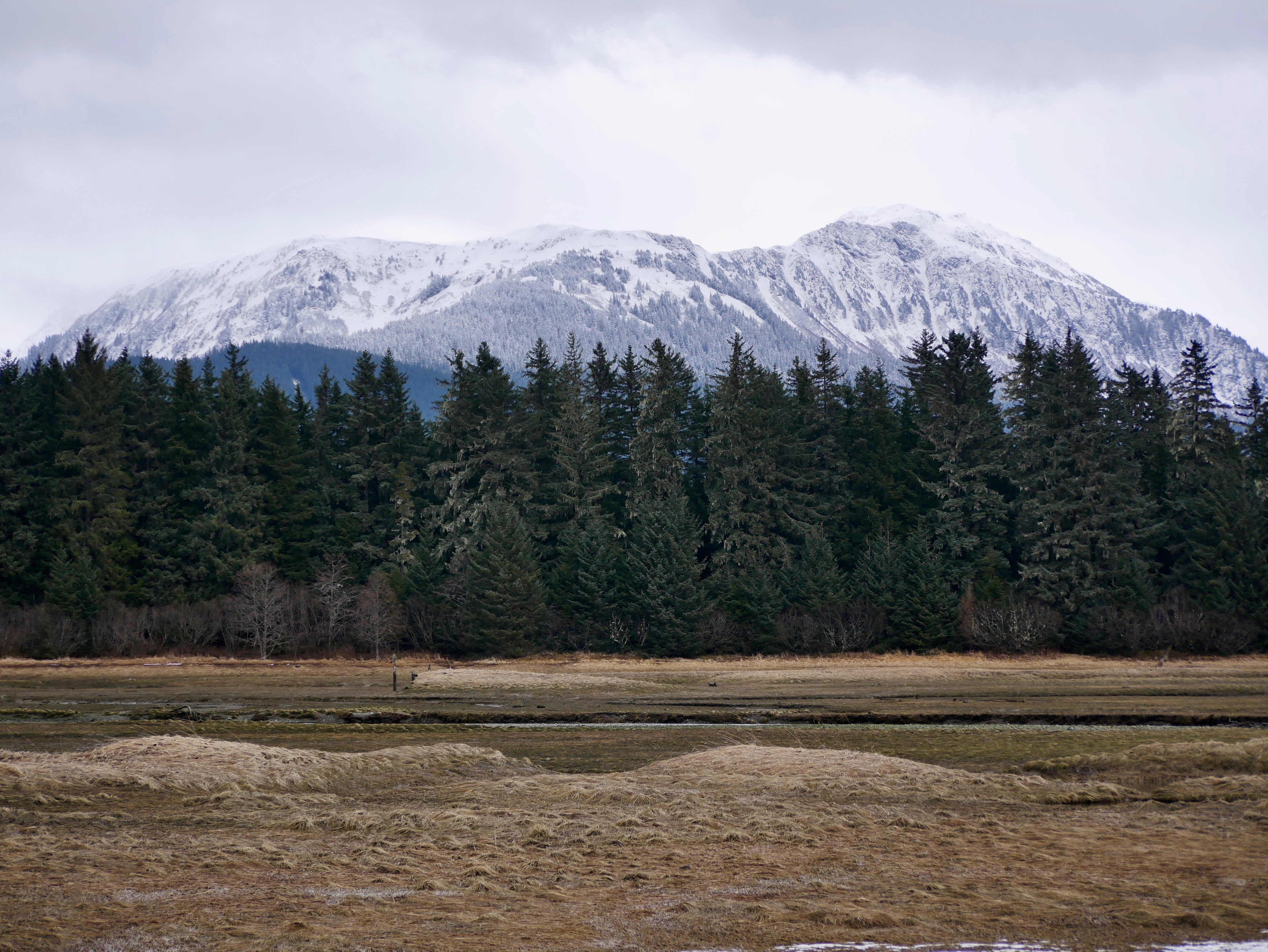
Yellow’s time will be short. Already green shoots push up through the bases of the winter-killed grass. Spring arrivals, like American Widgeon ducks and plovers work the shallows of Fritz Cove along with resident mallards.
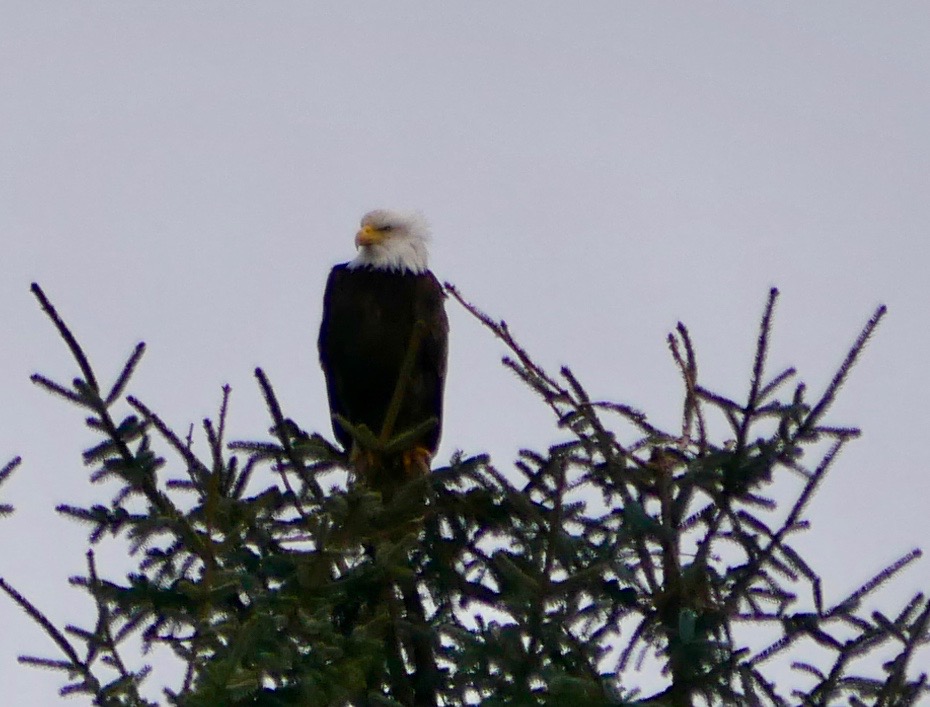
A half-a-dozen eagles sulk in nearby spruce trees. We have not seen more than one or two at time all winter. The sound of the eagles bickering makes Aki nervous. But she still follows me out to the mouth of Fish Creek where a large raft of widgeons feed. They seem jumpy. Six or eight of the plump ducks panic into flight and fly close by us on their way up stream. Aki is honoring her no-contact-with-waterfowl policy so I know we aren’t making the birds nervous.

We pass another collection of widgeons on the way back to the car. The entire raft bursts into flight, twists around above Fritz Cove, plops onto the shallows and charges onto the beach. I can’t spot the head of a seal offshore. But what else could have driven the sea birds on to the beach?

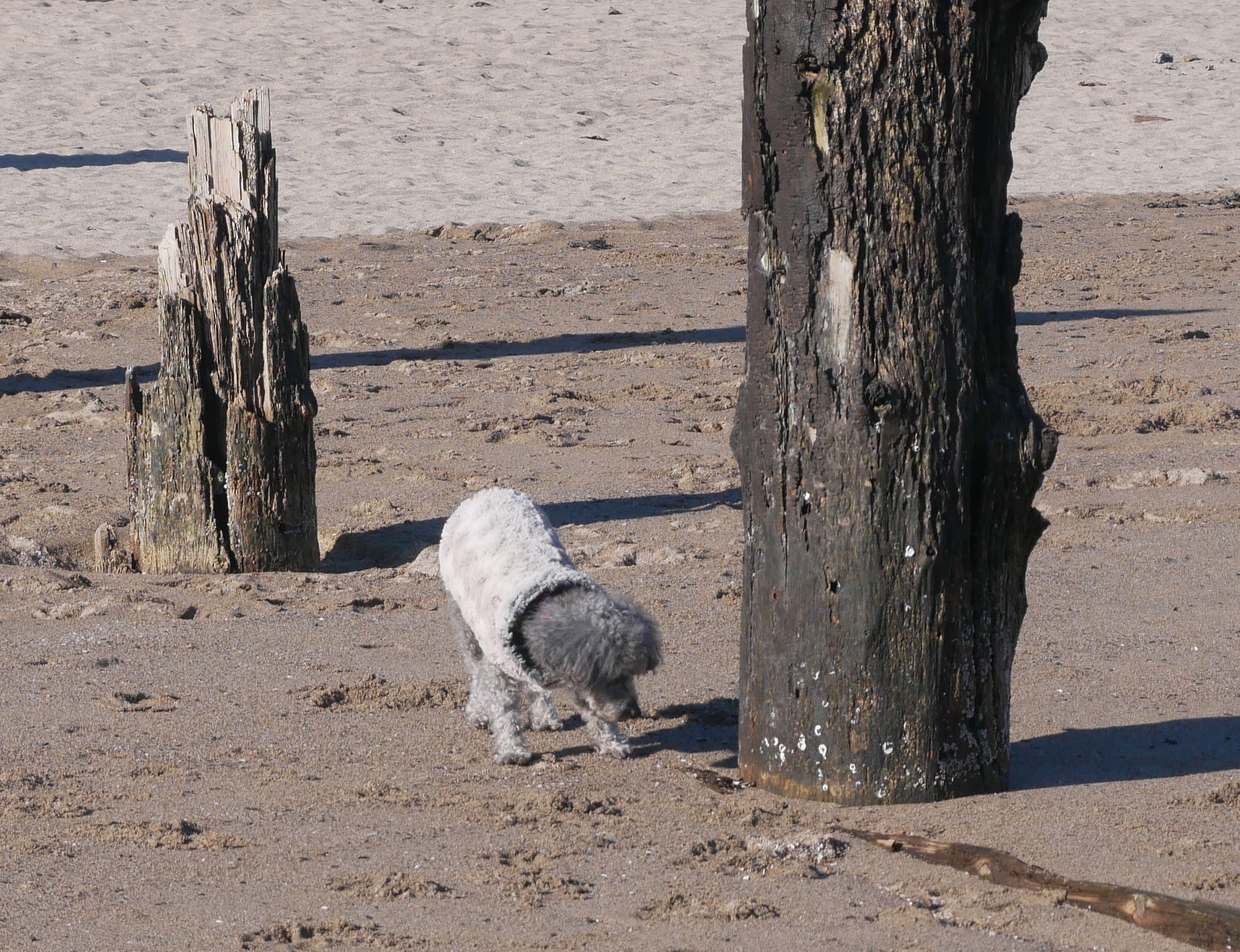
It’s too early for true spring, little dog. Aki squints up at me. She looks relaxed, not annoyed. Even through the temperature is below freezing, my gloveless hands are warm.
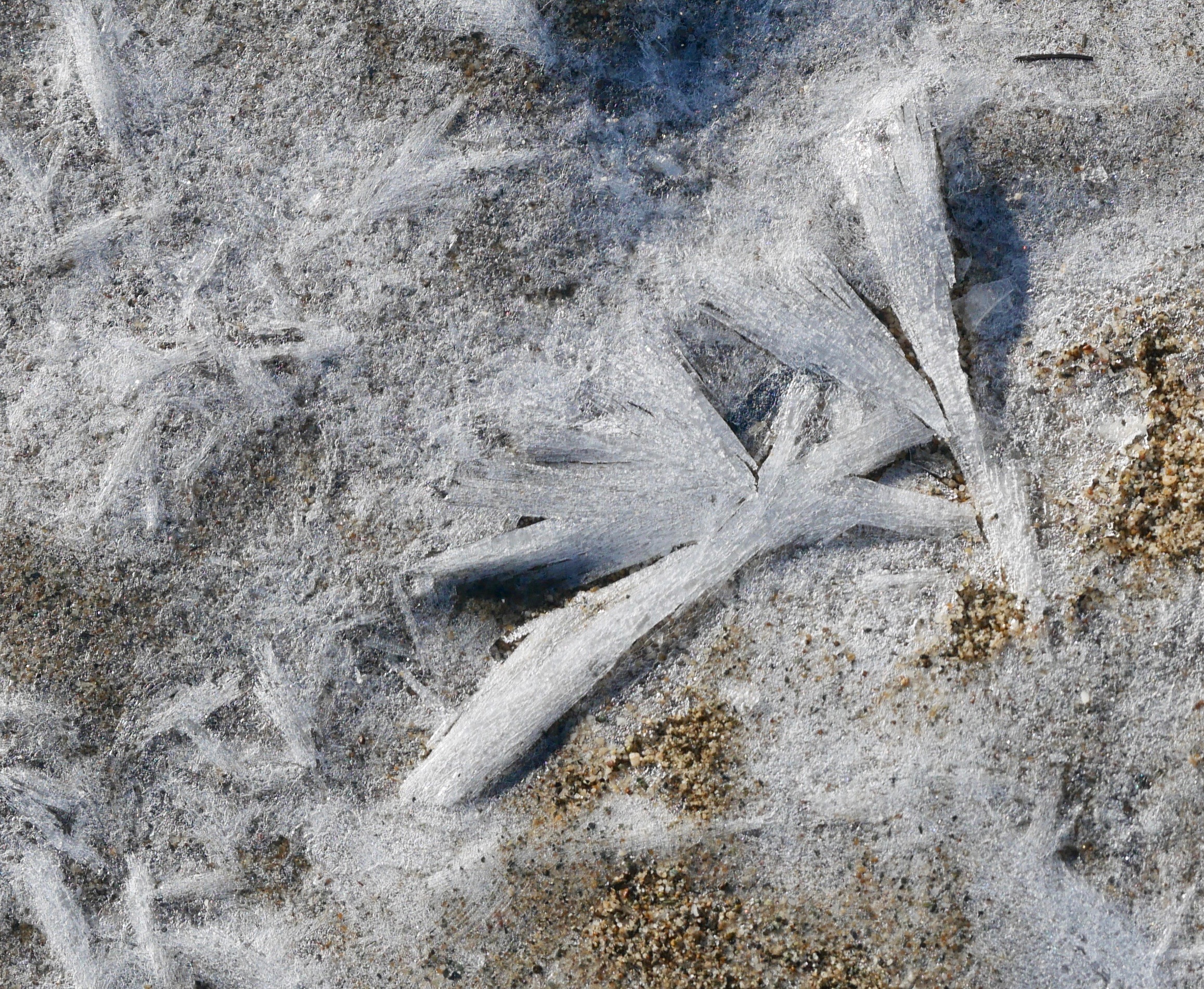
We crunch over still frozen sand toward the little bay formed by the collapse of the Treadwell mine tunnel. I look for bird tracks but see only those of dogs and their people. Just offshore, a small raft of golden eye ducks pull mussels off splinted pilings. We watch for several minutes until the head duck stares us down.

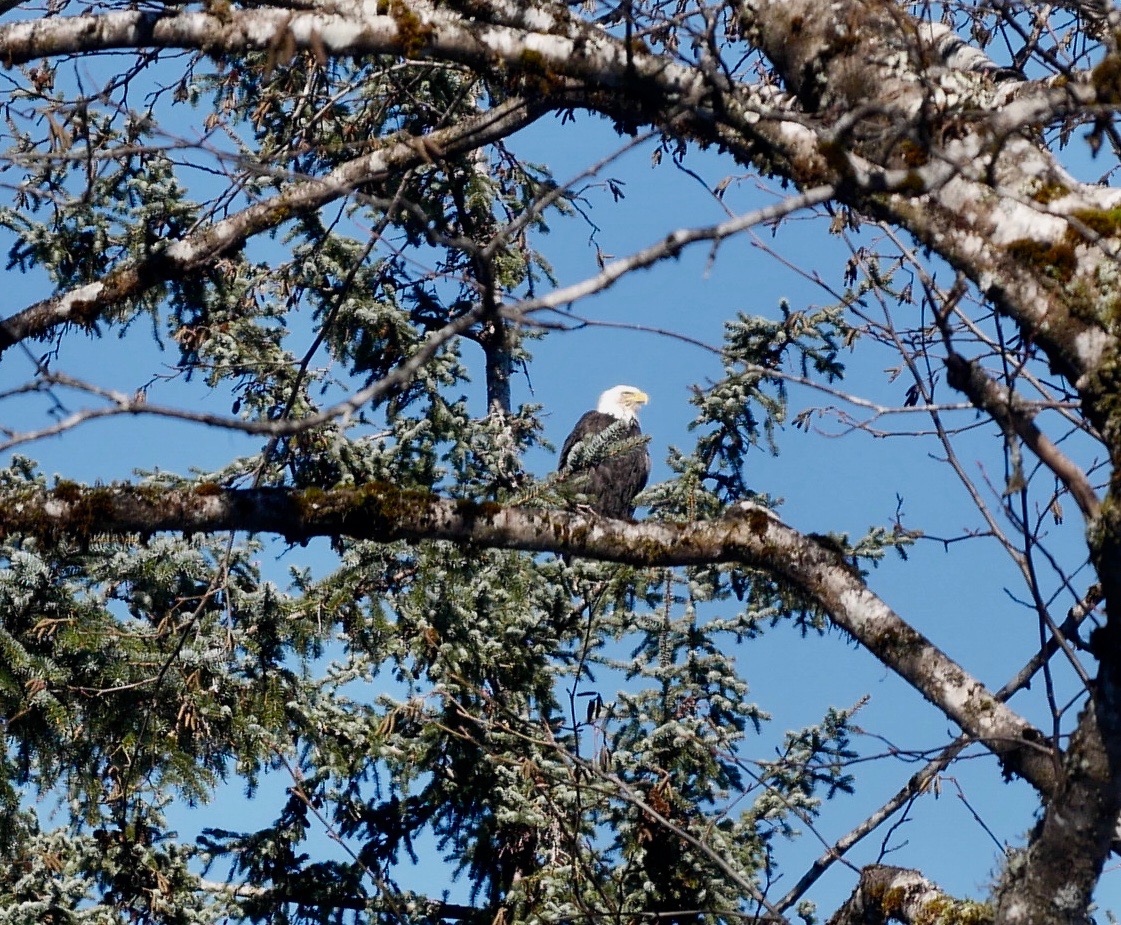
With regret, I lead the little dog off Sandy Beach and into the forested ruins of Treadwell. Even here, sunshine manages to dapple the snow-covered ground. A bald eagle gives itself away with a screech. I find him hidden in a snarl of spruce and cottonwood limbs, apparently enjoying the sun.
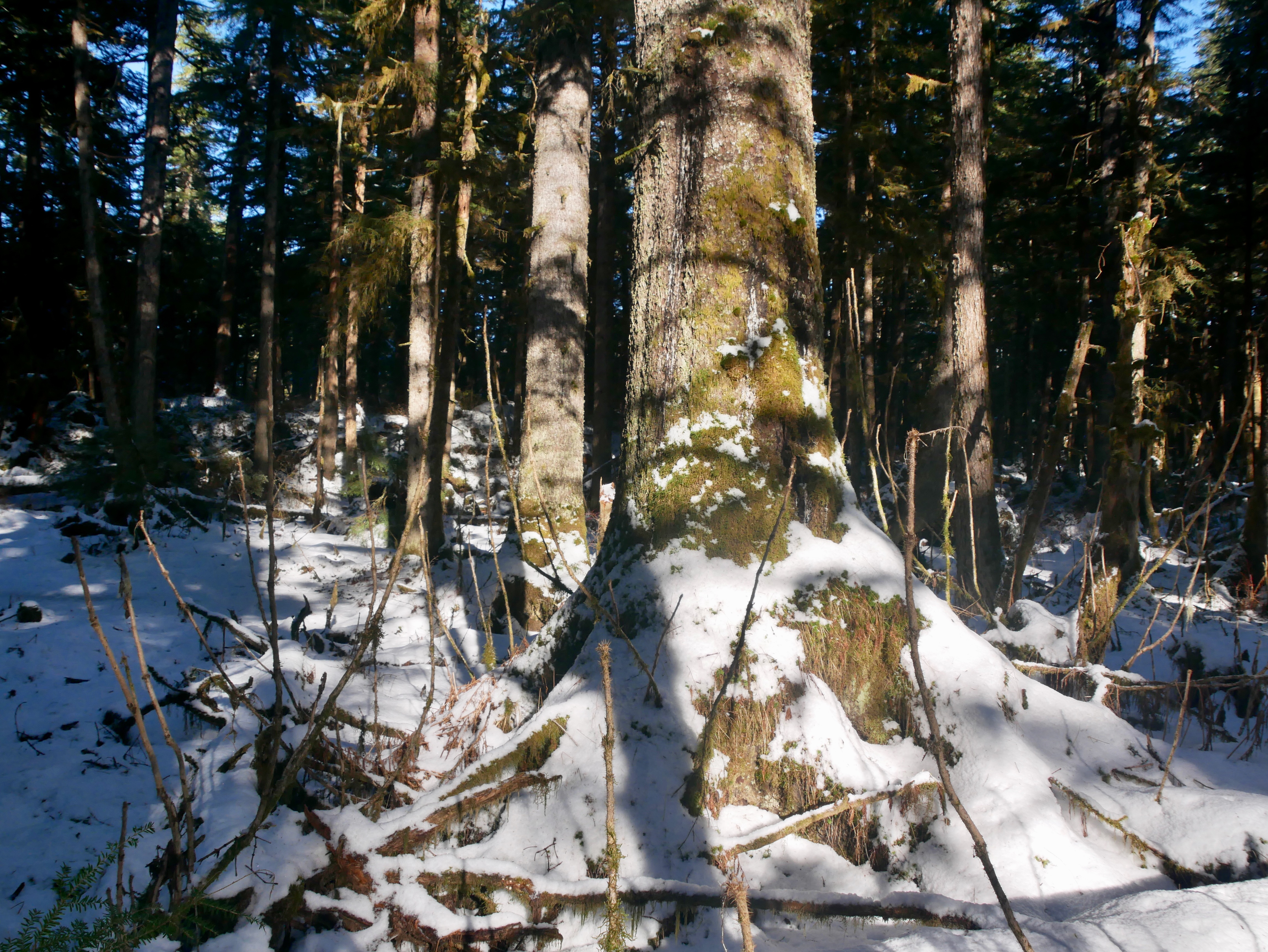
Aki and I head up Fish Creek. It’s the wrong choice for at least two reasons. The old growth spruce forest shades the trail. Ninety percent of Juneau’s other trails are sun flushed today. They also offer easier walking on packed paths. The little dog can trot over the top of the crusty snow that borders the path. Since I’d break through the crust, I must use my ice cleats to stay upright on the trail.

We could avoid the slick conditions and have a chance to walk in the sunshine if we dropped onto the frozen creek. But only tracks of the water-happy river otters dimple its surface. The forest deer stay off the creek. As I slog along, I wonder whether the sound of water running under ice intimidated the deer. It certainly discourages me from following the otter tracks.

Few dogs use the trail so nothing distracts Aki from her primary task—to keep me from doing something stupid. She does not follow me onto the creek ice to check out some eagle tracks. She gives me her “Are you kidding me” look when I glance back at her. She shifts into her “you finally figured it out” glare when I rejoin her on the trail. Chastened, I follow her back to the car.
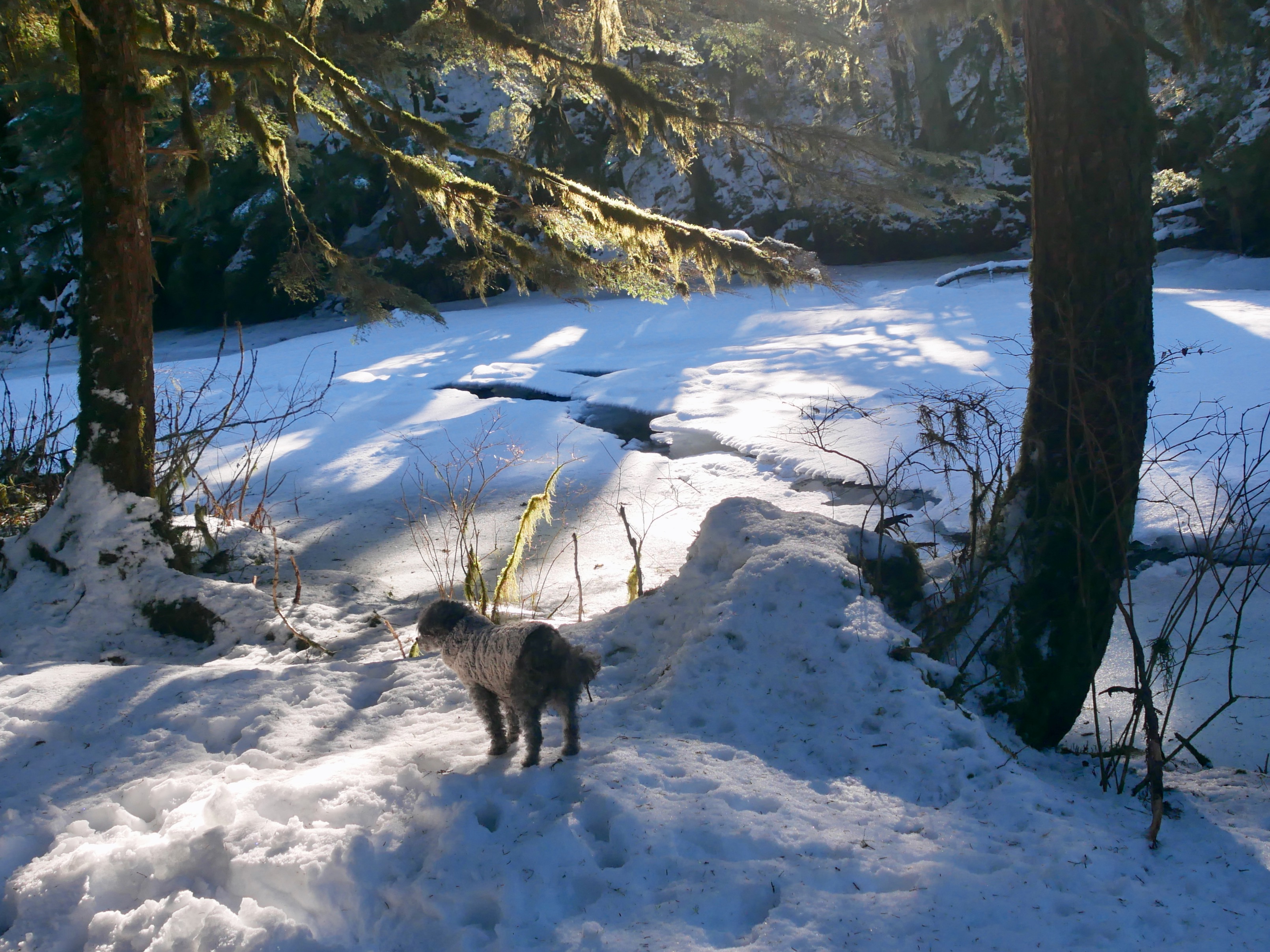
Sometime during the night a powerful high tide scattered 8-inch-thick pans of ice on the trail. The wet snowstorm that plagued us for several days moved on. Fresh morning light shines on the fresh snow covering Fish Creek Pond. As an added bonus, the snow provides good footing. When it melts in a hour or so, the ice-covered trail will be too slick to walk on without ice cleats.

At first the place is silent. No eagle cries as we round the pond and walk out onto the spit that separates Fish Creek from Fritz Cove. No mallard cackles. Then we hear a bald eagle complaint. On the grassy bank of the creek, the noisy eagle is spreading its wings to dry them. It has the white head and tail of a mature bird but the mottled wings of a young one. It looks wet and disheveled.

We won’t see any other birds on the way to the creek mouth. A man with his Labrador retriever will flushed them first by walking around on the wetlands. He will wear the camo clothing of a hunter but there is nothing for him to hunt.
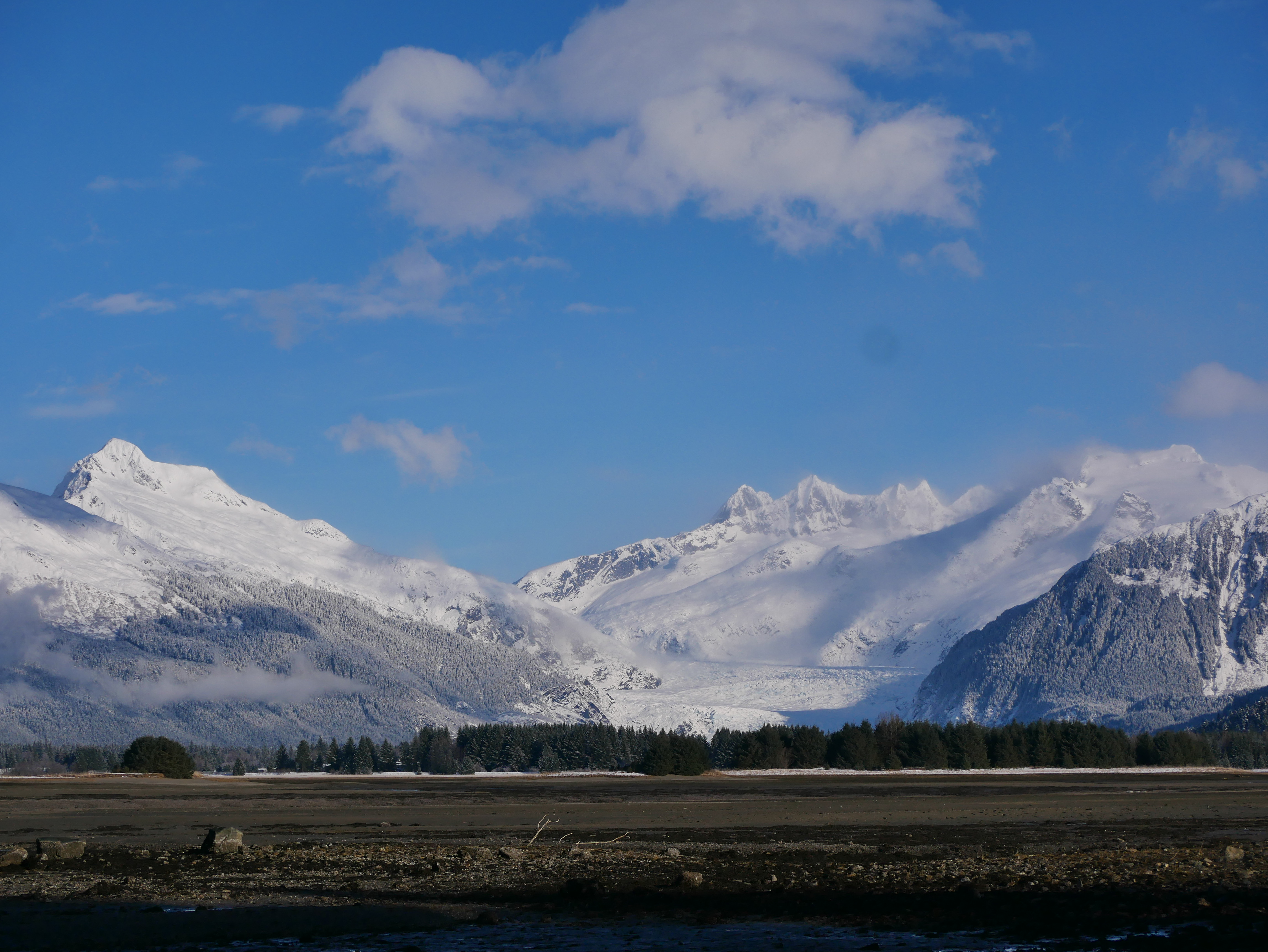
I will debate whether it is any of my business where the man walks. I will argue that it is his responsibility not to intimidate the wild residents off the wetlands when so much of the food-rich ground is exposed by a very low tide. I will follow Aki’s example and concentrate on the fresh light on fresh snow.

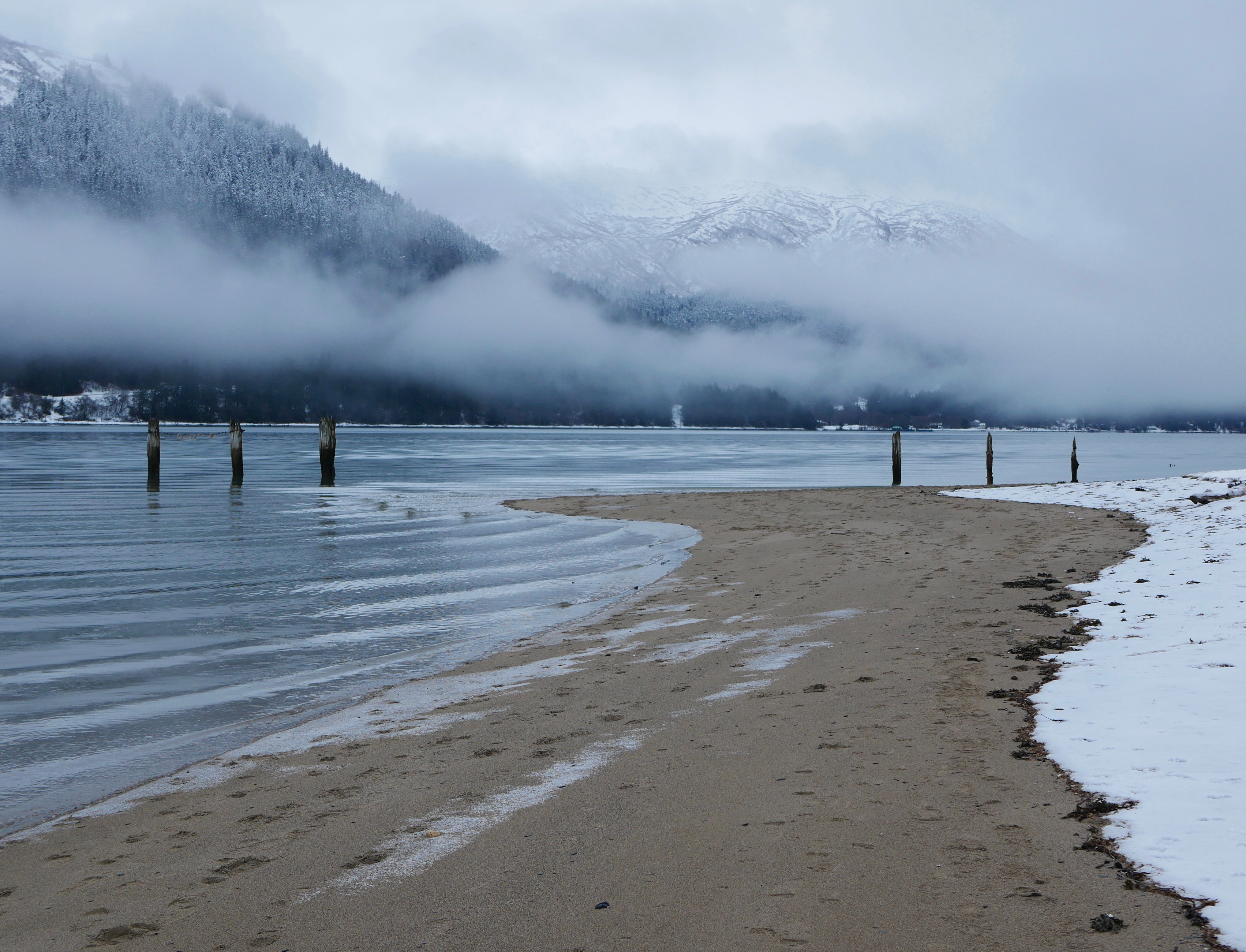
Minutes after we leave the Treadwell woods, two border collies start stalking Aki. They look so similar that I wonder if a sheep dog factory stamped them out. One of the collies is stretched out on the snow, head down, front legs stretched out, ready to charge forward. The other one creeps forward slowly, head down, using mincing steps. Now I know how a lost sheep must feel.

We are not in New Zealand and Aki is a poodle, not a lamb. As if to make that point two eagles roosting on the roof of the mine ventilation shaft let out their keening calls. I check the eyes of the collie dogs and then those of their owner. Finding no meanness, I relax and enjoy my little dog’s reaction.
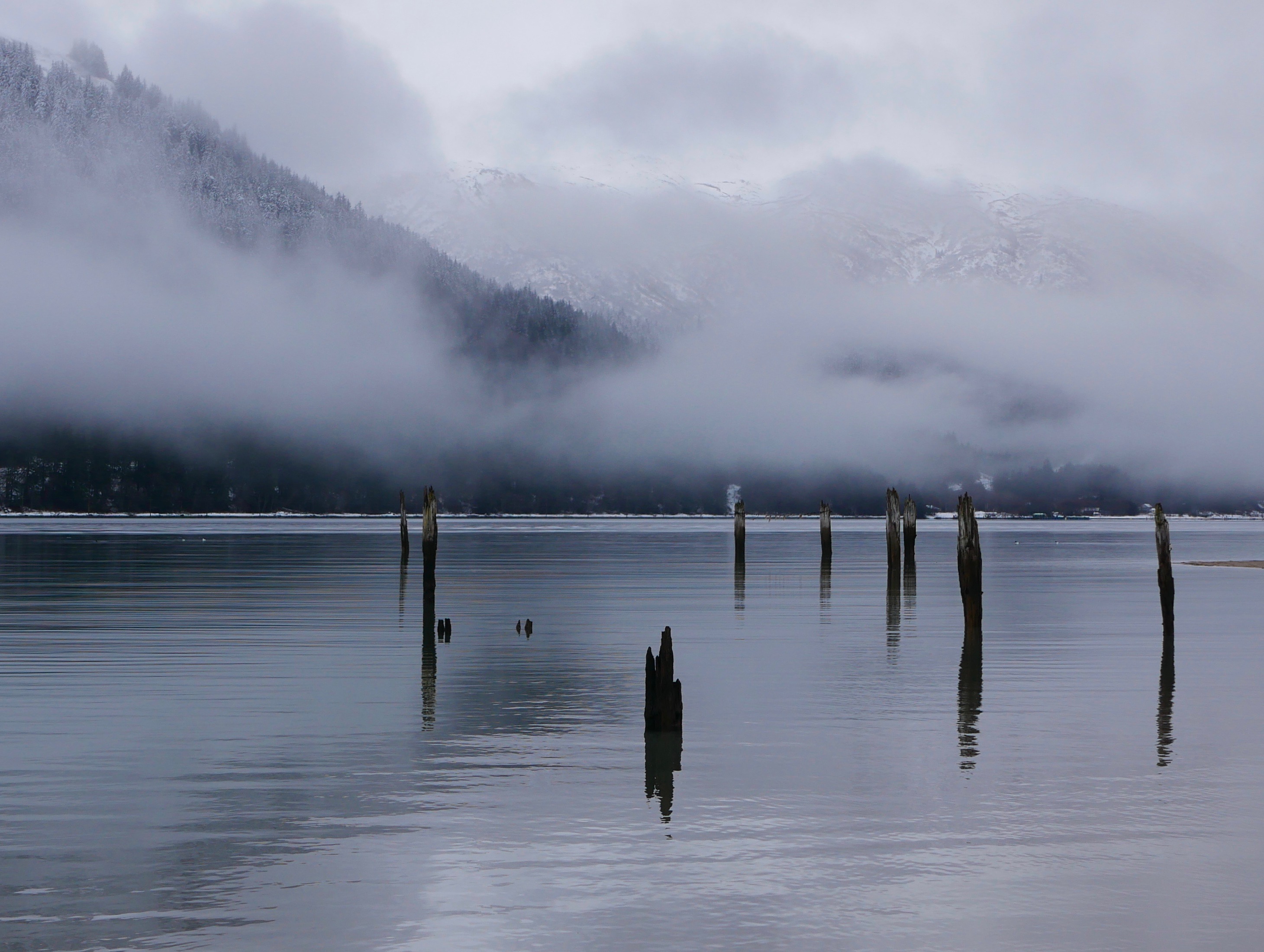
Aki stands as tall as she can, tail a metronome. When one of the collies breaks toward her, she dashes forward to meet him. They sniff and then Aki runs a circle around me, her tail now an invitation for the collies to chase her. When they do, she yips and drops low onto the sand. Normally the poodle-mix can always win this game. But these two sheep dogs work together to herd her, like seals driving pink salmon into a trap. Aki has met her match.
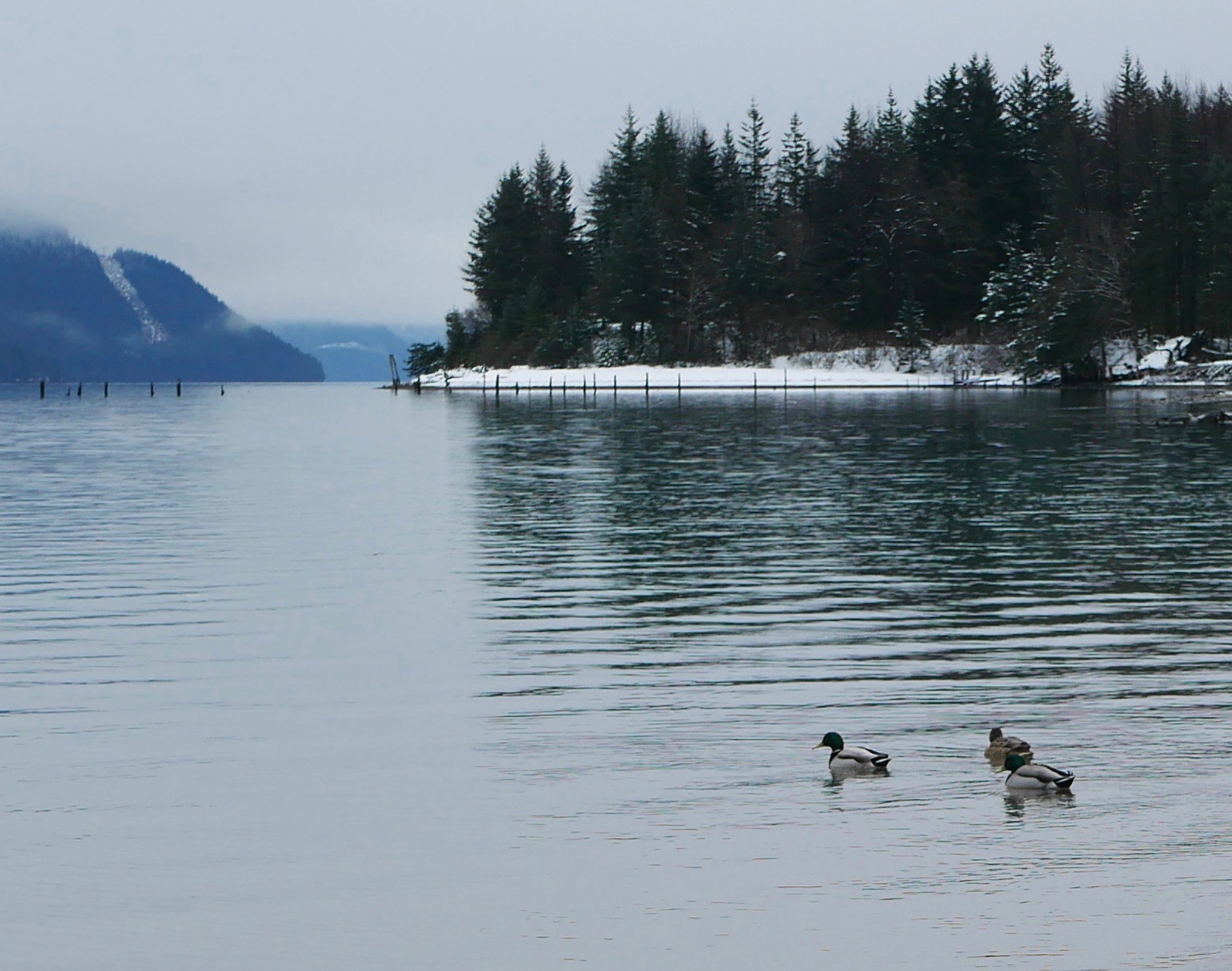
 Walking with Aki