Category Archives: Alaska Salmon

A Slow Day in the North Pass

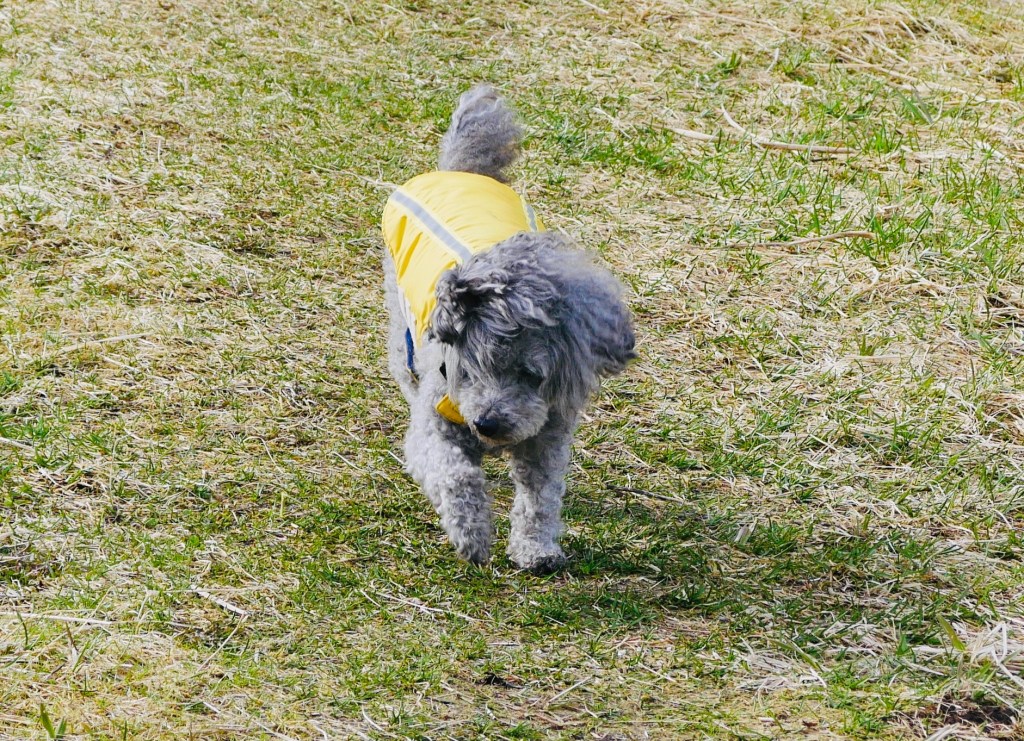
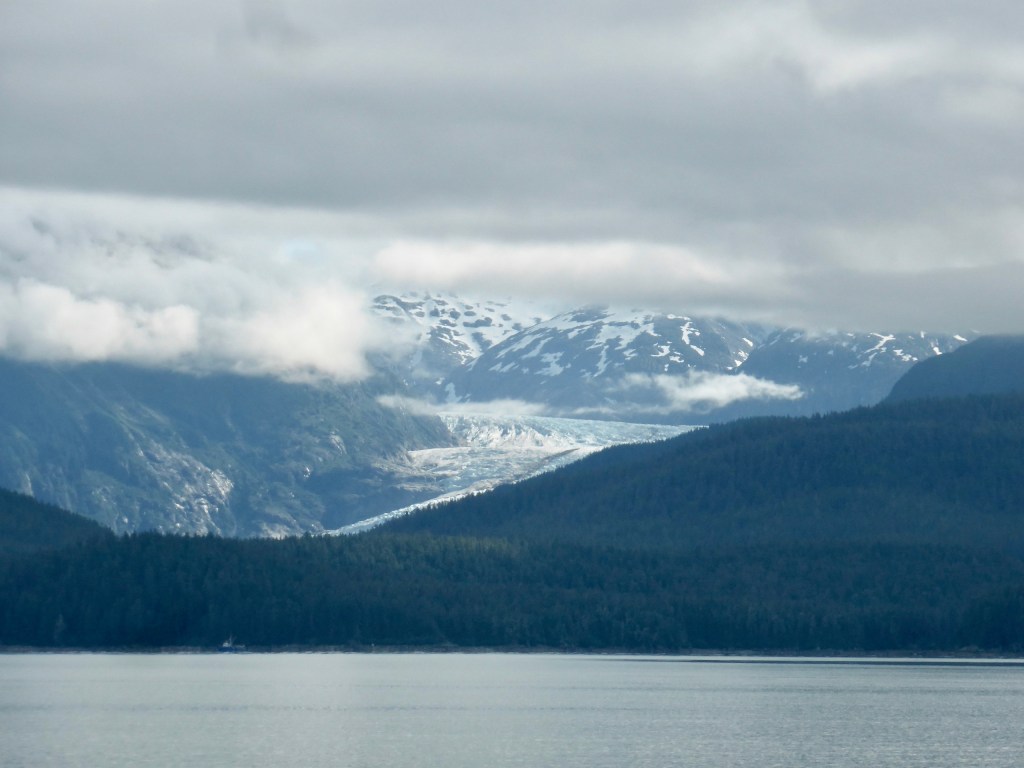
My hand reaches out for the little dog, but she is not there. My mind knows this but apparently, not my hand. Aki is cozy at home. I’m sitting on a folding chair on the deck of an old fishing boat. Two hooks baited with herring spin behind the boat as it moves through the north pass between Lincoln and Shelter Islands. 

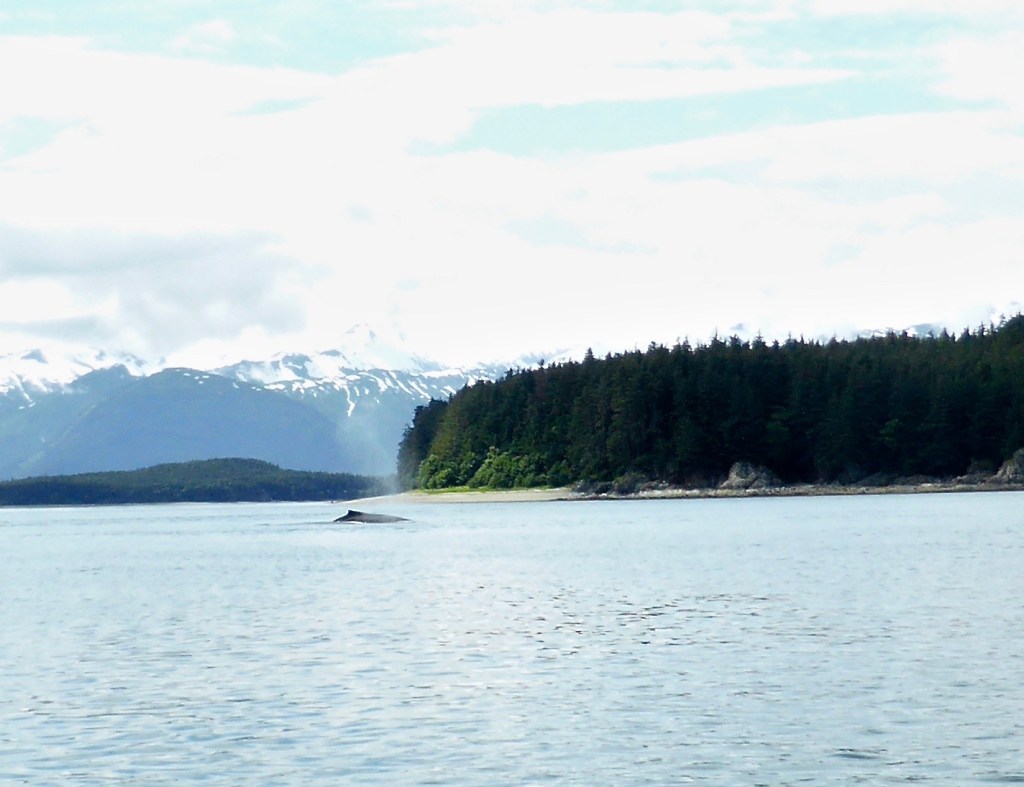
            Two eagles watch from Shelter Island. A sea lion follows in case we hook a coho salmon. It would see that we would not be able to get the salmon into the boat. A few minutes ago, three Dahl porpoise weaved in and out of the water to our right. In a half-an-hour, a humpback whale will do the same. 
            Salmon will make several attempts to pull herring from our hooks. One will be hooked briefly. Neither the sea lion nor I will catch a fish. 

The Heart of a Thrush

The dogs are in and they have brought the eagles.  “Chum” is the more polite name for dog salmon. Because they arrive in great numbers and aren’t as tasty as king or silver salmon, indigenous people of Northern Alaska dried chum salmon to feed their dog teams during the winter. Hence, the name. For some reason, rain forest people have also labeled chum salmon as dogs. 

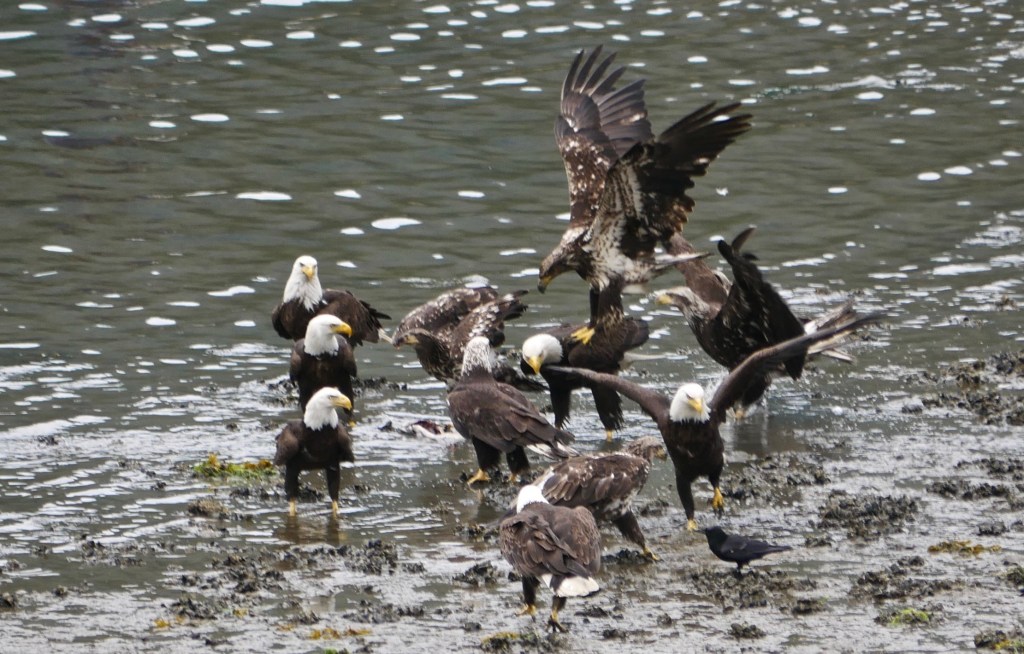
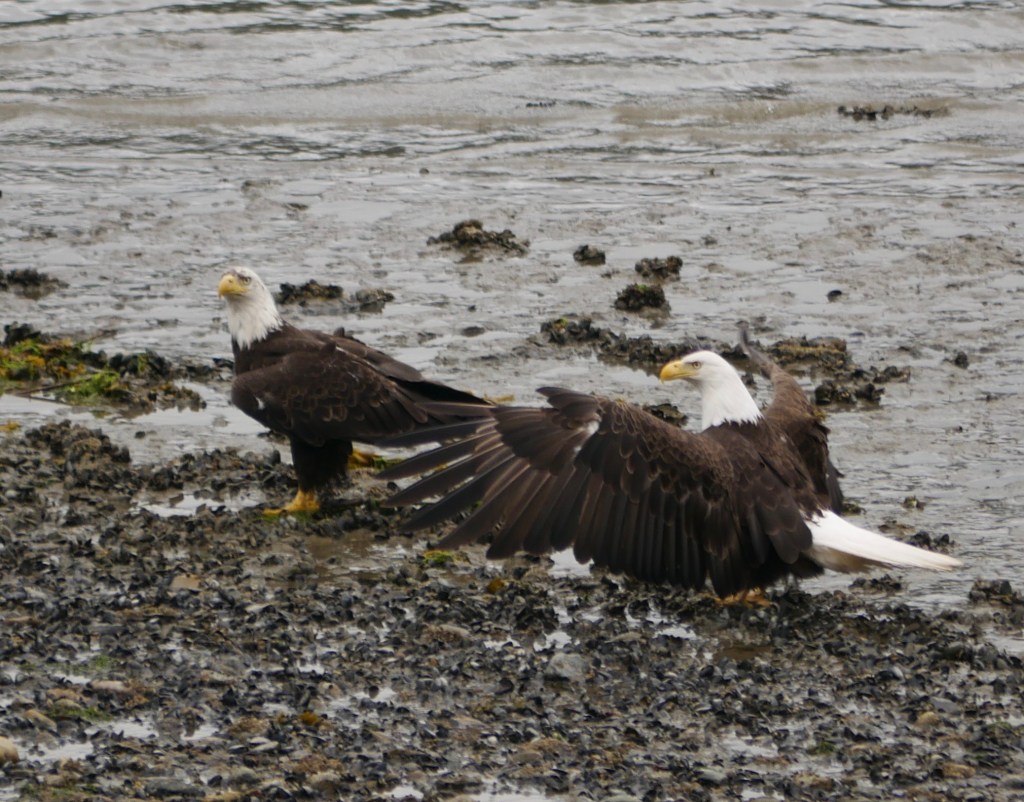
            Ten bald eagles scan the beach for dead dog salmon. Twenty more have grouped up around a half-eaten salmon carcass. In ones or twos, the eagles perching in the trees leave their roosts to fly low over the beach cabal. These fly overs don’t dislodge the eagles on the beach or drive off  the one crow brave enough to stand its ground near them.

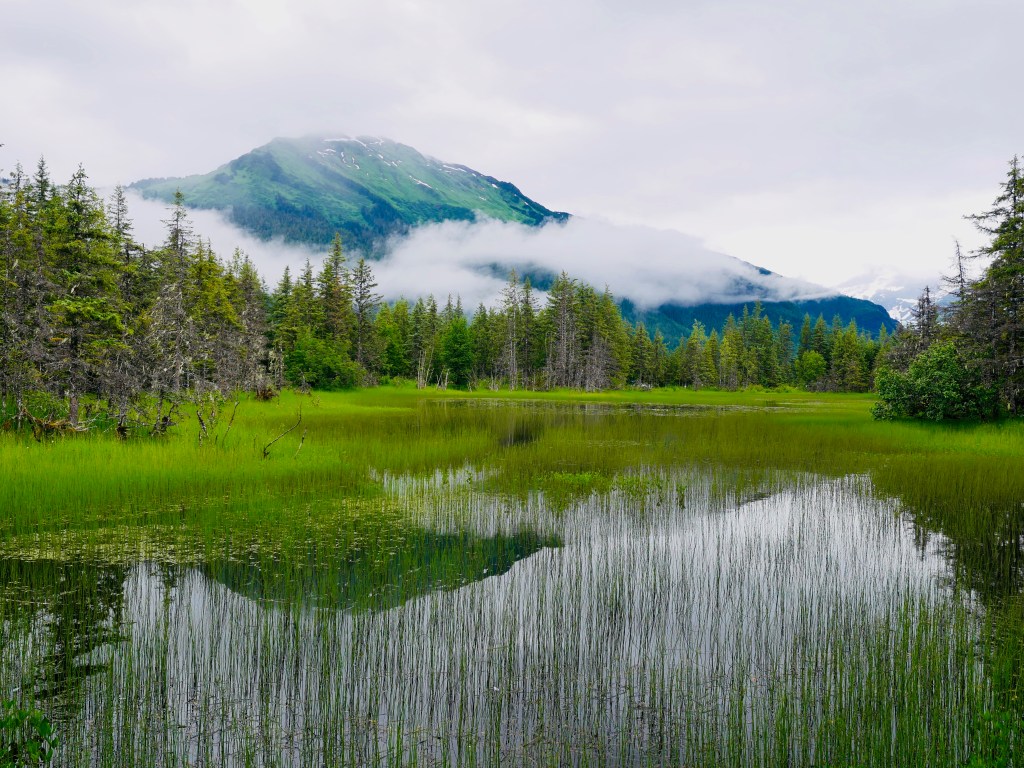
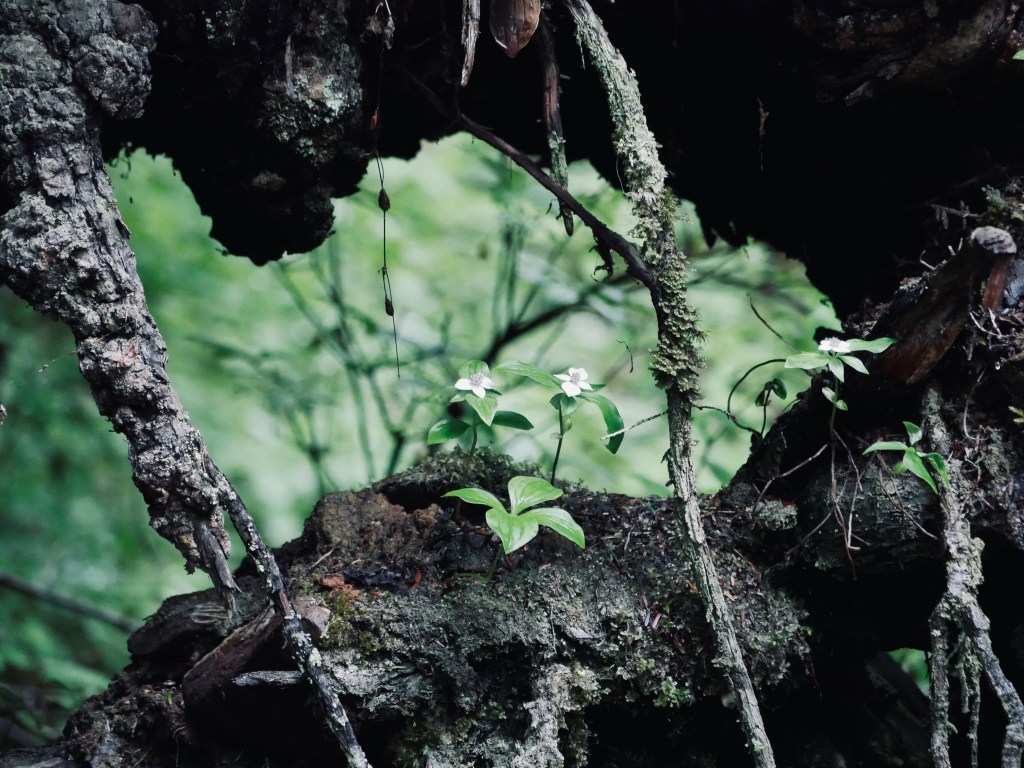
            It was much quieter on the glacier moraine where Aki and I spent the morning. Instead of watching bickering eagles we spied on a mallard hen and her chicks gliding through pond reeds. Lady Tress orchids provide white highlights to a predominately green landscape. 

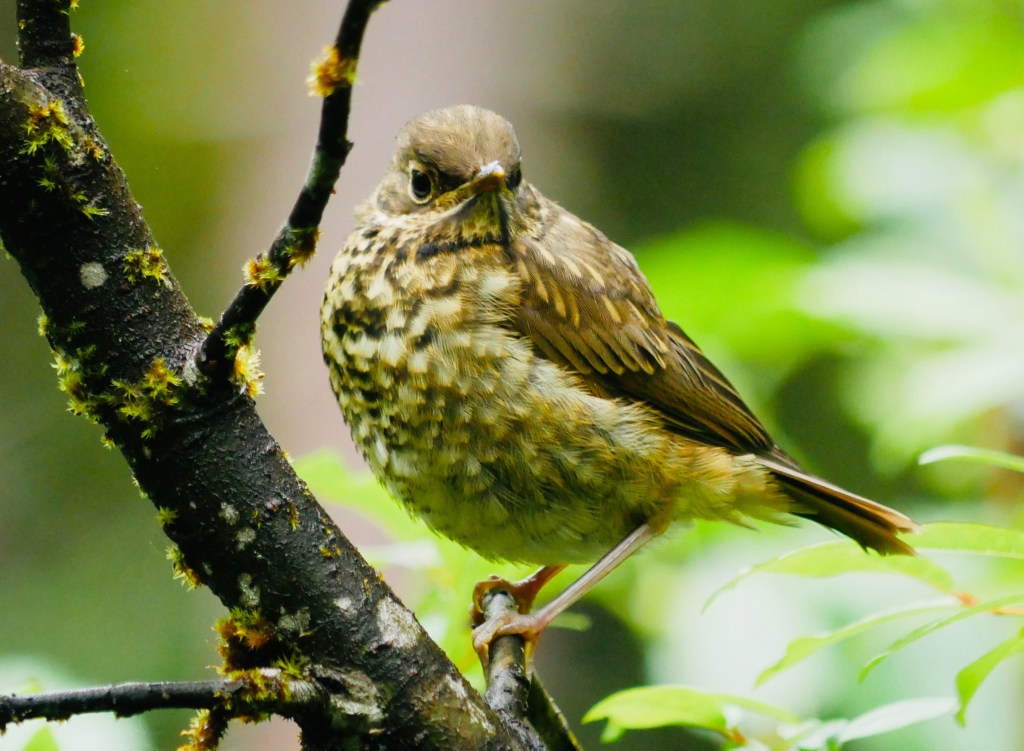
            Rather than eagle screams, the spiraling songs of the hermit thrush provided a song track for our walk. One flew onto a tree limb near us and gave me a policeman’s measuring stare. I’d hate to think of what would happen if eagles were as tough as a thrush.  

Harvest Time

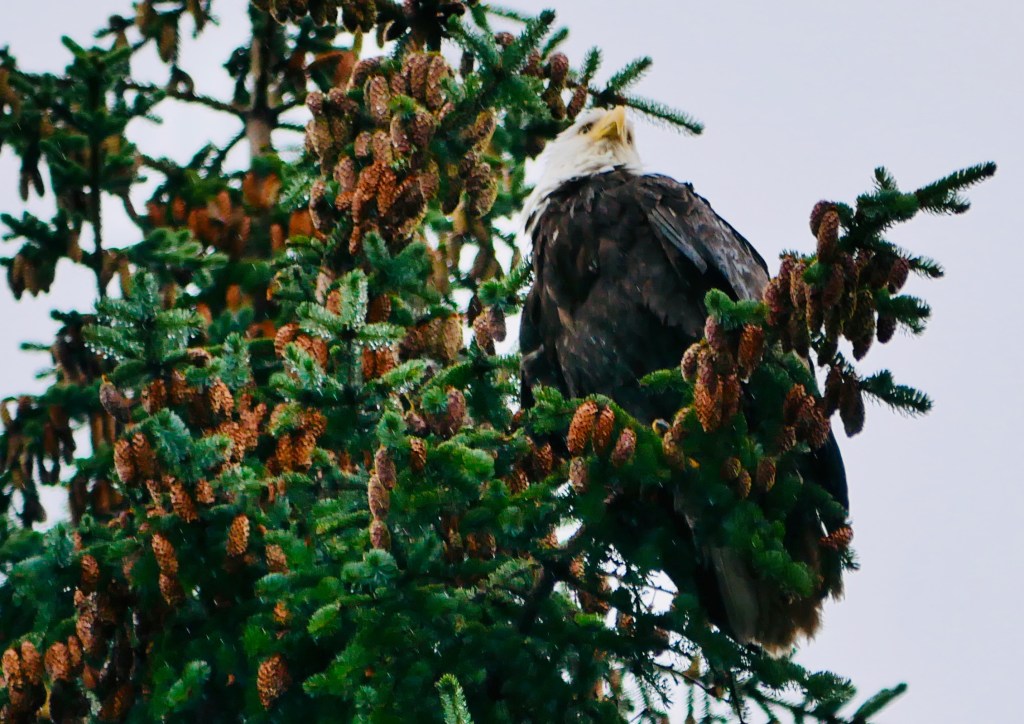
On an otherwise empty beach, Aki snuffles the sand. I watch her even though it means facing an up-channel breeze that throws rain in my face. Two eagles in a nearby tree also watch the little dog. They turn their heads away when I point my camera at them. They are waiting for something editable to wash ashore. 

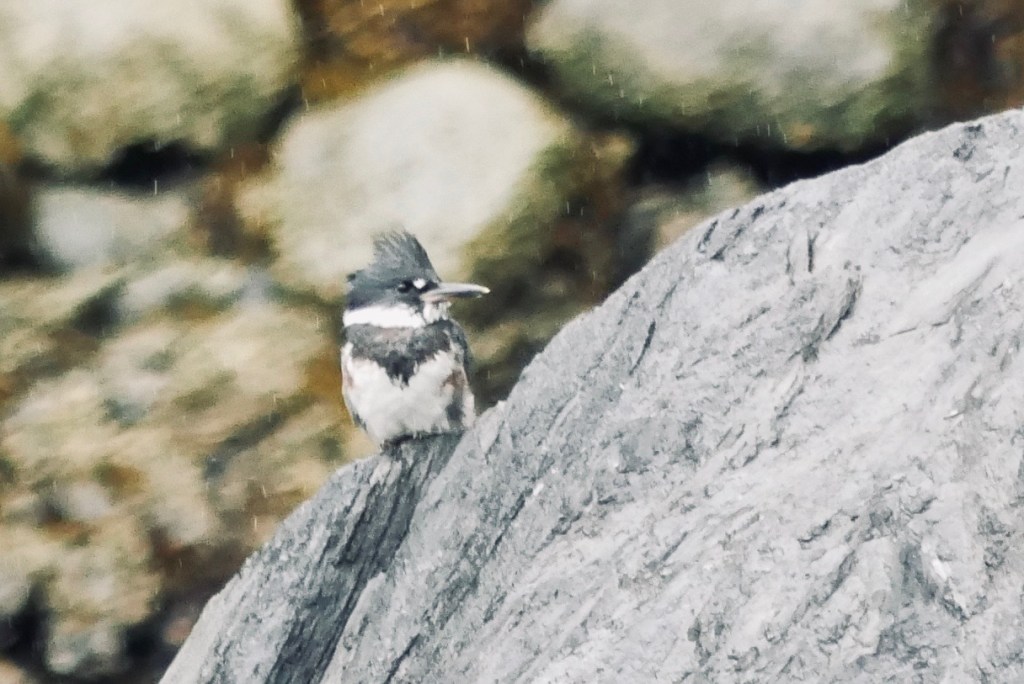
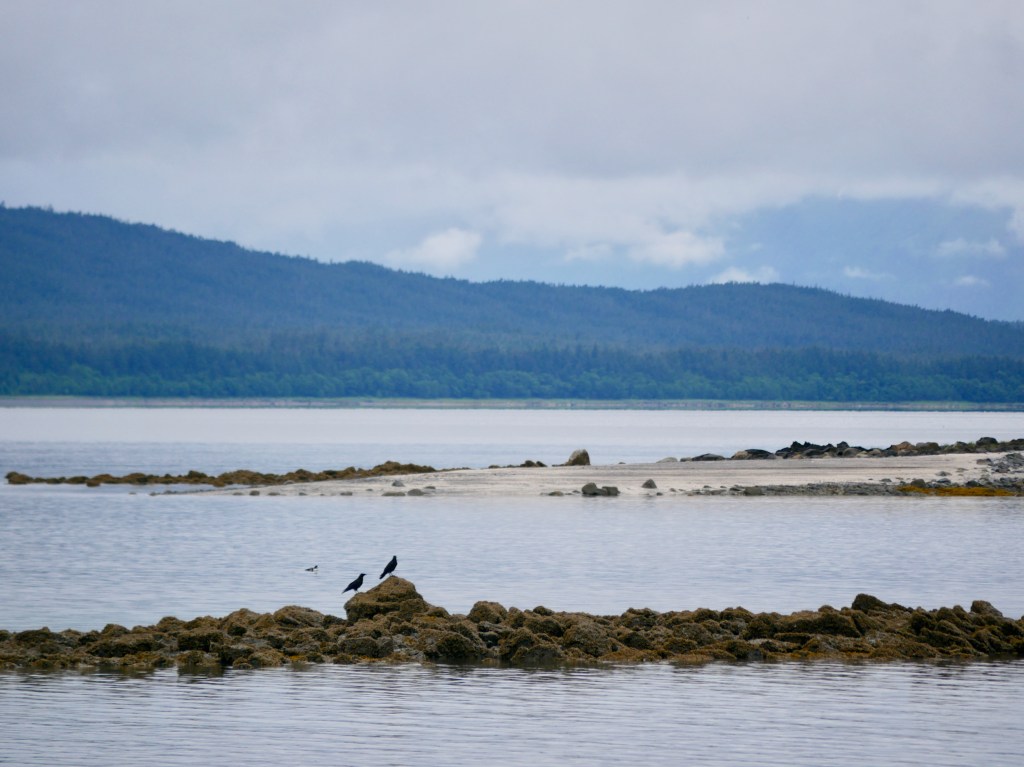
            In a week or so, the eagles will be pulling flesh from salmon carcasses marooned on the beach by the ebbing tide. For now, they must watch and wait for lesser fare. At least three more eagles roost in the beachside trees. Just down the beach, a belted kingfisher watches the glory hole bay while perched on a glacier erratic.

            The kingfisher won’t fly away unless I get really close. I don’t, choosing to watch it watching me through a curtain of rain. Inside the Treadwell Woods, I have a similar stare down with a pine siskin. It and the other song birds show no fear of Aki nor I, which surprises me given all the goof ball dogs that galumph through the woods. Then I realize that this is their  harvest time. 

Urban Eagles

Knowing that this year’s crop of dog salmon should already be heading up the Mendenhall River to spawn, I drive Aki out to a trail that leads to the river’s mouth. Usually we hear eagle and raven squabbles just after getting out of the car. This morning only robins and sparrows break the silence. The trail winds along a forested hillside, requiring the little dog and I to maneuver around and over exposed spruce roots. At first I worry that the Aki might reinjure her leg jumping over something. But she does fine.

            The beach, when we reach it, is as quiet as the woods. No salmon fin in eddies. No ducks or geese gossip on the shore. Here and there beach rocks are decorated with yellow flower petals. We will find these little dots of yellow on over a kilometer stretch of beach. A belted kingfisher scolds us and then lands on a rock near the river. Then we hear the first eagle. It screams from inside a tangle of spruce limbs. Other eagles will call out as we progress down the beach. But will only see one of them.

            On the drive back home, I stop at the hatchery where dog salmon wait to swim up a fish ladder to their death. Over a dozen bald eagles watch the salmon from perches in tree tops, pilings, and the top of the Juneau Empire building. Maybe made confident by their number, the eagles don’t seem bothered by our presence. Unlike their hard scrabble Mendenhall River cousins, these urban birds look large and in charge.    

Annihilator

The waters of Sheep Creek look empty this morning. In a week or two, pink or chum salmon fight here for spawning space. Eagles and gulls will watch from the beach or while perched in nearby trees. Aki won’t be able to hear me over the sounds of gull shrieks. Now she can hear a whisper. 

            At the edge of the creek delta, fishermen stand where we have sometimes seen herons. They try to catch king salmon moving up Gastineau Channel to the hatchery. But the main pulse of kings is already queuing up at the foot of the hatchery fish ladder.

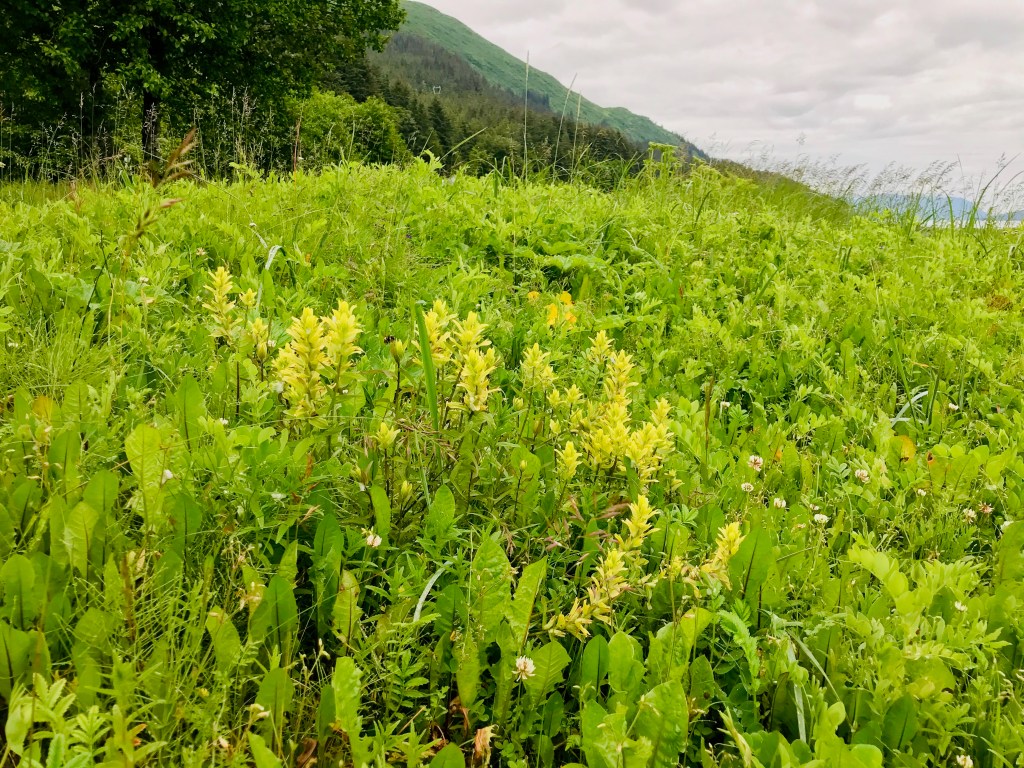
            The little dog and I walk down the beach along a dune covered with tall, thick grass. Except for patches of yellow paintbrush flowers, the scene is green. Just offshore the fishing boat “Annihilator” floats at anchor. It’s a surprise that the manager of our fisheries so they will be sustainable, would allow an annihilator anyway near the fish. 
Early Salmon

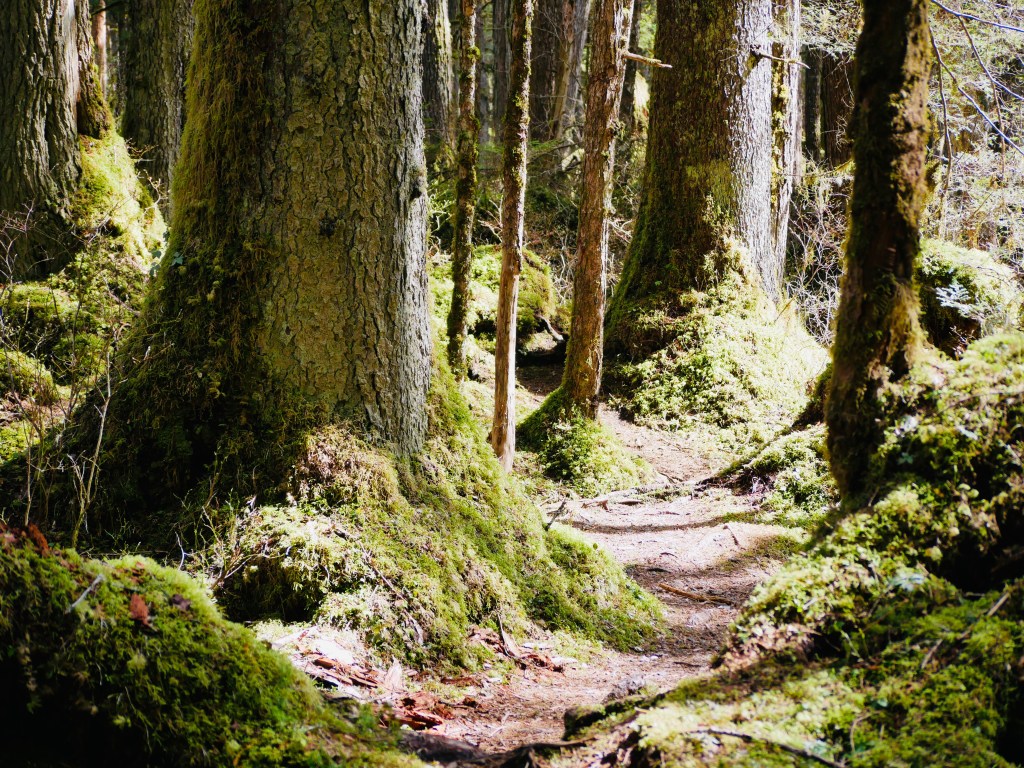
Aki and I have just walked into the rain forest. I swear that my blood pressure dropped the instant we stepped under the canopy. Maybe it’s the muted light or the sound of a downy woodpecker tapping on a spruce trunk. It might be the lush green colors that dominate this time of year. Aki does her business and stares up at me, like she is considering calling an ambulance if I don’t come out of my trance. 

            After assuring her that all is if fine, she leads me down to the beaver pond and where the mallard family lurk in a blind of reeds. Later I’ll spot a rambunctious bird dog splashing into water near Shaman Island and assume that he did the same on the beaver pond. 

            Not wanting to contribute to the mallard hen’s stress, I follow Aki down the beach trail. A seal swims just offshore, hunting for silver salmon about to leave salt water for their spawning stream. Yesterday, I hunted salmon in Lynn Canal, boating a silver-bright chum salmon. Last night, while Aki chowed down a scrap of the salmon’s ski mixed with rice, her humans enjoyed what the seal sought.  

Trail Less Traveled

Aki is frustrated. She and I have spent the last hour driving from one trailhead parking lot to another, looking for one that is not jammed with cars. She can’t understand why we have to avoid crowded trails. The Fish Creek parking lot has a half-a-dozen cars but it services three trails. We take the one least traveled. That will make all the difference. We will only have to pass three guys, and that at place to will allow us to keep three meters of distance.

            Our chosen trail takes us up the creek, past an amazing number of huge spruce trees. Many might have sucked water from the creek during the English Civil War. Most stood before white people arrived in North America.

   Few fish swim in the creek. It’s too early for adult salmon. Until they arrive, there will be no trout or dolly vardens. By now, most of the salmon smolt have made it to salt water. If we see a flash of silver in the stream, it will be a spawning steelhead trout.

            We can hear bird song when the trail takes us away from the noisy creek. Two male sap suckers pound spruce bark, trying to attract a mate. Nearby, a trio of pine siskens lands on a wind fallen spruce to tear thin strips from the bark for nests.   

Salmon and Birds

An adult bald eagle circles over the meadow where Aki and I stand. I check to make sure that the little dog is too close to me to be eagle bait and then turn to watch the eagle. Low angle sunshine lights up the eagle’s white head and enriches the chestnut tones of its wing feathers. Taking advantage of its two-meter wingspan, it lets the wind carry it higher over our heads. 

 When the eagle’s mate calls out from a nearby spruce top, it glides toward a nearby one, hovers for a second over its apex, and lands, talons first on a thin branch. The tree top sways with the eagle’s sudden weight, rocking the big bird back and forth until it settles. Once stable, the eagle watches a yellow legs sandpiper quick stepping across the shallows of a small pond.  

Earlier in the walk we watched two guys from the hatchery installing net pens for holding king salmon smolt. While the we watch the eagle watch the sandpiper, we can hear the sound of salmon smolt being pumped from a tanker truck into the pens. After four months in the pens, the smolt will be released. They will make their way down stream to the ocean. 

Adult king salmon, released from the pens over four years ago, will pass the smolt as they swim upstream to the pond. The big salmon, some weighing more than ten kilos, will wander around the pond, trying to find a way to satisfy their instinctual urge to spawn. A few might follow silver salmon upstream to their spawning gravel. Most will be caught by fishermen or bears. 

Nest Fights

This morning we have wind-driven rain and a sky full of swarming scavengers. Just a few meters above the tree tops ravens and eagles juke away from and dive on each other. The ravens are making all the noise. Hampered by my rain-spotted glasses I first assume that a raven gang is trying to drive one eagle away from the forest and the river beach it fronts.  After wiping the glasses down with a handkerchief, I can see more than one eagle.

In less than a month, king salmon will rest in nearby river eddies before making their final push to the spawning grounds. Pink, chum, and silver salmons will follow. For most of the summer, the nutrient-rich carcasses of spawned out salmon will drift up onto the beach. Ravens and eagles tough enough to establish nests along the beach will have more than enough food for their chicks.

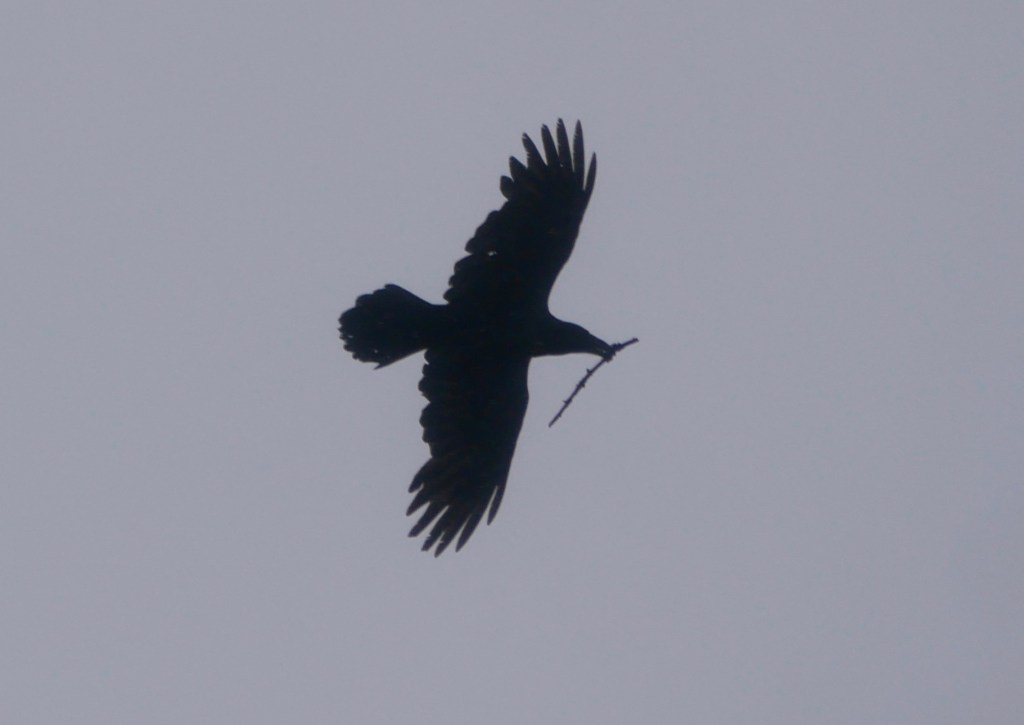
Eagles are doing most of the nest building. One eagle tries to keep a clump of old man’s beard lichen in its beak as it barrel rolls to escape two ravens. A third eagles takes advantage of the distraction to carry a cottonwood twig to its nest site. The members of the two bird clans are having a free-for-all fight over nest building materials. 

Calm Water, Deep Snow

I’m rushing to reach a vantage point before the wake of an outbound salmon troller shatters the reflection of Mt. Roberts. Tired from struggling in the soft-deep snow, Aki isn’t keeping pace. She catches up with me just after I take a few photos of the mountain. Soon she is following close at my heals, taking advantage of the trail I am punching into the snow. 

            The tide is in, pushing up against the snow line. Seeing a strip of exposed sand at the waterline, I plod over to it. Instead of a dry, snow-free strip made for poodle passage, I find a soggy mess. My boots would sink as deep in the sand as they do in the snow. Aki no doubt wonders “What the heck” as I lead her away from the sand. 

            I take the first trail off the beach and enter the Treadwell Woods. Aki flashes past me. At the deep bay caused by a mine tunnel collapse, handful of Barrow golden eye ducks fish. Out in Gastineau Channel another salmon troller heads toward Taku Inlet. Tomorrow, while passing Harris Harbor, I’ll look for a hand painted “Fresh Winter Kings for Sale” sign.