Monthly Archives: March 2020

Duck Diplomacy

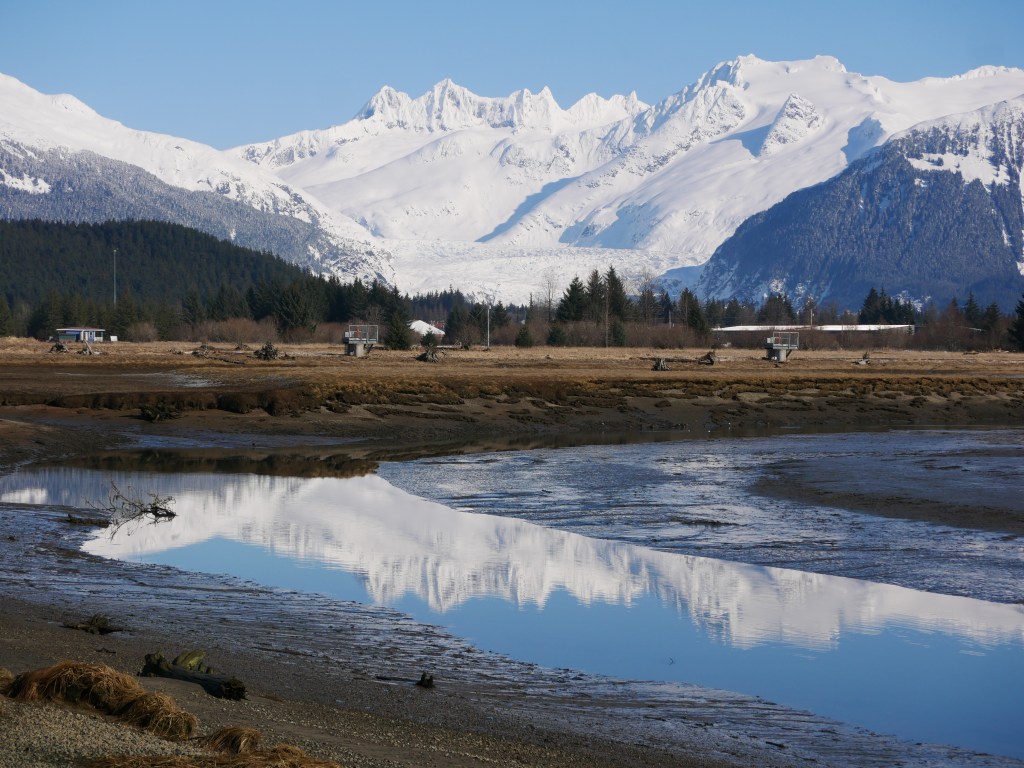
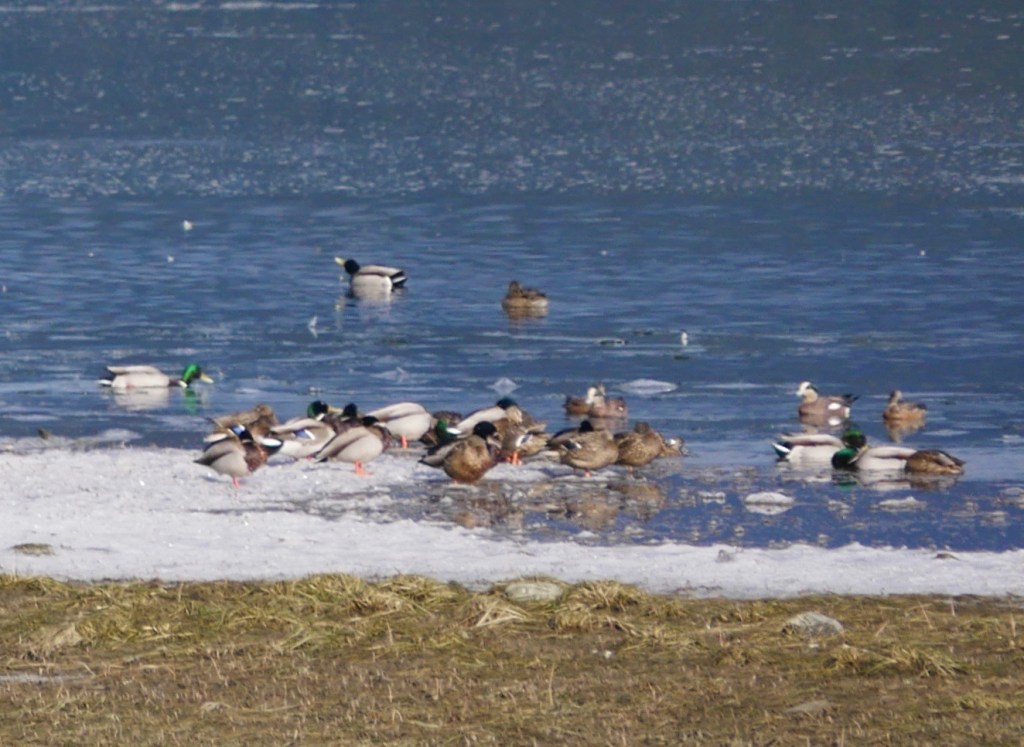
The mallards are gathering along Fish Creek. A medium-high flood tide is pushing them off the wetlands in threes and fours. They fly past the face of Mendenhall Glacier and up the creek, circle like they are waiting for a parking place to open up, and then splash down on the water. Each new group of arrivals is welcomed with maniacal mallard laughs. 

            Some of the incoming ducks are American widgeons. After they settle on the water, they chuckle hellos to the mallards. Widgeon diplomacy must work. In no time the mallards and widgeons are peacefully sharing the same water.
            This morning most of the birds are heard but not seen. Two eagles screech when we walk close to their roosts but we will never spot them. The trail side woods are full of junkos and siskins too shy to show themselves. Unseen varied thrusts punctuate the smaller birds’ songs with their shrill one note calls. 
            A small raft of Barrow golden-eye ducks cruises near the Fritz Cove shore. Each drake looks like a miniature common loon.  Further off shore several buffle-head drakes start squabbling over fishing rights until two of them leave. One of them walks on water for a meter before going airborne. Soon all the buffleheads are spread out like naval pickets on blockade duty. When one splash dives on bait fish every bufflehead on the cove collects around it. 

You've Gotta Love These Guys

Even though they are as common as lice in in urban and suburban centers, the presence of Canadian geese always excites me. Maybe it’s because here they hunt for their food rather than nibble golf course grass. This morning, one of our local flocks follows the flood tide up the Eagle Beach bar. The sun shines over my shoulder and onto the chestnut sides of the geese. I can almost make out the feather details.

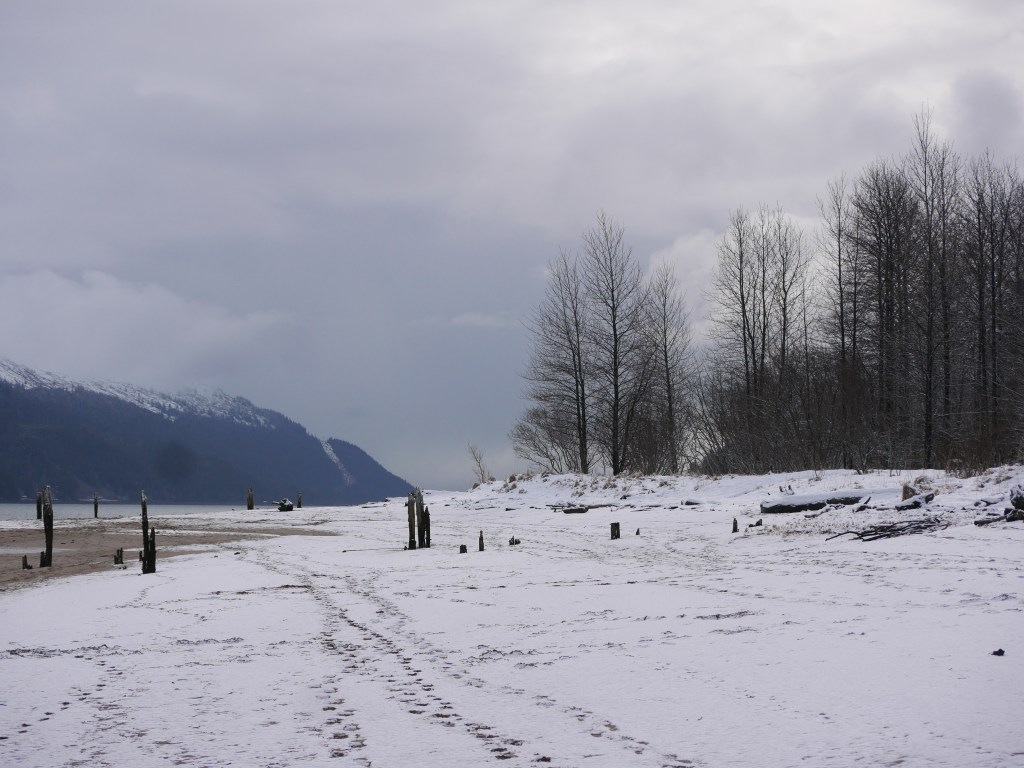
            Aki and I are crunching along a snow-covered portion of the beach. It is calm but the north wind is already whipping down Lynn Canal, raising a building surf. When it reaches this beach it will feel more like winter than early spring. 

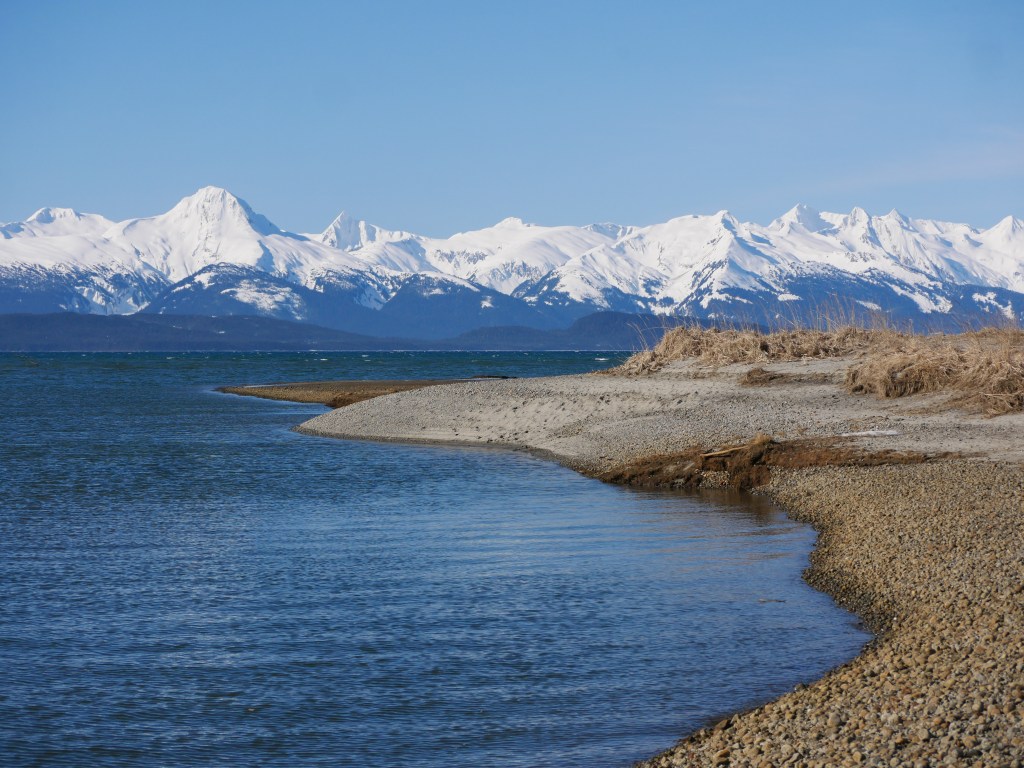
            The sunlight that strikes the geese is also brightening the white sides of the Chilkat Range. It seems like months since I’ve last seen these mountains that form the western edge of Lynn Canal. 

            On the way from the car we spotted a large flock of gulls tucked together as tight as puppies on a sand bar. When the tide must flooded their sandy nest the gulls formed a sudden avian cloud above the surf line, startling a cabal of crows into the air. The now black and white cloud pulses above the canal, some birds settling on the water, only to explode back into the air. When the tide retreats off the beach, they settle back into their puppy pile. 

Nervous and Mellow Swans

Aki and I have returned to the moraine, looking for swans. A little superstitious, and more than willing to indulge in magical thinking, I intend to take the same route to the river eddy where yesterday we saw the swans.               

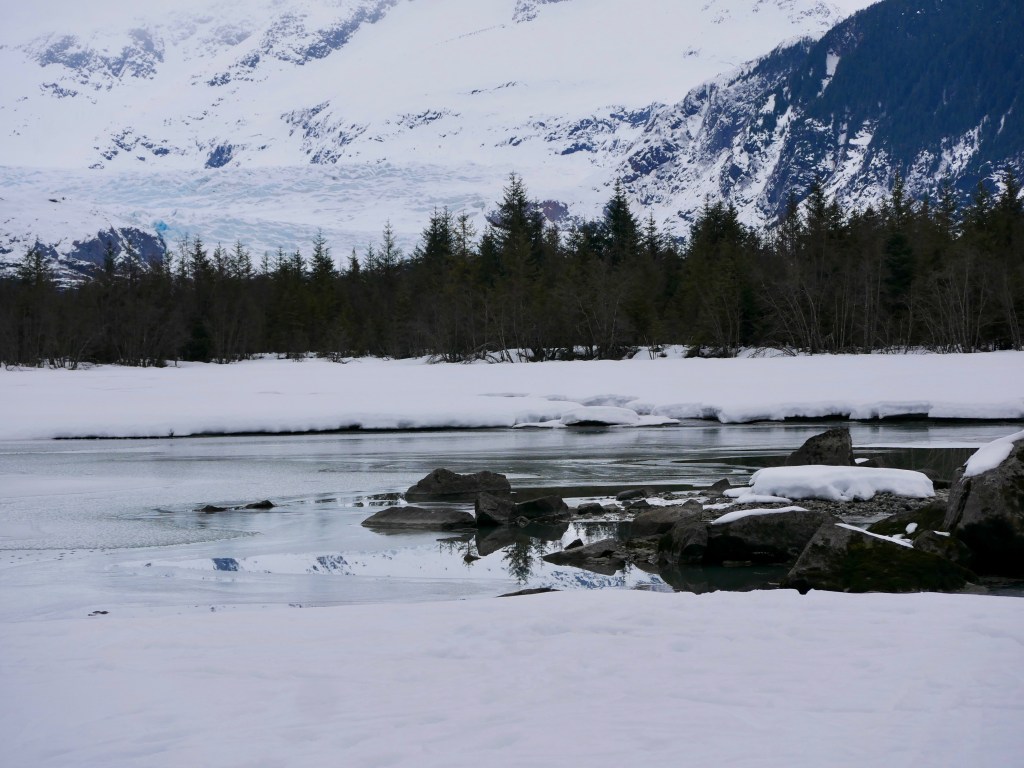
            Unlike yesterday, there is no sunshine to soften the snow or blue sky to act as a backdrop for the Mendenhall towers and Mt. McGinnis. The top of the towers and mountain are partially obscured by clouds. But the Mendenhall Lake is skiable. I shush along the surface with the little dog in my wake. Careful not to ski too close to open water, I reach the river where the trail snow is still icy from last night’s freeze. 

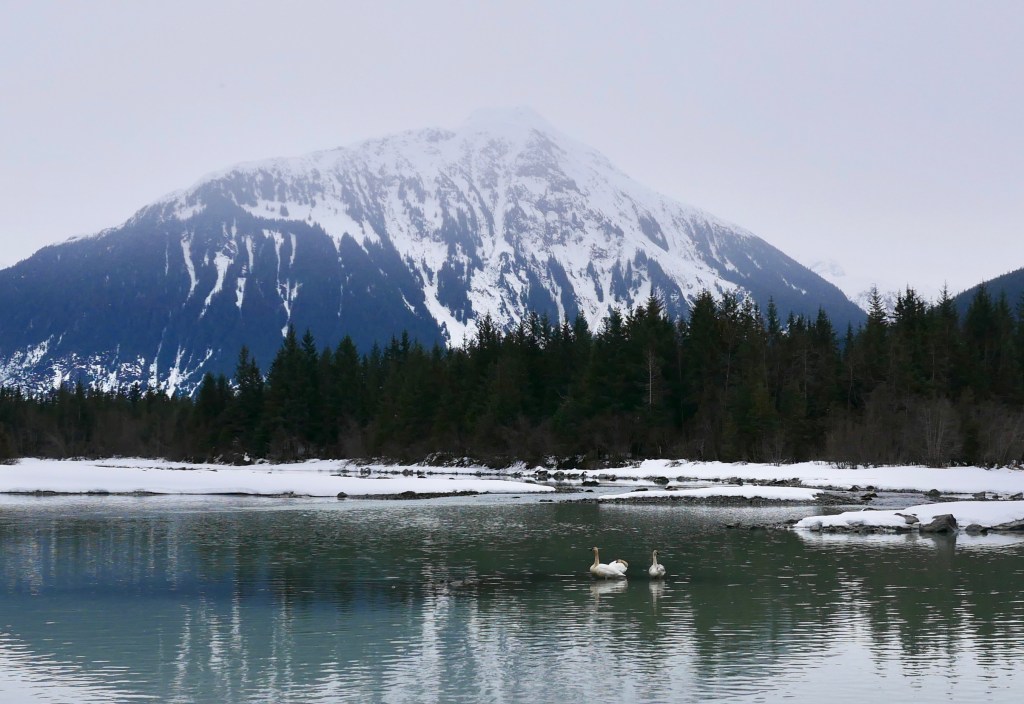
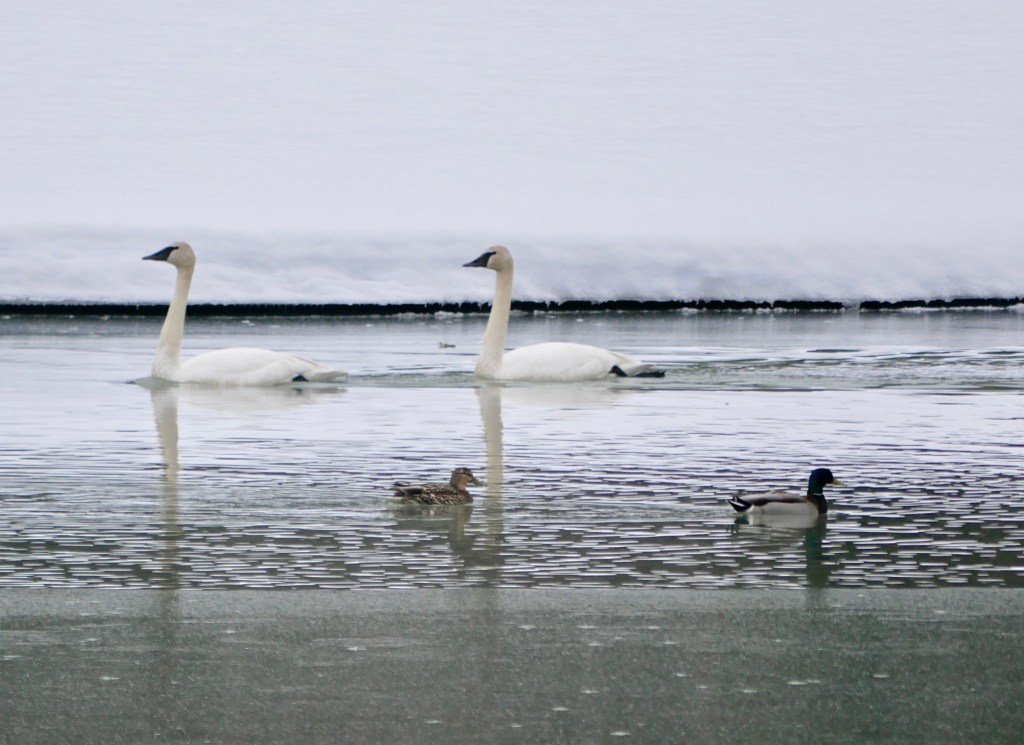
            What yesterday was a carefree trail softened by sunshine ski is now a tense transit along the running river. When we reach the eddy I look for the trumpeter swans we saw before but spot only mallards. In the patch of open water below the eddy two tundra swans paddle down river. They pivot back in our direct just before reaching the ice edge. Compared to yesterday’s trumpeters, the tundra swans seem edgy. They mutter their “oo oo oo” call and never stop paddlng.

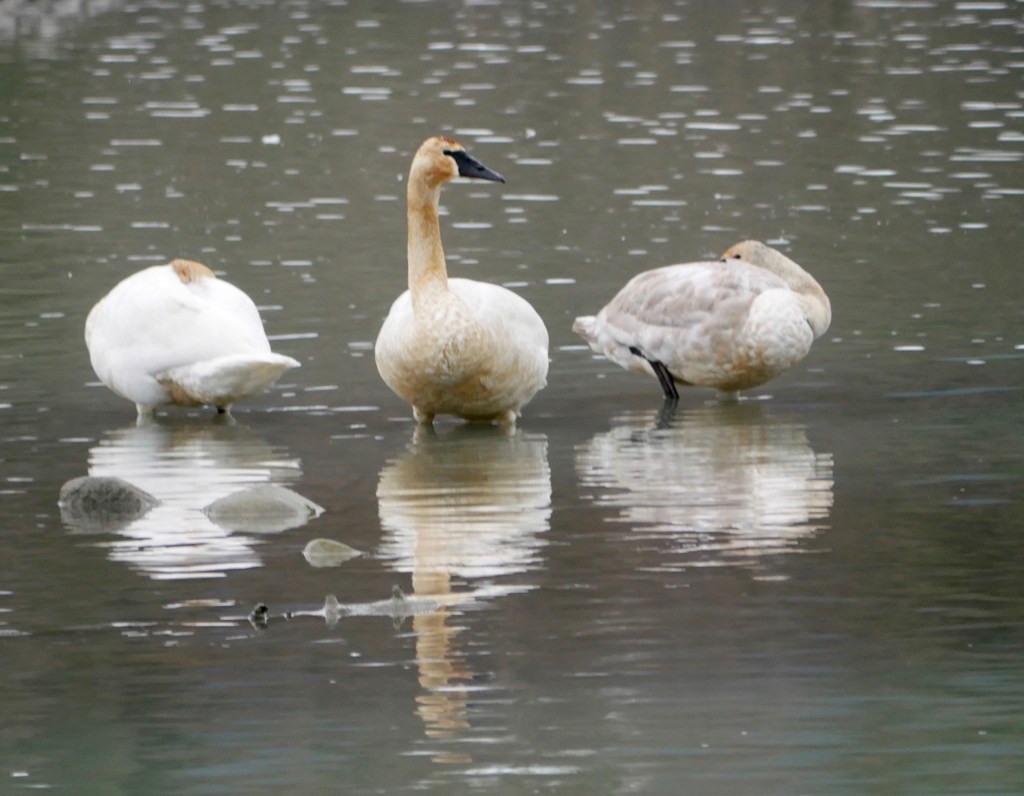
            After watching the nervous tundra swans for a few minutes, I start back down the river. There, maybe five meters from the trail are yesterday’s three trumpeters. They stand on a high spot in the river bottom. One watches us approach as the other two sleep, beaks poked into their wing feathers.

            Do they feel safe, maybe even invulnerable thanks to their five-meter moat? Or are they just too tired from their long migration to care? 

Fast Ice and Swans

Far out on Mendenhall Lake an exclamation point and a period move toward us. In a minute the punctuation marks transform into a skiing man and his dog. Assured that the lake ice is now firm enough, I ski onto the lake. Aki follows and the passes me. Soon she is running in large circles. 

            The glacier grows in size as I move further onto the ice. The conditions are perfect—five centimeters of sugar snow on firm, flat ice—almost too perfect. We are moving fast. Soon the little dog and I will be reduced to punctuation marks when seen from the beach. Worrying about skiing onto ice weakened by hidden currents or underwater springs, I head over toward the beach. 

            We cross a series of points and small bays to reach the Mendenhall River, which still runs dark and free. I can’t remember a winter cold enough to silence it. Something honks as we approach the place where the trail leaves the river bank and enters the woods. 
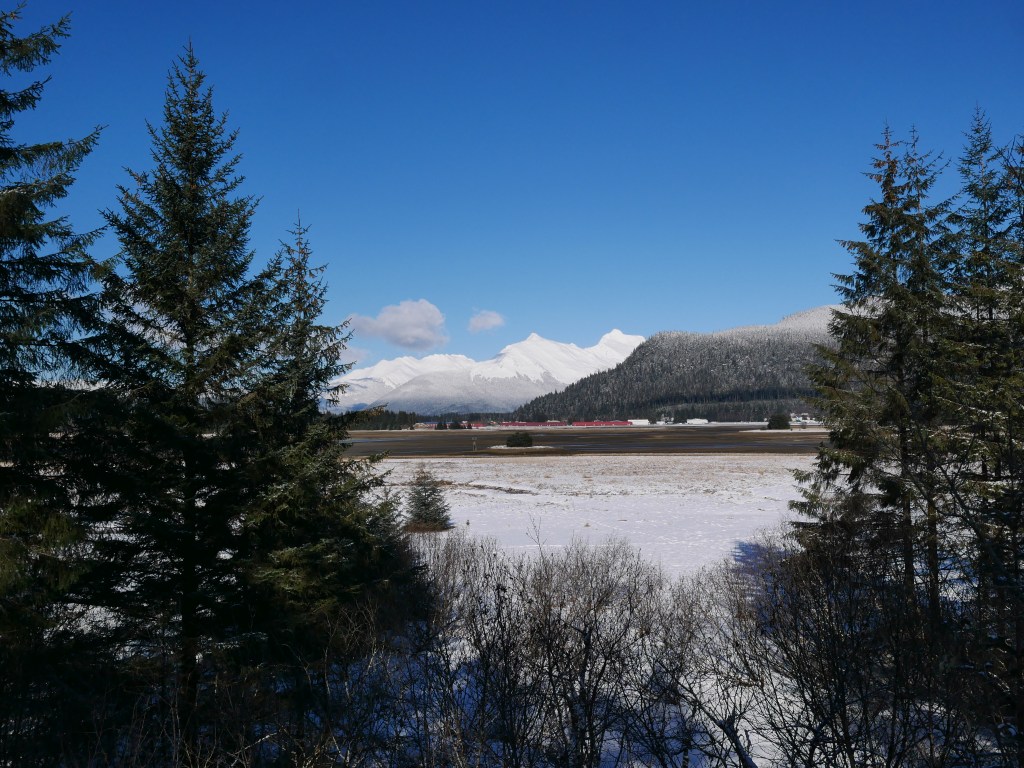
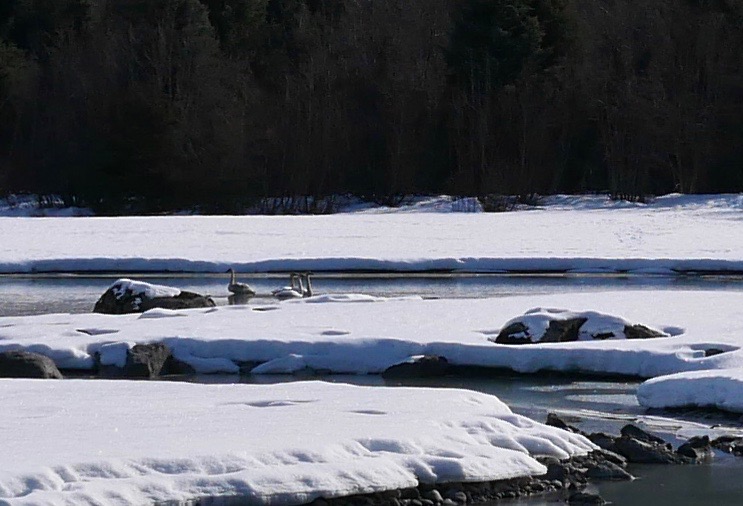
            Expecting Canada geese, I spot four large waterfowl gliding on a river eddy. The fierce morning light makes it hard to see more than the birds’ shapes. They could be Canadians but they would be larger than normal Canadians. Aki follows as I ski further down river to a get a better angle for investigating the birds. I stop when I can see that the birds are swans. They are recovering from their northern migration on the only piece of open fresh water for miles around.      

      The swans huddle against a snow-covered gravel bar where they almost vanish. After Aki and I move into the woods the swans come out of hiding. I watch them for a few minutes while screened from their view of shoreside alders.  

Concerto in C for Chain Saw

The birds are singing out the chorus to Concerto in C for Chain Saw. People who have never visited a rain forest won’t recognize it. Pine Siskins begin the chorus with high notes. Red breasted sap suckers hammer in a percussion line. Three-toed woodpeckers and blue jays take up the tenor parts. Then, from the other side of the forest a chain saw roars. 
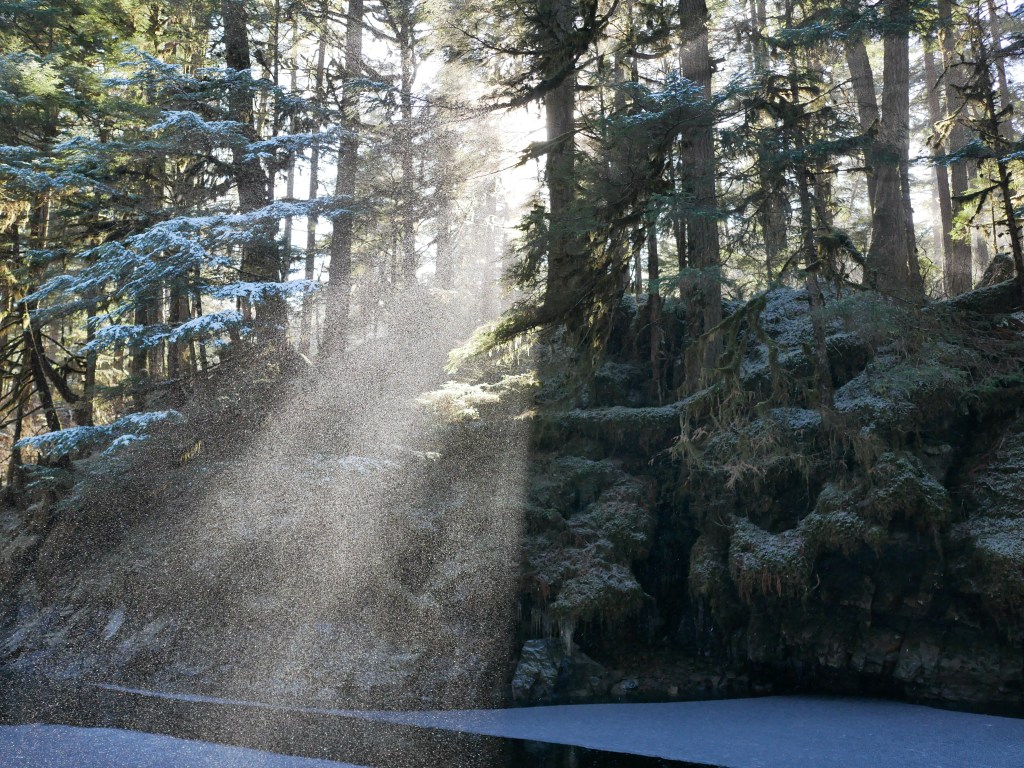
            The chain saw’s contribution grows as we walk deeper into the woods. When it pauses, we can hear spruce wood cracking. A trail crew must be dropping the three-hundred-year-old spruce that has been rotting near the trail for decades. Porcupines had hallowed a chamber at the tree’s base. Last fall the big trees’ twin fell during a wind storm. 

            As we approach, I try to engage Aki in a debate about whether the crew should be hurrying the old giant’s death. Aki doesn’t bite. Being the practical one, she probably agrees with the trail crew. If they don’t cut it down today, it might someday crush one of her dog buddies when it falls naturally. 

Enforced Social Distancing

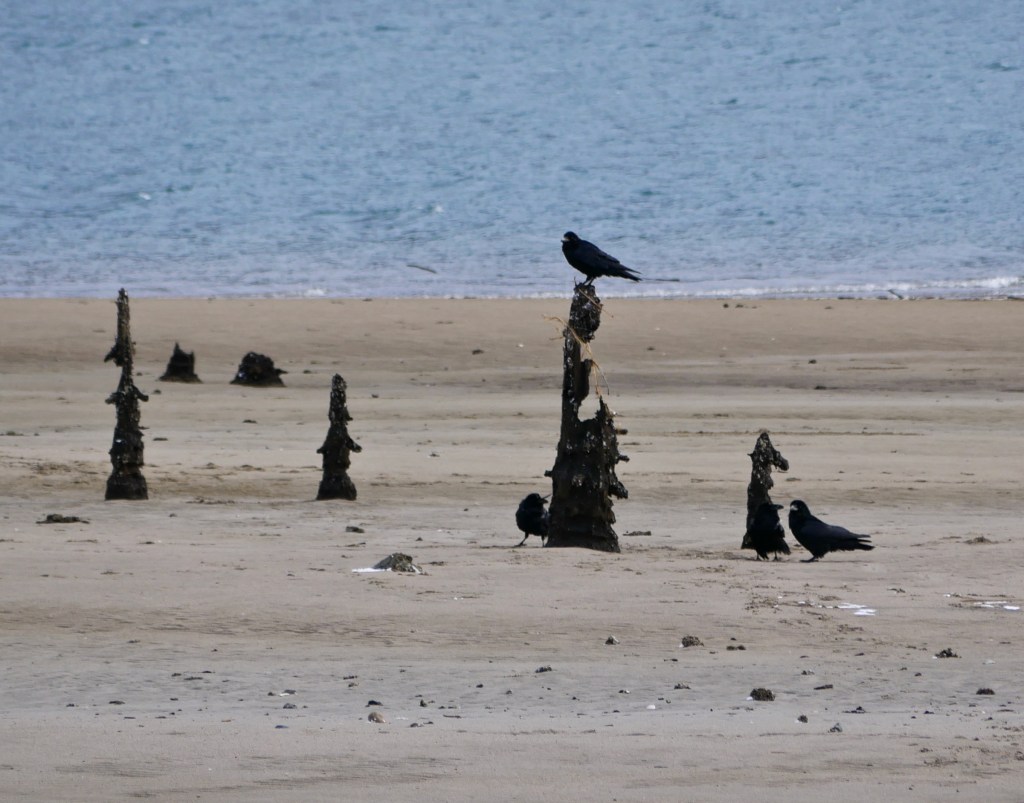
The ravens sound angry. Aki and I can hear them croak and complain as we walk along Switzer Creek. It drains a diminutive old growth forest that is bordered by a recovering clear cut. Forty or fifty ravens are hurling abuse from posts inside the forest canopy. One of the big scavengers shows itself only to disappear when I lift my camera.  
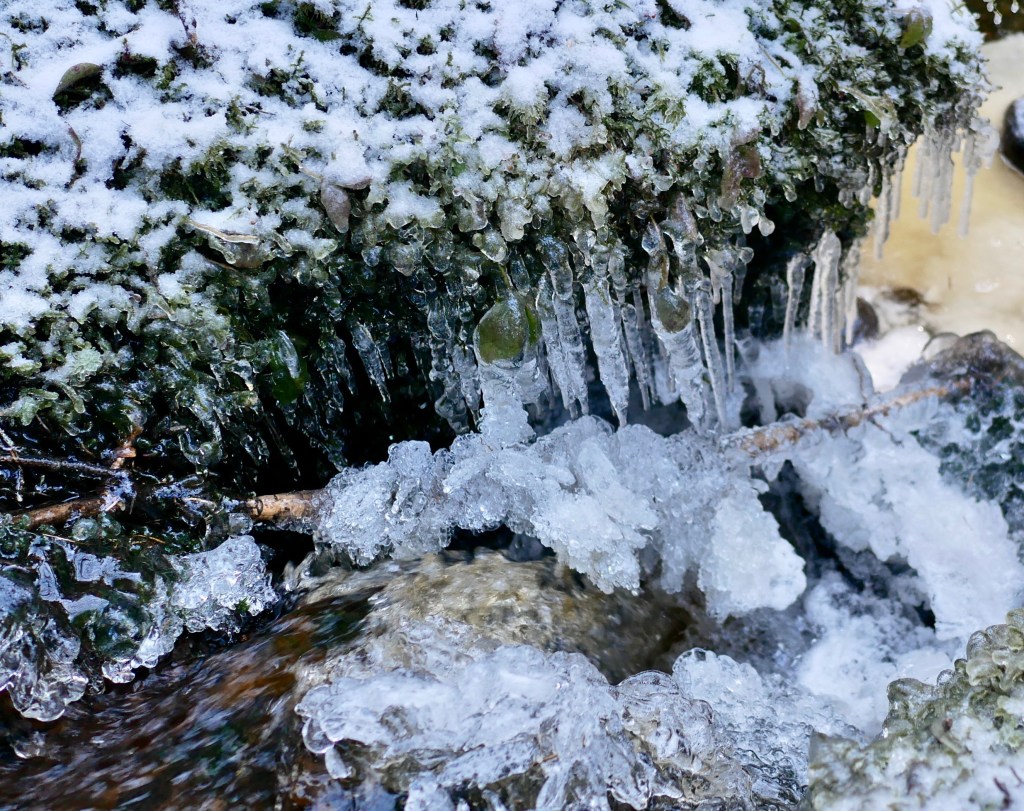
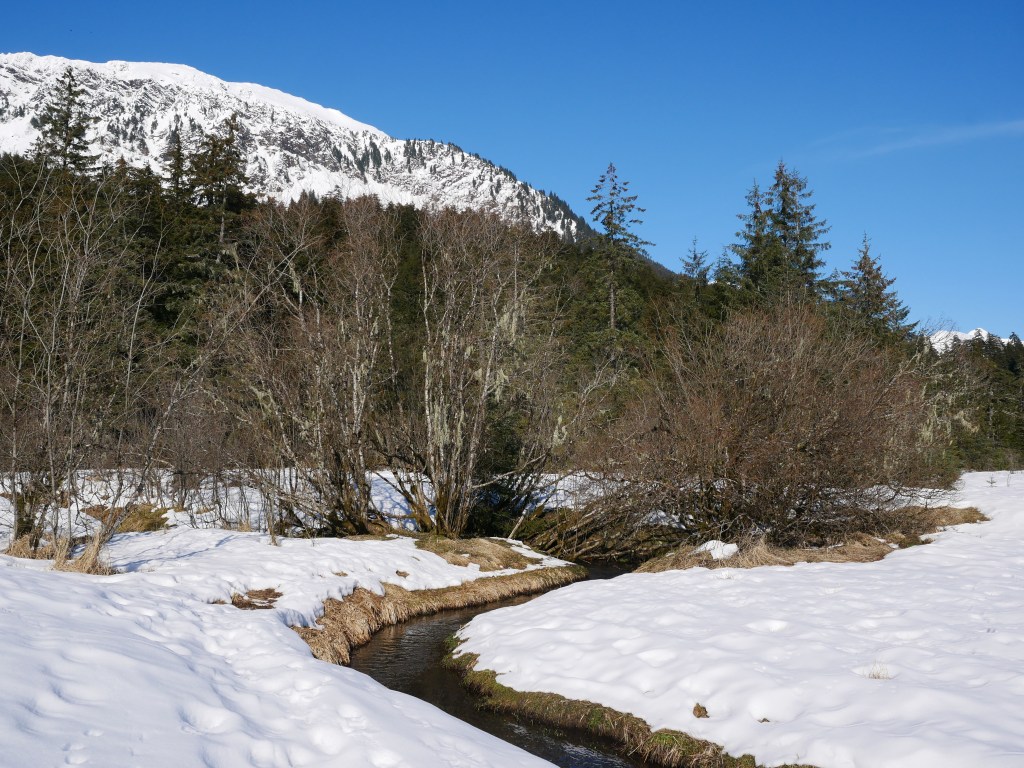
            Snow still covers the forest ground but the creek runs free. The pale-yellow shoots of three skunk cabbages have emerged a few centimeters above their mother plant. It feels like spring is checking out the woods but in a cautious way in case winter is just outside taking a smoke break. Aki and I are over-dressed. 

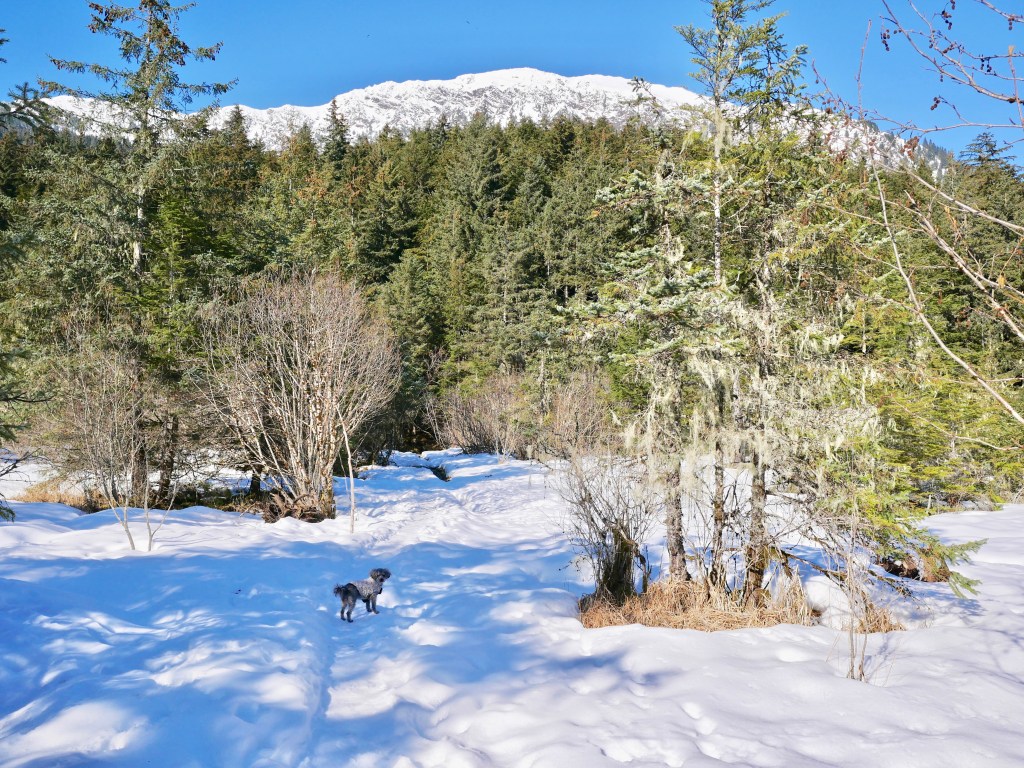
            The little dog cools off by rolling in wet snow. I take off my winter coat. We walk out of the woods and onto a snow-covered meadow, squinting from sun glare bouncing off the snow. Three ravens and an eagle leave the canopy. The eagle tries to settle into a tall spruce snag. More ravens show up to drive it away. 

            Aki and I head back to forest. Before entering it, we stop long enough to watch the gang of ravens chase the eagle. The swirl higher and higher over the meadow, rising above the tree line on the slope of Blackerby Ridge until they are just dark silhouettes against mountain snow. 

They Need Space to Do Their Job

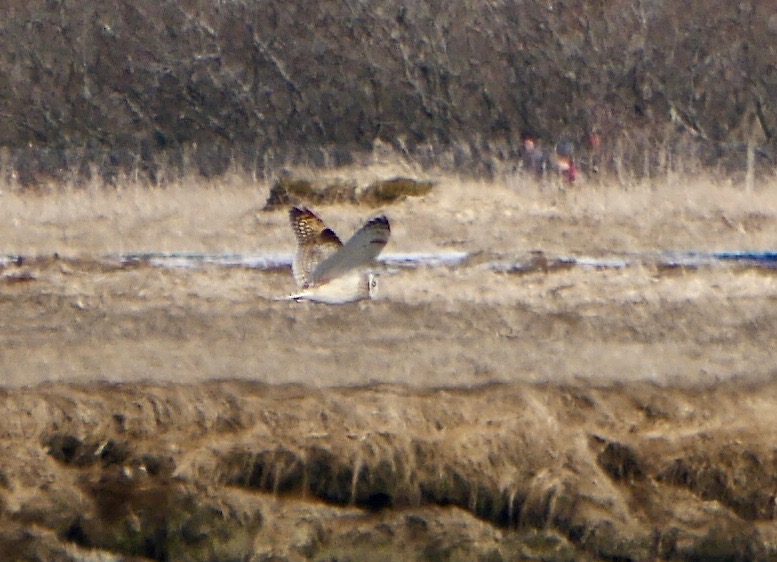
What a difference ten miles makes. Yesterday, Aki and I walked on a meadow burdened down with snow. This morning, we cruise over an almost snowless riverine meadow. We aren’t the only pair cruising here. Two short-eared owls glide over the grasslands. When they spot a vole or mouse, the bank into a sharp turn, dive down and snatch their prey. In seconds they are on their way to a snag or driftwood log to eat.

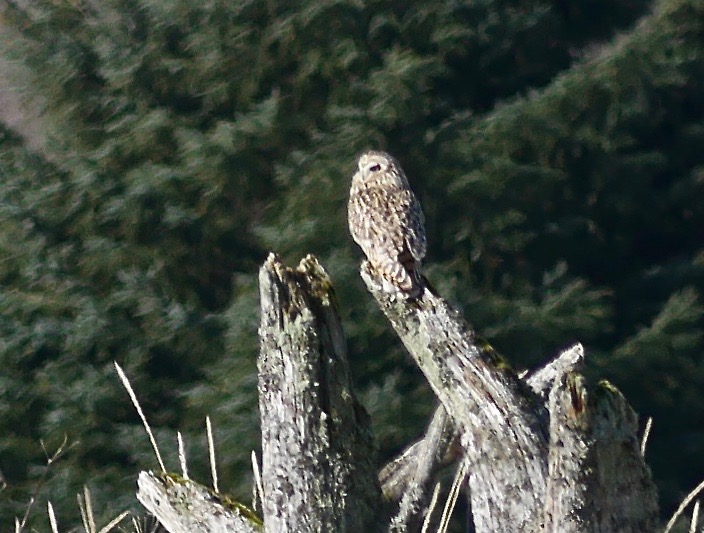
            One of the owls lands on the top of a stump very near the trail. It’s half-a-kilometer from us but only meters from half-a-dozen dogs and their humans. I take what I know will be a fuzzy photograph, then watch the owl resume the hunt. We continue down the trail. When we meet, I ask one of the lucky dog walkers if he knew what kind of owl he just saw. The man looks far out over the meadow where the owl was gliding, and said, “There’s an owl.” Then he told me that neither he nor his friends saw he owl while it had supped on top of a stump so near to them.  

            On the way back to the car we spot one of the owls flying across the river and away. The other one is trying to finish a meal while on top of a driftwood root wad. But it has to keep its eyes on a photographer, who points a long-barreled lens at the owl as he closes on it. The owl then swivels its head in the opposite direction to watch another photographer approach.

Later, I will be disappointed in the photos I took of the second owl. Many will look slightly out-of-focus, which is almost avoidable given the distance between me and the owl at the time I took them. In all the others, the owl only presents its profile as it keeps both eyes on the advancing photographers. We need to give wild things the space they need to do their jobs. 

Wind Erasure

Ruah, it means wind or the breath of God in Hebrew. Aki isn’t thinking about Ruah. She is burying her head in snow. We just left a packed trail across Gastineau Meadow. I ventured away from it to get an unfiltered view of Mt. Juneau. For me this required punching through ten centimeters of wind-drift snow. The little dog just cruised across the top of it. The fine snow delivered by the wind didn’t inconvenience her. 

            Yesterday strong winds blew snow off the surrounding mountain tops and dropped it on the meadow. It erased all but the deepest tracks. This morning we could tell ourselves that we are alone in a wilderness. A tiny meadow vole soon puts paid to my delusion of grandeur. Perhaps startled by my boot crunches, the vole bounded across open meadow to the protection of a bull pine snag. Its tracks provided proof that Aki and I are not alone. In a few minutes we will cross fresh tracks left by a loping snowshoe hare. 

            The wind rises as we turn back to firmer trail. Long tendrils of wind-driven snow extend from the saddles and ridges of Mt. Jumbo and the other peaks lining Gastineau Channel. Time to get back to the house. Wind will rock the car was we drive across the Douglas Bridge. 

This afternoon, while the little dog lays curled up on our floor, warmed by sun coming through the window, wind-driven snow will tidy up the mess we left on the meadow.

Sun, Wind, and Ice

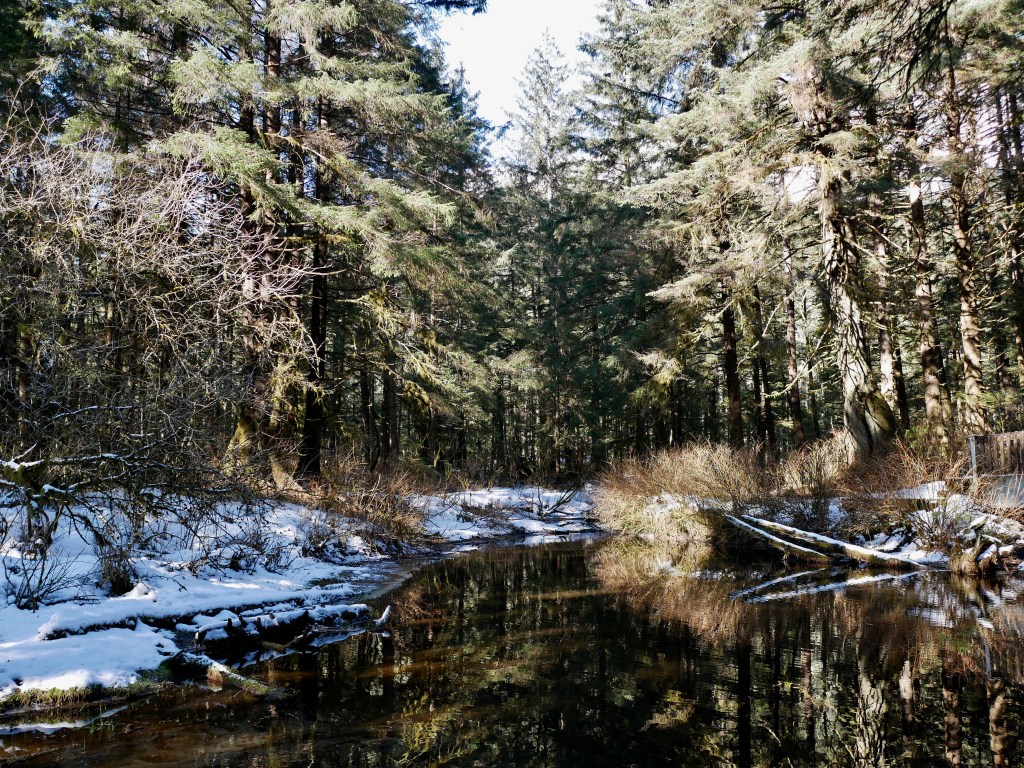
Sunshine, wind, and ice supply beauty but also risks. Looking for a walk out of the wind Aki and I start up the Upper Fish Creek Trail. A thin layer of drifting snow hides the icy spots on the trail. Even Aki slips when she steps on one. I slow to a creep. Even so, I push until we meet another dog walker returning to the trail head. He fell, hitting his head when he went down. 

            It’s too cold to risk continuing up the icy trail. But shafts of sunlight are backlighting the tree moss and illuminating normally dark parts of the streams. We push on for a half a kilometer until I slip and almost fall. Well little dog, it’s time to find a safer place to walk.

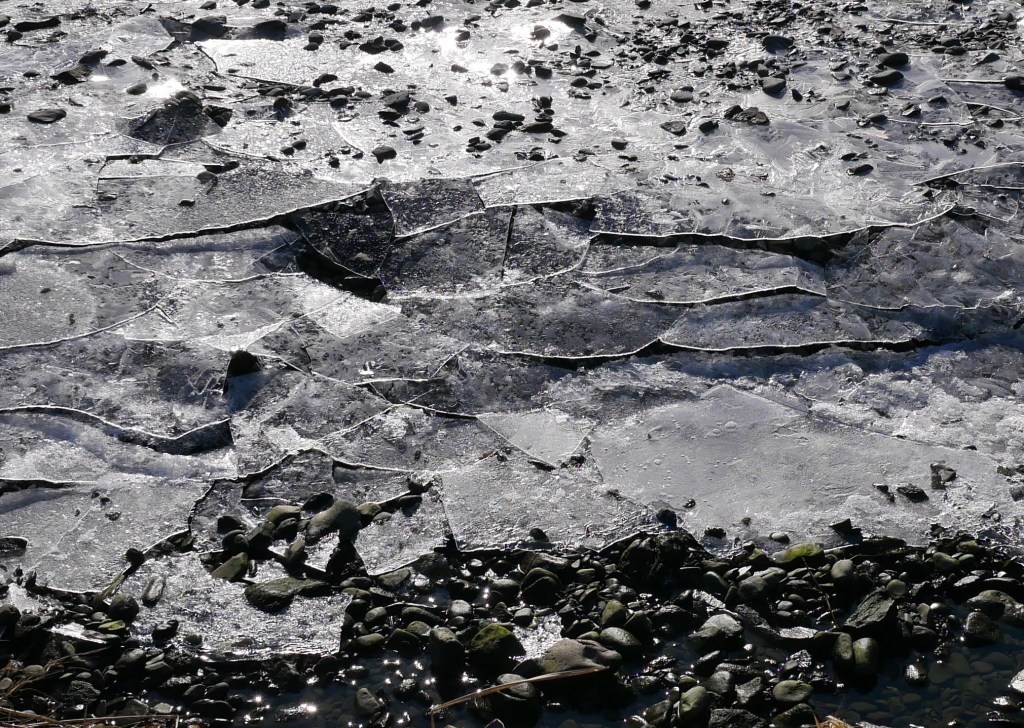
            We slip and slide back to the trailhead and walk towards salt water. Much of the trail is bare or covered with packed snow. If the wind wasn’t blowing hard, the little dog and I could loiter long enough to appreciate light sparkling the sheets of paper-thin sea ice left on the meadow grass by this morning’ retreating tide. 

Raven Convention

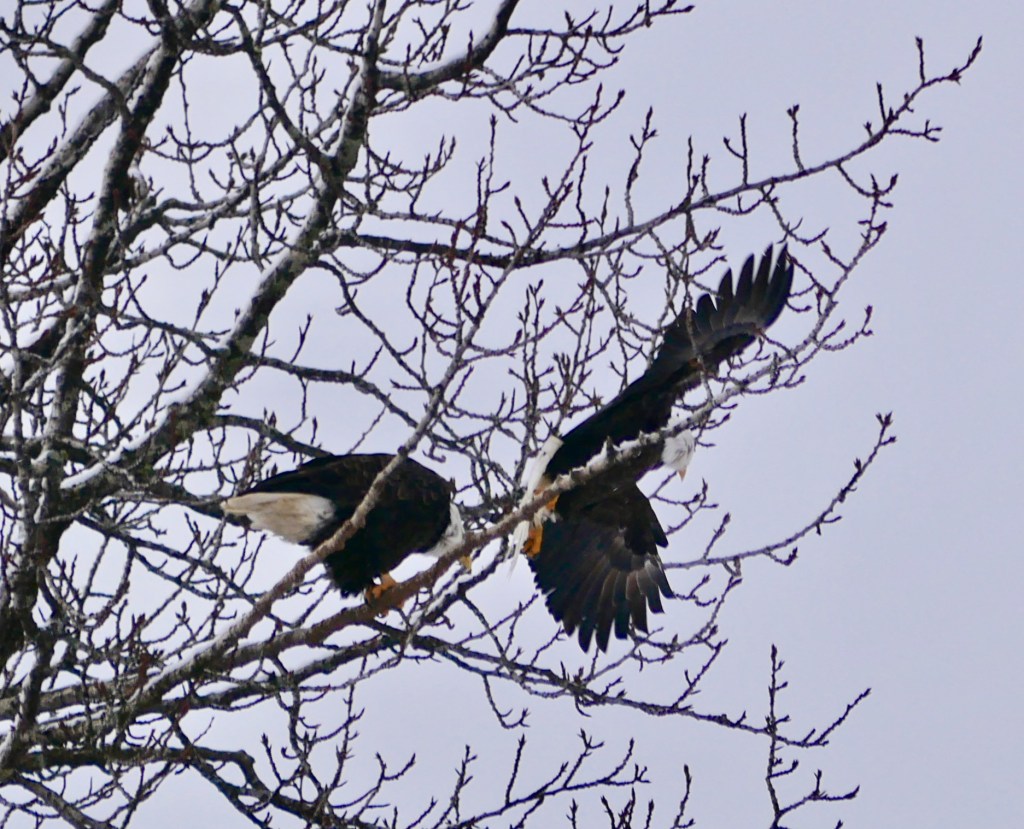
The tide is out at Sandy Beach. A pair of adult bald eagles are hunched in the branches of a tall cottonwood tree. The stiff breeze powers through their neck feathers, giving each a bald spot. If the eagles turn around, they could watch convention of ravens convening near the waterline. 

            Several inches of new snow brighten the beach above the high tide line. The snow is dimpled by the prints of dogs and their humans. A raven flies toward Aki as she investigates a promising set of prints. It flies low over her head. The startled dog leaps in surprise as the raven circles her and lands two meters away. Is this the same raven that tries to play tag with the poodle-mix at Sheep Creek? If not, work must have gotten out in Raven’s ville that Aki is quick to take the bait. 

            When Aki ignores the raven, it circles me a few times, lands on the sand, and struts away like the rich man on a Monopoly board. Three different ravens squawk as they fly over the channel. They fly across the Slide Creek avalanche chute, now burdened by the runout of a fresh avalanche.