Monthly Archives: June 2019

Family Farm

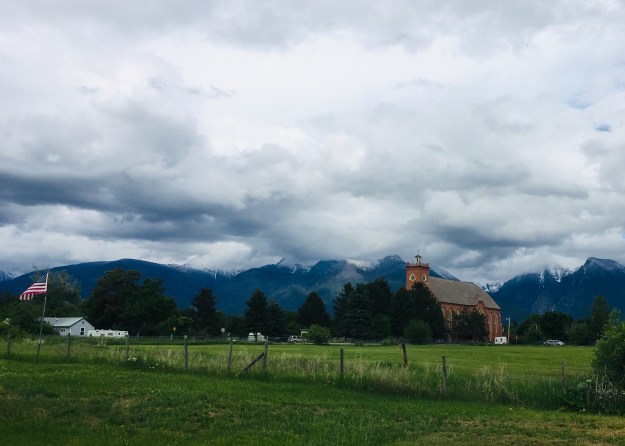
Aki would not have liked the barn cat that greeted my arrival at my grandfather’s Montana ranch. I still think of it as his even though he died in 1923. He homesteaded the bench land before he passed and left my grandmother with three children under 8 and a crop in the ground. Thanks to her two bachelor brothers, she held on to the ranch through the depression, surviving drops in wheat prices and hail storms that flatted the whole year’s crop in minutes.

Last night I slept alongside the Missouri River in the hotel where my grandparents spent their one night honeymoon. The next day they rode 40 miles to the ranch in an open buckboard. It was well below zero and snowing. They lived in a one room shack until grandpa built the Craftsman style house where I ate dinner. It was ordered from a Sears catalogue and shipped in parts from Chicago.

Meadow larks sang while I visited the family cemetery and later when I walked among the abandoned tractors, harrows, and shacks that have accumulated over a hundred years of farming. I spotted a loaping bear cross the far side of a field of winter wheat. A half an hour later an antelope trotted into view near the same place. Beyond the antelope low rounded hills and a flat topped butte rose above the field. The farmers of my family are responsible for beauty of the ground where the antelope stands. It enhances the natural beauty of the high ground beyond.

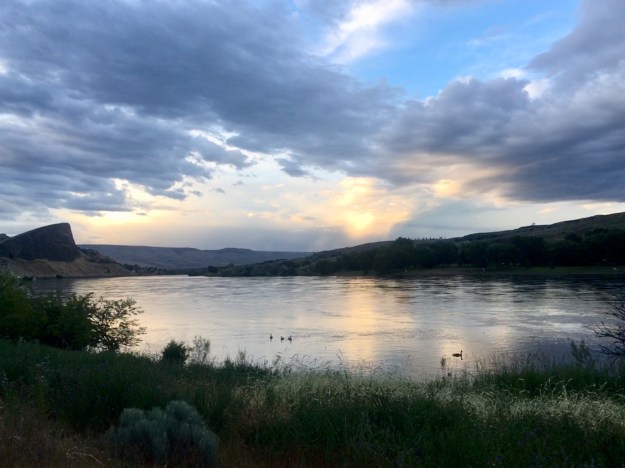
Snake River Osprey

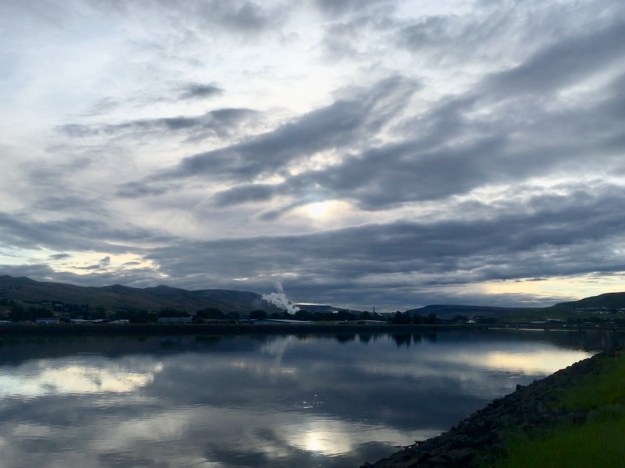
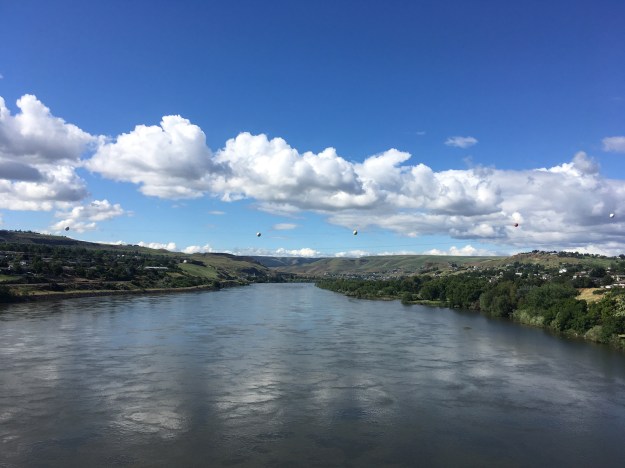
Yesterday, an osprey watched me peddled along the Washington shore of the Snake River. I always considered the fish eagles birds that only work clear waters. From it perch in a cottonwood tree, this citified eagle could watch cars and trucks clank over the interstate suspension bridge. Across the river, a factory cranked out bullets. What it did next left no doubt that it was the real deal.

The bird launched from its perch and hung in mid-air above the river, beating its broad wings to tread air like a swimmer can tread water. It dived toward the river. A sceen of trees blocked my view of the osprey until it had pull back above the tree line, its talons empty.

This morning I passed another urban marmot as well as a great blue heron that let me approach much closer than its Alaskan cousins. Later in the day a coyote crossed the road in front of me. I have long known of that trickster’s ability to thrive on a city’s margins. I suspected that herons can handle the stress of suburban living. But the osprey really surprised me.

Prairie Light

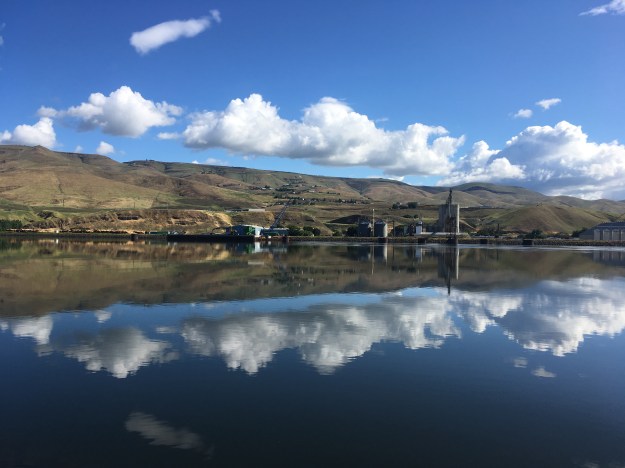
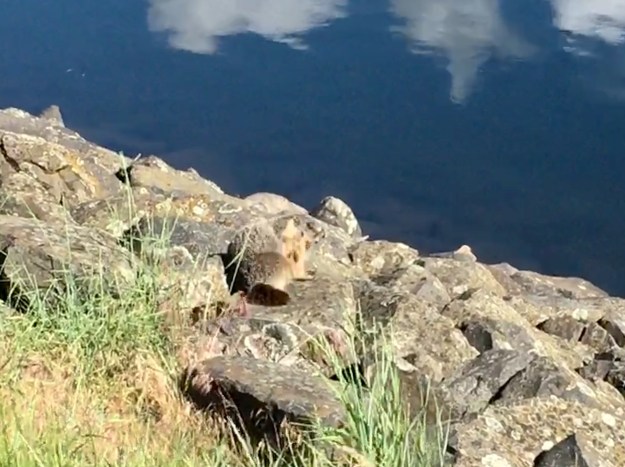
I am on the dike that protects Lewiston, Idaho from the Clearwater River. Aki would like the sunshine and cool, early morning temperature. She would be intrigued by the marmot that just ran across the bike path. If my little dog were here the marmot have slipped under a rock for protection. Instead the long-tailed rodent is only 7 meters away, enjoying the prairie light.

I’m enjoying the light too. Yesterday heavy rain washed the sky clean. No pollution softens the crisp sunshine or deadens the intense blue sky. It’s as if the marmot and I have been transported back to the time when Lewis and Clark were rescued by the Nez Pierce people: before the car, and grain trucks, and pulp mills.

Language Barriers

Aki and I are returning from Boy Scout Beach on a trail marked every half-mile or so with fresh bear scat. To warn the bear of our approach, I pull out my fancy phone and ask it to play Pachelbel’s Canon. With its repeats, the canon is a snake chasing its tail. But it is a gentle snake that doesn’t clash with the bird song or the music of Eagle River.

            Before the canon can repeat once, we come upon bear scat laid onto the trail like lines of calligraphy. Did the neighborhood bear form a kanji character with its waste product? Emptying its bowels on the trail rather than in the surrounding woods was probably an attempt to claim territory or to warn noisy humans of its presence. Did this bear go the extra step of forming the character for good fortune, peace, or courage? Or is this scat just the random product of a bear’s alimentary canal? 

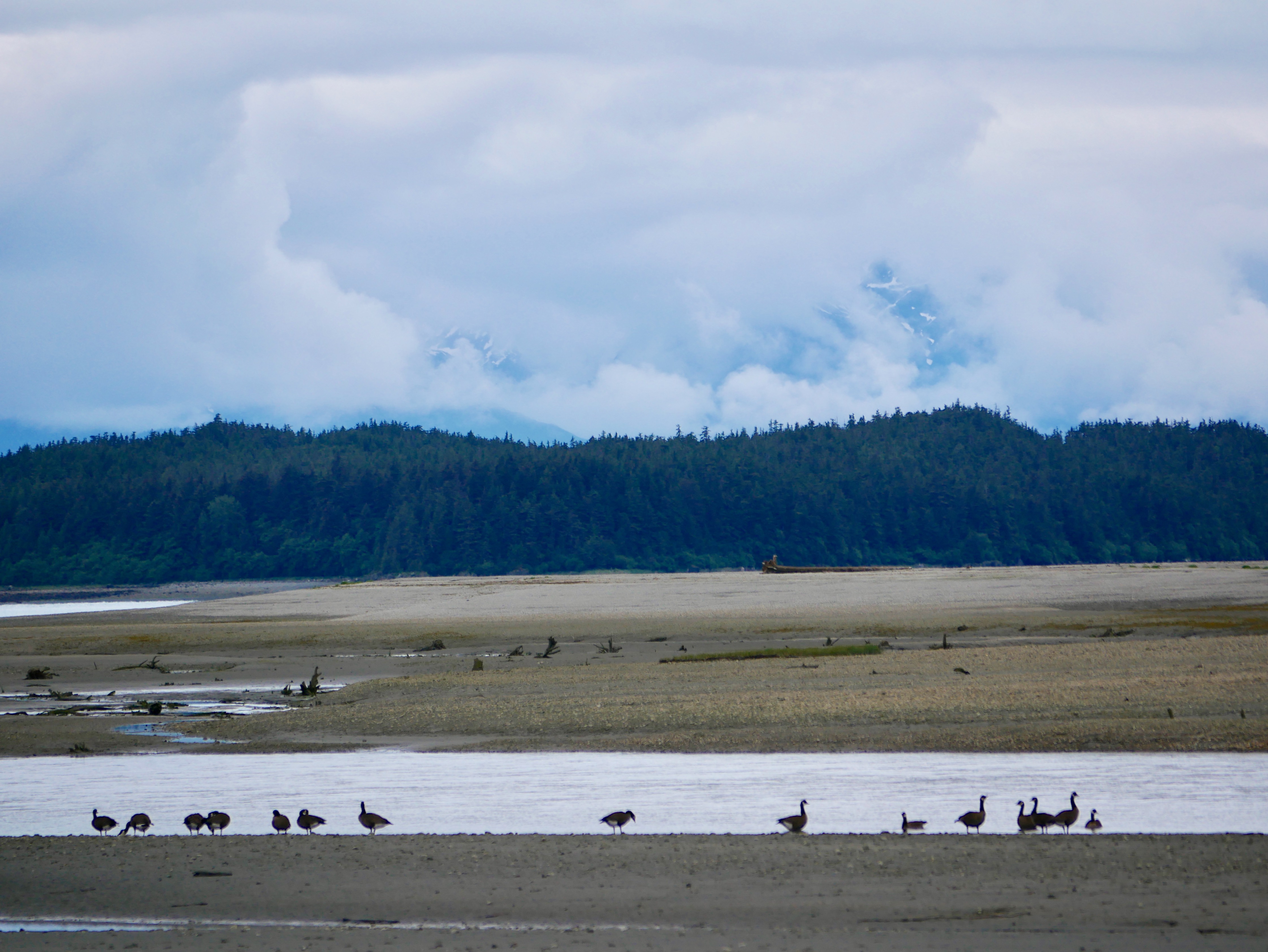
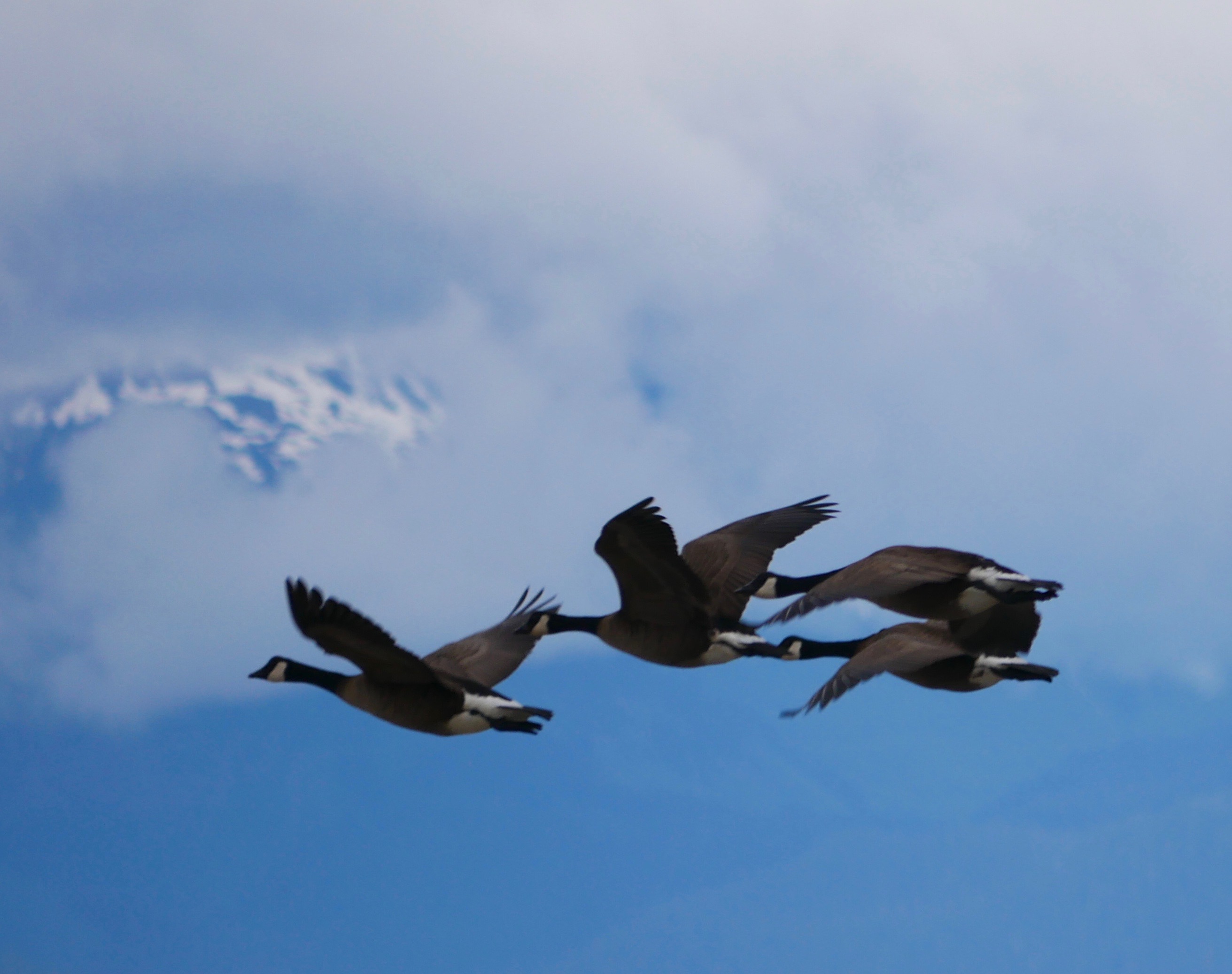
            This morning I couldn’t understand the message of songbirds, eagles, or the Canada geese that flew low over our heads when we approached the beach. What sounded like a robin’s love song to its mate was probably a warning for other birds to stay away. Geese honks, which rang in the air like warnings to flee, might have been taunts. The hangdog reaction of an eagle to the screams of a nest mate made me think that the eagle was being scolded. 

I had the impression that the birds expected me to be non-fluent in bird language. They weren’t honking at me. But in the magical realist world hinted at by the kanji-like bear poop, I have to wonder if it is trying to say something to Aki and me. 

No Time to Waste

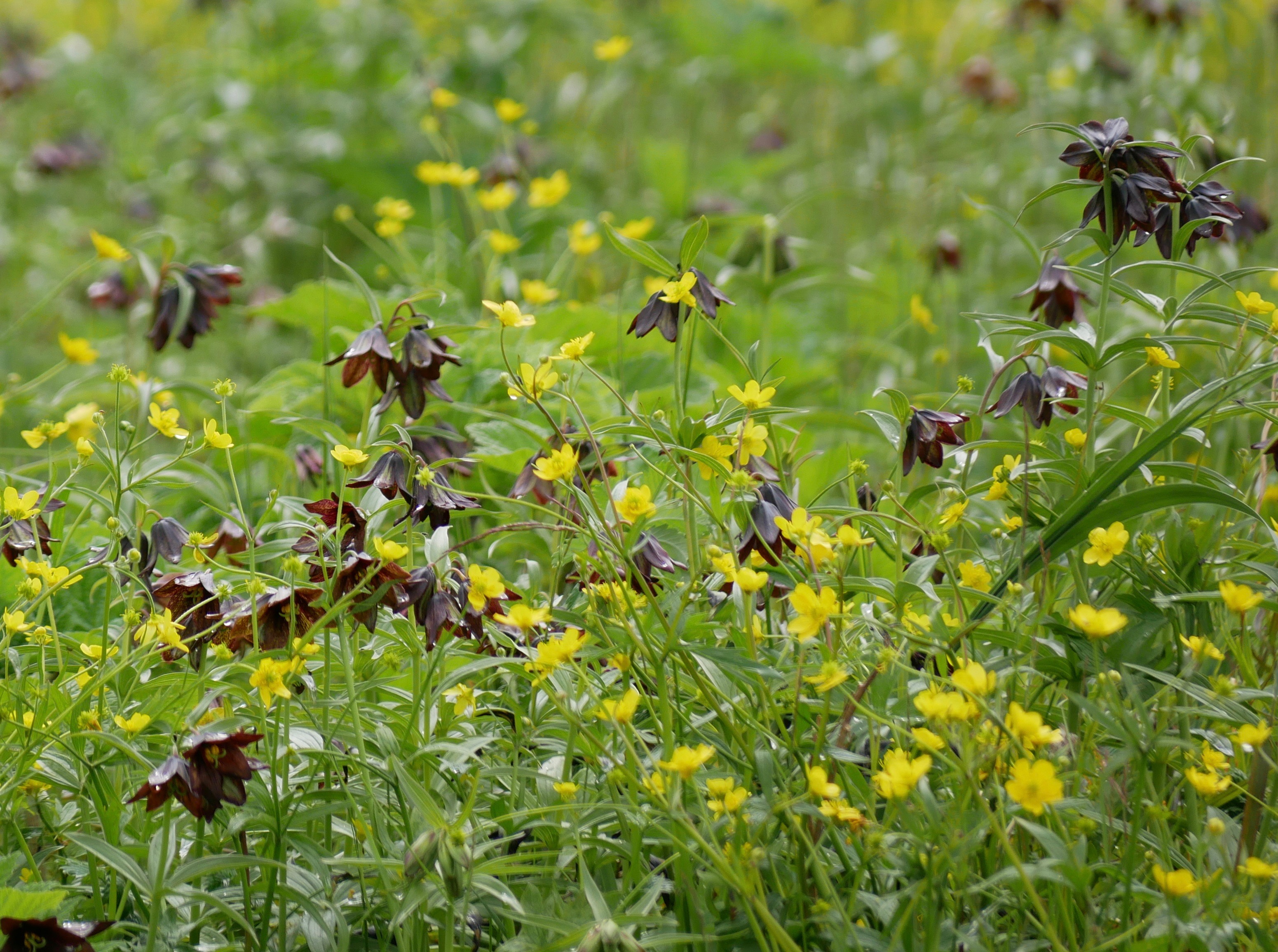
Summer is powering ahead in the rain forest.  Necklaces of white sorel flowers decorate the bells of forest spruce trees. Maidenhair ferns, already unfurled, wave in the lightest wind. Midway up a large spruce a woodpecker chips off chunks of bark which clatter through the tree’s branches to the ground. The sound encourages Aki to move on toward a muskeg meadow. 

            Cloudberry plants on the meadow are already setting berries. In between them heather-like lingon berry flowers bloom. All the meadow flowers and grasses glisten with newly fallen rain. 

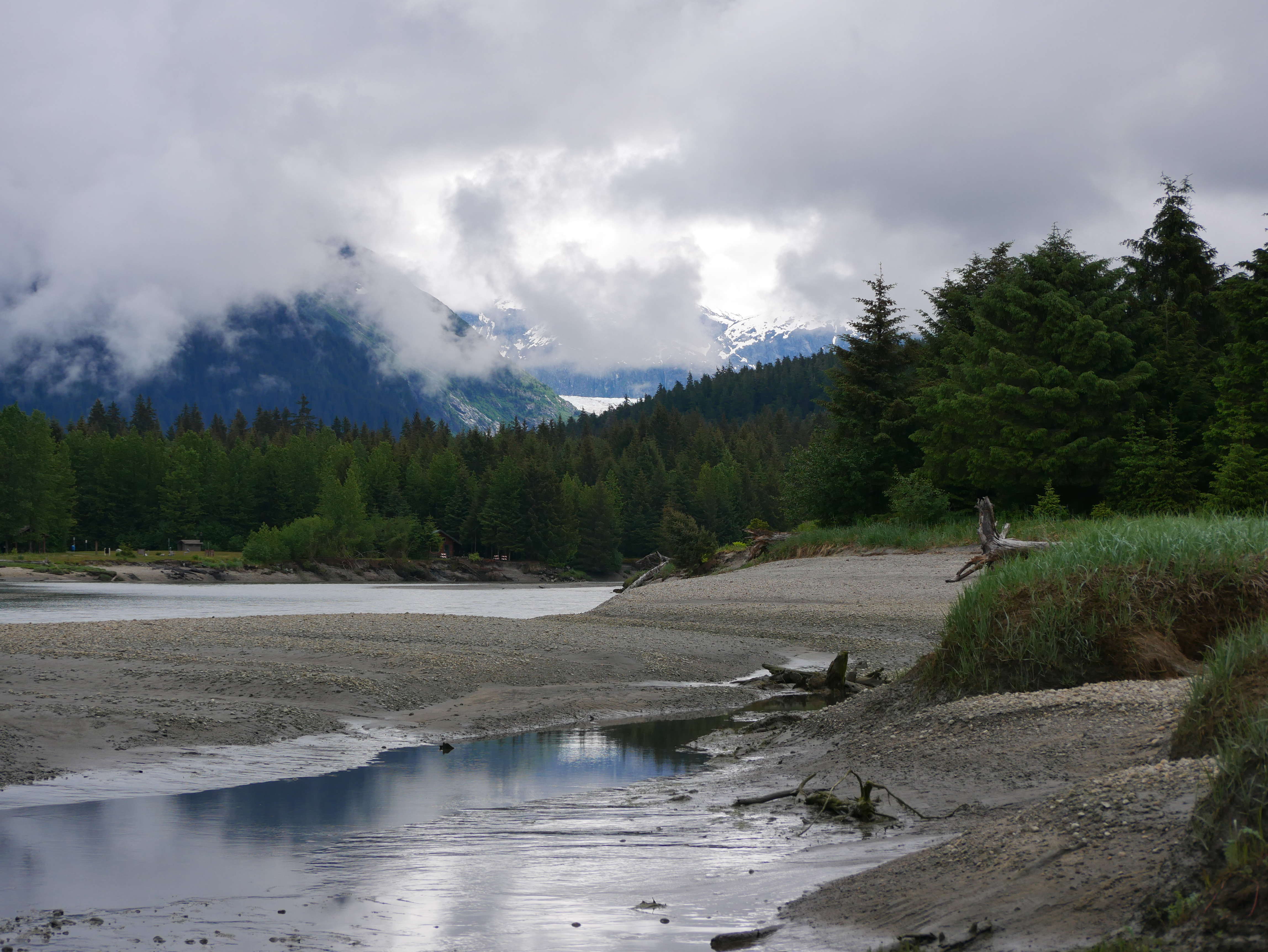
            Aki sniffs her way to the beach, now exposed by a negative low tide. A gathering of eagles announces us. The little dog wants to sneak back into the woods. But the causeway to Shaman Island is exposed so I carry Aki onto it. On a sunny day you can see the glacier and the Douglas Island Ridge from here. But Payne’s gray clouds block all that this morning. 

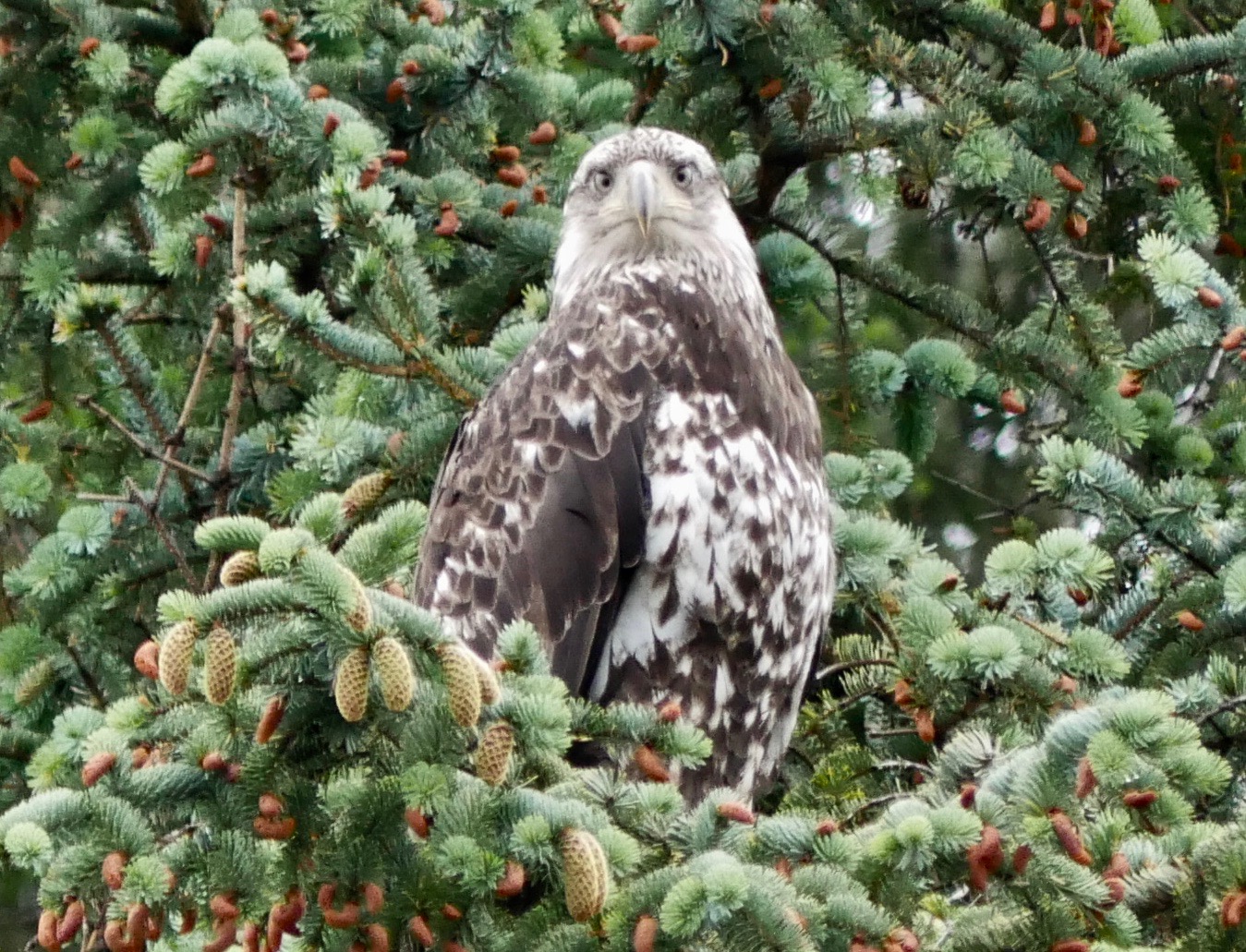
            In order to return to the forest trail we have to walk under a spruce tree occupied by two very young bald eagles. A mature eagle roosts above them like a watchful parent. The young ones, recent from their nest, look at us with their pale-green eyes.  They are so large and fierce looking, I can’t convince myself that they hatched a few months ago. Like the flowers, the eagles can’t afford to waste a day of summer. 

Back Together in the Rain Forest

Yesterday I rode an Alaskan ferry home from Skagway. Aki greeted me at the door. She looked a little sad, like she spent the whole of my absence in an unlit cell. Even though I knew she had enjoyed herself when I was away, I gave her cuddle and promised that after we both slept we would go on an adventure.  This morning we are heading for the Troll Woods. 

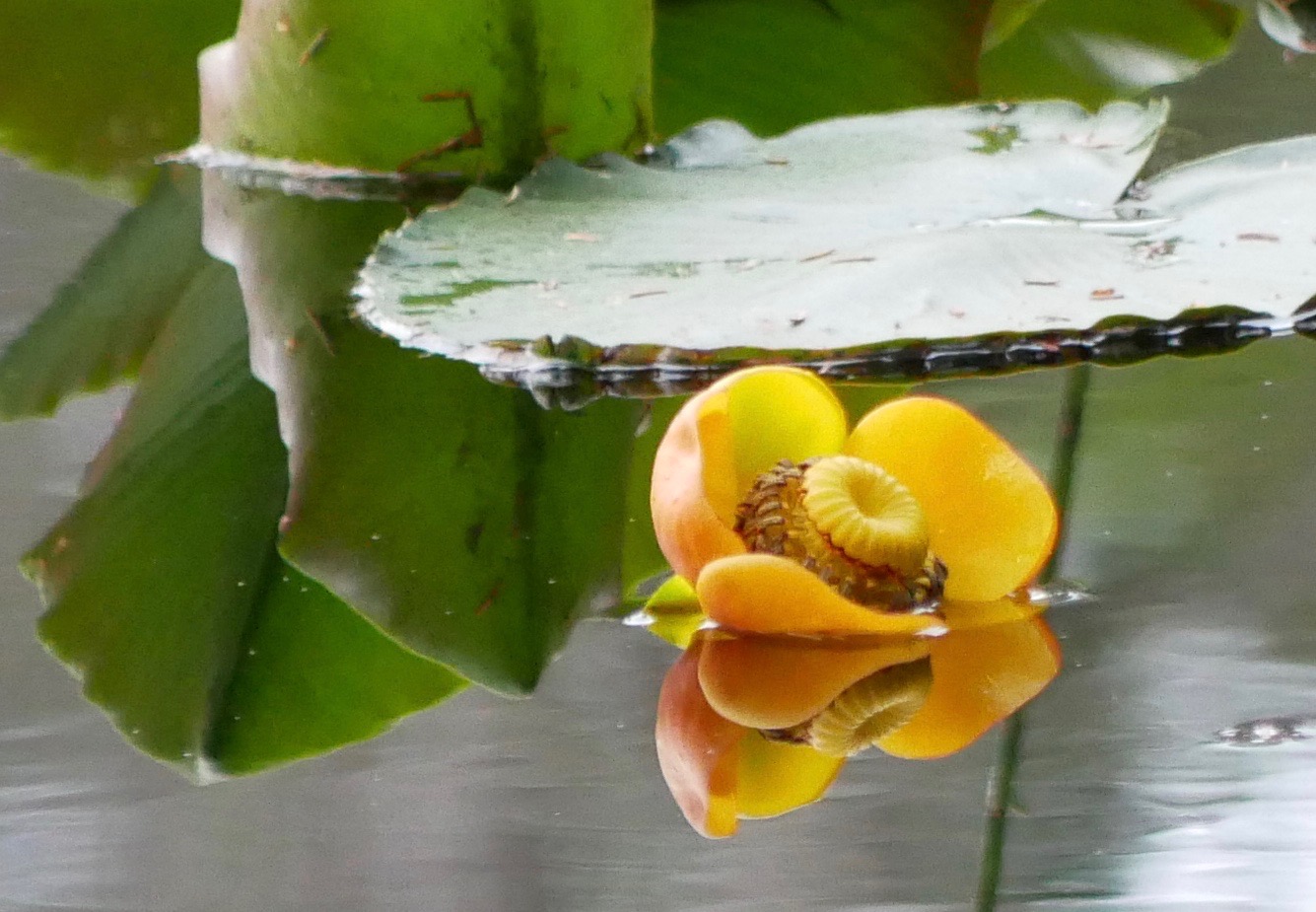
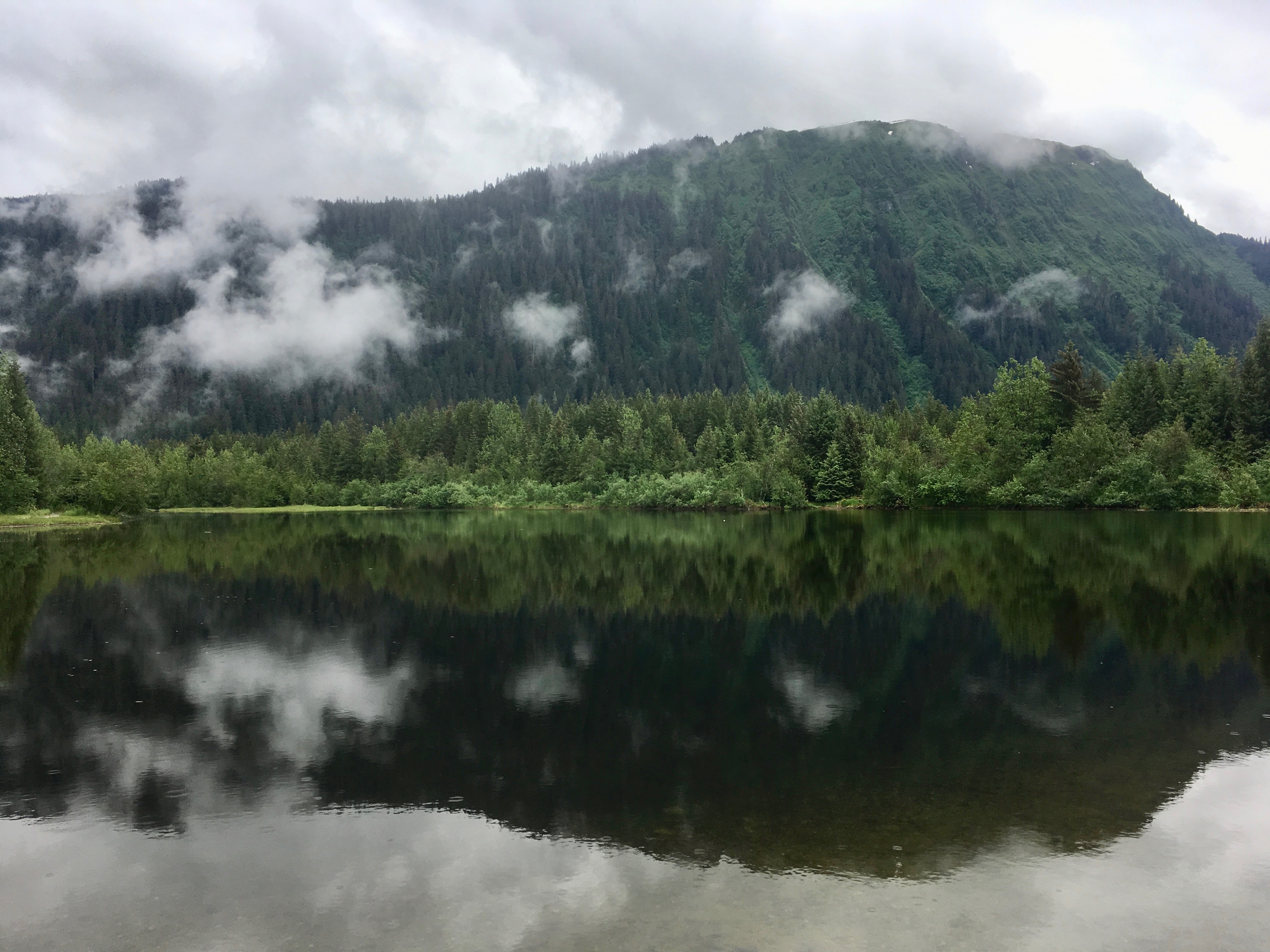
Bird song brightens what otherwise would be a gray day. It helps me to ignore the rain that dimples Moose Lake and slowly soaks into my sweatshirt hood. The rain softens the air but not Aki’s interest in a patch of nagoon berry plants. In August, when ripe fruit weighs down the plants, a berry picker will approach the patch with a combination of greed and fear that a bear or other berry picker will chase them off the patch. He or she won’t know what Aki does—that at least one dog had marked the patch with its pee.

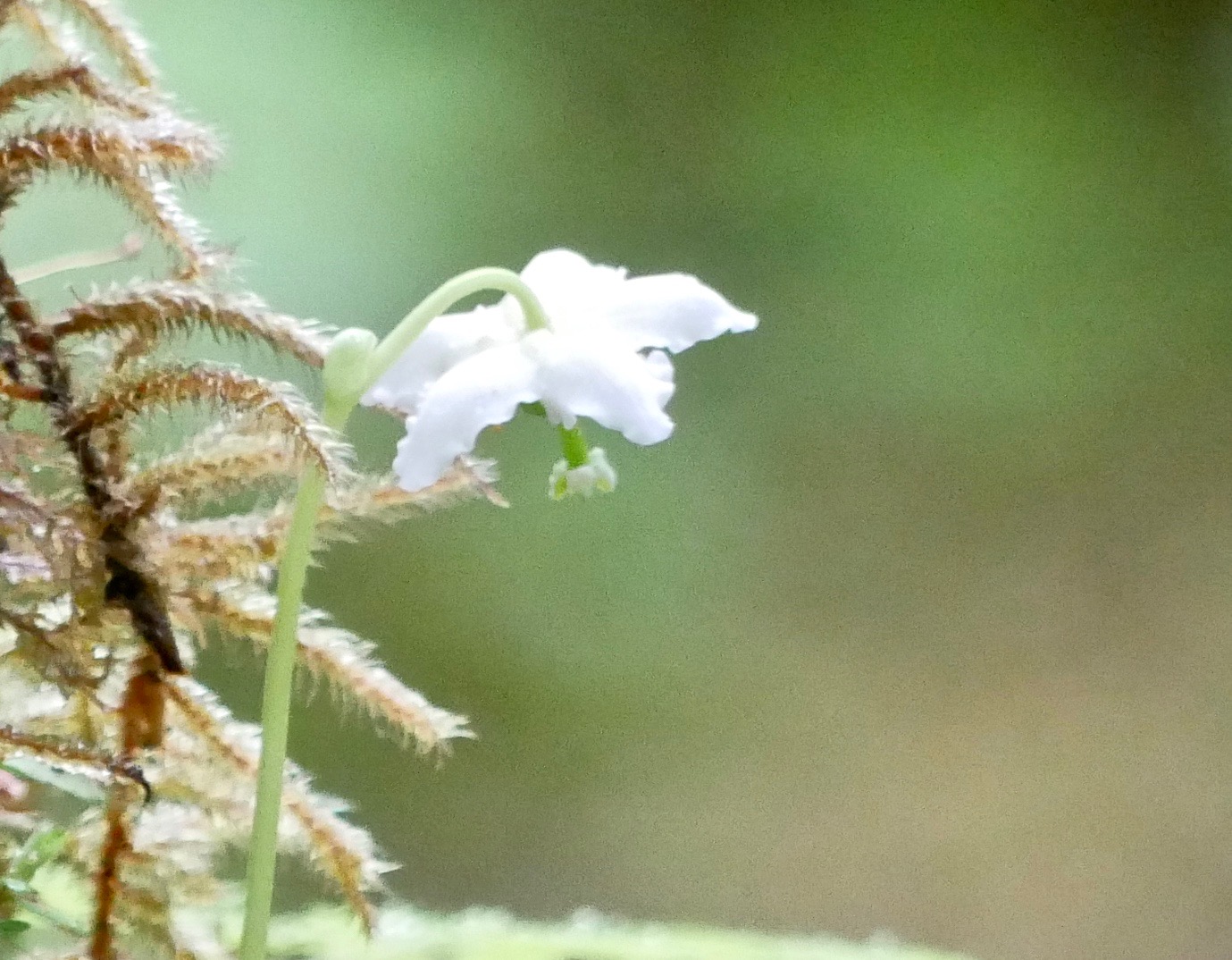
 On the path to Crystal Lake, in one of the more remote sections of the woods, we pass shy maiden flowers. Gently I lift one of the white, star-shaped blooms for a proper look. The flower offers less beauty than a shoot star, not as much drama as a lupine stalk, but has no reason to hide its face. 

Traveling with Writers

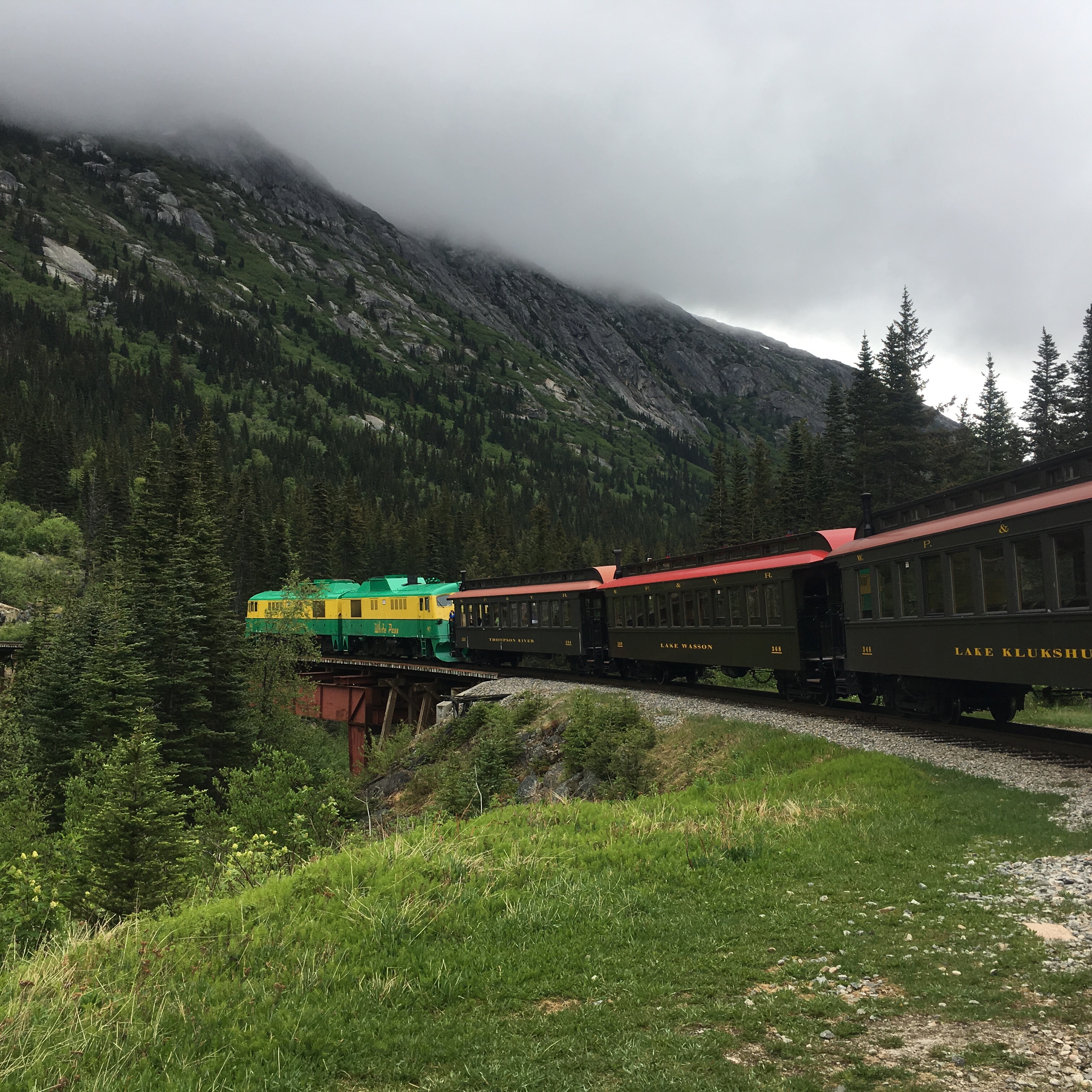
It’s early morning. Rain spots the windows of a railcar hauling forty writers toward the glacier trailhead. Some of the writers are published. Two are well established. All of us are talking loud enough to be heard over the creaks and grumbles of the White Pass Yukon train car. If each writer were making this trip solo, we would be quiet observers. We’d pay attention to the amplified, chipper voice that calls our attention to the U.S. Custom’s station on the Alaska border and then a great view of Skagway Harbor.

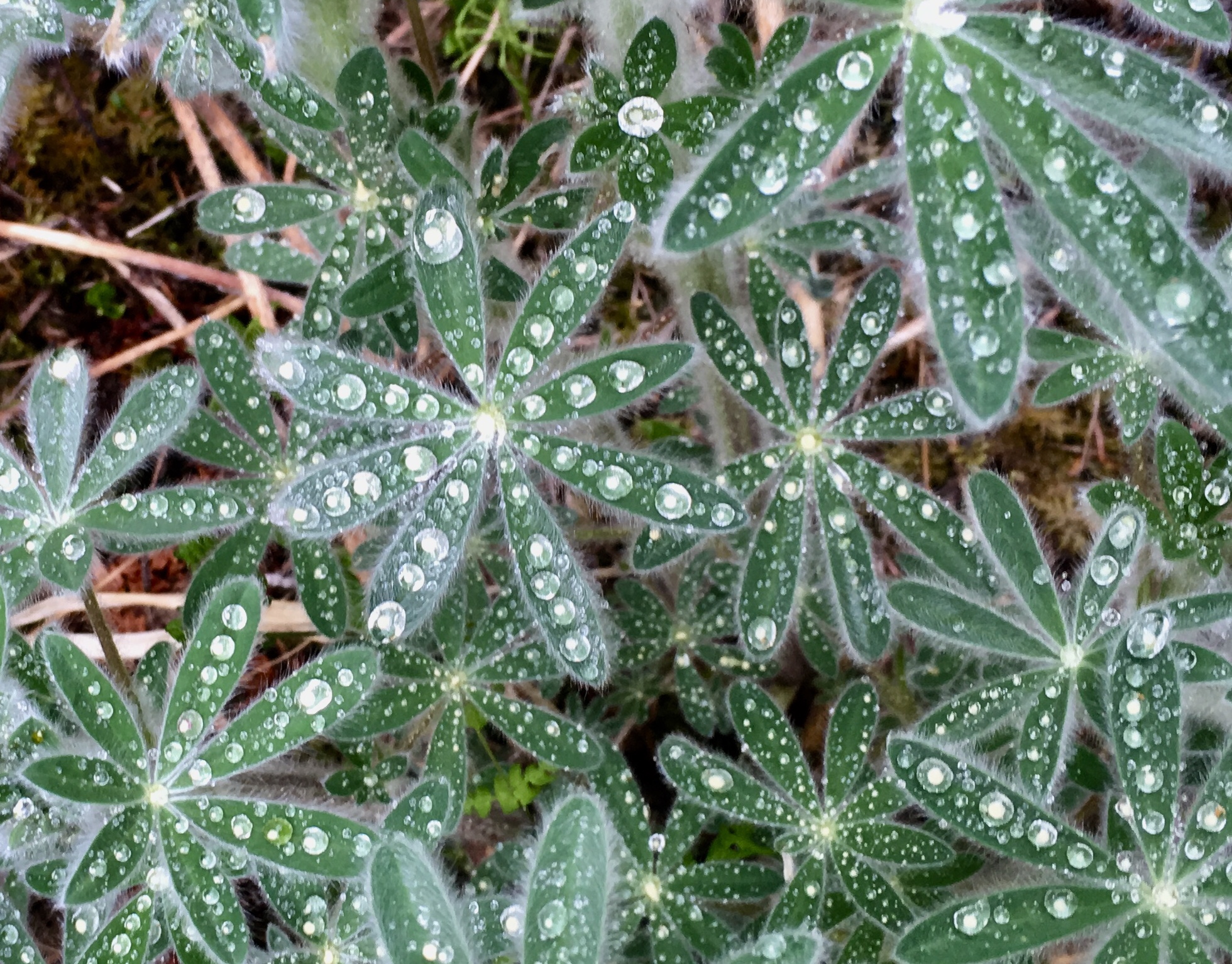
After the trail groans to a stop at Mile 14 we leave our warm, noisy car and watch the other train passengers—who all slept last night on a cruise ship—watch us. We pull on rain gear and start the mile and a half hike to the glacier cabin. The sounds made by a glacier-fed river dominates the walk. We pass a spruce tree scarred by the claws of stretching black bears. I can’t resist placing four fingers into one set of claw marks. Nearby beads of rain water weigh down the leaves of lupines.

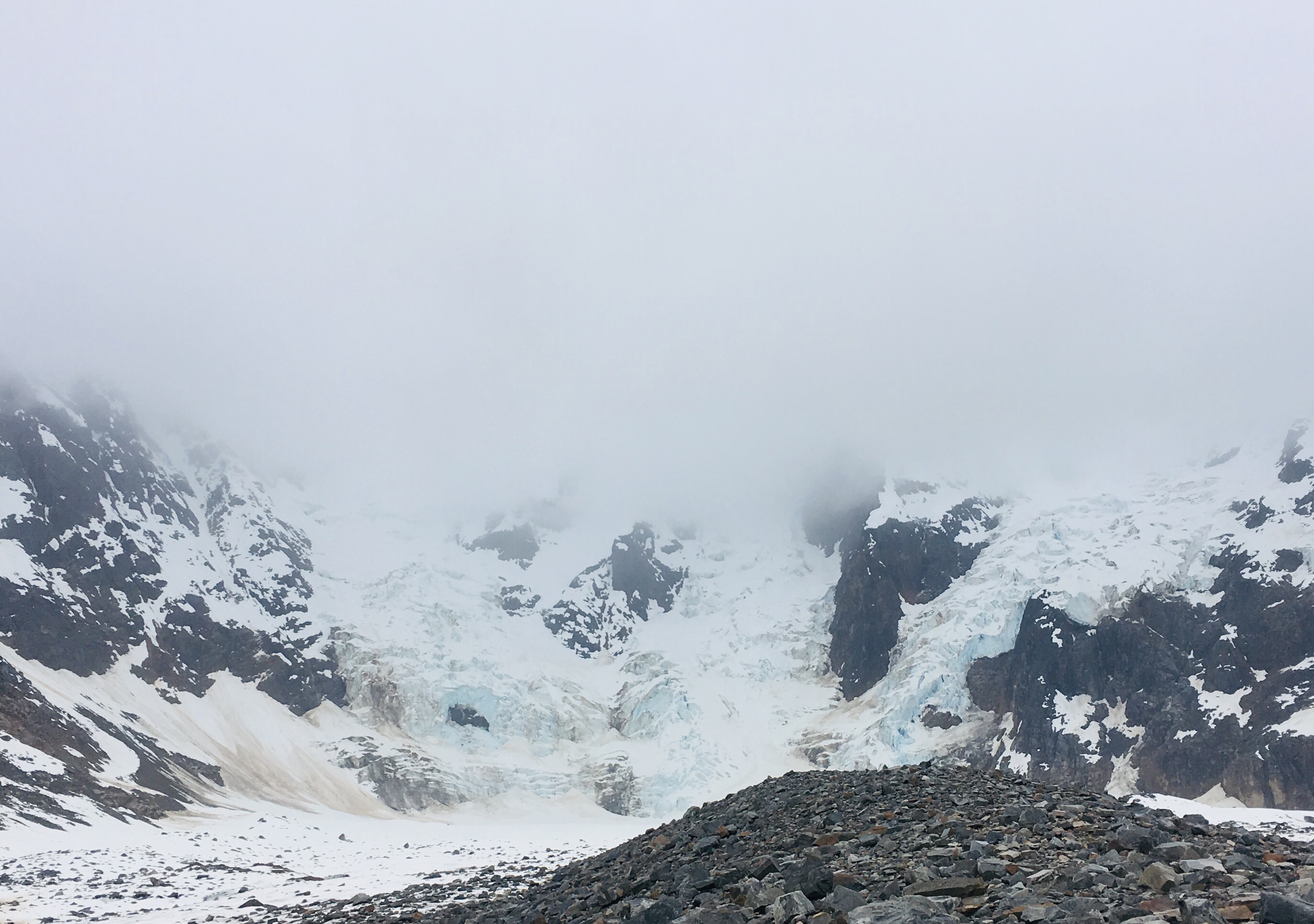
After the cabin two friends and I move on toward the glacier on a trail over moraine. Not enough time has passed since the retreating glacier exposed it for a proper forest to form here. In a half-mile the stubby alder and popular woods end. We see, for the first time, the glacier and U-shaped valley of rocky rubble dropped in place by melting ice. Walls of moraine rise a half-mile on both sides of us. In sad realization, I understood just how deep the remnant glacier was just a few hundred years ago.