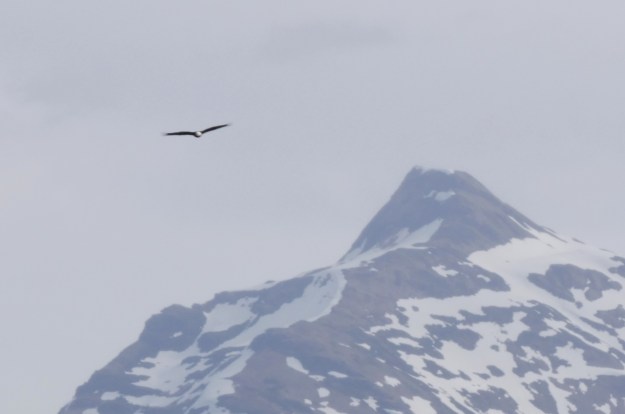
Tlingit elders teach that when the tide is out, the table is set. This morning, the tide is clearing the table as Aki and I walk toward the mouth of Fish Creek. From the sounds being made by eagles, crows, and gulls, last call is too early. Across Fritz Cove, a noisy cloud of white forms over Mendenhall River as displaced gulls and kittiwakes rise from an inundated sand bar. The cloud rises, falls, swoops, and settles on a still dry section of the wetlands.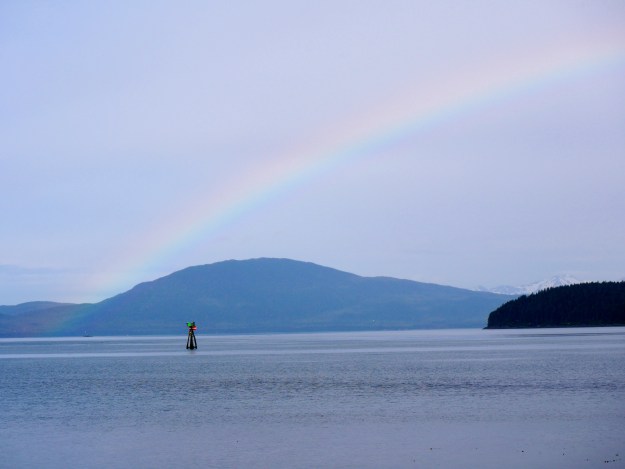
Rain falls through sunshine. In the American South, they would say that the devil must be beating his wife this morning. A rainbow appears in the skies above Admiralty Island. The wetland bird noise drops. Perhaps they accept the bow as a manifestation of the tide’s promise to withdraw from the wetlands after the crest.
The rainbow has no affect on the crows and eagles. Inside the spruced island near the creek mouth, they bicker like kids on the playground. Bald eagles glide in and out of the forest, some to fish over the cove, others to perch on a mid-channel navigation aid.
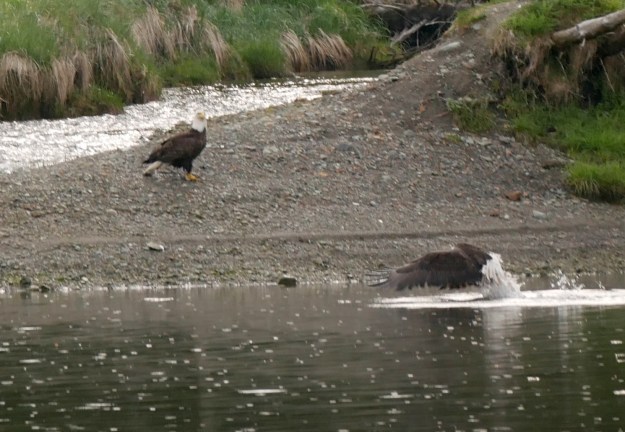 Two eagles, one wet, the other dry, sulk on the point separating fish creek from its pond. A minute earlier, one had crashed, talons first, into the pond water, struggled with something that appeared to pull it underwater. The then wet eagle released its prey and used its wings to lift out of the water for a short flight to the beach. Somewhere in pond, a sore backed king salmon drops into deeper water. .

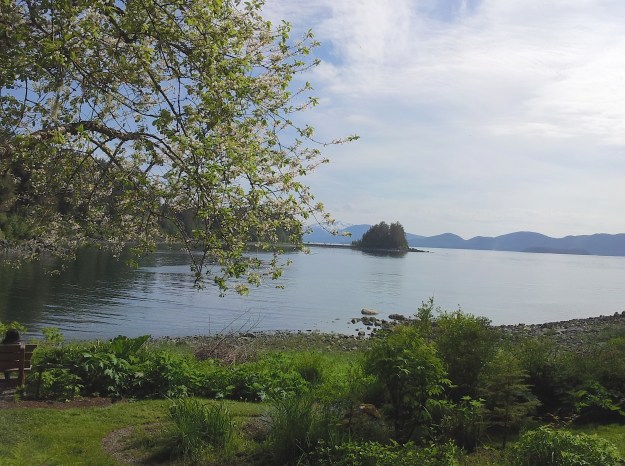
 It’s hard not to feel derided by the ravens and crows infesting the spruce forest that edges the Mendenhall River. The mere presence of Aki and me seems to put them in a foul mood. I experience emotions not felt since visiting a neighbor bar when in college. (Image me in school sweatshirt and jeans walking past a table of shipyard workers in machine-oil-stained overalls). The corvid choir takes me further back to the time of high school dances with their rigid hieratical order. The other birds along the river reinforce my feelings.
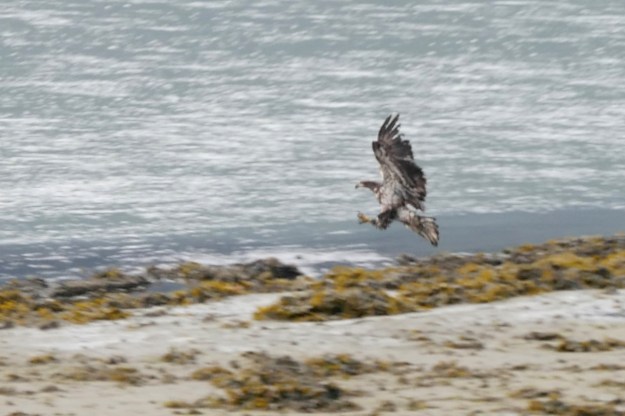 A sole, immature bald eagle was exiled on our side of the river when Aki and I first broke out of the forest. Across the way, on a bar exposed by a minus four low tide, the big men and women on campus—a gang of mature bald eagles—reigned. Gulls, crows and ravens kept a respectful distance.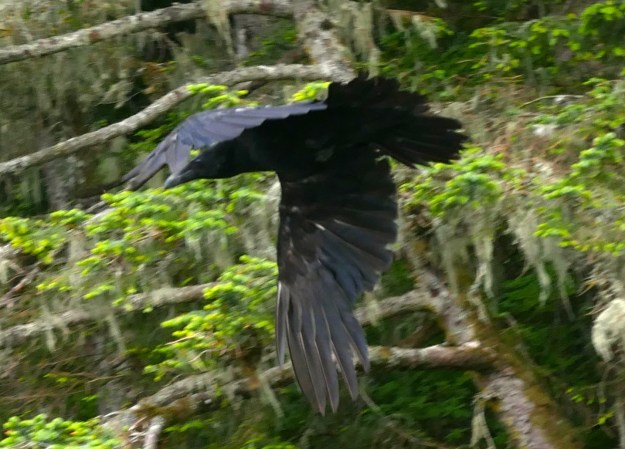
 I’ve seen a sole arctic tern drive off a mature bald eagle and a raven do the same. I’ve watched a crow harass a raven into leaving a tasty morsel of food. Today, the Mendenhall River crows, having been embarrassed by a diminutive gull, are putting us in our low place.






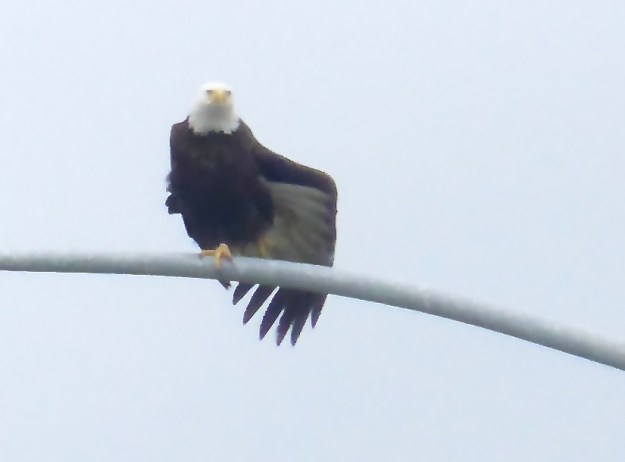

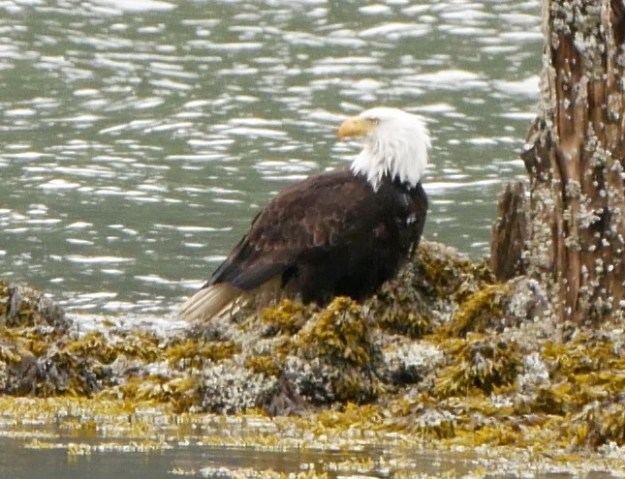
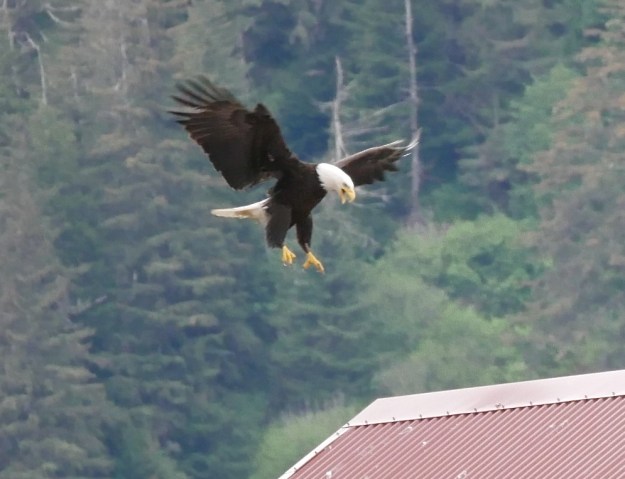 Down the beach two bald eagles scan the scene from a top a metal-roofed tower that once provided air to miners working the Ready Bullion tunnels. One spots food on the beach and glides down to investigate. It crashes chest deep into the water and splashes about until waddling onto an island of dry beach.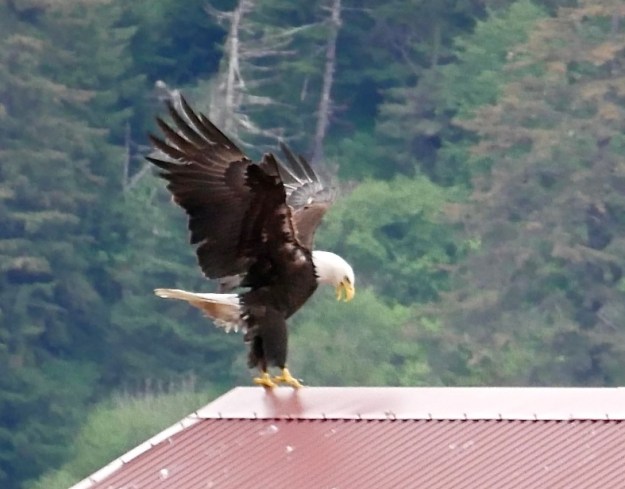

 Aki and I shelter from a nasty rainstorm in an old growth forest. Earlier storms toppled a score of middle-aged hemlocks within our view shed. But the forest can’t protect our car from the guy stealing one of its fog light assemblies. The thief, probably a heroin addict, might be able to covert it into a fix. But it will cost me much more in cash and bother.
 Happy in our ignorance, the little dog and I cross a pocket meadow decorated with cloudberry blossoms. If the summer dries out and brings enough sun, we will be back in July to harvest the succulent berries that are already forming in the heart of the dying blossoms. Cloudberries are fixtures of the tundra. Before last year, we never harvested many of them. Our summers were never hot enough for their ripening. Now global warming has given us a gift that I’d gladly turn down if the glaciers would stop retreating.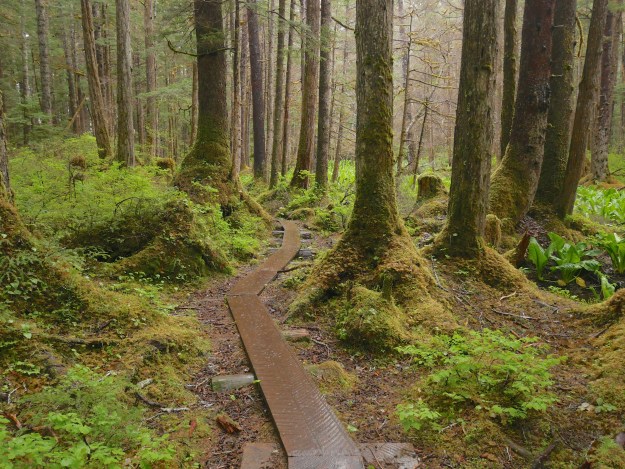
 Walking with Aki