Monthly Archives: September 2016

Chipping

1

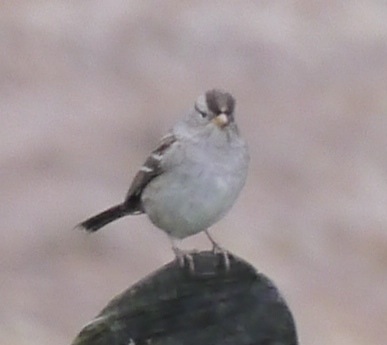
This time of the year I expect to see waterfowl on the wetlands. There are none today. But little seedeaters are everywhere. They rise from the standing dead grass blades like grasshoppers from a wheat field. In the flat light it is hard to distinguish one of the little brown jobs from another. But I identify several song sparrows and a savannah sparrow. Then a rare chipping sparrow settled on a nearby root wad. While a thrush shares a spring-like song, the chipping sparrow strikes a series of poses for my camera.

2

Well Adapted

3

Aki, fur plastered by a downpour to her nose, whines. It is a pleading whine, not one expressing misery. Even though rain pounds down on this mountain meadow from clouds that make day seem like night, the little dog still wants me to play catch with her Frisbee. The orange saucer lies at her feet. I pick it up and toss it out over a wet, undulating blanket of fall colors. She dashes after it, sounding her predator growl.

1

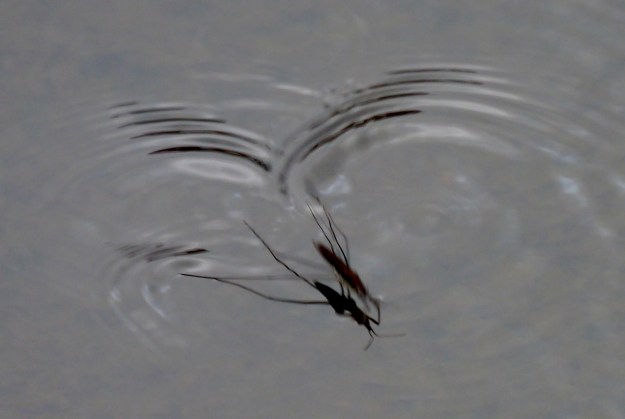
Aki is not the only thing on this meadow adapted to inclement weather. Round, red cranberries lie by the dozen on top of crimson beds of moss. The rain enhances their beauty as it does the yellowing deer cabbage and blood-red bear berry plants. I head over to a pocket pond to check how this heavy rain affects the water skimmers. They ride their’ home water’s surface, bobbing slightly as the rain ripples pass under them.

2

Soaked

1

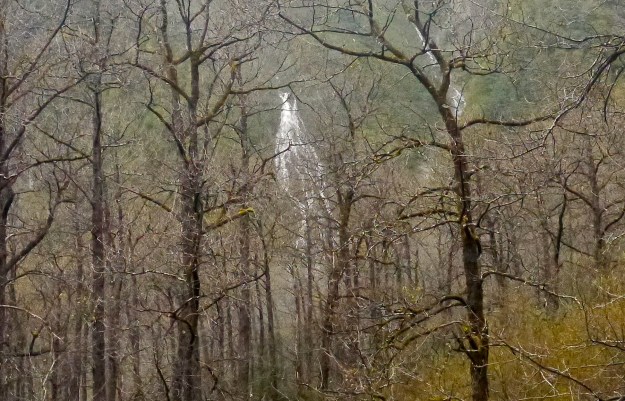
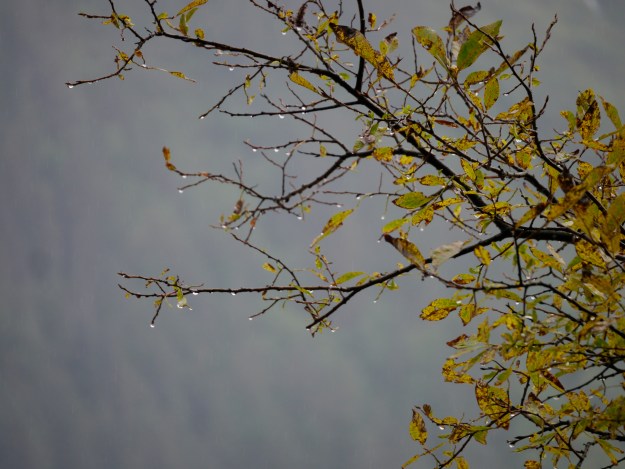
It’s raining again on Chicken Ridge. It wasn’t this morning when Aki and I walked the old mining road up the Gold Creek Valley. The waterfalls coming off Mts. Juneau and Roberts struggled to carry last night’s storm load down to Gold Creek, itself swollen almost to flood stage. We passed a couple of prospectors searching the stream edges for gold flakes that might have been dislodged by the high water. Above, the now nude cottonwood boughs looked tormented or like the limbs of witches twisted by challenging evil. Little dog, is it time to head south for a little sun?

2

Calm from the Storm

2

We can’t escape the wind and rain, even in this beachside forest. But the trees take most of the gale and protect us from sideways rain. As often happens, the adverse weather conditions discouraged other hikers and have apparently grounded the helicopters and other machines of Juneau’s tourism industry. So instead of airplane noise, we hear the surf-like roar of wind through the old growth canopy and hollow pops of raindrops hitting broadleaf devil’s club and skunk cabbage. In between gusts, raven’s clucks carry over the forest.

3

Approaching the beach during a break in the windstorm, I look forward to a chance to do some bird watching—maybe spot an oystercatcher or one of the belted king fishers diving on a fish. But the bay is empty of birds and even waves. Rather than disappointment, I feel peace—the calm that only an empty, quiet, wild place can deliver.

1

Not Sandburg’s Fog

1Last week’s storms surges dumped a mass of rockweed onto the False Outer Point beaches. Severed from their holdfasts, the rockweed turns from living cadmium orange to the color of iodine. The weed fills the air above the beach with the smell of iodine and my mind with the memory of my mother saying, “you know it is working if it stings,” as she brushes the dark-brown antiseptic on my cut finger.

2

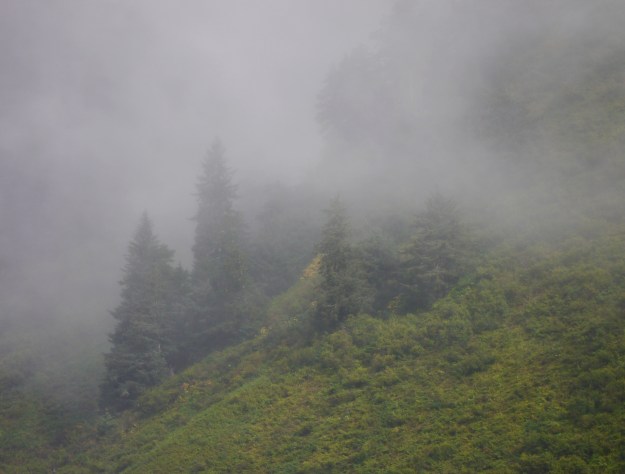
Aki hunts for interesting smells among the rockweed blankets as fog thickens between the glacier and us. It pours out of the forest, over North Douglas Highway and onto our beach. This is not Carl Sandburg’s fog that comes on little cat feet. This fog slithers onto the water like a snake.

3

If we were on a boat, I’d be concerned, if not scared. But here on solid ground, with a headland providing a reference point, I can enjoy how the fog snakes around islands and cuts us off from everything with its white wall, carrying the sounds of growling sea lions and scolding eagles.

A Dangerous Coat

1

Aki and I head out to the moraines, trying to squeeze in a visit before a promised Pacific storm slams us with high wind and heavy rain. Already the leaves of our cottonwoods weaken from green to yellow to brown. This afternoon’s storm could strip some of the moraine’s trees bare.

On the drive out I think briefly about bears. A sow and cubs have been feeding on salmon spawning near the glacier. We should be ok, a half-a-mile away on the moraine trail. Even if we come near bears, they shouldn’t be interested in a little dog and her scruffy master. But, I haven’t factored in my fishy coat.

3

Without thinking about anything other than convenience as we left the house, I pulled on the coat I used on yesterday’s fishing trip. A person with a sensitive nose might detect the faint odor of herring rising off its sleeves. But to a bear in autumn, the jacket must smell like an unguarded fish market.

4

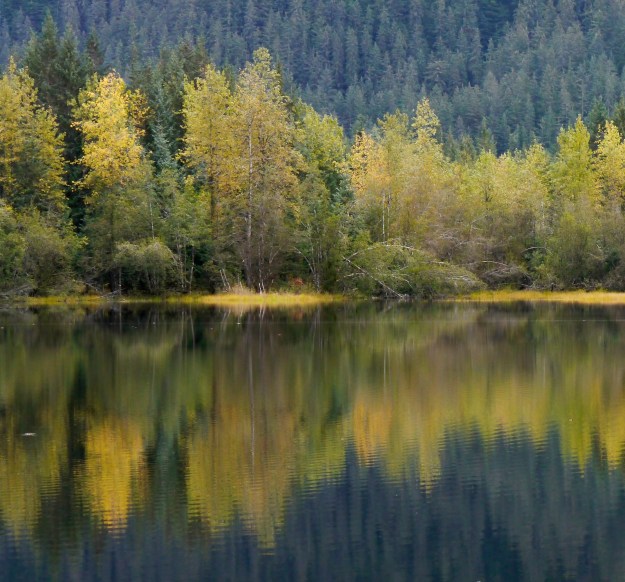
Ten minutes into the hike, Aki growls and makes a faint into the woods. The branch of a trailside alder quivers above her head. Suspecting she is flushing a bird, I call her back. We walk on, enjoying reflections of yellowing leaves of willows and cottonwoods in the moraine’s pocket lakes. Far from the quivering branch, Aki growls again and breaks into the woods. Another branch quivers. After I call her back, a bear lets out three huffs and climbs ten feet up a spruce tree.

2

We divert into the troll woods and swing a wide arc around the bear visitation spots. At home, I drop the herring coat into the washer.

Almost Fogged Out

2

The phone rings. It’s the captain. “I’ll pick you up in a half hour.” That gives me plenty of time to ready for what might the last salmon hunt of the year. As I pack, I think of the guy at Tee Harbor who said, “Tomorrow should be sunny and flat calm, lots of fish.” Today’s marine forecast gives further cause for optimism. It calls for calm winds and sun after the fog burns off at 10 a.m. I buy three trays of herring, instead of the usual two at Foodland when the captain stops there for supplies.
3

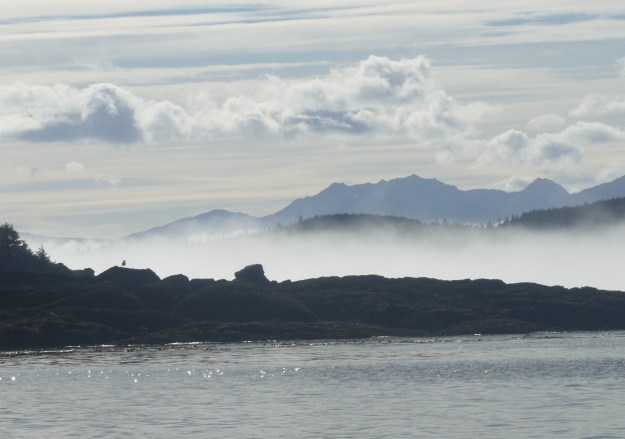
Fog obscures most of Tee Harbor as the captain and I load the boat. We mount the downriggers, ready the fishing poles, and set the herring to soaking, sure that the fog is about to lift. As I bend down to unclip the bow line a couple walks by. One of them says that they are heading home with plans to fish on a day without fog. An hour later, a red Lund skiff emerges from the fog driven by a standing man with the look of an escapee from tragedy. The captain still reverses his old Sea Dory from the mooring and motors us slowing into the thin white wall.

1

We find clear skies and sunshine at the mouth of Tee Harbor but fog still obscures most of Favorite Passage. It even covers half of the nearby Aaron Island, where we once caught a brace of silvers just after Dall Porpoise swan under and around the Sea Dory. We find neither fish nor porpoise during the hours we troll around Aaron. But the fog’s slow reveal of sun on nearby islands, mountains and glaciers entertains us during the wait. So did a large raft of scoters and a pair of oystercatchers that flew laps around our boat.
4

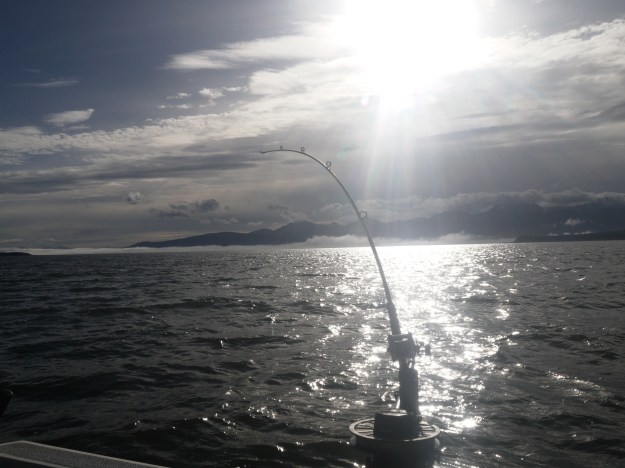
Finally, the fog lifts enough for us to cross the channel without getting crushed by a whale watching boat. But it still clogs the upper opening of the North Pass, where there should be salmon. We wait for more clearing. When it comes, and we can finally fish the pass, we have little luck. One whale breaks water near our boat, then makes its tail a black silhouette on the painfully-bright sea. A sea lion follows us, snatching each herring that we removed from our hooks when we change bait. Eventually, as a wall of storm clouds builds over the Chilkat Range, the captain catches a male silver salmon. But the wind, that had helped to blow away the fog, is already raising waves in the pass. Its time to start the bumpy ride back to the harbor.
The Other Senses

1

We are only a half-mile up the Gastineau Meadows’ trail when my camera battery dies. Aki, who seems to resent the camera delays, doesn’t mind. I don’t either. Today’s lighting would only confuse the camera sensors. So I sling the camera and employ my non-visual senses to experience the place.

2

Finding a patch of late-ripening blueberries, I roll one between thumb and forefinger and feel it yield to pressure before popping it in my mouth. Its taste—more sour than sweet—makes me think of the smell of muskeg meadows soaked with rain. I search the tops of nearby spruce when a rough tail hawk belts out its “queeeee” call but I can’t spot the bird. Its next call is fainter, made further into the meadow.

Back to the Woods

3

Heavy rain again drives us into the Treadwell woods where there is evidence of last night’s storm. Broken cottonwood branches litter soggy trails. We see one dog and its owner when we arrive. We won’t see any other. Another effect of the storm.

2


Gulls huddle on the shoreline or cruise just off shore. Three American widgeons drift among them. For a few minutes a shaft of sunlight breaks through cloud cover, enhancing the little fall color that has survived the wind. But it doesn’t stop the rain.

1


Eagle River

4

Today, before a Pacific storm can hammer Juneau with high wind and up to eight inches of rain, I take the little poodle mix out to one of our favorite trails. It runs through the cottonwoods and spruce that border Eagle River and then swings north toward an open meadow. The untended-outhouse smell of dead salmon dominates the woods. Through a screen of alders I see gulls and ravens feeding on salmon flesh. They don’t worry me but a crashing sound that silences the bickering gulls—that cause concern. It could only be a bear. I start singing the Aki song to keep the little dog focused on me and to warn any bears of our presence. If we don’t startle one or come between it and it’s young, we should be ok.

1

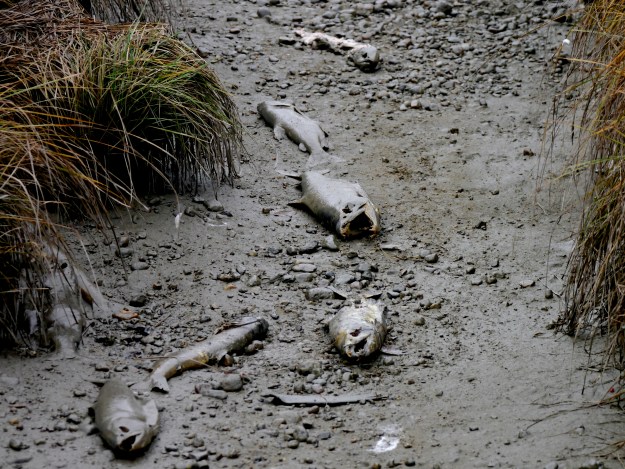
We reach the meadow without seeing any bears and cross it to reach the Glacier Highway. From there it is a short walk to a riverside meadow that is fertilized each year with salmon flesh. The big fish swim up small tidal streams during a flood tide and die after being stranded by the ebb. Here too, is the smell of death.

3

On an Eagle River gravel bar, an immature bald eagle feeds on a salmon carcass. After ripping off a portable piece the bird flies across the river to finish its meal on a driftwood stump. This is the first of many eagles we see feeding or roosting along the river. After passing one just before reaching the parking lot I think of the Haines, Alaska bald eagle confab that happens at the beginning of winter. Thousands of bald eagles gather there to feast on the participants in a late salmon run. Hundreds of people shiver in the cold to watch eagles bicker with each other over dying salmon flesh. As the first drops of promised rain fall, I think how much better we have it today. We only have to put up with a little rain and the constant smell of death.

2