
I had to swerve my bike around a dog salmon carcass today. It lay on the Glacier Highway bike path, not far from Walmart, where a bear had dropped it. The bear took a bite out of its head and belly before leaving it for me to run over. An opportunistic feeder, the black bear did not stop to wonder at the fish’s presence in a stream that meanders through a trailer park. He didn’t know about the great circle route the salmon had to swim before offering himself as a quick snack.
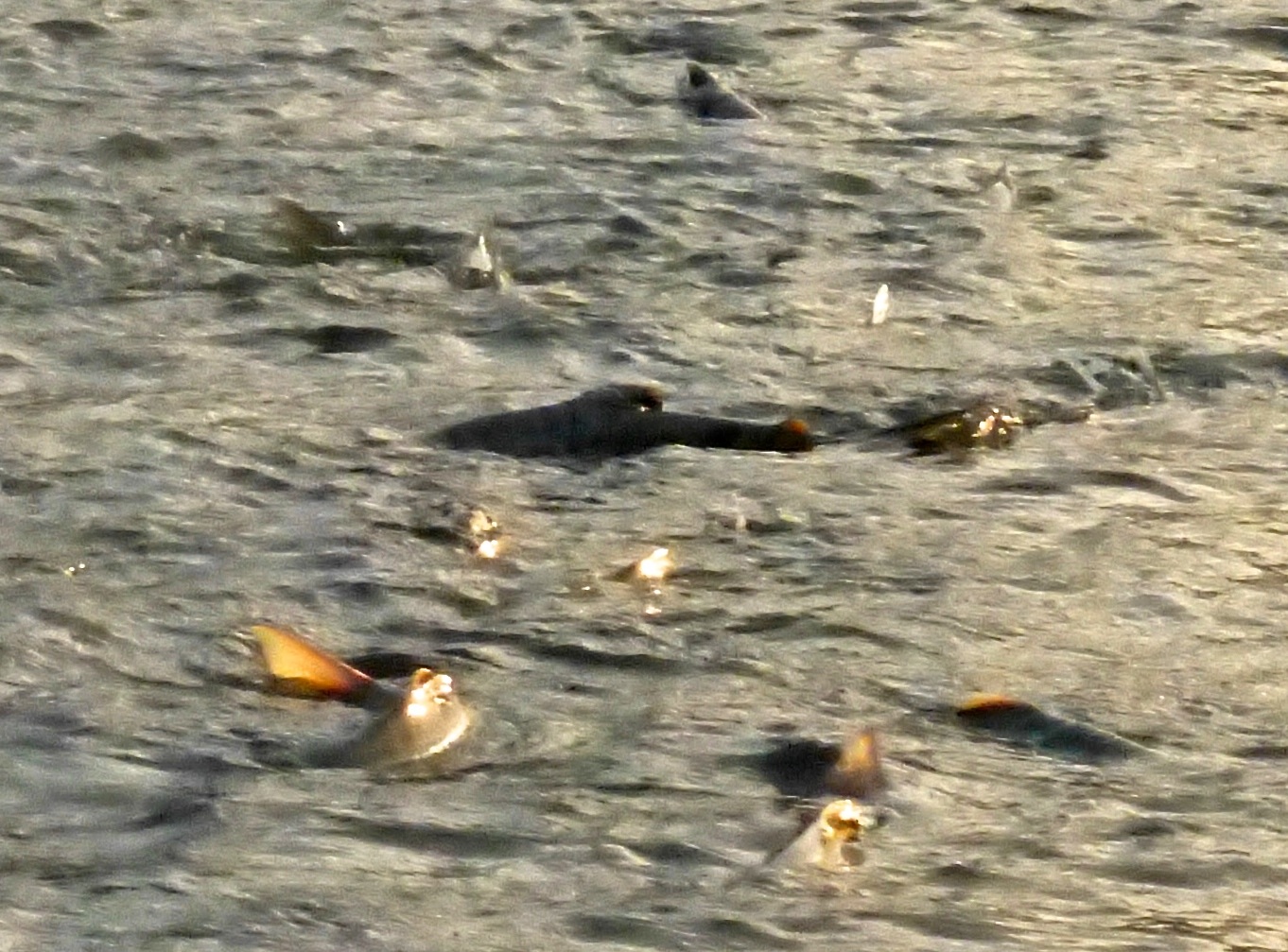 Two years ago, tens of thousands dog salmon smolt wandered down Gastineau Channel, though the Alexander Archipelago to the Pacific Ocean. Serving first as prey and then the predators, those most fit or lucky grew into eight or ten pound fish. When their biological alarm clocks made it impossible to remain at sea, they returned to Southeast Alaska. Driven by the need to procreate, the deceased fish I jigged around today avoided nets, killer whales, sea lions, seals, and hooks to reach his home waters at the trailer park, only to end up as bear food and finally, a road impediment.

This evening, after the bike ride, my family and I watched hundreds of gulls on the Sheep Creek delta, all bright white in low angled light, wait for thousands of dog salmon to die. No bear arrived to interrupt the fish’s efforts to mate. The gulls were content to let them finish before starting their picnic.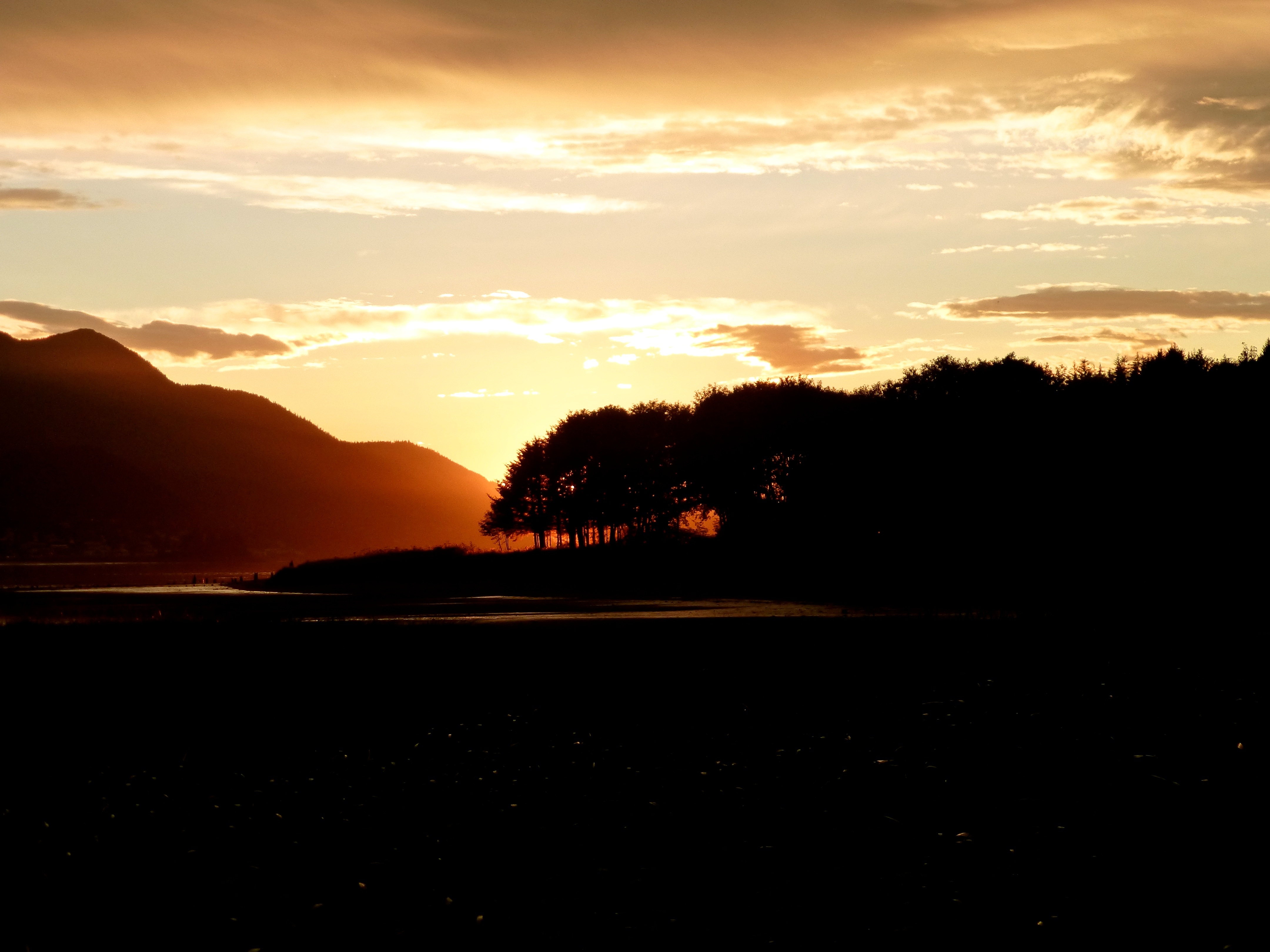
 Walking with Aki