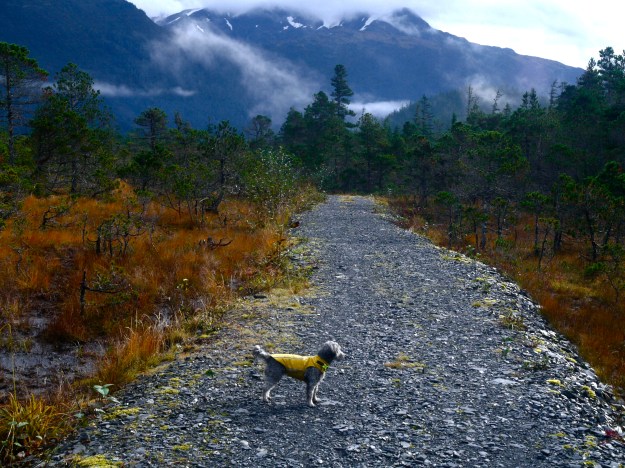
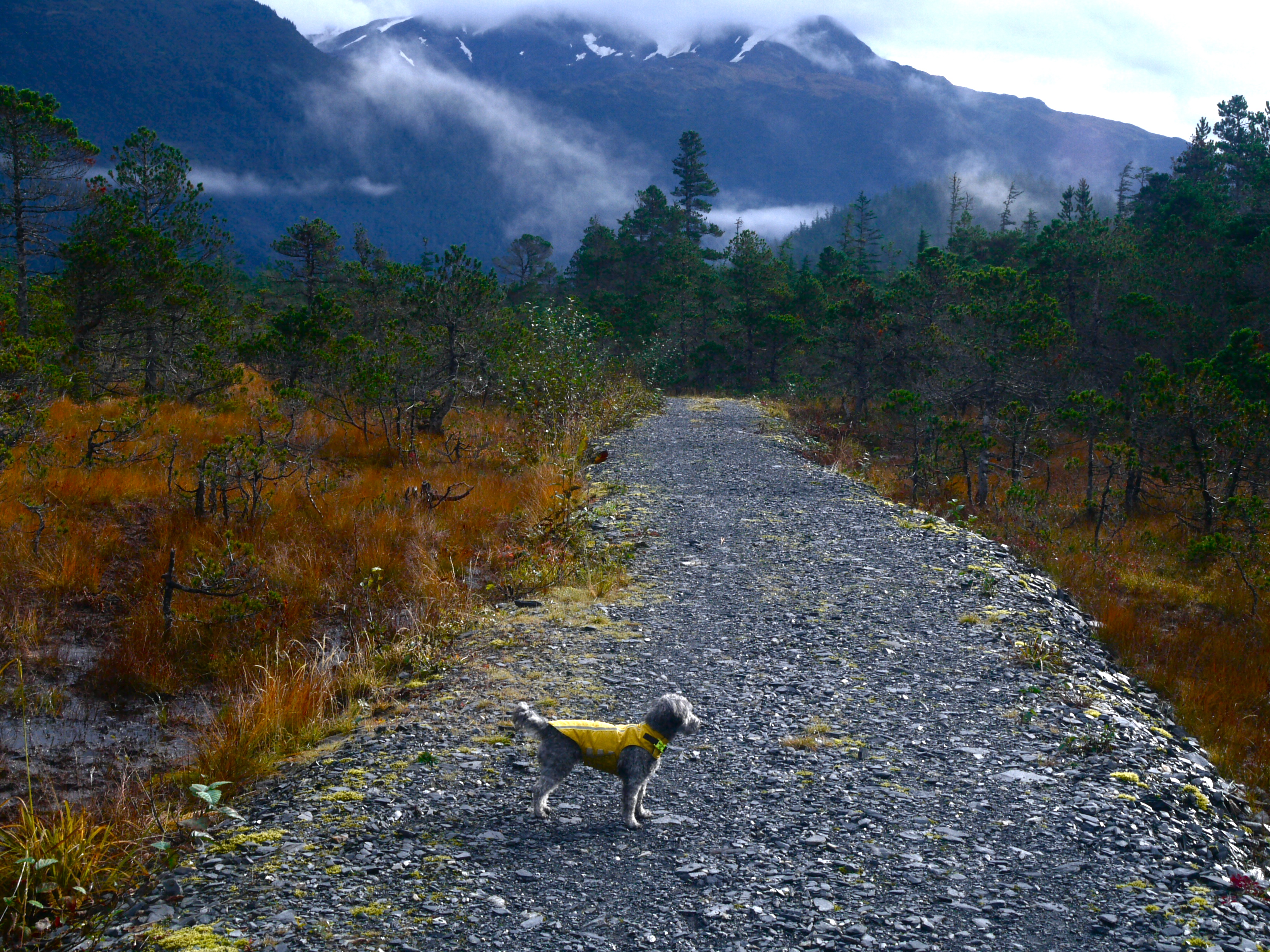
 This morning Aki and I cross Gasteneau Meadows under high overcast. It’s what we expect in October—subtle gray light of fall, usually illuminating some form of rain. No precipitation falls but it can’t be far off.
The lower portion of the trail leads past a school playground full of happy kids. Give a Juneau kid a rain coat and he will find the same joy in playing outside as one in Southern California. Aki ignores them in a search for dog sign. Many passed this way recently but we won’t see another dog on today’s walk.
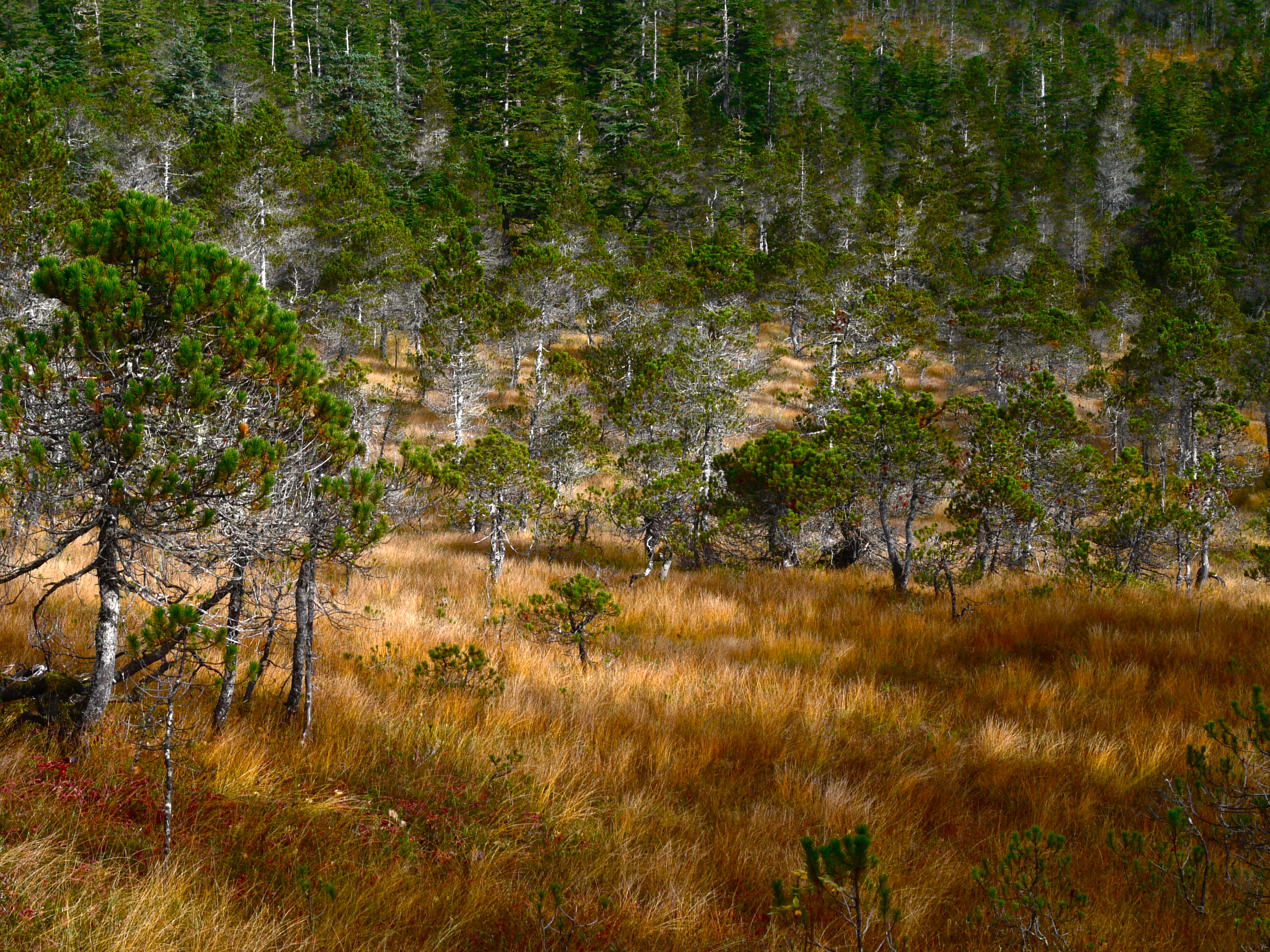
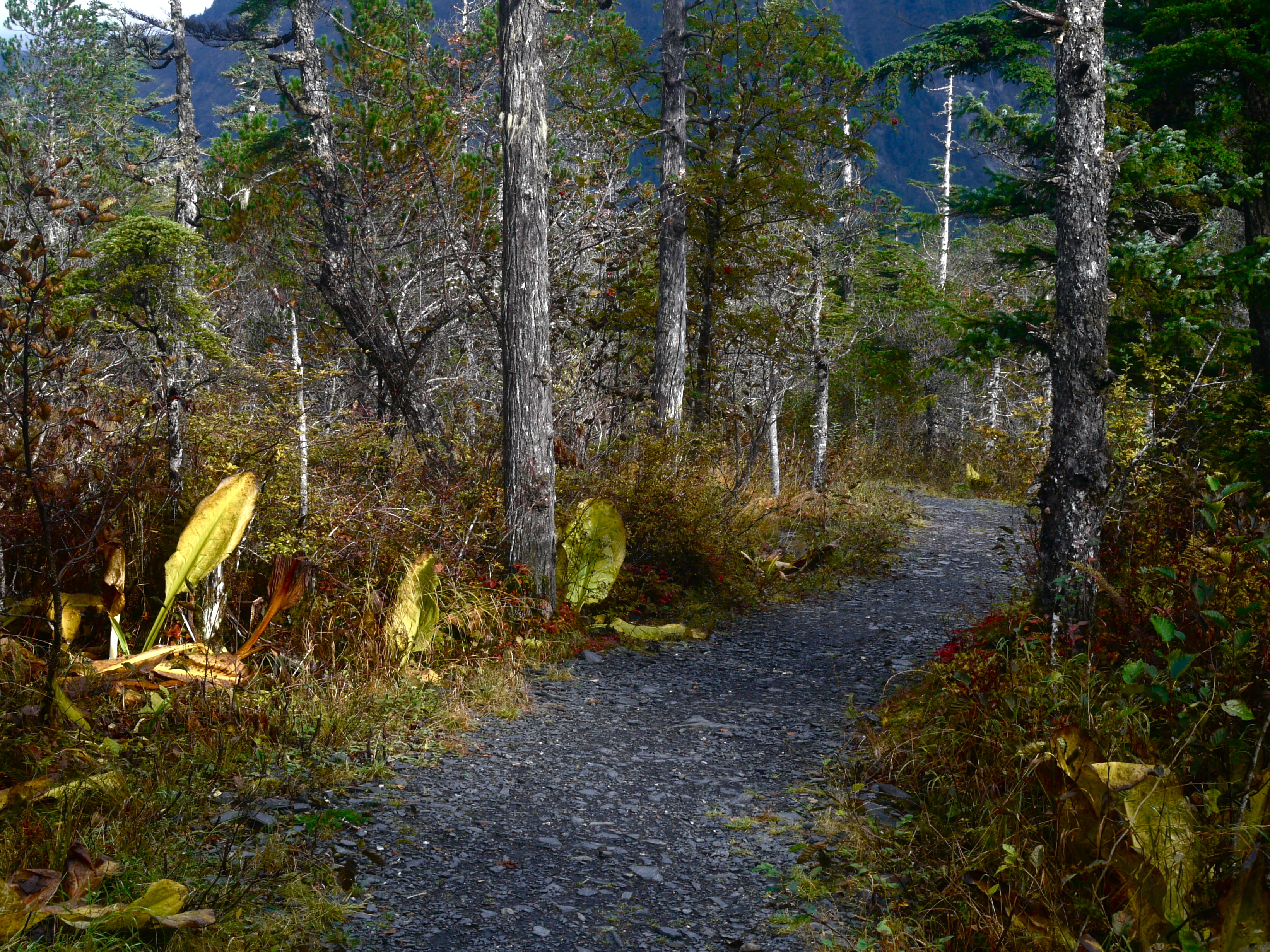
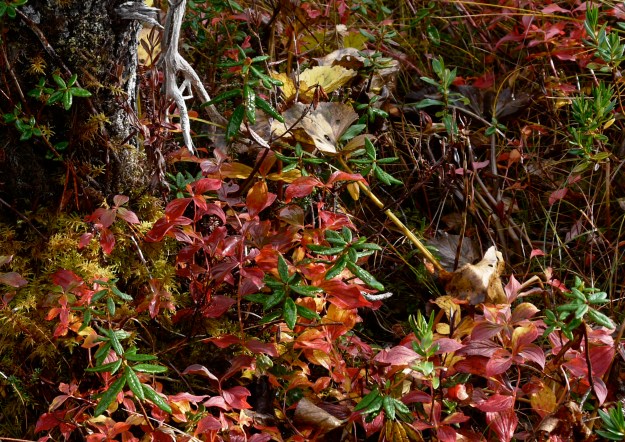 A shaft of sunlight would bring out the color of the red in the dying berry bushes and emphasize the tone variations of gold yellow meadow grass. With no hope of that show, I am satisfied with the color contrasting in places where red or yellow plants crowd the barkless flesh of dying pine trees.
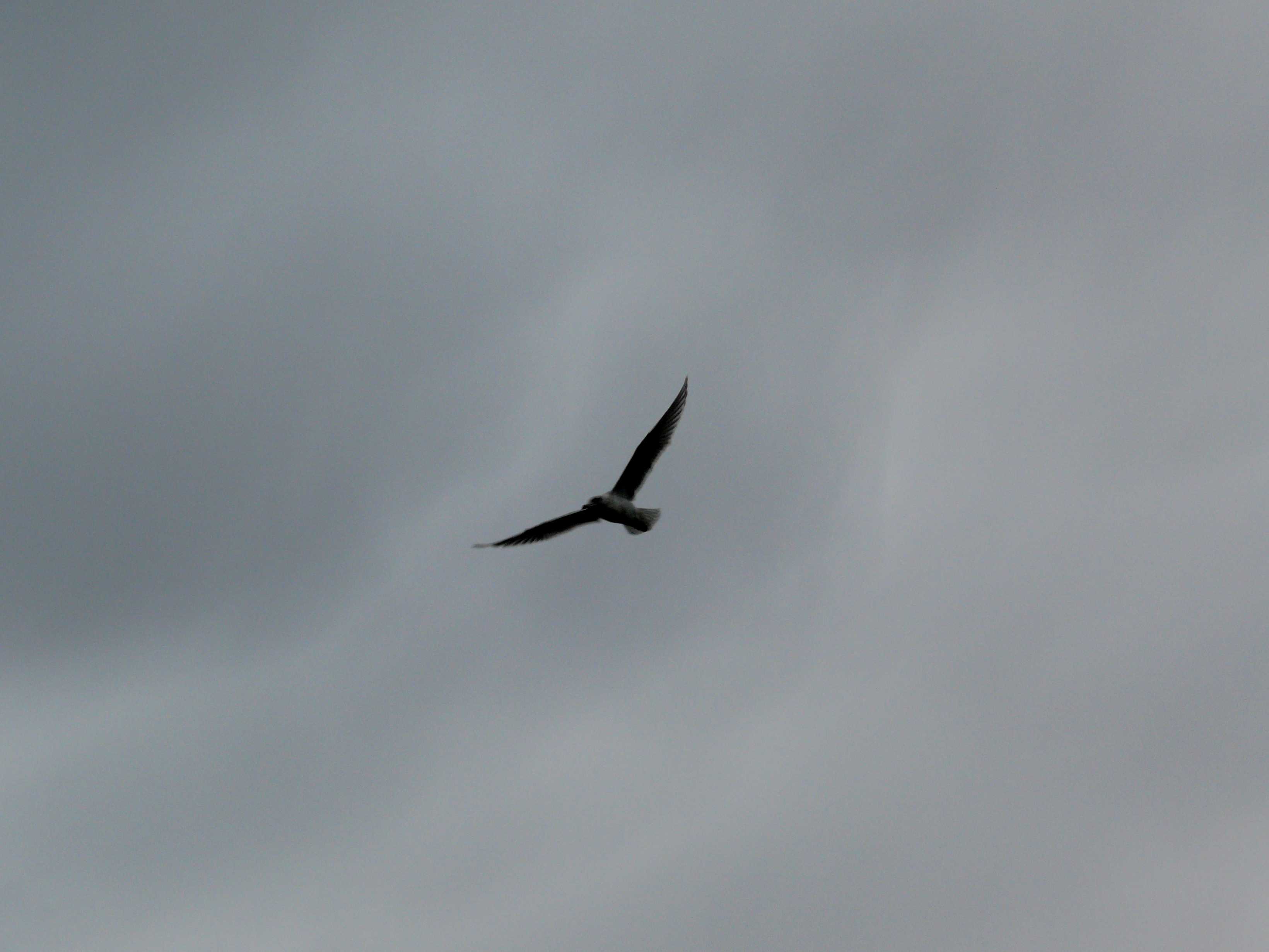
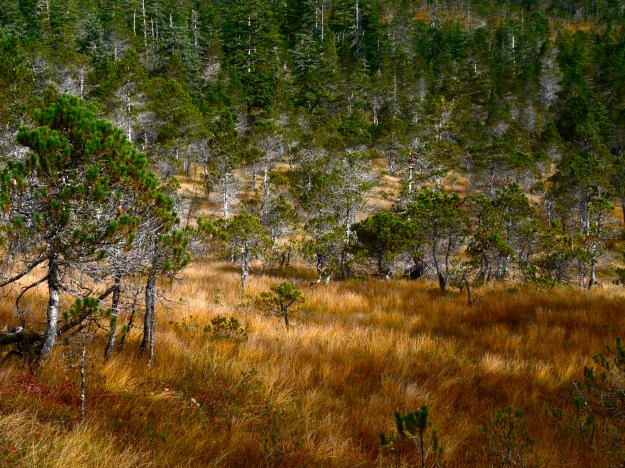 On most walks I have to wait for Aki but today she presses ahead, stopping just before disappearing from my vision. The trail leaves the open meadow, moving into the heavy blanket of spruce that covers most of Douglas Island. That’s where I hear the squeaky door song of migrating Sandhill Cranes. They must be far off, flying high and away from congested Juneau. A guy standing on the meadow might see their thin dark lines against the gray sky. I’m suddenly homesick for the tundra of Southwest Alaska, where for a few days each fall I’d listen to cranes forming up then flying south before winter denied them food. How can the memory of migrating cranes’ noisy passage through the delta’s dark blue skies trigger a longing for a place when recollection of more common events can not? Is it the other memories that form a rosary with that of the cranes—sinking into fragrant tundra to watch the birds pass overhead, tasting the last ripe berries as blue as the crane’s eyes, listening to a small child’s giggles as she uses a rolling gait to move across spongy tundra toward the arms of an encouraging mother?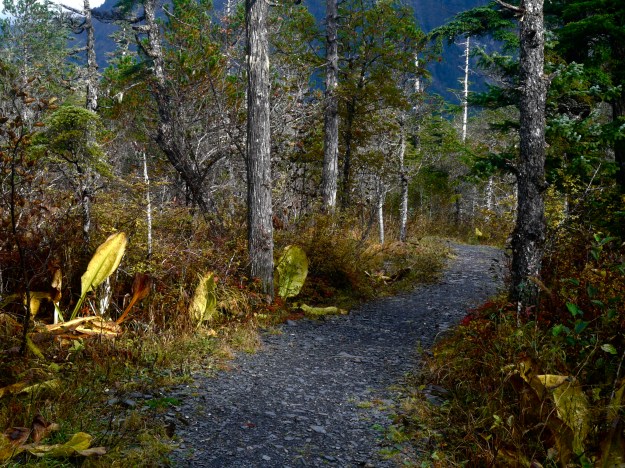
 This morning Aki and I walked around the moraine with a mutual human friend. It was a dark morning but with no rain. Even the faint color of yellowing willow leaves seemed candle like. Aki played with the many dogs being walked on the trails as the two humans talked about the sadness we had know while living on the Kuskokwim River in Southwest Alaska. We welcomed this chance to air out and then jettison grief, comforted by each other and the gentle beauty of lake side forests going to rest.




 Walking with Aki