
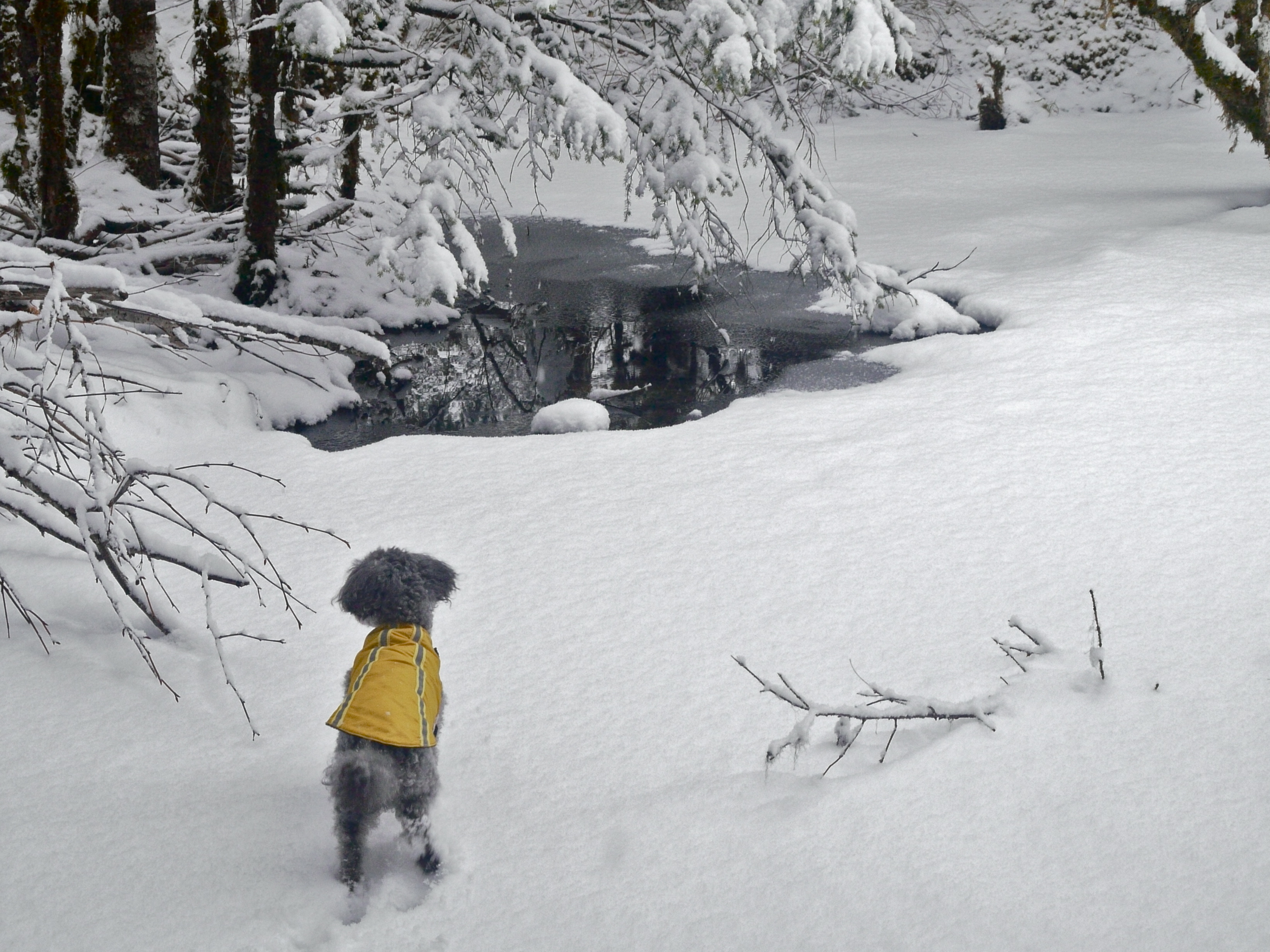
Judging by their absence from the moraine most residents of our town don’t appreciate this snow storm or its five inch white blanket now beautifying the Troll Woods—a departing gift from cantankerous winter. Aki, who likes fresh snow best of all, is ecstatic. Me, I’m haunted by the memory of a storm covering subarctic tundra in April.
 It happened when we lived in Bethel on the Kuskokwim River in Western Alaska. An April snow storm reopened the snowmachine trail to Akiakchak right after my just widowed father arrived for a visit. He had arrived on the evening jet from Anchorage, watching the details of the flat Kuskokwim delta soften beneath the descending plane, the sky fade from deep blue to black.
That night it snowed down quarter sized flakes that quickly covered the wet tundra with ten inches of white. Knowing it wouldn’t last ‘till noon, I roused Dad for an early breakfast and, hoping my neighbors would forgive the noise, began the chore of harnessing our team of dogs to the sled. They began to howl the minute I left the house carrying an armful of harnesses. They howled louder when I secured the sled quick release cable to the deadman anchor and laid out the gangline; reached a level of near hysteria while I harnessed Bilbo and clipped him into his lead dog position.
I didn’t hear dad leave the house, didn’t notice him in the dog yard until he shouted an offer of help. “Stand by Bilbo,” I suggested even though the old lead dog needed no help to keep the lines stretched tight. The three of us had been through much. It was time for Bilbo and dad to know each other.
The noisy energy of the dogs, each acting like a spoiled child in fear of being left behind, distracted me from the purpose of the trip— to share something that I love with one who had lost the main source of his.
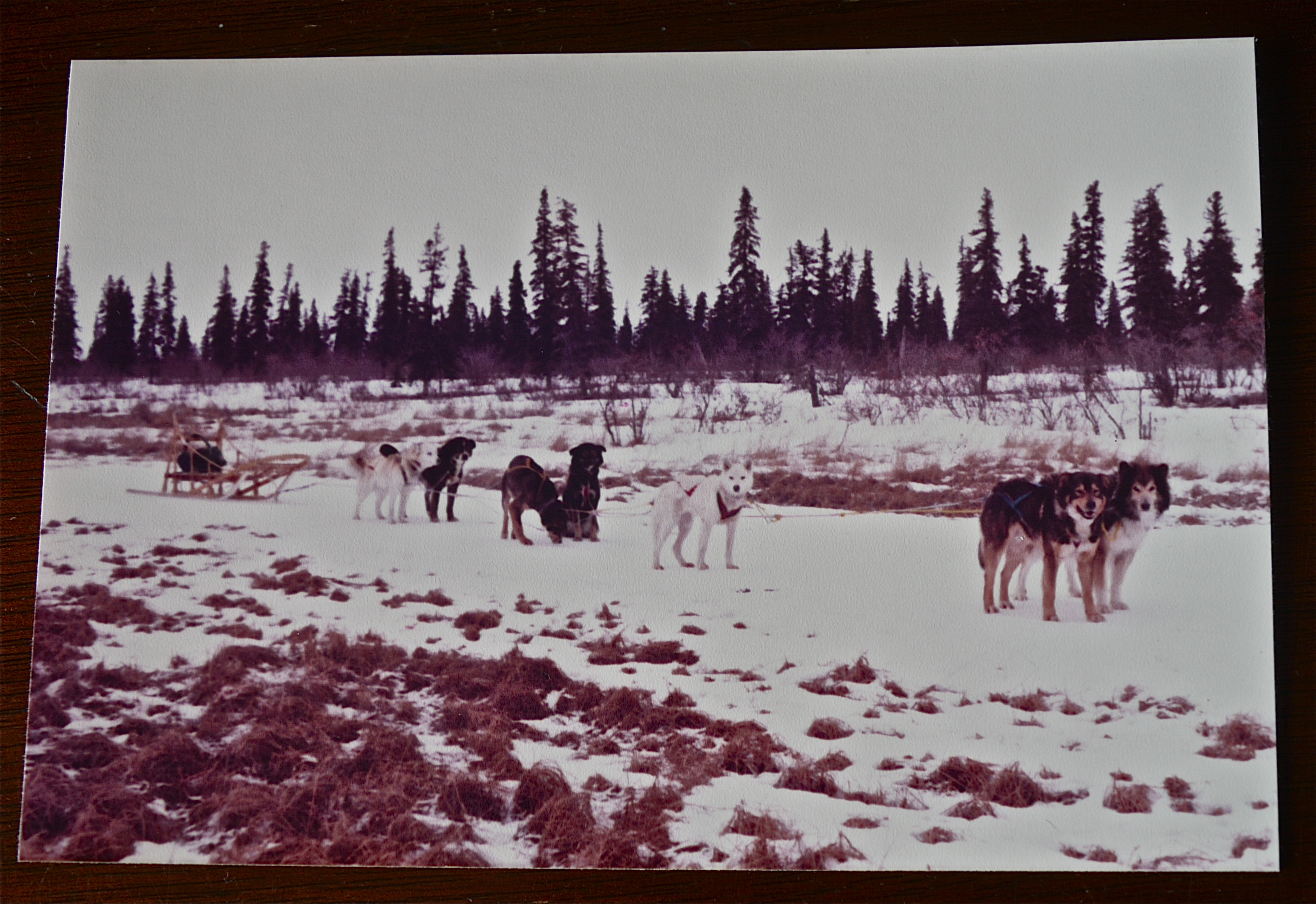 Dad took his place in the sled basket when all eight dogs were clipped to the gangline. I stood behind on the sled runners and pulled the quick release. We never talked about what came next—the sudden silence as the dogs surged forward—my fear of not being able to control the accelerating team or make the tricky turn where the trail dropped off the tundra onto Brown Slough—his blind faith in my ability to bring him home safely.
The dogs pulled us up the trail as the snow melted away under a spring sun. Only the ribbon of the snow machine compressed snow of the trail remained when we turned back to town. We were on the crest of the riverside bluffs where Dad would pick blue berries that summer. As the dogs rested we watched the broad Kuskokwim River, still covered with softening ice, take a lazy course through dead brown tundra broken by islands of cottonwood, willows, and stunted black spruce. You see no mountains or even hills from the place— just a great flatness relieved by occasional undulations and the practical buildings of Bethel.
On the return trip I worried whether the slough ice would hold long enough for our return crossing and whether there would be enough snow for passage over the less used side trail that leads to our dog yard. I should have spent the time telling him much it meant for me to share this with him—all of it. I’d like to think the sorrowful man could appreciate the wild beauty of the day and accept this last gift of winter

 Walking with Aki