Monthly Archives: April 2012

The Temple of the Ravens

The hike starts with wind rushing over two sets of raven wings followed by an eagle’s complaint. We are feet from the trail head, far away from the big birds’ feeding ground which makes it a strange place for them to roost. The ravens flew low over my head. Maybe I should have recognized it as a warning but was too taken by the lovely whooshing sound they made with their wings.

Aki dashes down the trail to wait with patience where the forest gives way to beach. Together we parallel the river and head toward its mouth. It’s in the mid-fifties so I left my coat in the car. The tide’s out but we hug some bluffs lining the opposite side of the beach from water to give feeding waterfowl some space. 
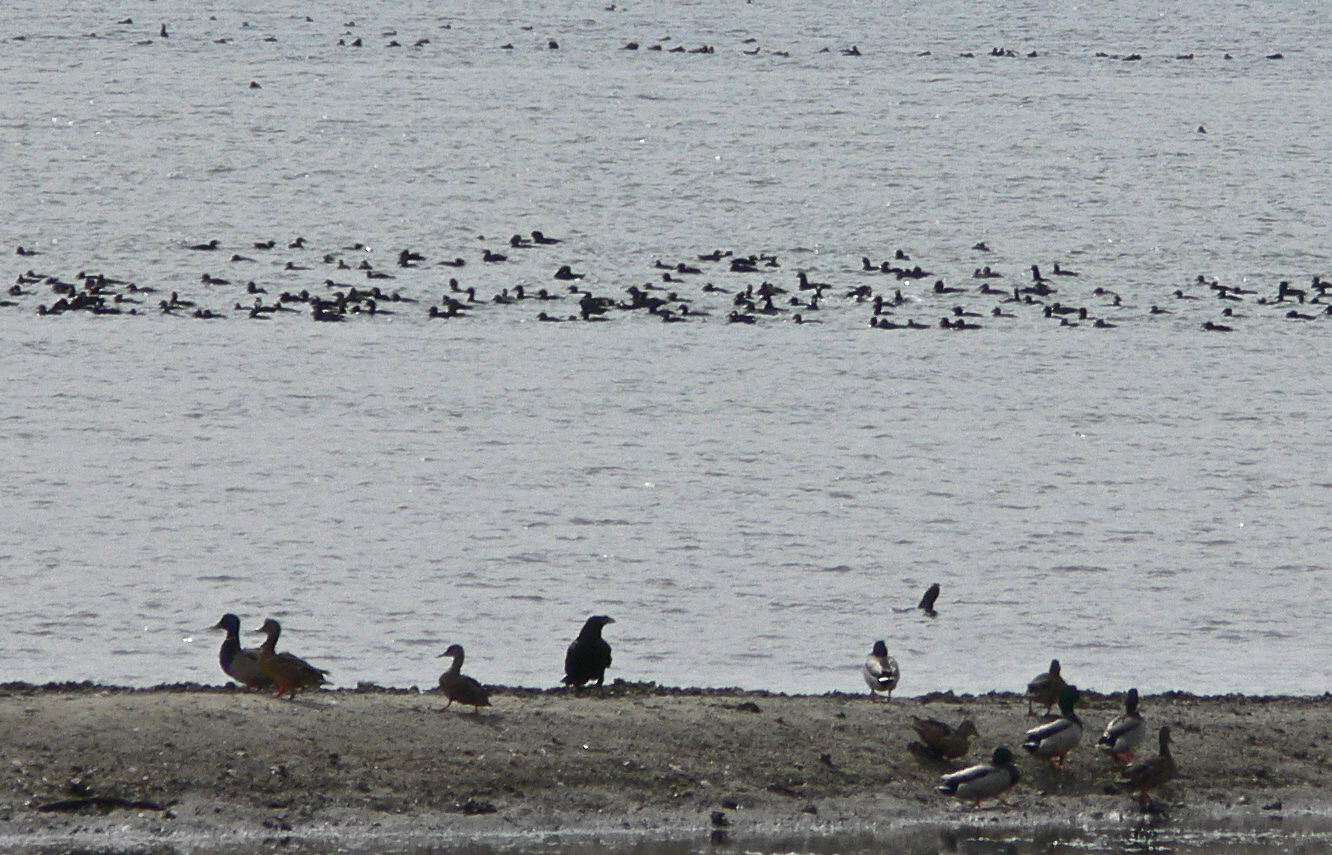
These bluffs are scalloped with a series of dry bays and topped with a heavily wooded slope. When we find someone’s abandoned campsite in the back of one of the bays I get out the picnic I packed in and sit down for a meal. We can see the river from here and watch a line of ravens dig for food in the waterside mud. Halfway through my sandwich a chorus of raven calls erupt from the trees above us. As if responding the riverside ravens fly straight at us and then veer  sharply into the trees.

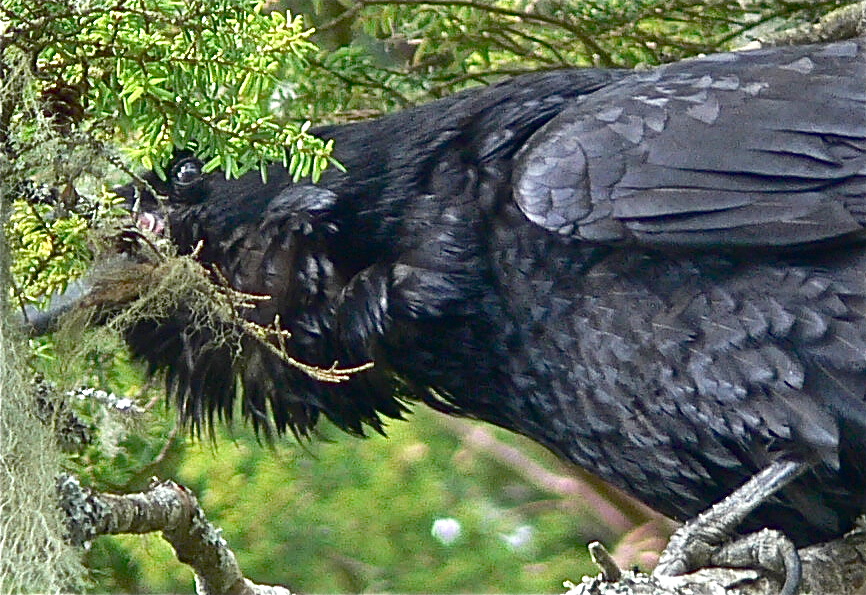
The new arrivals join the other ravens in casting what sounds like foul abuse at Aki and I. Quickly finishing our meal we move away from the bluffs to see who is making all the noise. Here and there purple black raven feathers show through the green wall of trees above the bluffs but I can only see the face of one bird. Their sound rises like a chimpanzee opera as we walk further along the bluff. Is this their holy place — so sacred the we profaned it with our presence? It could be a nesting site but most of the raven nests I’ve seen have been stand alone affairs. 
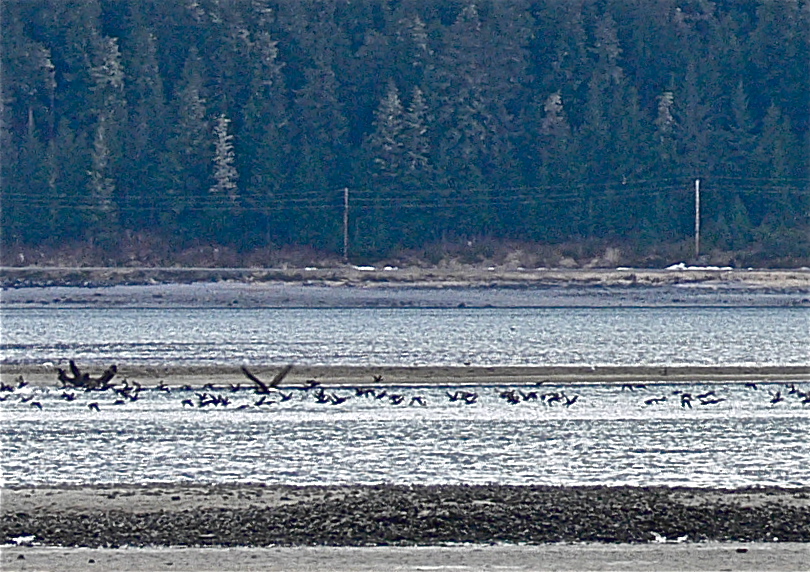
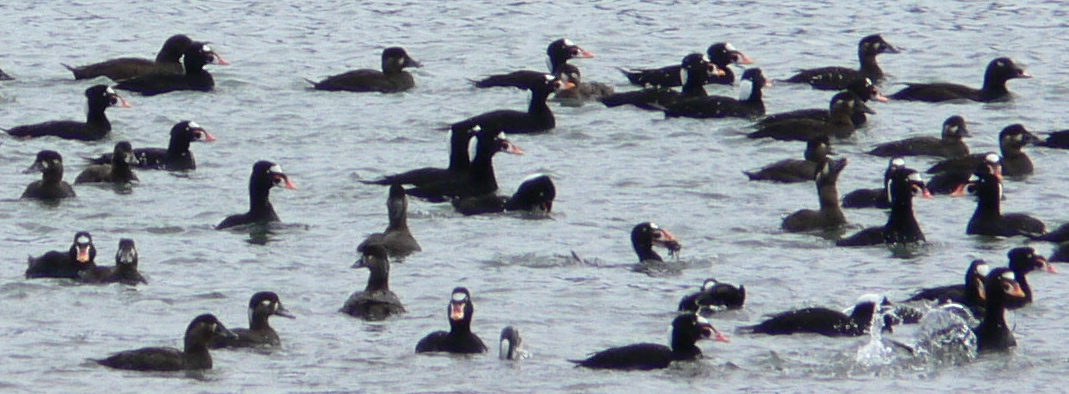
The ravens quiet down after driving us from their place. Down the beach a bald eagle flies over our head toward a huge raft of surf scoters. Already moving away from the beach in a nervous “v” shaped formation, the scoters panic into flight as the eagle flies over them and then returns with empty talons to the trees.

Apparently shaken by being cruised by the eagle the scoters break formation and sing our their hysterical song of warning. We find another, calmer raft of scoters near the river mouth where we start to retrace our steps. Something in the water spooks this raft and most of the scoters burst into flight and join the upriver group. We stop when reaching the raft that is now several hundred birds strong.

We have a choice now –do we walk back alone the bluffs, disturbing the raven’s temple or hang near the river and make the scoters uncomfortable. Since the scoters don’t seem to react to our presence I chose the river route where we can water the surf scoters dive and splash and feed. The sun breaks the overcast to sparkle on the water and shine on their orange and white beaks.    
Teenagers

I use my camera for taking notes.  Today the media card failed rendering the camera useless. Instead of snapping pictures without discrimination I have to stop and memorize things of interest on the trail.

With the snow pack failing in this part of the forest this might be the last chance to walk the breadline trail before it melts into a boggy mess. After pulling on ice cleats I head down the steep but short drop to “U” shaped creek valley that is still in darkness on this sunny day.  Aki halts at the near edge of a rough hewn bridge with a six inch wide strip of snow rising one foot above its wooden deck. I must cross first to convince her of its safety.

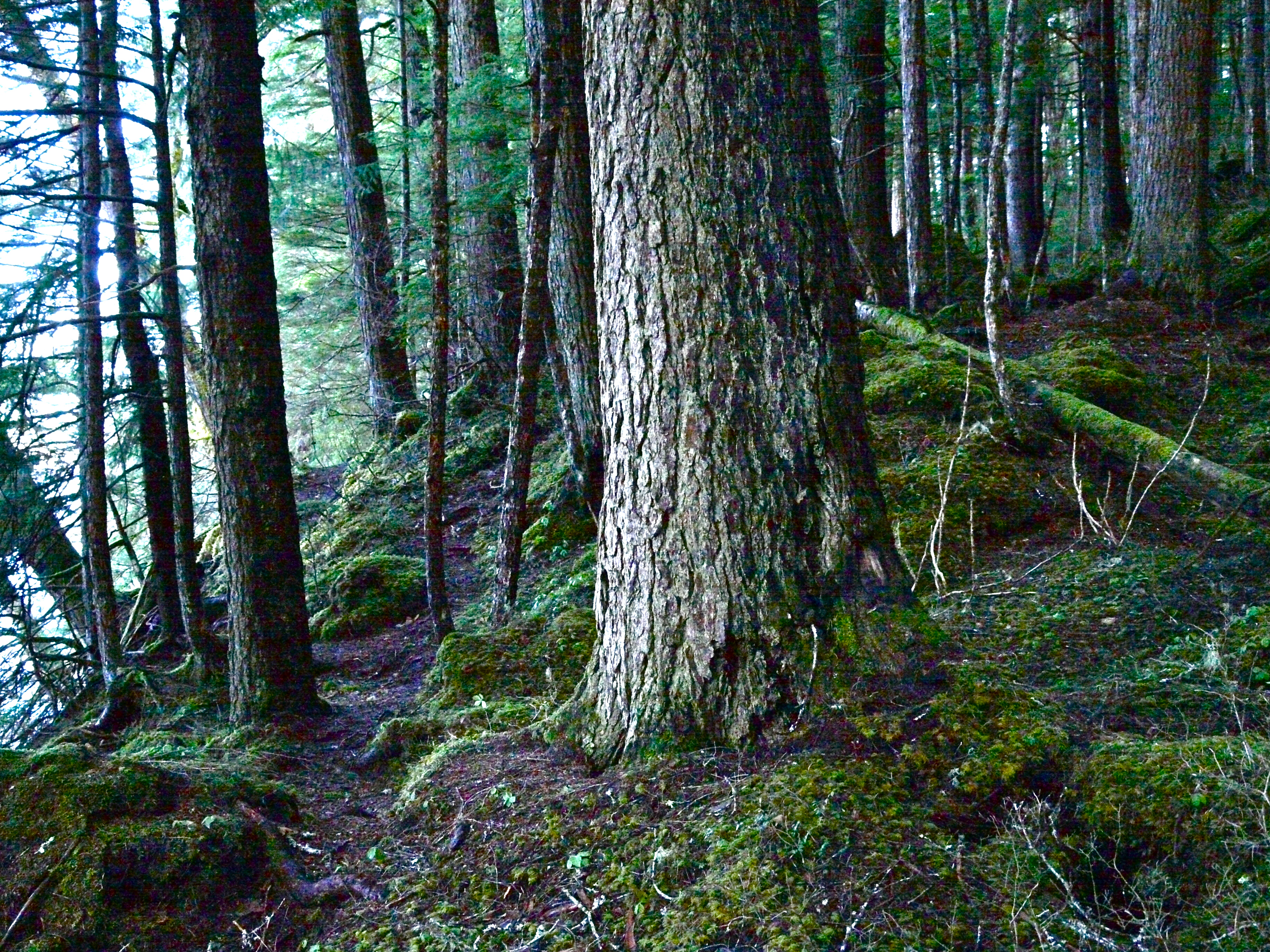
After the bridge it is a short climb up to a muskeg meadow now flooded with sunlight. Snow covers most of it so Aki lightly paws my leg in hopes that I have brought her frisbee. She would settle for a stick to chase but snow covers all. In seconds she dashes down the faint trail and follows it into a grove of old growth hemlock trees. I join her and wonder how nature crammed three such different ecosystems in the short distance from trailhead to ocean bluffs.

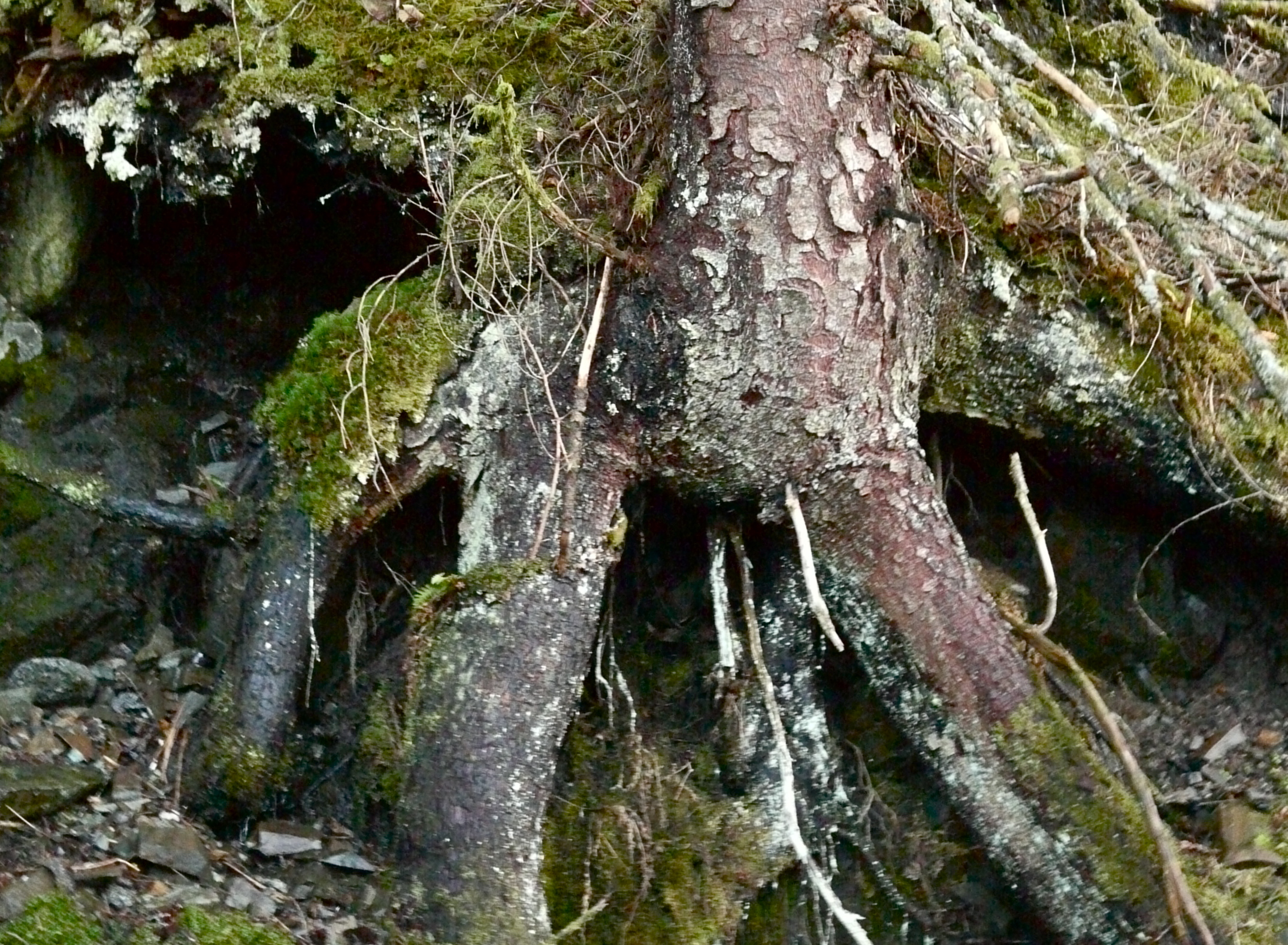
The hemlocks flourish in a large protected swale that ends where the bluffs drop vertically to the beach. To survive the trees send out their tough roots up and down the hill.  They form  spiderweb like tangles on the steepest portions of the trail.  Even small boulders wear a mesh of their roots. Large spruce and alder trees grip the edge of the bluffs by sending roots into the hillside and bluff face.

Thanks to a complex of cliff side alders we find safe passage down the bluff to the beach. The tide recently turned from ebb to flow so we have lots of area to explore.  I am drawn to a flat section that extends far enough away from the bluff face to escape its shadow.  Most of the rocks in this sunny space offer nice places to sit. Unfortunately tiny periwinkle snails, just formed, cover the surface of them. I do find one snail free perch near the water.

Offshore a sea lion slides it’s head sideways out of the water at a 30 degree angle then slides back into the water. He repeats this several times until another sea lion head rises with his. Then a third one joins the spy ring. With Aki leaning up against me I wait for more.  These are young sea lions — the teenagers of their kind. Like human teenagers they get bored, take chances, and quickly change their minds. I am counting on these traits to bring them closer to the beach.

While the tide rises closer and closer to our resting rock the sea lions continue their cautious closing on our position. Just before we have to move to drier ground one of the lions breaks the surface 50 feet away, stretches out his body and swims by on his side before diving.   That is last we see of any of them.

Revealed by the Sun

Today we wish winter could last forever or at least until King Salmon season.  After weeks of thawing days followed by freezing nights the moraine snow pack offers unlimited access to seldom seen places. It will soften in this strong sunlight but not before Aki and I can take one last stroll through the beaver lands.

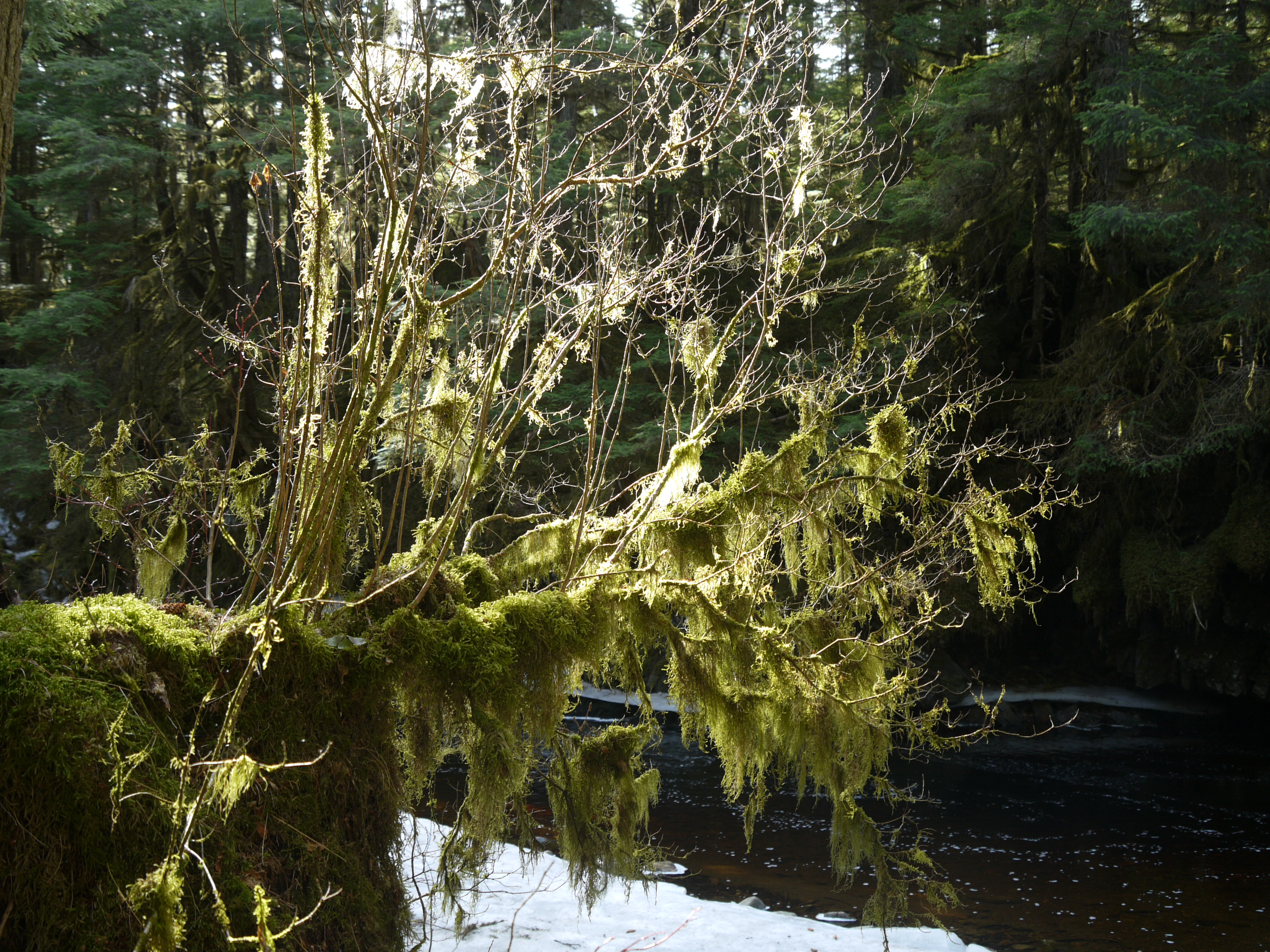
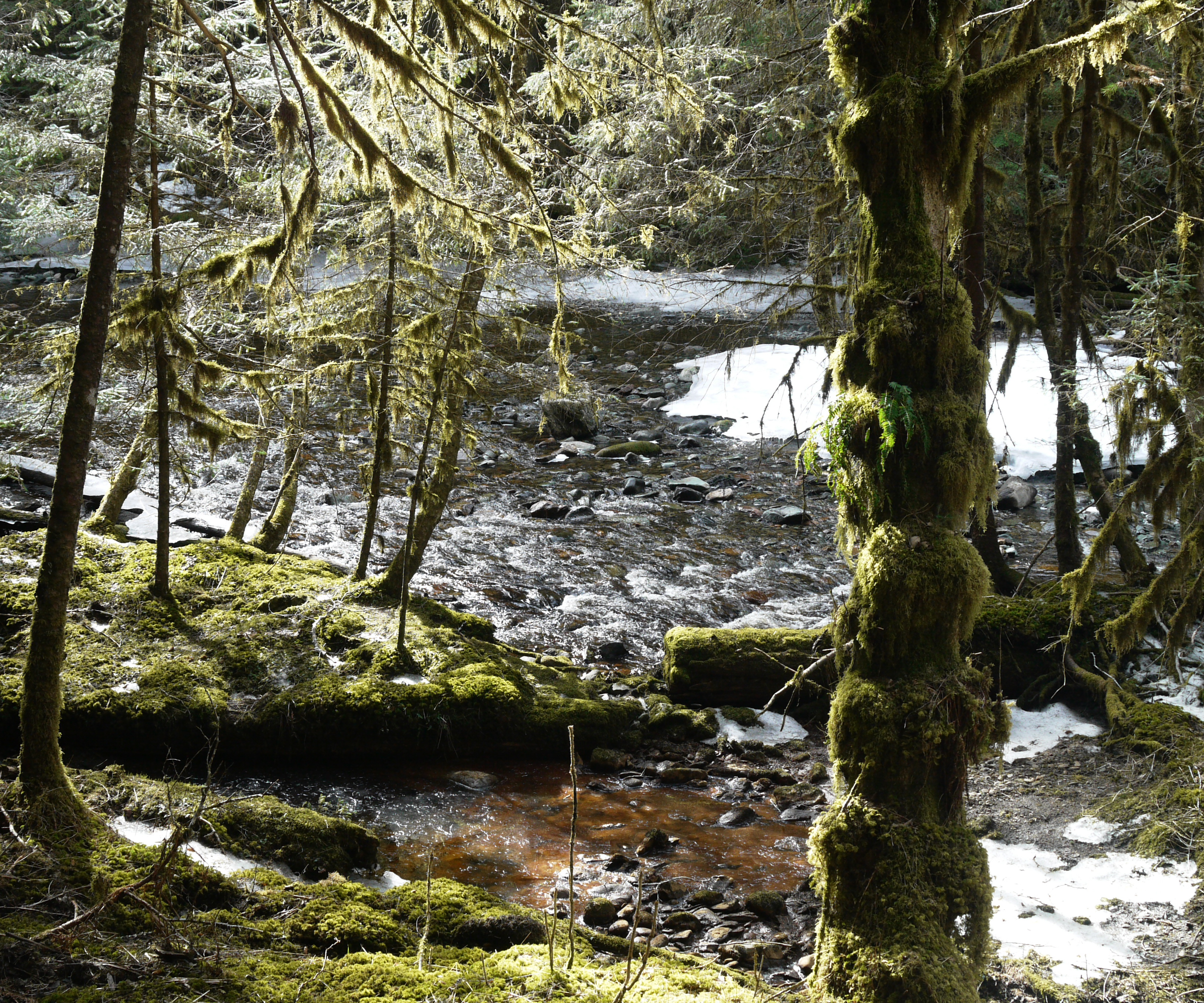
First we cut through the Troll Woods where morning sun once again infuses tree moss with vivid green light. Aki almost runs out of patience waiting for me to abandon efforts to capture it with the camera. Rather than frustrate, my failure pleases. There is still some beauty capable of defeating digital machines and may only be  captured by the human eye. 

We find what looks like the twisted remains of a child’s plush toy fashioned into a small rug. It’s the frozen scat of a wolf who recently enjoyed rabbit for dinner.

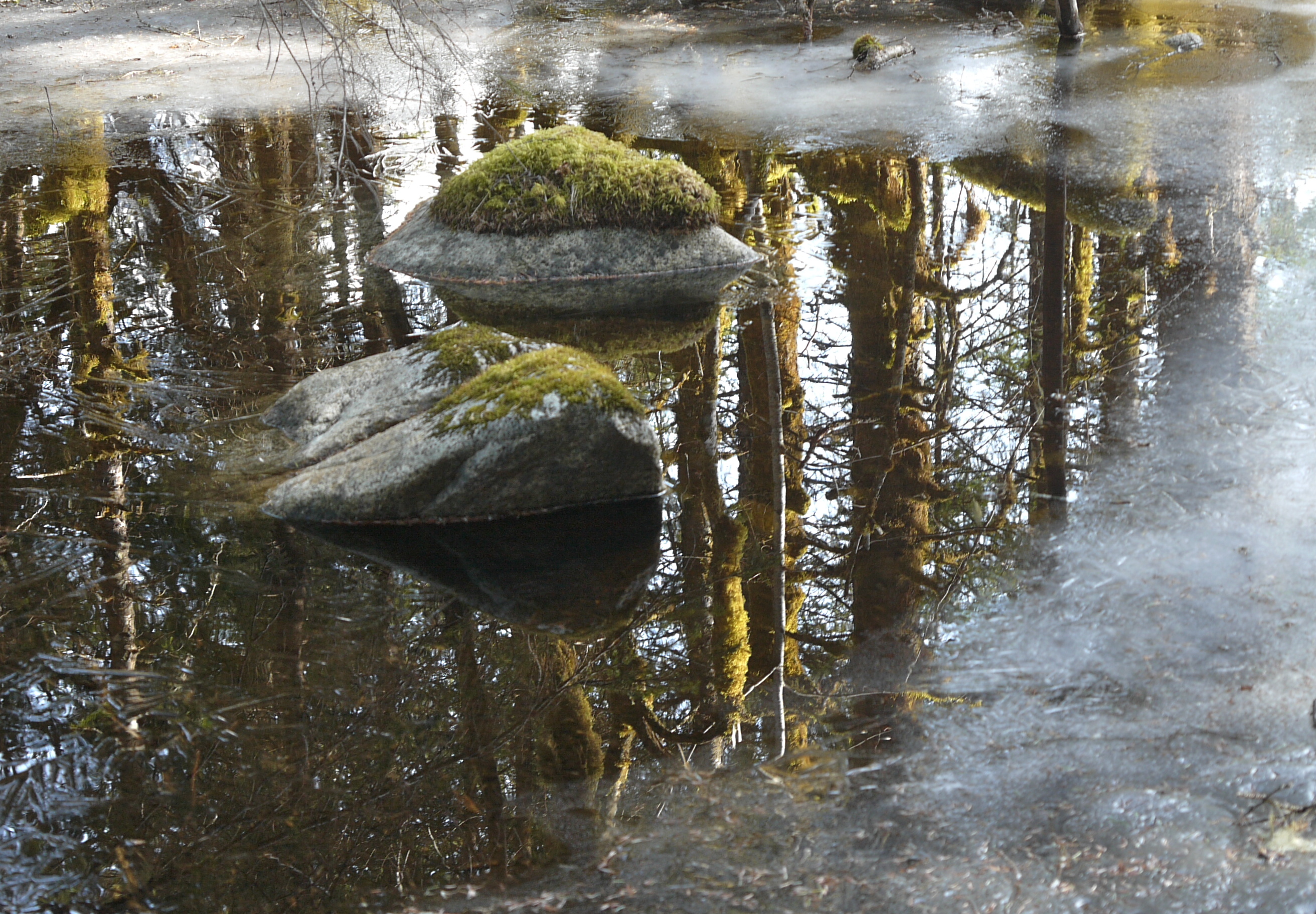
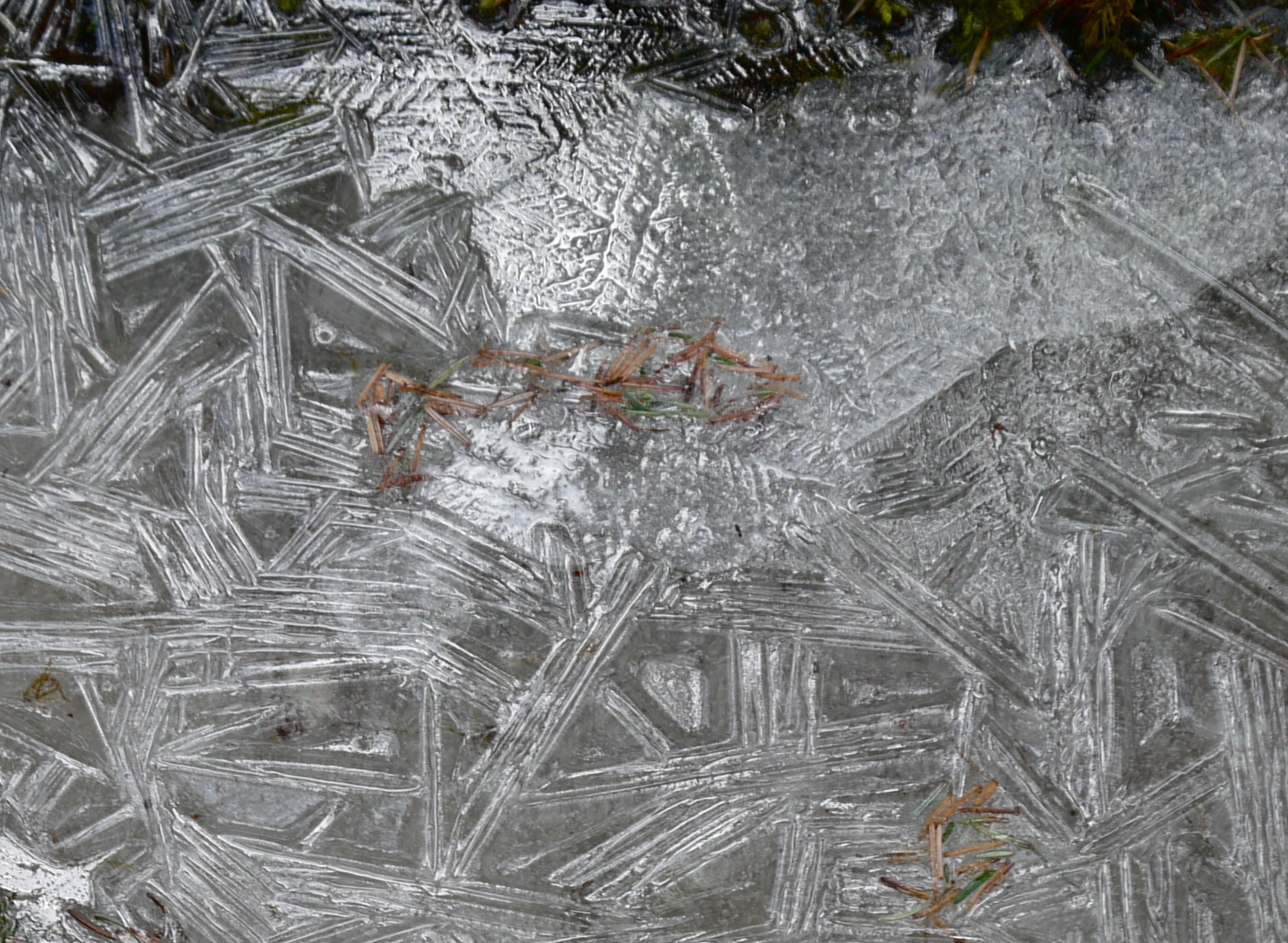
The troll trail skirts some small lakes covered with ice that has captured the tips of shoreline alders. Greedy for light, the trees reached out over the lake in summer and remained too long. Heavy winter snows bent their tops under water to be captured by rapidly freezing water. It will take weeks of warm weather to win their freedom.

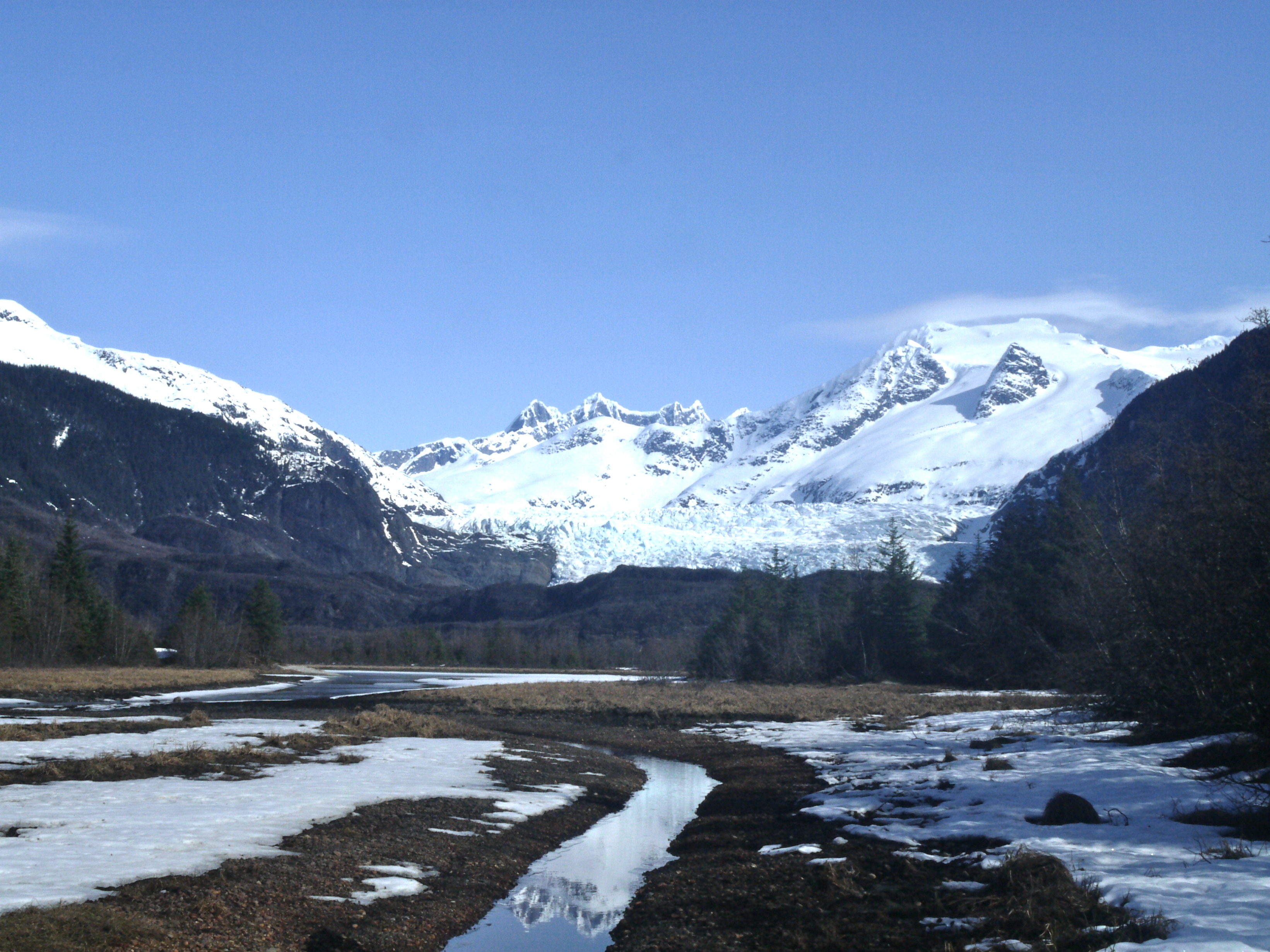
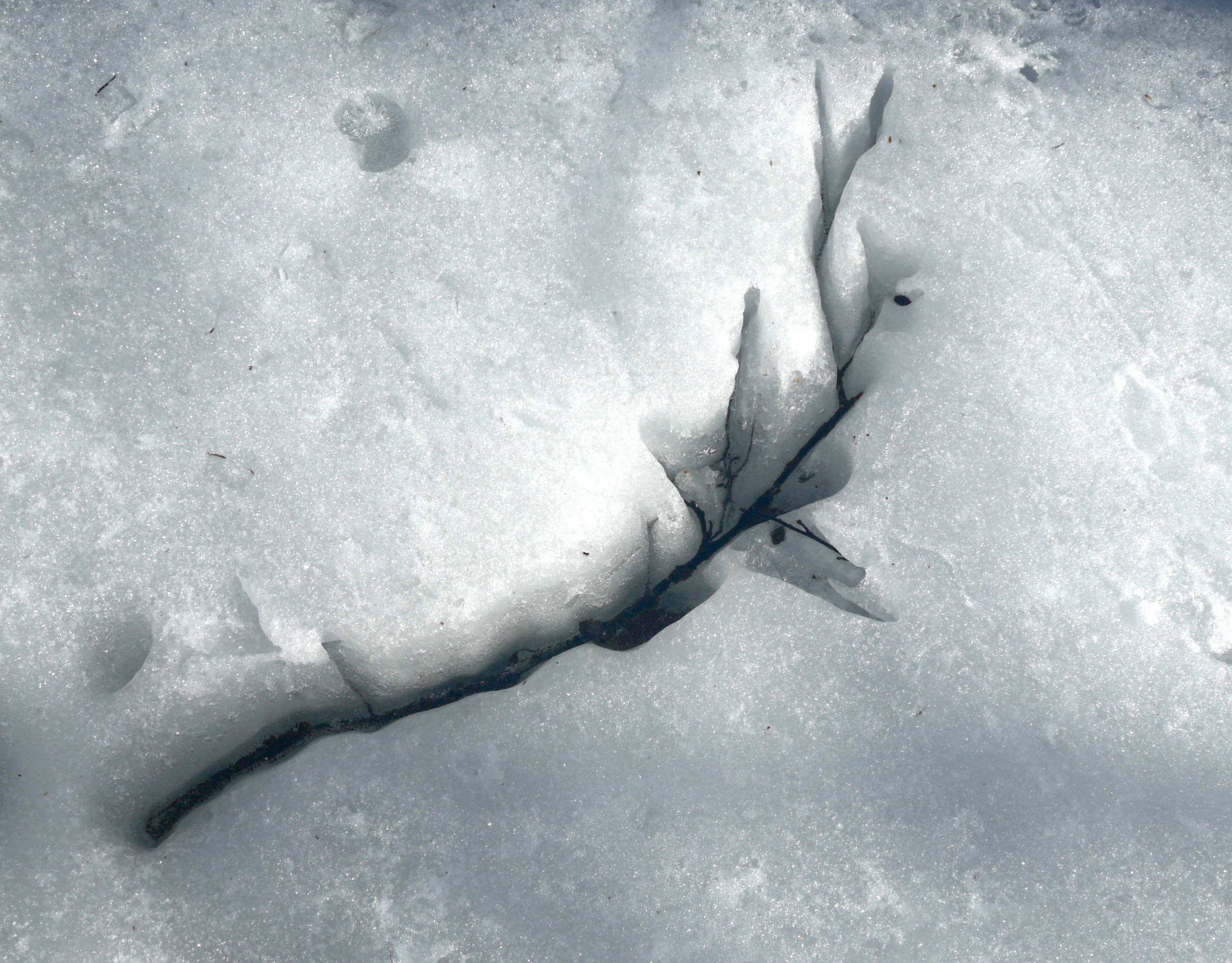
At the edge of the woods we drop down onto the flat beaver country and abandon the trail for a chance to move among the standing dead spruce to Mendenhall Lake.     With Mt. McGinnis as our guide we pass through the desolated country where only the stubborn willows have a chance to grow. Where exposed to full sun the ice is pockmarked by deep sided holes made by leaves or twigs that fell there during the winter. We find the grave of a small alder branch that it dug with the help of the sun. 

After rejoining the main trail we pass the massive two tiered beaver dam complex that provided so much transformation. Only a small trickle of water seeps out from underneath the last dam to only partially fills a winding stream flowing toward the lake. The once navigable watercourse is now too small to capture the glacier’s reflection.  It can only mirror the tips of two Mendenhall Towers.

For Other People to See

These old growth woods refuse to let in the Spring. The fast moving steam still undercuts shelves of ice. Shafts of sunlight manage to energize the colors of tree moss but offer us  no warmth. Surprised but accepting we head deeper into the woods.

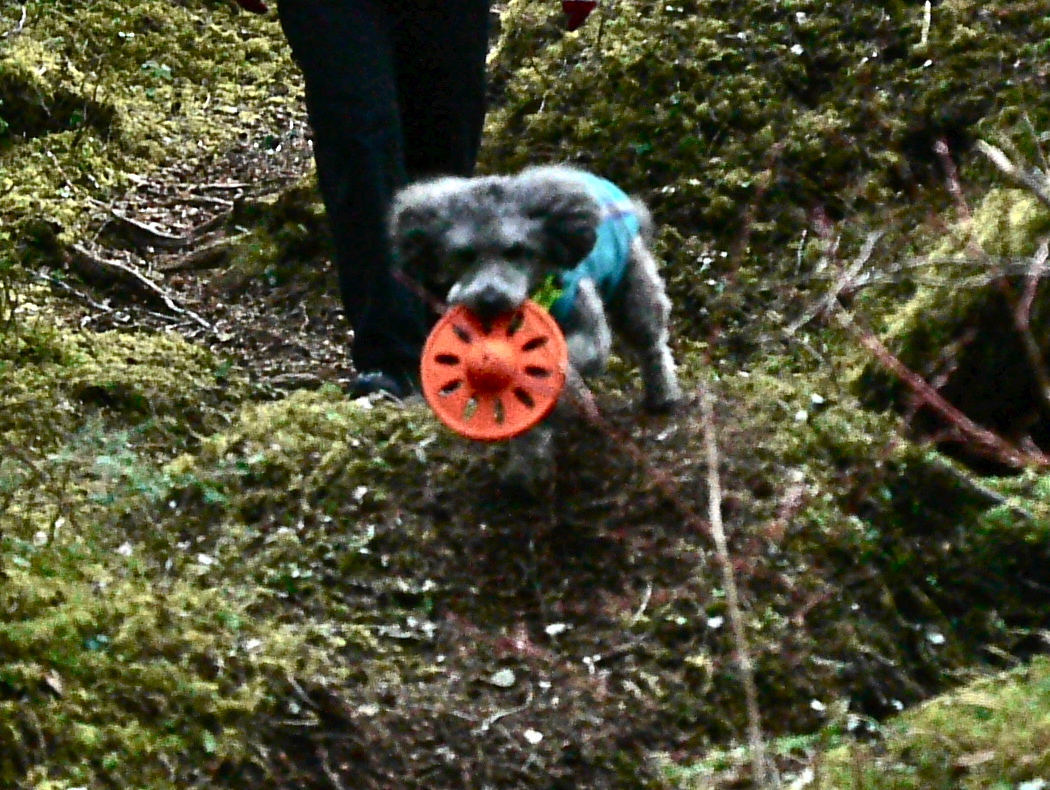
Aki has brought along another human member of the house who has her orange frisbee. Between tosses the thrower spots a belted kingfisher perched across the stream. Patient and wise for a bird, it stays in place on the spruce branch forty feet above the stream. I wish we could watch its steep dive for food in the stream but only grow cold waiting for it to drop.

Further upstream I think I hear bird song but find its only Aki squeezing her frisbee for the squeaking noise it makes. Then a echo of the squeak sounds above us. The winter wrens are back. One accepted Aki’s challenge to sing. 

Wanting warmth with our sun we turn around and follow the stream to tidal flats of sleeping grass, the color of light mud. The trail takes us along the edge of a rich pond still covered with a skim of ice. We pass a woman carrying a long range camera so I ask her is she has seen any birds. “Just a couple of blue herons,” she answers, “but there is a river otter.” Apparently it scared her breaking through the pond ice near the trail. 

Our local newspaper has been full of otter sighting reports. Six were seen often this winter fishing in the artificial lakes that border our busiest road. Hoping to get our own chance to watch an otter we start toward where the woman saw it. Close to  the sight I hear ice breaking followed by a splash. Expecting otter, I see a four year old dressed in pink tossing a series of stones onto the thin pond ice. My heart breaks with the ice.